

Diferenças entre as versões do USB PD: 3.1 vs 3.0 vs 2.0 - Guia de Fornecimento B2B
Diferenças entre as versões do USB PD: 3.1 vs 3.0 vs 2.0 - Guia de Fornecimento B2B
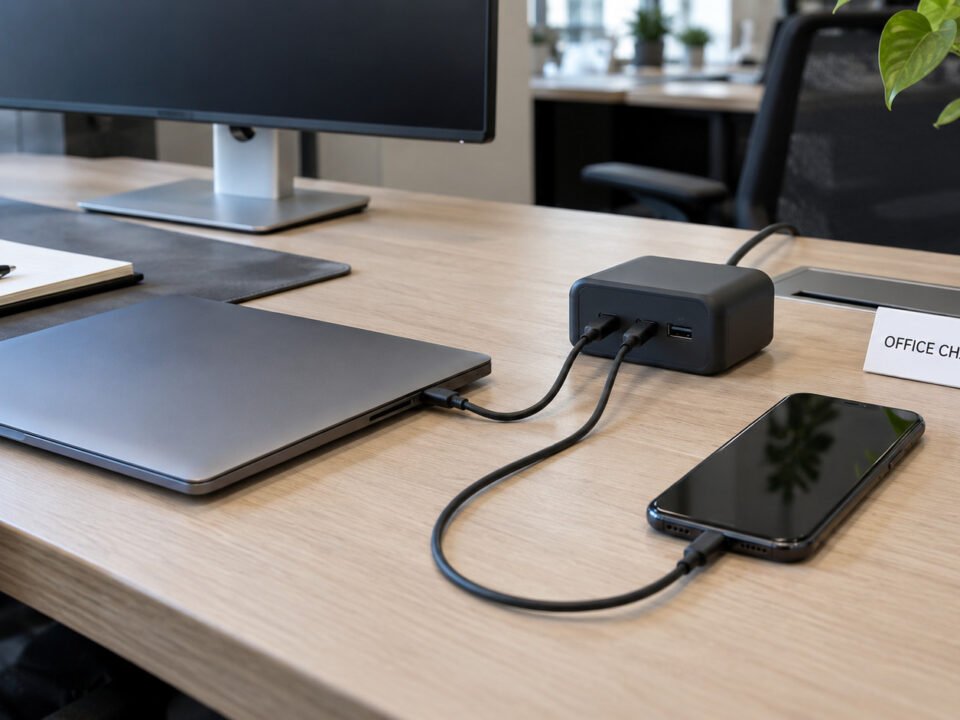
For B2B buyers, verifying multi-port power allocation behavior is essential. A "100W multi-port charger" may only deliver 100W when a single device is connected, dropping to 65W + 30W or 45W + 45W configurations when multiple ports are in use. This same principle applies to high-wattage USB-C power banks, where total output must be intelligently distributed across connected devices.
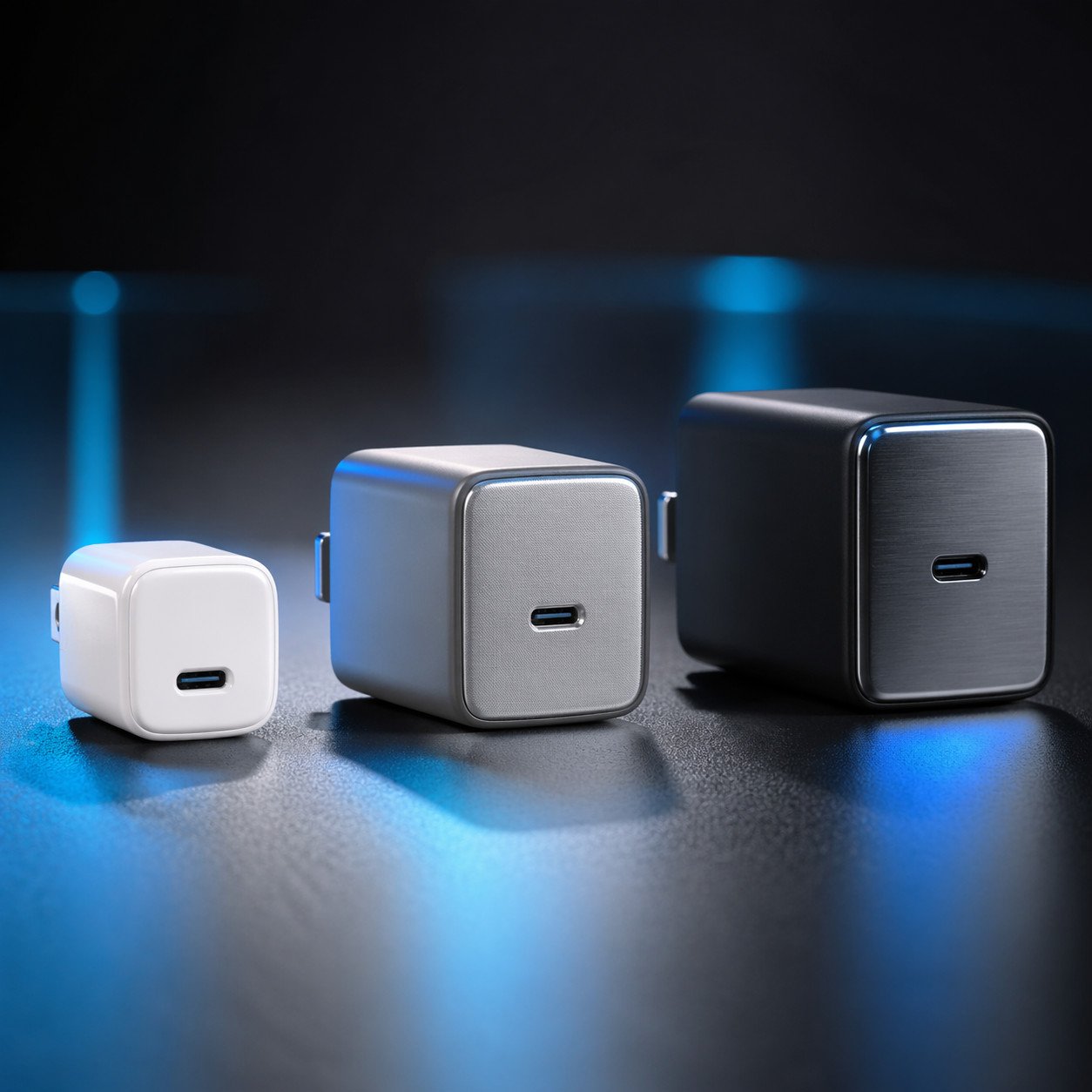
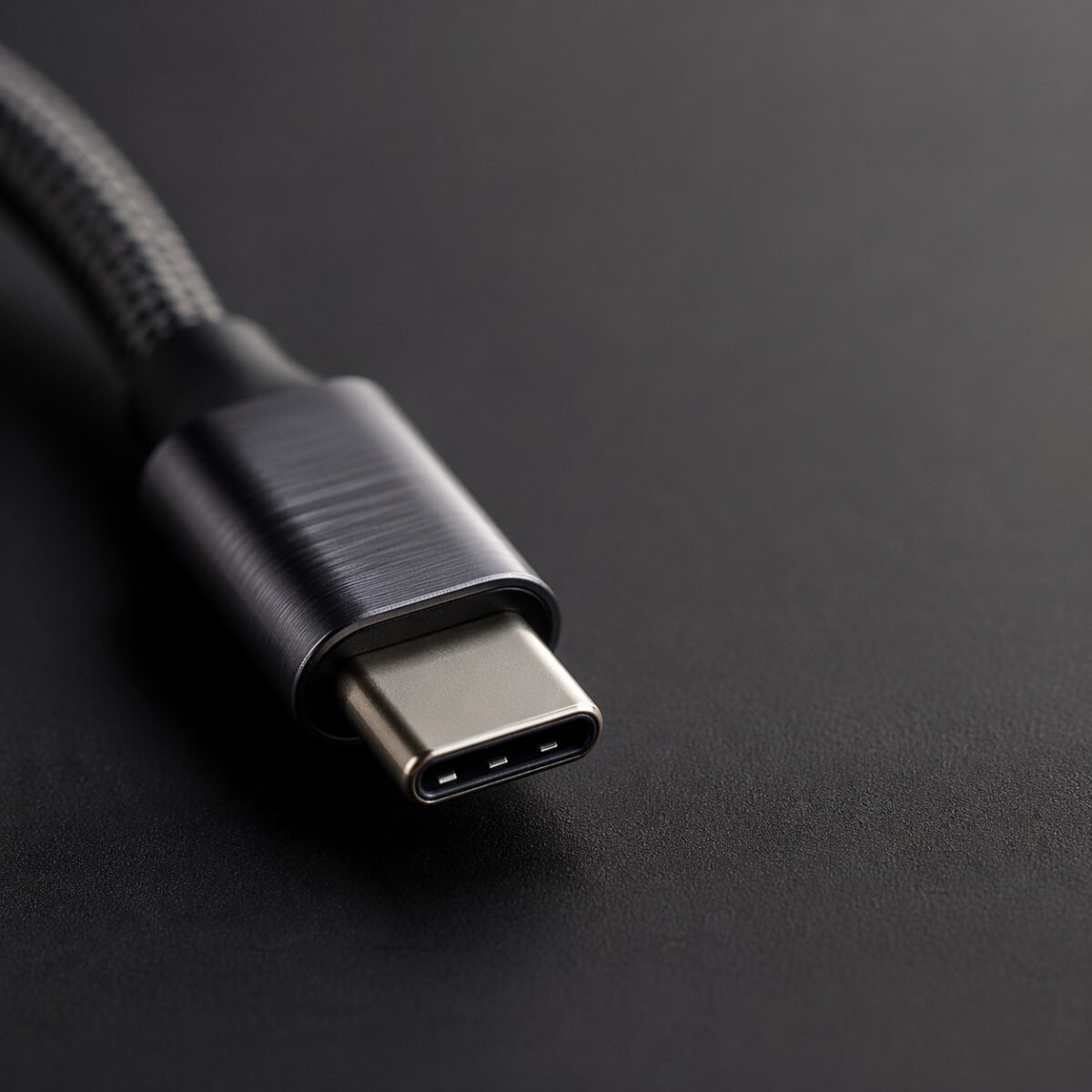
From left to right: PD 2.0 (100W fixed), PD 3.0 (100W + PPS), and PD 3.1 (240W EPR)—each generation expanding USB-C charging capabilities.
Entendimento USB PD version differences is foundational to profitable B2B sourcing decisions. For importers and distributors evaluating chargers and cables, the distinctions between PD 2.0, PD 3.0, and PD 3.1 directly determine product positioning. They also define target market segments. And they create competitive differentiation. This comprehensive guide breaks down every technical distinction. It covers power ceilings and voltage regulation. It explains cable requirements and real-world performance. And it provides actionable procurement frameworks for global markets.
Índice
- What is USB Power Delivery? Understanding USB PD Version Differences
- USB PD 2.0: The Foundation (2014)
- USB PD 3.0: Smarter Charging with PPS (2015-2017)
- USB PD 3.1: Breaking the 100W Barrier (2021)
- PPS vs AVS: Understanding Variable Voltage Technologies
- SPR vs EPR: Standard and Extended Power Ranges
- Complete Feature Comparison: USB PD Version Differences Table
- Real-World Charging Performance by Device Category
- Cable Requirements: Not All USB-C Cables Support 240W
- B2B Sourcing Guide: Procurement by Product Type
- How to Verify PD Version and PPS/EPR Support
- Future Outlook: PD 3.2 and Industry Trends
- Resumo e suporte de fornecimento da WJWSY
1. What is USB Power Delivery? Understanding USB PD Version Differences
USB Power Delivery (USB PD) is a universal fast-charging protocol. It was developed by the USB Implementers Forum (USB-IF). It operates exclusively over the USB Type-C connector. Unlike older standards limited to 7.5W, USB PD supports flexible voltage and current combinations. These are negotiated dynamically between charger and device.
1.1 Core Architectural Principles of USB PD
- Higher power output scaling: From 0.5W for tiny accessories up to 240W for high-performance laptops
- Bidirectional power flow capability: Devices can dynamically swap roles—a laptop can charge a smartphone
- Universal compatibility across device categories: One cable charges phones, tablets, laptops, and monitors
- Dynamic power negotiation via CC pin: The Configuration Channel carries USB PD communication
- Optional programmable voltage technologies: PPS and AVS enable real-time voltage adjustment
1.2 Why PD Version Matters for B2B Procurement Decisions
For importers and distributors, USB PD version differences directly determine product positioning. They also define target market segments. And they create competitive differentiation. Furthermore, the version number alone is insufficient. Optional features like PPS must be explicitly confirmed. EPR capability must be verified through testing. For a deeper understanding of cable specifications that support these power levels, refer to our Guia de cabos USB-C para USB-C.
PD 2.0 Market Position
Legacy technology found in budget chargers. It lacks PPS capability. It cannot support optimal fast charging on modern Android flagships.
PD 3.0 Market Position
Current mainstream standard. PD 3.0 with PPS is essential for Android fast charging. It delivers superior efficiency across 18W-100W.
PD 3.1 Market Position
Premium tier enabling 140W-240W charging. It serves gaming laptops and workstations. It commands higher price points.
2. USB PD 2.0: The Foundation (2014)
First and foremost, to understand USB PD version differences, we must begin with the foundation. PD 2.0 established this foundation in 2014. Introduced in August of that year alongside USB Type-C, it represented the first major leap forward for USB charging. Prior to PD 2.0, USB charging was limited to 5V at up to 1.5A. That is only 7.5W. This was sufficient for smartphones. But it was wholly inadequate for tablets or laptops. For a broader comparison of USB interfaces, see our Guia de fornecimento B2B: USB-A vs USB-C.
2.1 Technical Specifications and Capabilities
- Fornecimento de potência máxima: 100W achieved through 20V at 5A configuration
- Fixed Voltage Profiles: Four predetermined levels—5V, 9V, 15V, and 20V
- Maximum Current: Up to 5A, contingent on cable capabilities
- Connector Standardization: Established USB Type-C as the exclusive interface
- Power Role Swap: Devices can switch between power source and sink roles
At the time of release, 100W charging was revolutionary. It enabled laptops to charge via USB-C. This replaced bulky proprietary barrel connectors.
2.2 Limitations and Shortcomings of PD 2.0
Despite its groundbreaking power ceiling, PD 2.0 had significant limitations. The most consequential was fixed power profiles. Devices could only request 5V, 9V, 15V, or 20V. A laptop needing 12V had no such option. It was forced to use 15V. This caused conversion losses and heat. Additionally, PD 2.0 lacked security features. There was no device authentication.
2.3 Current B2B Relevance and Inventory Considerations
As of 2025-2026, PD 2.0 products are legacy inventory. They lack PPS support. Consequently, they cannot deliver optimal fast charging on Samsung or Google Pixel devices.
3. USB PD 3.0: Smarter Charging with PPS (2015-2017)
Following the foundation laid by PD 2.0, USB PD 3.0 was initially introduced in November 2015. However, the transformative Programmable Power Supply (PPS) feature did not arrive until February 2017. While the maximum power ceiling remained at 100W, PD 3.0 fundamentally changed how power is delivered. It shifted from static voltage to dynamic adjustment. This adapts to the battery's changing needs throughout the charge cycle.
3.1 Key Enhancements Relative to PD 2.0
- Fonte de alimentação programável (PPS): Continuous voltage adjustment in 20mV increments within 3.3V to 21V
- Enhanced Battery Status Reporting: More detailed communication of battery characteristics
- Digital Certificates and Authentication: Cryptographic device identity verification
- Firmware Update Capability: Devices can receive updates via PD channel
- Extended Status Messages: Richer information exchange about capabilities
Importantly, PD 3.0 maintained full backward compatibility with PD 2.0 devices.
3.2 How PPS Transforms Charging Efficiency
PPS enables a fundamentally different charging paradigm. Rather than the device converting fixed voltage internally, this technology allows the charger itself to deliver precisely what the battery needs. Consider a smartphone at 40% charge. Under PD 2.0, the charger delivers 9V. The phone converts this down to roughly 4.2V internally. This wastes energy as heat. It also slows charging to manage thermal limits. Under PD 3.0 with PPS, the charger directly outputs 8.8V. This dramatically reduces conversion losses. As a result, the device stays cooler and charges faster.
- Faster overall charging speeds: Optimal voltage throughout the cycle
- Reduced heat generation: Precise voltage matching minimizes waste heat
- Extended battery lifespan: Gentler profile reduces electrochemical stress
3.3 PPS Adoption Across Major Device Ecosystems
Samsung's 45W Super Fast Charging relies on PPS. Google Pixel devices use PPS for optimal speeds. Xiaomi, Oppo, and Motorola have also adopted PPS. Apple's iPhones benefit from PPS but do not require it for maximum speeds.
4. USB PD 3.1: Breaking the 100W Barrier (2021)
Most significantly, USB PD 3.1 was released in May 2021. It represents the largest power upgrade in USB Power Delivery history. The maximum output expanded from 100W to 240W. This opened USB-C charging to entirely new device categories. Previously, these devices were impossible to power over USB. To see what premium cable construction looks like internally, check out our Relatório de desmontagem do cabo Thunderbolt 3.
4.1 The SPR and EPR Architecture
- Faixa de potência padrão (SPR): Maintains full backward compatibility with PD 3.0, up to 100W
- Extended Power Range (EPR): Adds 28V, 36V, and 48V levels, enabling up to 240W
- Adjustable Voltage Supply (AVS): Variable voltage in 100mV steps for EPR range
EPR mode requires certified cables and chargers. These must have enhanced isolation. And they need specific E-Marker programming.
4.2 Device Categories Enabled by 240W EPR
- High-performance gaming laptops: 16-inch models requiring 140W-240W
- Mobile workstations: Professional laptops with discrete GPUs
- 4K and 8K monitors: Displays with integrated USB hubs
- Premium docking stations: Multi-port docks with full power delivery
- Professional equipment: Power tools, 3D printers, and e-bikes
4.3 EPR Cable Requirements and Certification
Standard USB-C cables are not certified for EPR. Even 100W-rated cables will prevent EPR mode. Specifically, EPR-certified cables require E-Marker chips programmed with 48V/5A capability. They also need enhanced electrical isolation.
USB PD evolution: PD 2.0 (2014) established the 100W foundation; PD 3.0 (2017) added PPS; PD 3.1 (2021) expanded to 240W.
5. PPS vs AVS: Understanding Variable Voltage Technologies
While both PPS and AVS enable variable voltage operation, they serve different power ranges. Therefore, understanding their distinctions is essential. PPS stands for Programmable Power Supply. AVS stands for Adjustable Voltage Supply. Each targets specific device categories and power levels. For more context on why Type-C has become the universal standard, read our Guia de vantagens do cabo USB Type-C.
PPS (Programmable Power Supply)
- Introduced with: PD 3.0 (2017)
- Voltage range: 3.3V to 21V
- Adjustment precision: 20mV steps
- Primary applications: Smartphones and tablets
AVS (Adjustable Voltage Supply)
- Introduced with: PD 3.1 (2021)
- Voltage range: 15V to 48V
- Adjustment precision: 100mV steps
- Primary applications: Gaming laptops and workstations
5.1 The Technical Distinction: Why Different Step Sizes?
PPS uses 20mV steps for precise battery charging at lower voltages. AVS uses 100mV steps for high-voltage operation. Both provide proportionally similar precision for their respective domains.
5.2 Practical Charging Implications by Device Type
| Categoria do dispositivo | Required Technology | Without This Technology |
|---|---|---|
| Samsung Galaxy S24 Ultra | PPS | Charges at 15W-18W instead of 45W |
| Google Pixel 9 Pro | PPS | Fails to achieve rated 27W-30W |
| MacBook Pro 16" (M3 Max) | PD 3.1 EPR | Limited to 100W charging |
6. SPR vs EPR: Standard and Extended Power Ranges Explained
In addition to the power increase, PD 3.1 introduced a fundamental architectural change. It divides power delivery into two distinct ranges.
| Characteristic | SPR (Standard Power Range) | EPR (Extended Power Range) |
|---|---|---|
| Maximum power | 100W (20V at 5A) | 240W (48V at 5A) |
| Fixed voltage levels | 5V, 9V, 15V, 20V | SPR levels plus 28V, 36V, 48V |
| Cable requirement | USB-C padrão | EPR-certified cable |
| Aplicações típicas | Phones, tablets, ultrabooks | Gaming laptops, workstations |
6.1 How Mode Negotiation Works
Initial negotiation occurs in SPR mode. If both charger and device support EPR and an EPR cable is detected, the system transitions to EPR mode. Otherwise, it remains in SPR mode with 100W maximum.
6.2 The Cable Bottleneck Problem
A common frustration is the "cable bottleneck." A customer buys a 140W charger. They use their existing premium 100W cable. Charging maxes out at 100W. The cable lacks EPR-specific E-Marker programming. Consequently, the system cannot enter EPR mode.
7. Complete Feature Comparison: USB PD Version Differences Table
| Recurso | PD 2.0 | PD 3.0 | PD 3.1 |
|---|---|---|---|
| Release year | 2014 | 2015 (PPS: 2017) | 2021 |
| Maximum power | 100W | 100W | 240W (EPR) |
| Fixed voltage levels | 5V, 9V, 15V, 20V | Same as 2.0 | SPR: same; EPR: +28V, 36V, 48V |
| Variable voltage | None | PPS: 3.3-21V, 20mV steps | PPS + AVS: 15-48V, 100mV steps |
| Device authentication | Básico | Digital certificates | Inherits 3.0 + EPR cable auth |
| Current market position | Legacy/budget | Mainstream volume | Premium/professional |
| B2B recommendation | Phase Out | Core Inventory | Premium SKU |
8. Real-World Charging Performance by Device Category
Although specifications provide the foundation, actual performance varies significantly. Thermal constraints matter. Cable quality matters. Device implementation matters.
8.1 Smartphone Fast Charging Performance
| Dispositivo | PD 2.0 Charger | PD 3.0 with PPS | 0-50% Time (PPS) |
|---|---|---|---|
| Samsung Galaxy S24 Ultra | 15W (slow) | 45W Super Fast | ~20 minutes |
| Google Pixel 9 Pro | 15W | 27W-30W | ~30 minutes |
| iPhone 16 Pro Max | 20W | 20W-27W | ~30 minutes |
8.2 Laptop Charging Performance
| Dispositivo | Maximum USB-C Power | Required PD Version |
|---|---|---|
| MacBook Air 15" (M3) | 70W | PD 3.0 SPR |
| MacBook Pro 14" (M3 Pro) | 96W | PD 3.0 SPR |
| MacBook Pro 16" (M3 Max) | 140W | PD 3.1 EPR |
| ASUS ROG Zephyrus G16 | 240W | PD 3.1 EPR |
9. Cable Requirements: Not All USB-C Cables Support 240W
Furthermore, a comprehensive understanding of cable ratings is essential. Specifically, the cable actively participates in power negotiation. It imposes hard limits on maximum power delivery. For B2B buyers, sourcing EPR-certified USB-C cables with verified E-Marker programming is critical to ensuring compatibility with PD 3.1 chargers. For a comparison of connector types including Apple's proprietary interface, see our Lightning connector differences guide.
9.1 USB-C Cable Power Rating Hierarchy
| Tipo de cabo | Marcador eletrônico | Max Current | Max Power | EPR Capable? |
|---|---|---|---|---|
| Basic USB-C (charge-only) | None | 3A | 60W | Não |
| USB-C 5A (100W rated) | Obrigatório | 5A | 100W | Não |
| USB-C EPR (240W rated) | Required (EPR) | 5A | 240W | Yes |
9.2 Identifying EPR-Capable Cables
EPR-certified cables are marketed with explicit 240W claims. Physical inspection reveals "240W" markings. However, the definitive method is reading E-Marker data with a USB-C power meter.
10. B2B Sourcing Guide: Procurement by Product Type
With a clear understanding of USB PD version differences established, we can now turn to procurement. For guidance on navigating certification requirements, refer to our Guia de certificação USB-IF vs MFi. When sourcing multi-port GaN PD chargers, verify that each port supports PPS independently for optimal Android fast charging performance. Based on this analysis, the following recommendations provide a framework. They cover charger and cable categories. They also address different market segments.
10.1 Charger Sourcing Recommendations
| Charger Category | Target PD Version | Key Requirements |
|---|---|---|
| 20W-30W Single Port | PD 3.0 with PPS | PPS support verified |
| 45W-65W Single Port | PD 3.0 with PPS | PPS for Samsung 45W |
| 65W-100W Multi-Port GaN | PD 3.0 PPS | Dynamic power allocation |
| 140W-240W | PD 3.1 EPR | EPR certification; included EPR cable |
10.2 B2B Verification Checklist
- Verify PPS support with USB-C power meter
- Read E-Marker data for all 5A and EPR cables
- Check USB-IF certification status
- Test with actual devices
- Request batch consistency documentation
10.3 Recommended Inventory Mix (2025-2026)
- PD 3.0 with verified PPS: 65-70% of charger inventory
- PD 3.1 EPR (140W-240W): 15-20% of charger inventory
- Basic/PD 2.0 legacy: 5-10% (budget only)
- EPR-certified cables: Align with EPR charger quantities
For OEM and wholesale manufacturing of USB-C cables that meet these specifications, visit our USB-C data cable manufacturer page. To explore bulk USB-C charger inventory covering PD 3.0 PPS and PD 3.1 EPR options, browse our wholesale charger catalog.
11. Future Outlook: PD 3.2 and Industry Trends
Looking ahead, USB PD 3.2 was released in October 2024. It introduces AVS capability for the Standard Power Range. This bridges the gap between PPS and AVS. The adoption of compact high-power GaN chargers continues to accelerate, enabling smaller form factors for 100W+ multi-port designs that were previously impossible with silicon-based semiconductors.
11.1 Key Industry Trends
- GaN semiconductor adoption: Smaller, more efficient high-power chargers
- EPR ecosystem expansion: Gaming laptops adopting PD 3.1 EPR as standard
- EU Common Charger Directive alignment: USB PD as harmonized fast-charging standard
- Beyond consumer electronics: Power tools and industrial equipment adopting USB PD
12. Summary: USB PD Version Selection for B2B Buyers
Esse USB PD version differences guide has covered every dimension. We examined power ceilings. We explored voltage regulation. We detailed cable requirements. And we analyzed real-world performance. In conclusion, the following key takeaways should guide your procurement strategy.
Core Technical Distinctions
- PD 2.0 (2014): 100W fixed profiles. Legacy technology lacking PPS. Avoid for new inventory.
- PD 3.0 (2015-2017): 100W with optional PPS. Essential for Android fast charging. Core inventory.
- PD 3.1 (2021): 240W with EPR. Required for gaming laptops. Premium differentiation.
Critical Verification Requirements
- "PD 3.0" does not guarantee PPS—verify through testing
- "PD 3.1" does not guarantee EPR—many products are SPR-only
- EPR mode requires EPR-certified cables
- USB-IF certification provides independent validation
Need USB PD Chargers and Cables with Verified Specifications?
WJWSY provides OEM and wholesale manufacturing for USB-C chargers, power banks, and cables supporting PD 3.0 PPS and PD 3.1 EPR specifications. All products undergo verification testing for claimed capabilities, with USB-IF certification documentation available.
Explore as capacidades de fabricação Request Samples and Specifications
For official USB Power Delivery specifications, visit the USB-IF USB Power Delivery page. For EU regulatory information, refer to the Programa de Conformidade USB-IF da UE.
For related technical guides, read our USB-C to USB-C cable complete guide ou nosso Guia de vantagens do cabo USB Type-C. To understand our manufacturing standards, see our quality assurance and certification página.