

USB-IF Certification vs. MFi Certification: How Should European Importers Choose?
USB-IF Certification vs. MFi: Which One Matters for European Importers?
With the EU Common Charger Directive in full effect and Apple's transition to USB-C, European importers face a critical sourcing decision. Should you pursue USB-IF certification, MFi certification, or both? This comprehensive guide breaks down the costs, requirements, and strategic implications of each certification path.

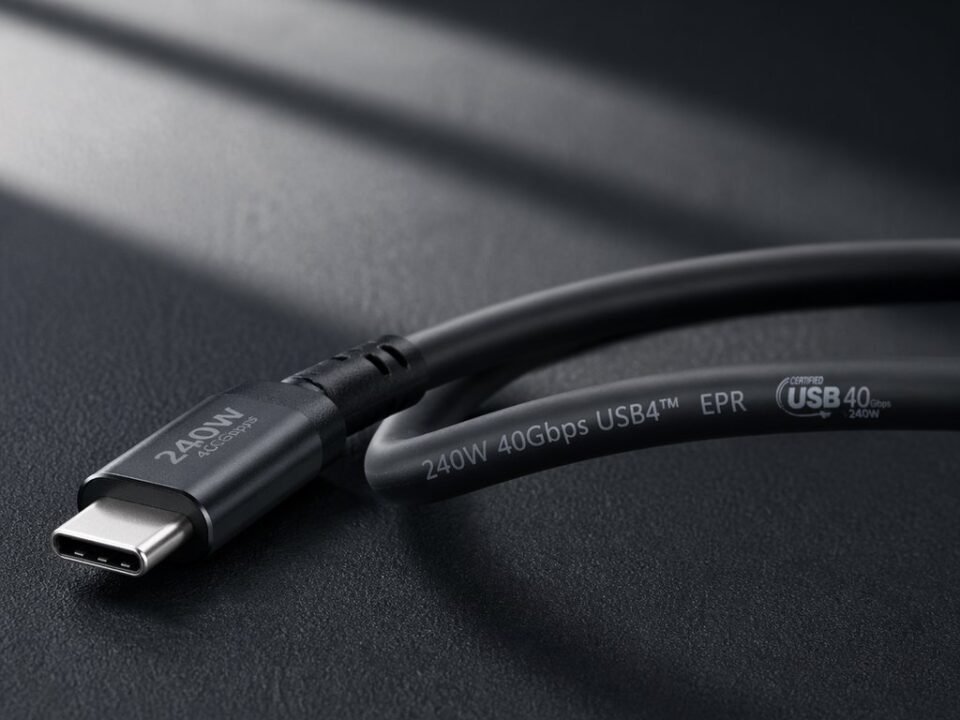
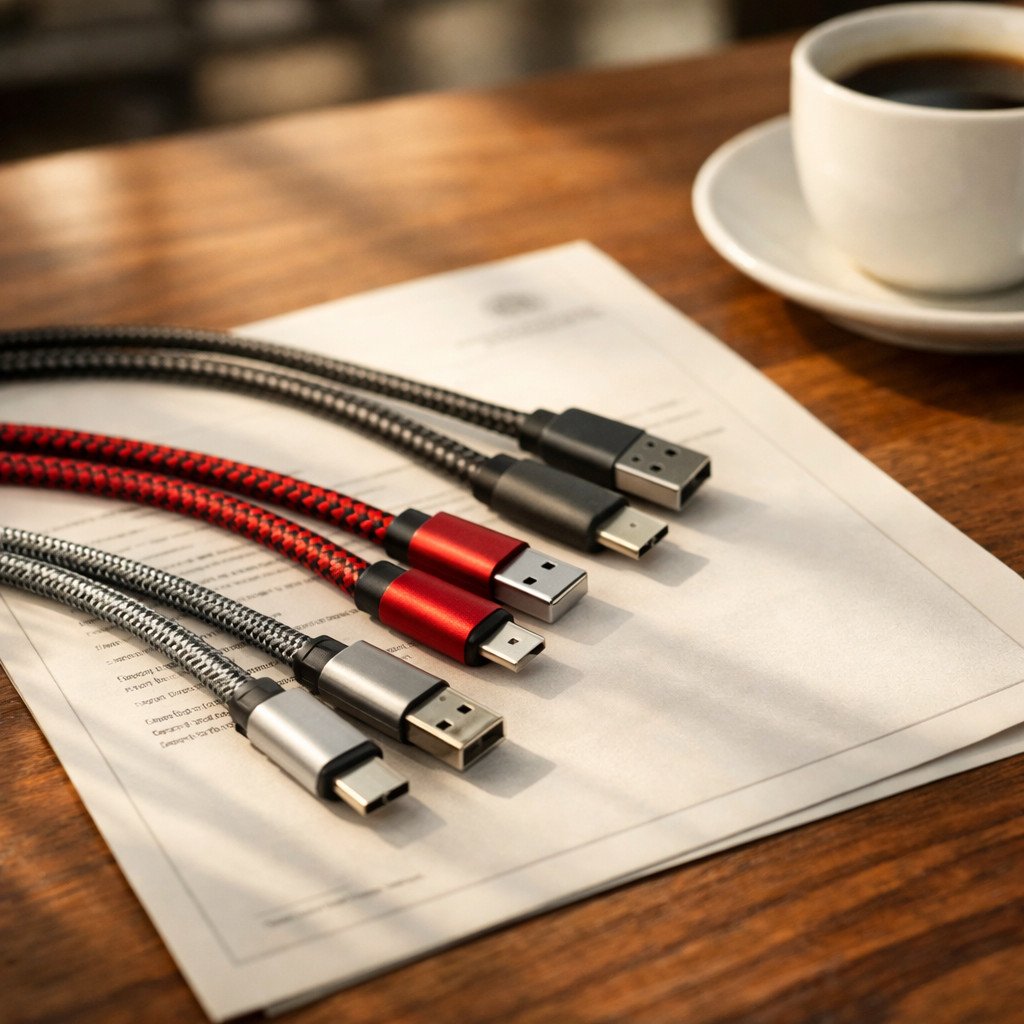
USB-IF vs MFi: Two certification paths with distinct costs, requirements, and market implications for European importers.
For European importers of USB-C cables and Apple accessories, navigating the certification landscape has never been more complex—or more critical. The EU's Common Charger Directive (Radio Equipment Directive 2022/2380) now mandates USB-C as the standard charging port for most portable electronics, with compliance deadlines already in effect for smartphones and approaching in April 2026 for laptops. Meanwhile, Apple's iPhone 15 and 16 series have adopted USB-C connectors, yet the company maintains its MFi (Made for iPhone/iPad) certification program for third-party accessories. Understanding the relationship between USB-IF certification and MFi certification—and how each aligns with European regulatory requirements—is essential for making profitable, compliant sourcing decisions. This guide provides the technical, regulatory, and commercial clarity European importers need.
Table of Contents
- The European Regulatory Landscape
- USB-IF Certification: Deep Dive
- MFi Certification: Deep Dive
- Head-to-Head Comparison
- The EU Conformity Program
- Decision Matrix: Which Certification?
- Certification ROI Analysis
- Common Myths and Pitfalls
- Step-by-Step Roadmap
- Summary and WJWSY Support
1. The European Regulatory Landscape: What Importers Must Know
Before comparing USB-IF and MFi certifications, European importers must understand the foundational regulatory framework that governs all electronics entering the EU market. There are three distinct layers of requirements, each with different legal weight and commercial implications.
1.1 CE Marking: The Non-Negotiable Baseline
CE marking is mandatory for all electronic products sold in the European Union. It signifies compliance with EU safety, health, and environmental protection requirements. For USB cables and accessories, CE certification involves EMC Directive compliance, LVD Directive safety testing (for products above 50-75V), and RoHS Directive hazardous substances verification.
CE certification typically takes 5-7 working days for non-wireless products, with costs varying based on product complexity. Without CE marking, products cannot legally clear EU customs or be sold in the European market.
1.2 The EU Common Charger Directive: Key Deadlines

EU Common Charger Directive timeline: December 2024 for smartphones and portable devices; April 2026 for laptops.
The EU's Common Charger Directive represents a seismic shift for cable importers:
- December 28, 2024: All smartphones, tablets, cameras, headphones, portable speakers, and similar devices sold in the EU must use USB-C charging ports
- April 28, 2026: Laptops and notebooks must comply with USB-C charging requirements
- Technical foundation: The directive explicitly references IEC 62680-1-2 (USB Power Delivery) and IEC 62680-1-3 (USB Type-C) as the mandatory interoperability standards
Critically, these IEC standards are derived directly from USB-IF specifications. This means that while USB-IF certification remains technically "voluntary," compliance with EU law effectively requires adherence to USB-IF technical standards.
1.3 The Certification Hierarchy for European Importers
Bottom Line for Importers: CE marking is legally mandatory. USB-IF certification (or EU Conformity) is the most efficient way to demonstrate compliance with the Common Charger Directive's technical requirements. MFi certification addresses a specific market segment (Apple users) but does not substitute for CE or USB-IF compliance.
2. USB-IF Certification: The Universal Standard for USB Devices
USB-IF (USB Implementers Forum) certification is the global standard for ensuring USB products meet technical specifications for interoperability, performance, and safety. For European importers, understanding the nuances of this certification—including costs, processes, and the critical EU Conformity variant—is essential.
2.1 What USB-IF Certification Actually Verifies
USB-IF certification is not a single test but a comprehensive evaluation covering electrical performance, protocol compliance, interoperability across diverse devices, and connector mechanical compliance (10,000+ insertion cycles). Passing certification grants the product a unique TID (Test ID) number and listing in the public USB-IF Integrators List—a key reference for B2B buyers verifying supplier claims.
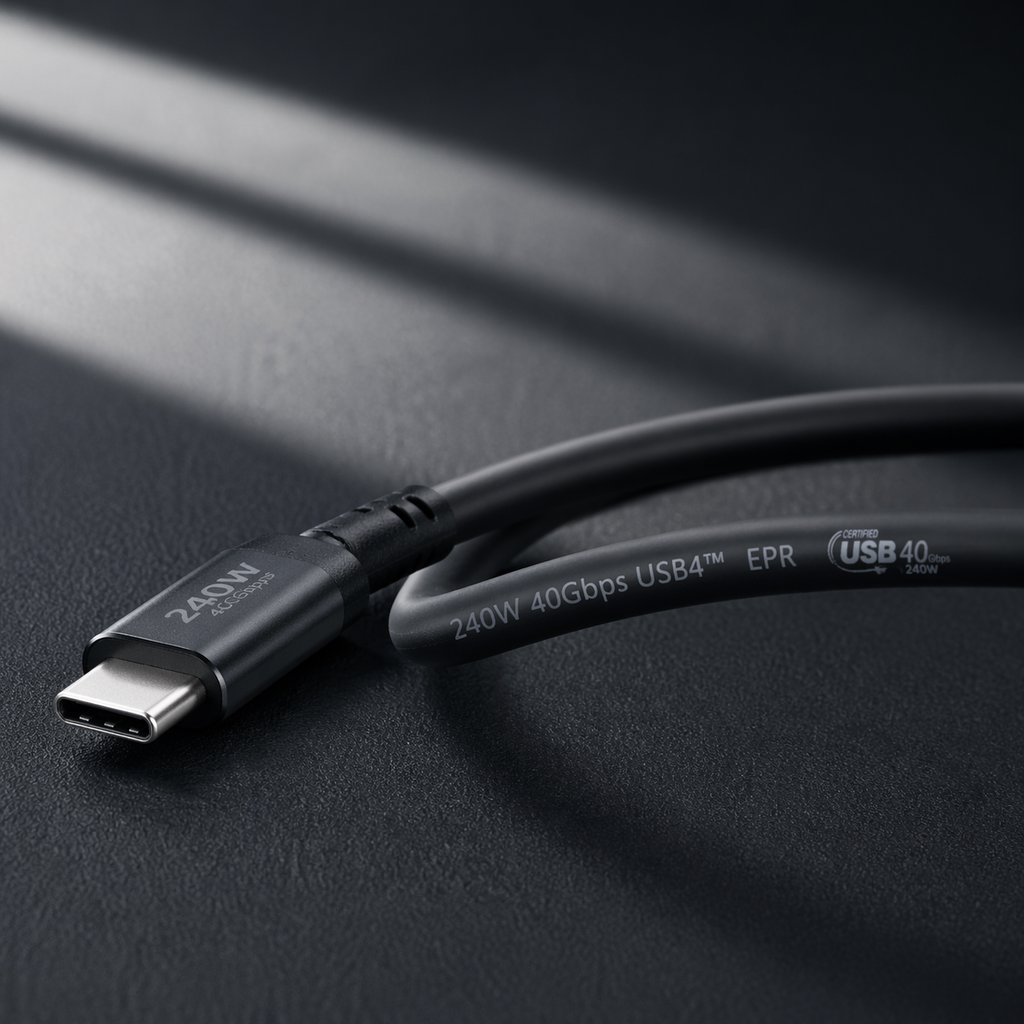
USB-IF certification testing at an authorized independent test laboratory (ITL) ensures compliance with USB specifications.
2.2 USB-IF Certification Costs and Process (2026 Data)
| Cost Component | Amount | Notes |
|---|---|---|
| USB-IF Membership (Annual) | $5,000 USD | Full membership includes VID and logo usage rights |
| Testing Fees (Standard Cable) | $2,300 - $3,400 USD | Approximately 1.6万-2.35万 RMB |
| Testing Fees (PD/Complex Products) | $2,900 - $7,200 USD | Higher for products with advanced features |
| Re-testing (if failure) | 50-70% of initial fee | Required for hardware/firmware changes |
| Timeline | 1-4 weeks | Pure technical review, no factory audit required |
Important distinction: The $5,000 annual membership fee covers unlimited product certifications for the member company. For importers sourcing multiple USB-C product SKUs, this fixed cost becomes highly economical when amortized across a product portfolio.
2.3 Why USB-IF Certification Matters for European Importers
- Regulatory compliance shortcut: USB-IF certification automatically satisfies the technical requirements of the EU Common Charger Directive
- Retailer requirements: Major European electronics retailers (MediaMarkt, Fnac, Darty) increasingly require USB-IF certification for listed USB-C accessories
- B2B buyer confidence: Corporate IT departments and institutional buyers use the USB-IF Integrators List to validate supplier claims
- Reduced return rates: Certified cables demonstrate measurably lower compatibility-related returns (typically 2-4% vs. 8-12% for uncertified)
3. MFi Certification: Apple's Gateway to a Premium Market Segment
MFi (Made for iPhone/iPad/iPod) is Apple's proprietary licensing and certification program for third-party accessories. Despite Apple's transition to USB-C connectors on iPhone 15 and 16, the MFi program remains fully operational and continues to enforce strict compatibility requirements for accessories connecting to Apple devices.
3.1 MFi in the USB-C Era: What Changed and What Didn't
Many importers incorrectly assume that Apple's adoption of USB-C eliminated the need for MFi certification. This is false. Key facts about MFi in 2026:
- Connector change, certification unchanged: While the physical connector changed from Lightning to USB-C, Apple still requires MFi certification for accessories seeking full compatibility with iPhone and iPad
- Authentication continues: MFi-certified USB-C accessories include an Apple-authorized authentication chip that communicates with the connected Apple device
- Non-certified consequences: Uncertified USB-C accessories may trigger "This accessory may not be supported" warnings, experience restricted charging speeds, or fail to function entirely
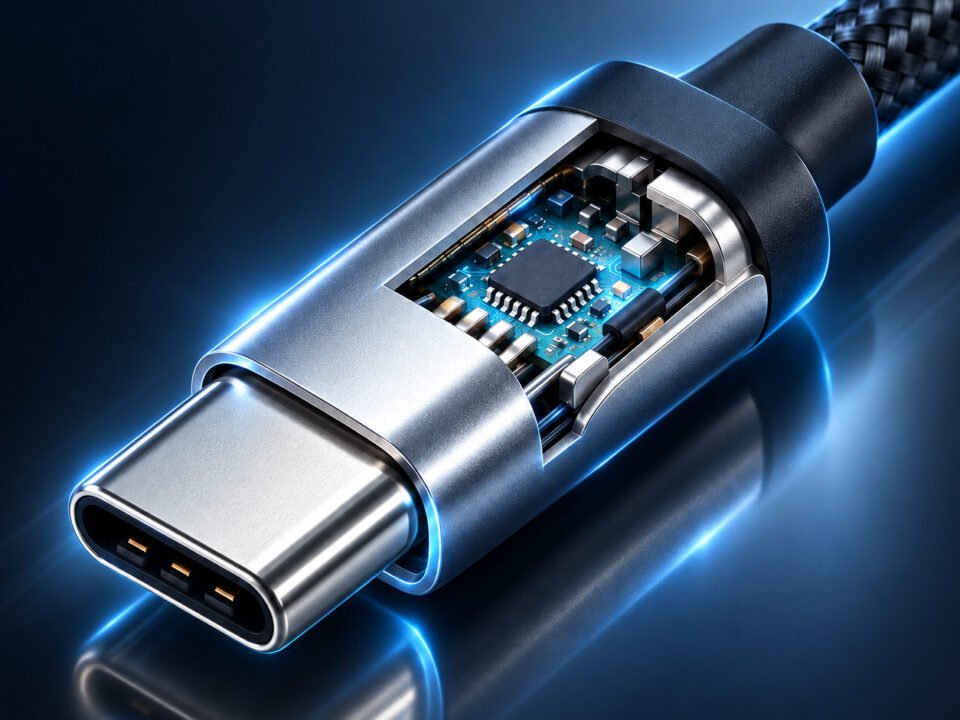
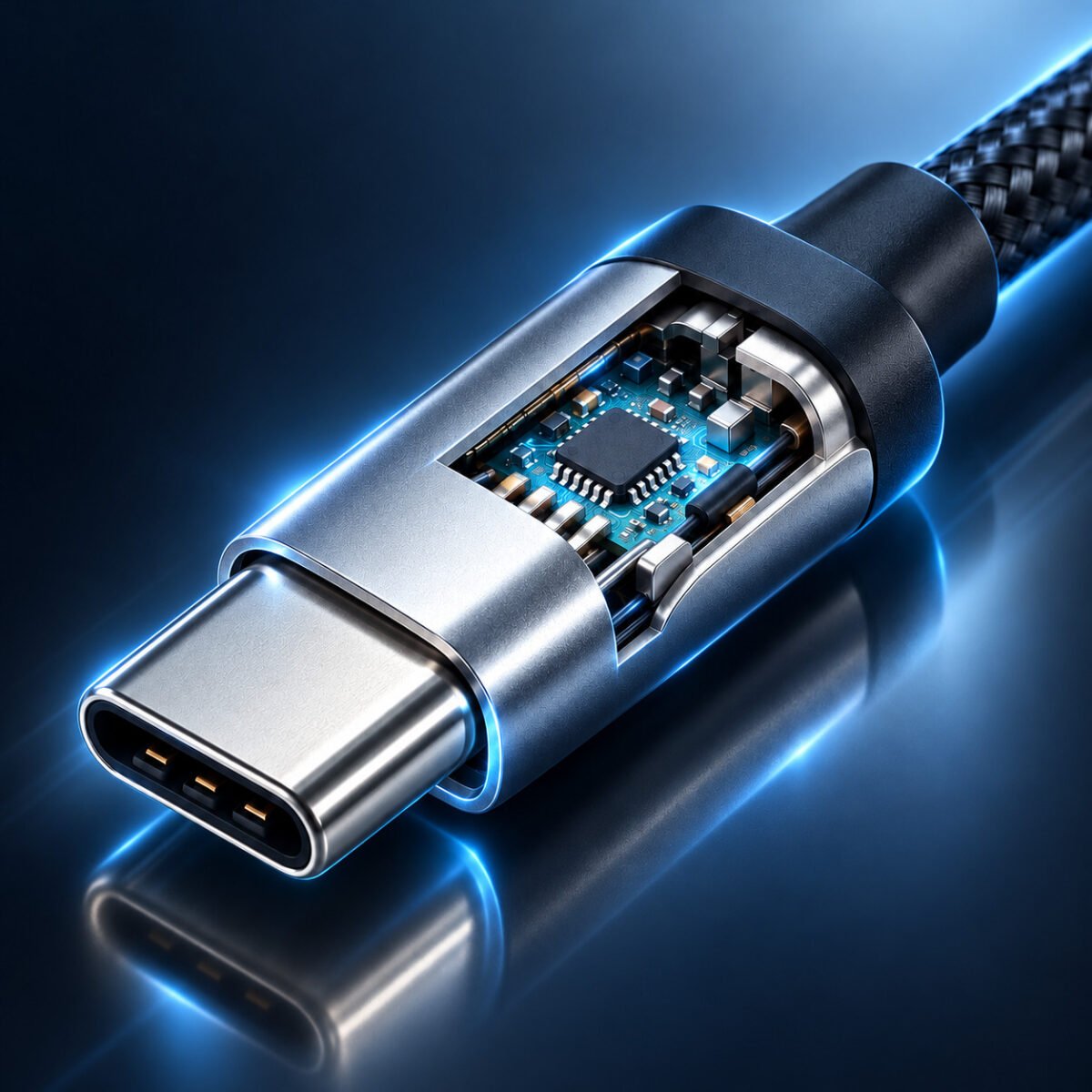
MFi certified USB-C cable with "Made for iPhone" badge—authentication chip inside ensures full Apple device compatibility.
3.2 MFi Certification Costs and Process
| Cost Component | Amount | Notes |
|---|---|---|
| MFi Annual Fee | $99 USD/year | Significantly lower than USB-IF membership |
| Product Testing Fee | ~$600 USD per submission | Per product model |
| Authentication Chip | ~$3 USD per unit + 17% VAT | Ongoing per-unit cost—major factor in COGS |
| Factory Audit | Varies (several thousand USD) | Apple conducts on-site manufacturing facility inspection |
| Timeline | 3-6 months | Includes company qualification, factory audit, product testing |
| Company Approval Rate | ~2% | Stringent qualification process—most applicants rejected |
3.3 Why MFi Certification Still Matters for European Importers
- Premium market access: Apple users represent approximately 30-35% of the European smartphone market and consistently spend more on accessories
- Price premium potential: MFi-certified accessories command 30-50% higher retail prices than equivalent non-certified products
- Channel requirements: Apple Authorized Resellers and major retailers' Apple sections require MFi certification
- Consumer trust: The "Made for iPhone" badge carries significant brand equity with Apple's loyal customer base
4. Head-to-Head Comparison: USB-IF Certification vs. MFi Certification
Now that we've examined each certification individually, let's directly compare them across the dimensions that matter most to European importers.

Cost structure comparison: USB-IF features high fixed costs with zero per-unit fees; MFi features low fixed costs with significant per-unit chip expenses.
| Comparison Dimension | USB-IF Certification | MFi Certification |
|---|---|---|
| Nature | Voluntary industry standard (de facto required for EU compliance) | Mandatory for full Apple device compatibility |
| Annual Fee | $5,000 USD (full member) | $99 USD |
| Testing Cost (per product) | $2,300 - $3,400 USD | ~$600 USD + factory audit costs |
| Per-Unit Cost | None (certification only) | ~$3.51 per unit (authentication chip) |
| Certification Timeline | 1-4 weeks | 3-6 months (includes factory audit) |
| Factory Audit Required | No | Yes (Apple on-site inspection) |
| Approval Difficulty | Moderate (technical compliance) | Extremely high (~2% company approval rate) |
| Logo/Mark Usage | USB-IF certified logos (upon full compliance) | MFi badge ("Made for iPhone/iPad") |
| EU Regulatory Weight | Directly referenced in Common Charger Directive (via IEC 62680) | No regulatory weight; commercial only |
Key Strategic Insight: Fixed vs. Variable Cost Structure
USB-IF: High Fixed, Zero Variable
$5,000 annual + $3,000 testing = ~$8,000 upfront. Zero additional per-unit cost. Economical for high-volume products.
MFi: Low Fixed, High Variable
$99 annual + $600 testing + $3.51 per unit. For 100,000 units = $351,000+ total cost. Significant ongoing expense.
5. The EU Conformity Program: A Critical Distinction for Importers
Many importers remain unaware of the USB-IF's EU Conformity Program—a specialized certification track designed specifically for European market compliance. Understanding this option can significantly reduce certification costs while maintaining full regulatory compliance.
5.1 What the EU Conformity Program Tests
The EU Conformity Program focuses exclusively on the requirements mandated by EU legislation:
- USB Type-C Functional Test Specification: Ensures proper connector behavior and orientation detection
- USB Power Delivery Compliance CTS: Verifies correct PD protocol implementation and power negotiation
- USB Type-C and USB PD Interoperability Testing: Confirms compatibility across representative devices
Notably excluded: High-speed data testing (USB 3.2, USB4 speeds) is not required for EU Conformity unless the product makes specific data speed claims.
5.2 Important Limitations of EU Conformity
6. Decision Matrix: Which Certification Path for Your Product?
With the technical details established, let's apply a practical decision framework based on product type and target market.
6.1 By Product Category
| Product Type | Essential Certifications | Recommended Certifications |
|---|---|---|
| Basic USB-C Charging Cable (60W-100W, USB 2.0 data) | CE + RoHS | USB-IF EU Conformity |
| Premium USB-C Data Cable (10Gbps+, 100W-240W) | CE + RoHS | Full USB-IF Compliance |
| Thunderbolt 4 Cable | CE + RoHS | Full USB-IF + Thunderbolt Certification |
| Apple-Specific USB-C Cable | CE + RoHS + MFi | USB-IF EU Conformity (optional) |
6.2 By Market Positioning
Entry-Level / White Label
Priority: CE + RoHS
Strategy: Minimize upfront certification cost; leverage supplier certifications
Cost Priority
Mid-Market / Branded
Priority: CE + USB-IF EU Conformity
Strategy: Balance investment with market credibility
Balanced Approach
Premium / OEM Export
Priority: CE + Full USB-IF + MFi
Strategy: Complete certification portfolio for premium channels
Full Coverage
7. Certification ROI: Cost-Benefit Analysis for European Importers
Certification decisions are ultimately financial decisions. This section quantifies the return on investment for different certification strategies.
7.1 USB-IF Certification ROI Calculation
Scenario: Importer selling 50,000 premium 10Gbps USB-C cables annually across 5 SKUs
- Investment: $5,000 membership + ($3,000 × 5 SKUs) = $20,000 first-year certification cost
- Per-unit cost: $20,000 ÷ 50,000 = $0.40 per cable
- Price premium potential: Certified cables command 10-20% higher wholesale prices—$0.40-$0.80 additional revenue per unit
- Return rate reduction: Reducing returns from 8% to 3% saves 2,500 returns annually; at $3.00 per return, that's $7,500 in direct savings
- Net ROI: Positive within first year; highly positive in subsequent years
7.2 MFi Certification ROI Calculation
Scenario: Importer selling 20,000 MFi-certified USB-C cables annually targeting Apple users
- Investment (fixed): $99 annual + $600 testing + $3,000 factory audit = ~$3,700 first-year fixed cost
- Investment (variable): $3.51 chip cost × 20,000 units = $70,200 per-unit chip cost
- Total first-year cost: ~$73,900 ($3.70 per cable incremental)
- Price premium potential: MFi-certified cables wholesale premium: $2.00-$3.00 per unit
- ROI conclusion: MFi certification is profitable only when retail price premium exceeds per-unit chip cost—requiring premium branding and effective marketing
8. Common Myths and Compliance Pitfalls for European Importers
❌ Myth 1: "CE marking covers everything"
✅ Reality: CE marking addresses safety and EMC, not USB protocol compliance. The EU Common Charger Directive explicitly references USB-IF-derived standards.
❌ Myth 2: "Apple switched to USB-C, so MFi is dead"
✅ Reality: MFi remains fully operational and continues to enforce compatibility requirements for accessories connecting to Apple devices.
❌ Myth 3: "EU Conformity = Full USB-IF Certification"
✅ Reality: EU Conformity is a subset focused on EU regulatory requirements and does not grant USB-IF logo usage rights.
❌ Myth 4: "MFi certification just requires paying the fee"
✅ Reality: MFi company approval rate is approximately 2%. Apple conducts rigorous factory audits and quality system evaluations.
9. Step-by-Step Certification Roadmap for European Importers
Phase 1: Pre-Product Planning (2-4 weeks)
- Define target market and product positioning: Entry-level, mid-market, or premium?
- Research supplier certifications: Does your manufacturing partner already hold relevant certifications?
- Budget certification costs based on the cost tables in this guide
- Initiate MFi company qualification if applicable (due to 3-6 month timeline)
Phase 2: Product Development (4-12 weeks)
- Engage authorized test laboratory (USB-IF ITL such as Granite River Labs, Allion, or iST)
- Conduct pre-compliance testing to identify potential issues before formal certification
- Prepare technical documentation: specifications, schematics, bill of materials
- For MFi products: Complete factory audit, procure authorized authentication chips
Phase 3: Formal Certification (1-8 weeks)
- CE marking: Complete EMC and safety testing (5-7 working days typical)
- USB-IF certification: Submit to authorized lab (1-4 weeks)
- MFi product testing: Submit to Apple-authorized lab (includes packaging review)
- Obtain certification documentation: TID number, MFi certificate, CE DoC
Phase 4: Post-Certification Maintenance
- Annual renewals: USB-IF membership ($5,000), MFi annual fee ($99)
- Monitor regulatory changes: EU legislation evolves; new Ecodesign requirements take effect December 2028
- Manage product changes: Any hardware/firmware modification requires re-evaluation
10. Summary: Strategic Certification Recommendations for European Importers
If You Are...
A New/Small Importer
- ✓ CE + RoHS (mandatory baseline)
- ✓ Source from certified manufacturers
- ✓ Focus on universal USB-C products
A Growing Brand
- ✓ CE + USB-IF EU Conformity
- ✓ Full USB-IF for flagship products
- ✓ Evaluate MFi ROI carefully
An Established Brand/OEM
- ✓ CE + Full USB-IF compliance
- ✓ MFi for Apple-targeted products
- ✓ Thunderbolt certification (if applicable)
Core Conclusions for European Importers
- CE marking is the non-negotiable baseline—without it, no EU market access
- USB-IF certification (or EU Conformity) is the de facto compliance path for USB-C products under the Common Charger Directive
- MFi certification is a premium market access key—valuable for Apple-focused strategies but not a substitute for USB-IF compliance
- Full USB-IF Compliance vs. EU Conformity depends on your product claims—data speed marketing requires full certification
One-Sentence Guidance for European Importers: Prioritize CE compliance as your legal baseline, pursue USB-IF EU Conformity for regulatory alignment, and consider MFi only if you have a clear path to premium Apple-market positioning—with the understanding that MFi's per-unit chip cost fundamentally changes unit economics.

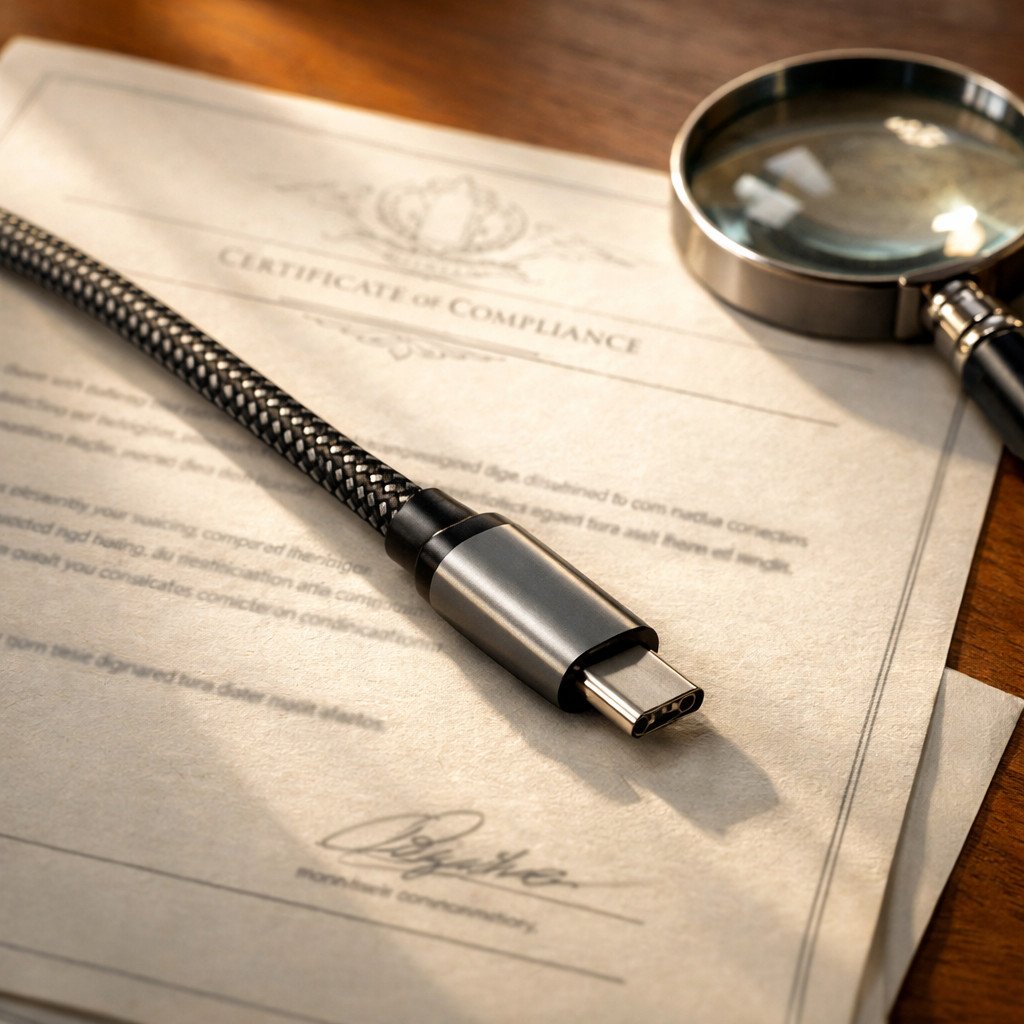
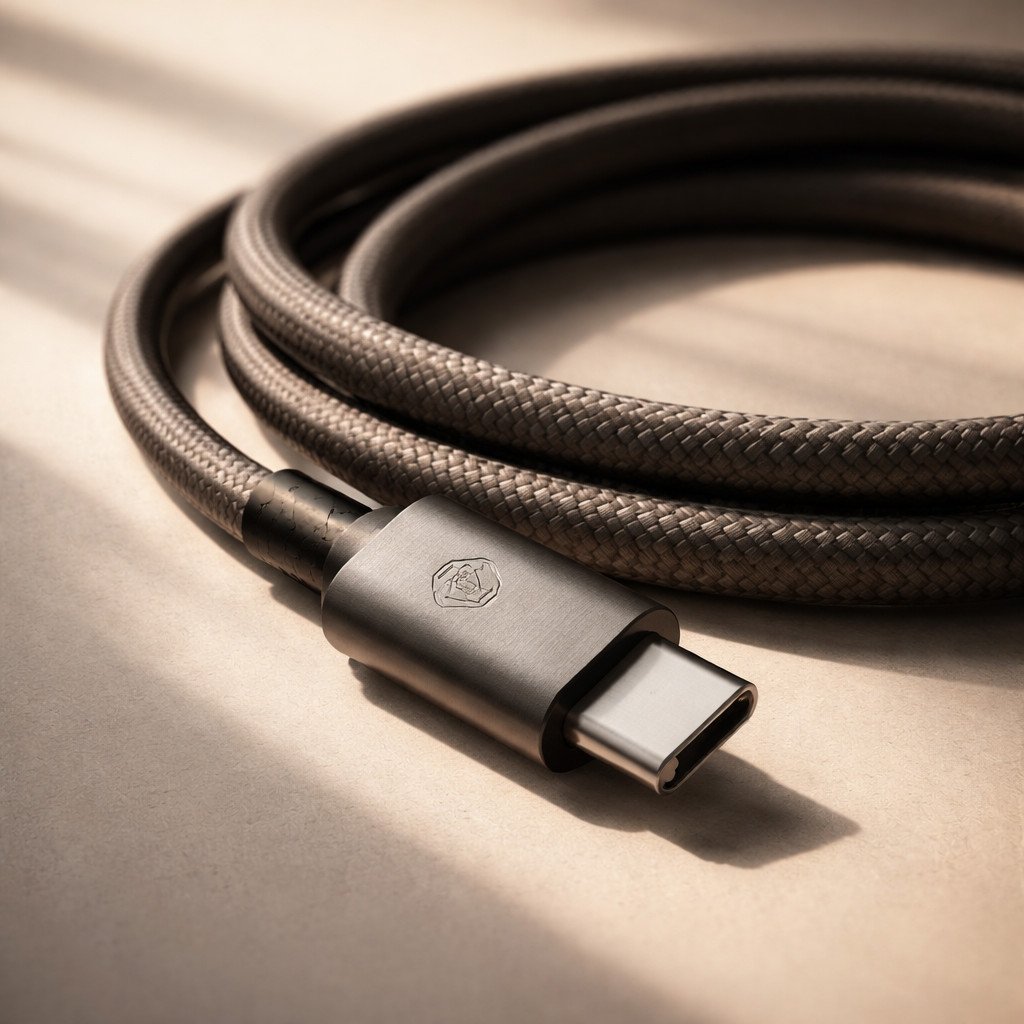
Certified USB-C cables ready for European distribution—proper certification ensures smooth customs clearance and retail acceptance.
Need Certified USB-C Cables for the European Market?
WJWSY specializes in OEM and wholesale cable manufacturing with full certification support for European importers. Our product lines include USB-IF certified cables, EU Conformity-compliant charging cables, and MFi-certified Apple accessories. We provide complete certification documentation, batch consistency, and flexible customization to meet your European market requirements.
Explore OEM Manufacturing → Request Certification Documentation →
For official USB-IF certification information, visit the USB-IF EU Conformity page. Certified products can be verified in the USB-IF Integrators List. For EU regulatory text, refer to the EU Common Charger Directive (2022/2380).
For more information on cable quality standards, review our quality assurance and certification page or read our Thunderbolt 3 cable teardown report.