

Lightning Connector Differences: C48 vs C89 vs C94 MFi Chip Guide for B2B Buyers
Lightning Connector Differences: C48 vs C89 vs C94 MFi Chip Guide for B2B Buyers
Not all Lightning connectors are created equal. From the legacy C48 to the fast-charging C94, and from audio-focused C100 to adapter-specialized C101—understanding the differences between Apple's MFi-certified Lightning chips is essential for B2B buyers sourcing cables for the global market.
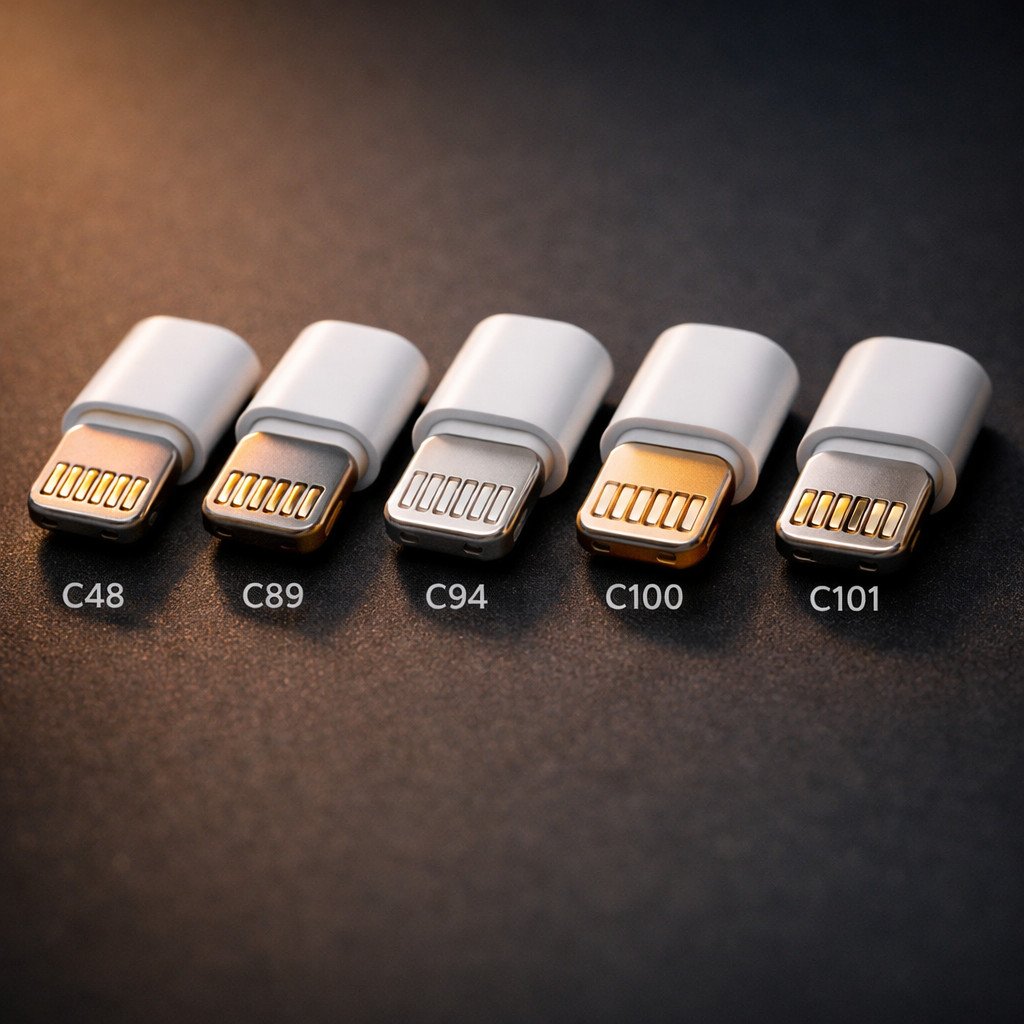
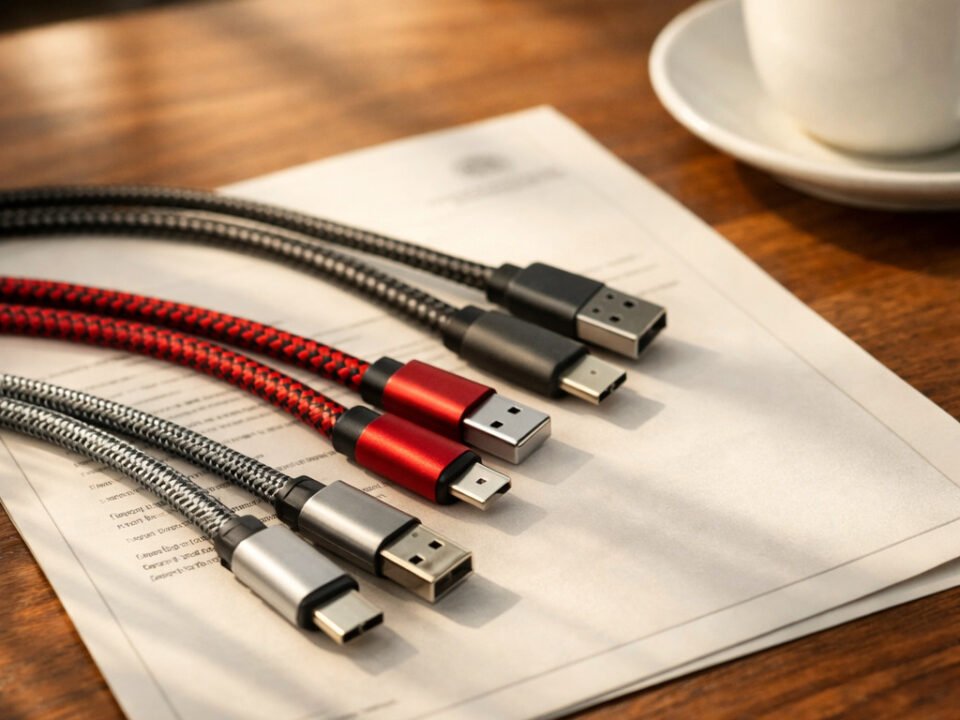
From left to right: C48, C89, C94, C100, and C101 Lightning connectors—each designed for specific applications and performance requirements.
Understanding the different Lightning connector MFi chip types is essential for B2B buyers sourcing Apple accessories. The Lightning connector, introduced by Apple in 2012, has powered over a decade of iPhones, iPads, and accessories. But despite its familiar 8-pin exterior, the internal MFi authentication chip has evolved through multiple generations—each with distinct capabilities, applications, and cost implications. This comprehensive guide breaks down every Lightning connector MFi chip type, from legacy C48 to fast-charging C94 and audio-focused C100/C101, helping you match the right product to the right market.
Table of Contents
- Why Lightning Connector Differences Matter for B2B Buyers
- Understanding MFi Certification and Lightning Chip Basics
- C48 Lightning Connector: The Legacy Standard
- C89 Lightning Connector: The Enhanced Security Upgrade
- C94 Lightning Connector: USB-C to Lightning PD Fast Charging
- C100 Lightning Connector: Dedicated Audio Chip
- C101 Lightning Connector: Audio Adapter Specialist
- C48 vs C89 vs C94: Complete Comparison Table
- How to Identify Genuine MFi Lightning Chips
- B2B Sourcing Decision Matrix by Application
- Market Trends and Future of Lightning
- Summary and WJWSY Sourcing Support
1. Why Lightning Connector Differences Matter for B2B Buyers
On the surface, every Lightning cable looks the same—an 8-pin reversible connector that plugs into iPhones and iPads. But inside that tiny connector head lies an MFi authentication chip that determines what the cable can actually do. The differences between chip versions directly impact:
- Charging speed: Only C94 and C79 chips support USB-C to Lightning PD fast charging (18W-30W)
- Durability and security: Newer chips like C89 feature enhanced encryption and corrosion-resistant silver pins
- Cost structure: Different chips have different price points, affecting your BOM and retail pricing strategy
- Application compatibility: Audio products require C100/C101; charging cables use C48/C89/C94
For B2B buyers sourcing Lightning accessories for Amazon, retail, or corporate clients, selecting the wrong chip means stocking products that either underperform or are incompatible with customer expectations—leading to returns, negative reviews, and lost revenue.
For context on how Lightning fits into the broader USB ecosystem, see our USB Type-C cable advantages guide.
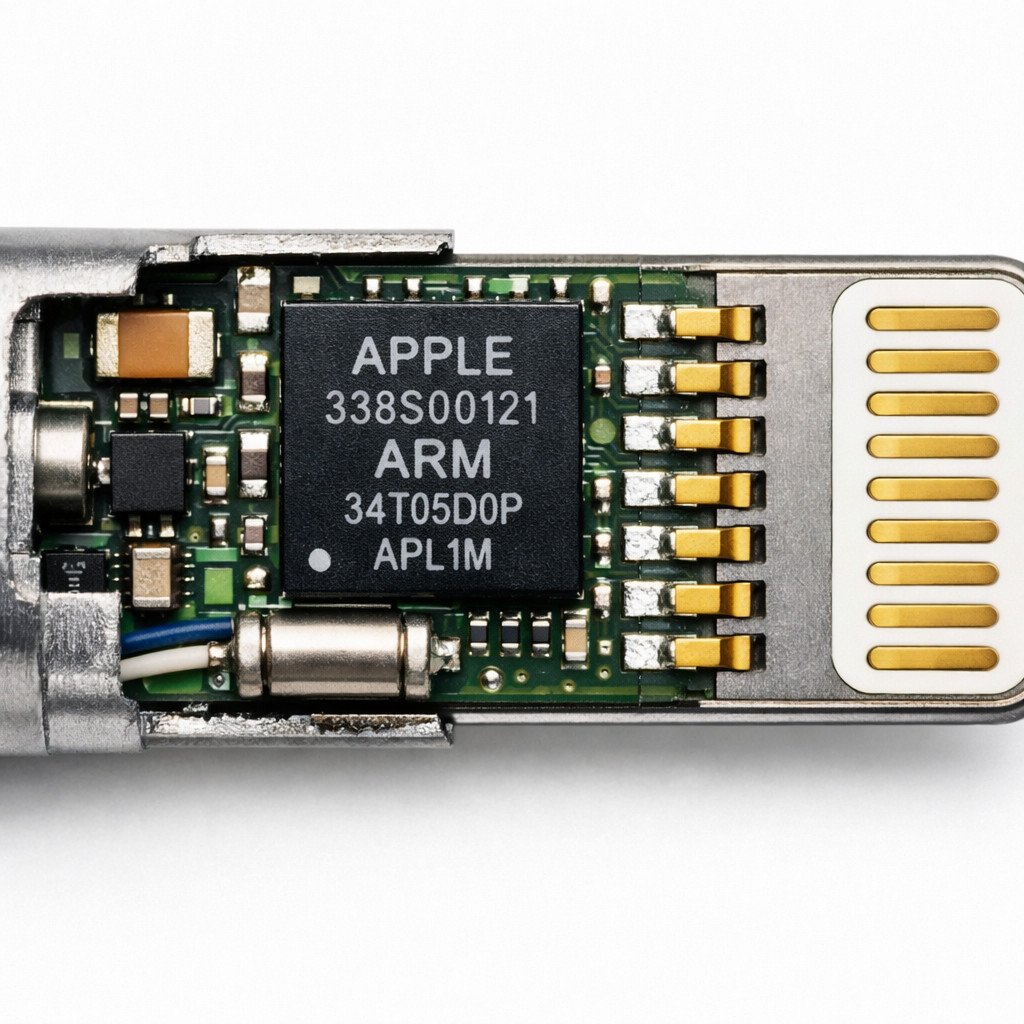
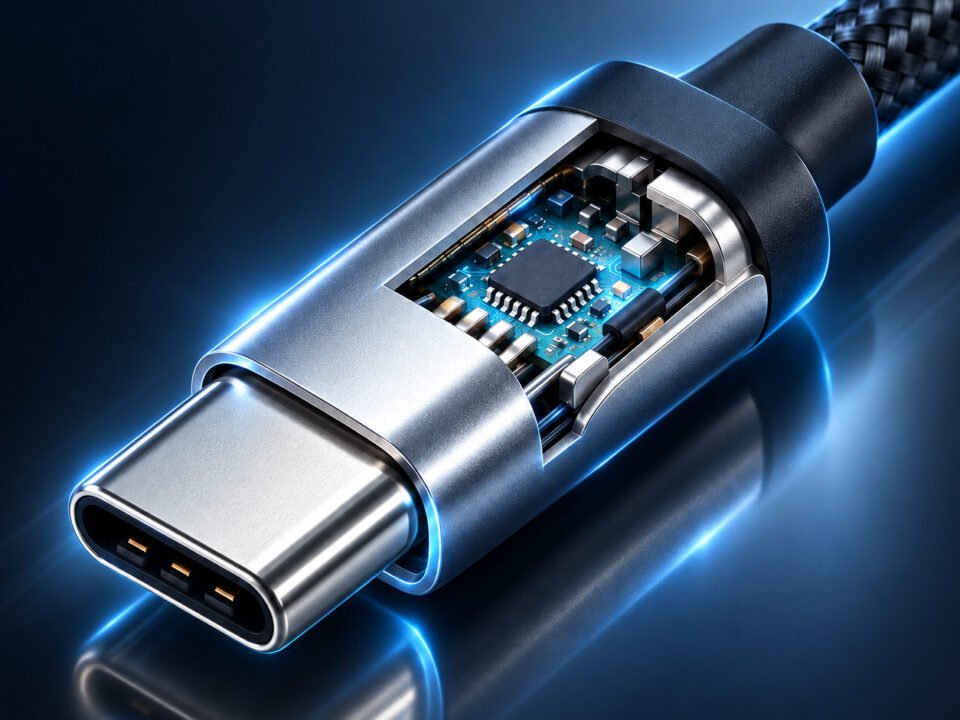
Internal structure of a Lightning connector showing the MFi authentication chip and 8-pin contact arrangement.
2. Lightning Connector MFi Chip Types: Understanding the Basics
MFi (Made for iPhone/iPad/iPod) is Apple's proprietary licensing and certification program for third-party accessories. To legally produce and sell Lightning-compatible accessories, manufacturers must join the MFi program, pass factory audits, and purchase genuine Apple-authorized MFi chips.
2.1 What Does an MFi Lightning Chip Do?
The MFi chip serves as the "identity verification" between the accessory and the Apple device. When you plug a Lightning cable into an iPhone, the following sequence occurs:
- The iPhone sends a challenge signal to the accessory
- The MFi chip responds with encrypted authentication data
- If authentication succeeds, the iPhone enables full functionality (charging, data, audio)
- If authentication fails or chip is missing, the iPhone displays "This accessory may not be supported" and limits functionality [citation:7]
This authentication mechanism protects users from unsafe or poorly manufactured accessories that could damage their devices.
2.2 Apple's MFi Chip Evolution and R32 Standard
Apple regularly updates its MFi technical specifications. As of the Accessory Interface Specification R32, Apple officially supports four primary Lightning connector types: C89, C94, C78, and C79 [citation:1][citation:4]. Older chips like C48 and C68 have been discontinued but remain in circulation in the secondary market and older inventory.
For a deeper understanding of how MFi compares to other certification standards, refer to our USB-IF vs MFi certification guide.
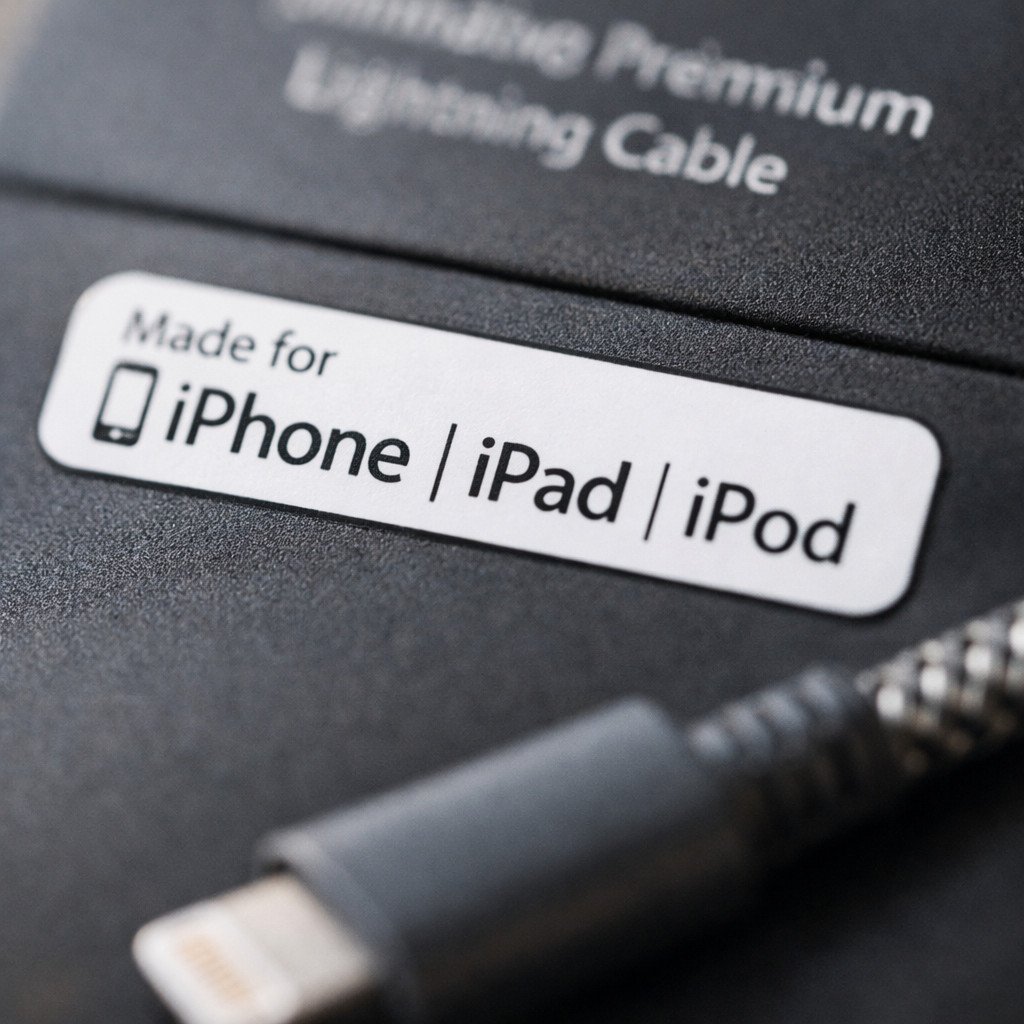
The "Made for iPhone/iPad/iPod" badge is the consumer-facing indicator of MFi certification.
3. C48 Lightning Connector: The Legacy Standard
The C48 Lightning connector was the industry standard for USB-A to Lightning cables for many years. While Apple officially discontinued C48 in February 2019, it remains relevant for B2B buyers dealing with legacy inventory or servicing price-sensitive markets [citation:7].
3.1 Technical Specifications
- Chip Type: C48 Lightning connector
- Primary Application: USB-A to Lightning charging cables
- Charging Support: Standard 5V/2.4A (12W maximum)
- Data Transfer: USB 2.0 (480Mbps)
- Pin Plating: Gold-colored contacts Gold Pins
- Status: Discontinued by Apple (February 2019) [citation:10]
3.2 Visual Identification
C48 connectors are characterized by their distinctive gold-plated contact pins and a PCB design featuring multiple small ICs rather than a single integrated chip [citation:10]. This multi-chip architecture made C48 more vulnerable to reverse engineering and counterfeiting.
3.3 B2B Sourcing Considerations for C48
While C48 is discontinued for new MFi certifications, B2B buyers may encounter C48-based cables in several scenarios:
- Clearance/closeout inventory: Older stock being liquidated at low prices
- Non-MFi aftermarket cables: Uncertified cables using cloned C48 designs
- Legacy accessory bundles: Products designed before the 2019 cutoff
4. C89 Lightning Connector: The Enhanced Security Upgrade
The C89 Lightning connector replaced C48 as the standard for USB-A to Lightning cables. It features significant improvements in security, durability, and manufacturing consistency.
4.1 Technical Specifications
- Chip Type: C89 Lightning connector
- Primary Application: USB-A to Lightning cables (replacement for C48)
- Charging Support: Standard 5V/2.4A (12W maximum)
- Data Transfer: USB 2.0 (480Mbps)
- Pin Plating: Silver-colored rhodium/ruthenium plating Silver Pins
- Security: Integrated single-chip design with enhanced encryption [citation:7]
- Status: Active, current MFi standard for USB-A cables
4.2 Key Improvements Over C48
The C89 connector introduced several critical upgrades:
- Single-chip integration: Unlike C48's multi-IC design, C89 integrates all functions into one chip—making it significantly harder to clone or reverse-engineer [citation:10]
- Silver pin plating: Rhodium/ruthenium plating offers superior corrosion resistance compared to gold, extending connector lifespan in humid environments [citation:10]
- Enhanced data security: Advanced encryption protects against unauthorized access and ensures reliable authentication
- Stricter manufacturing QC: Apple requires C89 cables to pass more rigorous production line testing, including over-voltage protection and current limit verification [citation:7]
4.3 Visual Identification: C48 vs C89
| Feature | C48 | C89 |
|---|---|---|
| Pin Color | Gold | Silver |
| PCB Design | Multiple small ICs | Single large IC |
| Security Level | Basic | Enhanced |
| MFi Status | Discontinued (2019) | Active |
4.4 B2B Sourcing Recommendations for C89
C89 is the recommended chip for B2B buyers sourcing standard USB-A to Lightning cables for:
- Car chargers and older USB-A power adapters
- Value-oriented retail SKUs where fast charging isn't required
- Bulk orders for corporate/IT deployments with mixed USB-A and USB-C infrastructure
Always verify that suppliers can provide valid MFi certification documentation for their C89 cables—counterfeit C89 chips exist in the market.
5. C94 Lightning Connector: USB-C to Lightning PD Fast Charging
The C94 Lightning connector is the current standard for USB-C to Lightning cables, enabling Power Delivery (PD) fast charging for iPhone 8 and newer models. This is the highest-volume Lightning SKU for B2B buyers in 2025-2026.
5.1 Technical Specifications
- Chip Type: C94 Lightning connector
- Primary Application: USB-C to Lightning fast-charging cables
- Charging Support: USB-PD up to 18W-30W (requires 20W+ USB-C PD charger)
- Data Transfer: USB 2.0 (480Mbps)
- Key Feature: USB-CC pin for PD protocol communication [citation:1]
- Appearance: Visually identical to C89 (silver pins, single IC) [citation:7]
- Status: Active, current MFi standard for USB-C to Lightning
5.2 C94 vs C91: What's the Difference?
You may encounter both C94 and C91 referenced in Lightning chip discussions. The distinction is simple:
- C91: Used exclusively in Apple's original OEM cables
- C94: Used in third-party MFi-certified cables (functionally identical to C91) [citation:7]
For B2B buyers sourcing from third-party manufacturers, C94 is the relevant chip specification. Performance and compatibility are identical to Apple's own C91-based cables.
5.3 Why C94 Matters for Fast Charging
The key differentiator of C94 is the USB-CC (Configuration Channel) pin that enables communication with USB-C PD chargers. This allows the cable to negotiate higher voltage and current levels—typically 9V/2A or 9V/2.2A for iPhones—enabling 0-50% charging in approximately 30 minutes. Without the CC pin (as in C89), the cable is limited to standard 5V charging regardless of the power source.
5.4 B2B Sourcing Recommendations for C94
C94 USB-C to Lightning cables are the must-stock SKU for B2B buyers targeting:
- iPhone 8 through iPhone 14 series users (all support USB-PD fast charging)
- Retail and e-commerce accessory bundles (cable + 20W PD charger combos)
- Corporate and education deployments with modern USB-C charging infrastructure
- Premium and mid-tier product positioning (fast charging is a key consumer expectation)
6. C100 Lightning Connector: Dedicated Audio Chip
The C100 Lightning connector is a specialized chip designed exclusively for audio applications—specifically, Lightning-equipped EarPods and similar wired audio accessories.
6.1 Technical Specifications
- Chip Type: C100 Lightning connector
- Primary Application: Lightning EarPods and wired Lightning headphones
- Charging Support: Not applicable (audio-only chip)
- Data Transfer: Audio signal transmission only
- Status: Active for audio accessories
6.2 C100 Applications and Limitations
C100 is purpose-built for audio output. It handles digital-to-analog conversion (DAC) within the Lightning connector itself, enabling wired audio through the Lightning port. Key considerations for B2B buyers:
- Not for charging cables: C100 cannot be used for charging or data transfer applications
- Declining market: With Apple's shift to wireless audio (AirPods) and the iPhone's retention of the Lightning port only on older models, the wired Lightning audio market is shrinking
- Replacement demand: Still relevant for users who prefer wired EarPods or have lost their original accessories
7. C101 Lightning Connector: Audio Adapter Specialist
The C101 Lightning connector is closely related to C100 but optimized for a different application: the Lightning to 3.5mm headphone jack adapter.
7.1 Technical Specifications
- Chip Type: C101 Lightning connector
- Primary Application: Lightning to 3.5mm audio adapters
- Charging Support: None
- Key Function: Built-in DAC for converting digital Lightning audio to analog 3.5mm output
- Cost: Slightly higher than C100 [citation:7]
- Status: Active, steady replacement demand
7.2 C101 vs C100: Key Distinctions
While physically identical in appearance, C100 and C101 serve different purposes:
| Feature | C100 | C101 |
|---|---|---|
| Application | Lightning EarPods | Lightning to 3.5mm adapter |
| DAC Integration | Basic | Enhanced (for headphone amp) |
| Cost | Lower | Slightly higher |
| Market Volume | Declining | Steady replacement demand |
7.3 B2B Sourcing Considerations for Audio Chips
C100 and C101 represent niche but stable markets:
- C100 (EarPods): Limited opportunity unless bundling with older iPhone models or targeting budget-conscious wired audio users
- C101 (Audio Adapter): Consistent replacement demand from users with high-quality 3.5mm headphones who need the adapter for Lightning iPhones
For most B2B cable buyers, C94 and C89 represent the primary volume opportunities.
8. Lightning Connector MFi Chip Types: Complete Comparison Table
| Chip | Application | Charging | Data Speed | Pin Color | MFi Status | B2B Priority |
|---|---|---|---|---|---|---|
| C48 | USB-A to Lightning | 12W max | 480 Mbps | Gold | Discontinued | Avoid - obsolete |
| C89 | USB-A to Lightning | 12W max | 480 Mbps | Silver | Active | Secondary SKU |
| C94 | USB-C to Lightning | 18-30W PD | 480 Mbps | Silver | Active | Primary SKU |
| C100 | Lightning EarPods | N/A | Audio only | Silver | Active | Niche only |
| C101 | Lightning to 3.5mm | N/A | Audio + DAC | Silver | Active | Replacement market |
9. How to Identify Genuine MFi Lightning Chips
Counterfeit Lightning chips are widespread in the accessory market. For B2B buyers, verifying authenticity is essential to avoid stocking products that will trigger "accessory not supported" errors and generate returns.
9.1 Visual Inspection (Physical)
- Pin color: Genuine C89/C94 connectors have silver-colored pins (rhodium/ruthenium plating); gold-colored pins on new cables suggest counterfeit or outdated C48 stock [citation:10]
- PCB inspection: Genuine C89/C94 chips use a single integrated IC; multi-chip designs are either C48 or counterfeit
- Build quality: Genuine MFi connectors have precise molding, smooth finish, and no visible glue or gaps
9.2 Documentation Verification
- MFi certification letter: Suppliers should provide Apple's MFi certification documentation for their products
- PPID (Product Plan ID): Each MFi-certified product has a unique PPID registered with Apple
- Packaging badges: Legitimate MFi products display "Made for iPhone/iPad/iPod" badges on packaging
9.3 Functional Testing
- No pop-up warning: Genuine MFi cables never trigger "This accessory may not be supported" warnings
- Fast charging verification: C94 cables should deliver 9V PD charging with compatible chargers (use USB-C power meter to verify)
- iOS update compatibility: Genuine chips remain functional through iOS updates; counterfeit chips often break after major iOS releases
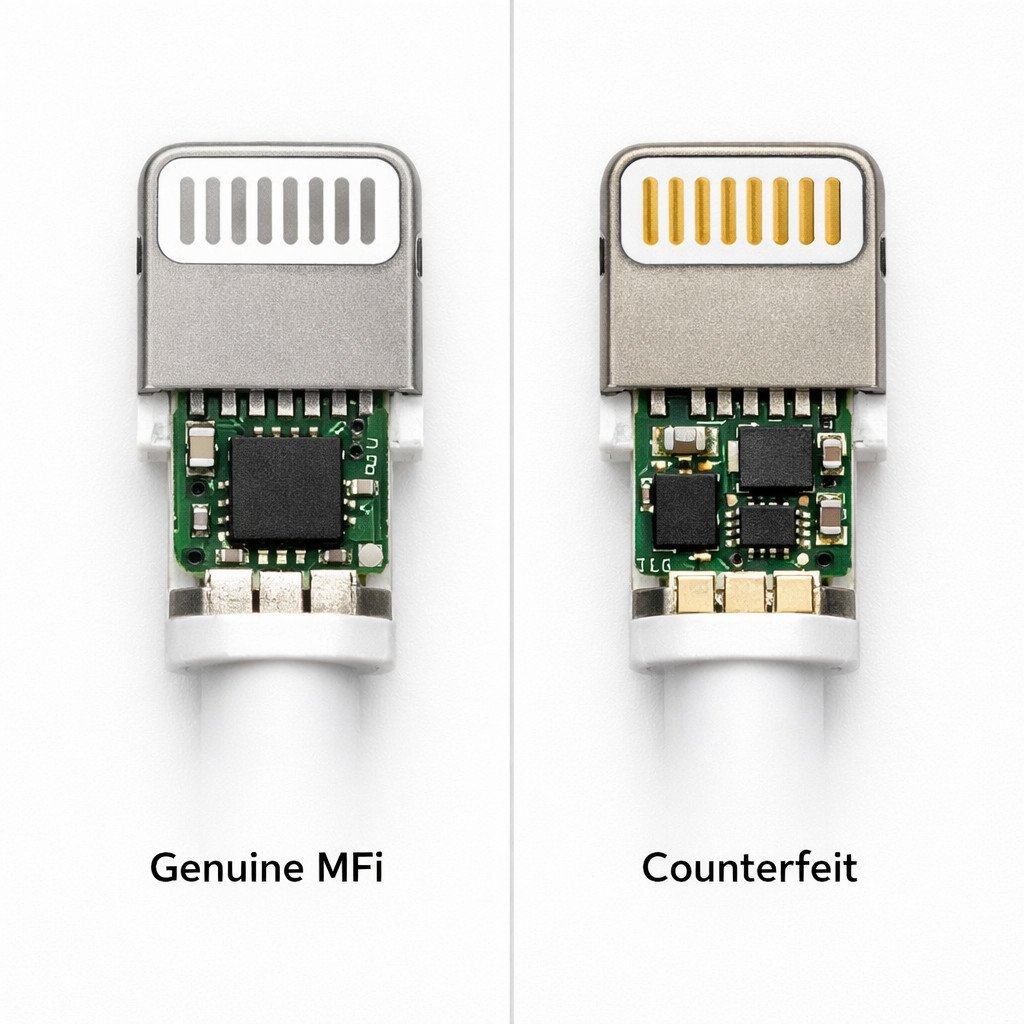
Left: Genuine C89/C94 with single integrated IC and silver pins. Right: Counterfeit/clone with multi-chip design.
10. B2B Sourcing Decision Matrix by Application
10.1 By Product Category
| Product Type | Recommended Chip | Rationale |
|---|---|---|
| USB-A to Lightning (basic charging) | C89 | Active MFi standard, silver pins, enhanced security |
| USB-C to Lightning (fast charging) | C94 | Only chip supporting USB-PD for iPhone 8+ fast charging |
| Lightning EarPods replacement | C100 | Purpose-built for Lightning audio output |
| Lightning to 3.5mm audio adapter | C101 | Integrated DAC for analog headphone compatibility |
| Multi-pack/value bundles | C89 (A-side) + C94 (C-side) | Cover both legacy and modern charging scenarios |
10.2 By Market Positioning
Entry-Level / Value Market
Chip: C89 (USB-A)
Strategy: Lowest viable MFi-certified option; pair with basic 5W/12W chargers
Cost Priority
Mainstream / E-commerce
Chip: C94 (USB-C)
Strategy: Fast charging is table stakes for online retail; bundle with 20W PD charger
Volume Driver
Premium / Branded
Chip: C94 + braided jacket
Strategy: MFi + premium materials (nylon braid, metal connectors) command higher ASP
Margin Focus
10.3 B2B Sourcing Checklist for Lightning Cables
- Verify MFi certification status and request documentation
- Confirm chip model (C89 or C94) matches your product specification
- Check pin color—silver for genuine C89/C94, gold indicates older/possibly counterfeit
- Request sample for functional testing with iOS devices and USB-C power meter
- Verify supplier's batch consistency and quality control processes
- For volume orders, consider independent lab verification of chip authenticity
11. Market Trends and the Future of Lightning
11.1 The USB-C Transition and Lightning's Remaining Lifespan
Apple began transitioning away from Lightning with iPhone 15 in 2023, and as of 2025, Lightning-equipped iPhones are no longer sold new. However, the installed base of Lightning devices remains enormous:
- iPhone 14 and earlier models: Hundreds of millions still in active use globally
- Lightning-equipped iPads: iPad 9th gen and earlier remain in circulation
- AirPods and Magic accessories: Many still use Lightning charging cases
Industry analysts project that Lightning cable demand will remain significant through 2028-2030 as these devices age and require replacement cables [citation:2].
11.2 B2B Inventory Transition Strategy
Recommended Lightning-to-USB-C inventory ratio by year:
- 2025-2026: 50% Lightning / 50% USB-C (balanced transition)
- 2027-2028: 30% Lightning / 70% USB-C (replacement-only focus)
- 2029+: <10% Lightning (minimal legacy support)
11.3 Opportunities in the Lightning Sunset Period
As major accessory brands shift focus to USB-C, the Lightning market becomes less crowded—creating opportunity for B2B buyers who maintain quality Lightning inventory. Key opportunities:
- Replacement cables for existing iPhone users (spares, travel, car cables)
- Multi-packs and value bundles (price-sensitive customers with older devices)
- Specialized Lightning accessories (audio adapters, OTG adapters for legacy iPads)
For sourcing USB-C alternatives as the market transitions, explore our USB-C cable manufacturing capabilities.
12. Summary: Lightning Connector Differences and B2B Sourcing Strategy
Key Takeaways for B2B Buyers
- C48 is obsolete—avoid stocking unless specifically requested for legacy compatibility
- C89 is the standard for USB-A to Lightning—cost-effective, MFi-certified, silver-pin durability
- C94 is the must-stock SKU for USB-C to Lightning fast charging—highest volume, best margins
- C100/C101 are niche audio chips—limited opportunity outside specialized replacement markets
- Always verify MFi authenticity through documentation and physical inspection (silver pins, single IC)
- Plan for gradual Lightning phase-out over 5+ years—balance inventory with USB-C growth
Final Word on Lightning Connector Selection
Understanding Lightning connector MFi chip types—C48, C89, C94, C100, and C101—is fundamental to profitable B2B accessory sourcing. Here are the key takeaways...
As the industry transitions toward USB-C, the Lightning market will contract—but not disappear overnight. The next 3-5 years represent a managed decline with steady replacement demand. B2B buyers who understand the chip differences and maintain quality MFi-certified inventory will capture value while competitors exit prematurely.
Need MFi-Certified Lightning Cables with the Right Chip?
WJWSY provides OEM and wholesale Lightning cables featuring genuine C89 and C94 MFi chips. All products are fully MFi-certified with documentation, available in custom lengths, colors, and packaging. Whether you're stocking USB-A to Lightning for value markets or USB-C to Lightning for fast-charging premium SKUs, we ensure batch-to-batch consistency and reliable authentication.
For more information on cable certification and quality standards, review our quality assurance and certification page or read our USB-IF vs MFi certification comparison guide.