

Differenze tra i connettori Lightning: C48, C89 e C94 - Guida ai chip MFi per acquirenti B2B
Differenze tra i connettori Lightning: C48, C89 e C94 - Guida ai chip MFi per acquirenti B2B
Non tutti i connettori Lightning sono uguali. Dal classico C48 al C94 a ricarica rapida, dal C100 pensato per l'audio al C101 specifico per gli adattatori, comprendere le differenze tra i chip Lightning certificati MFi di Apple è fondamentale per gli acquirenti B2B che si riforniscono di cavi per il mercato globale.
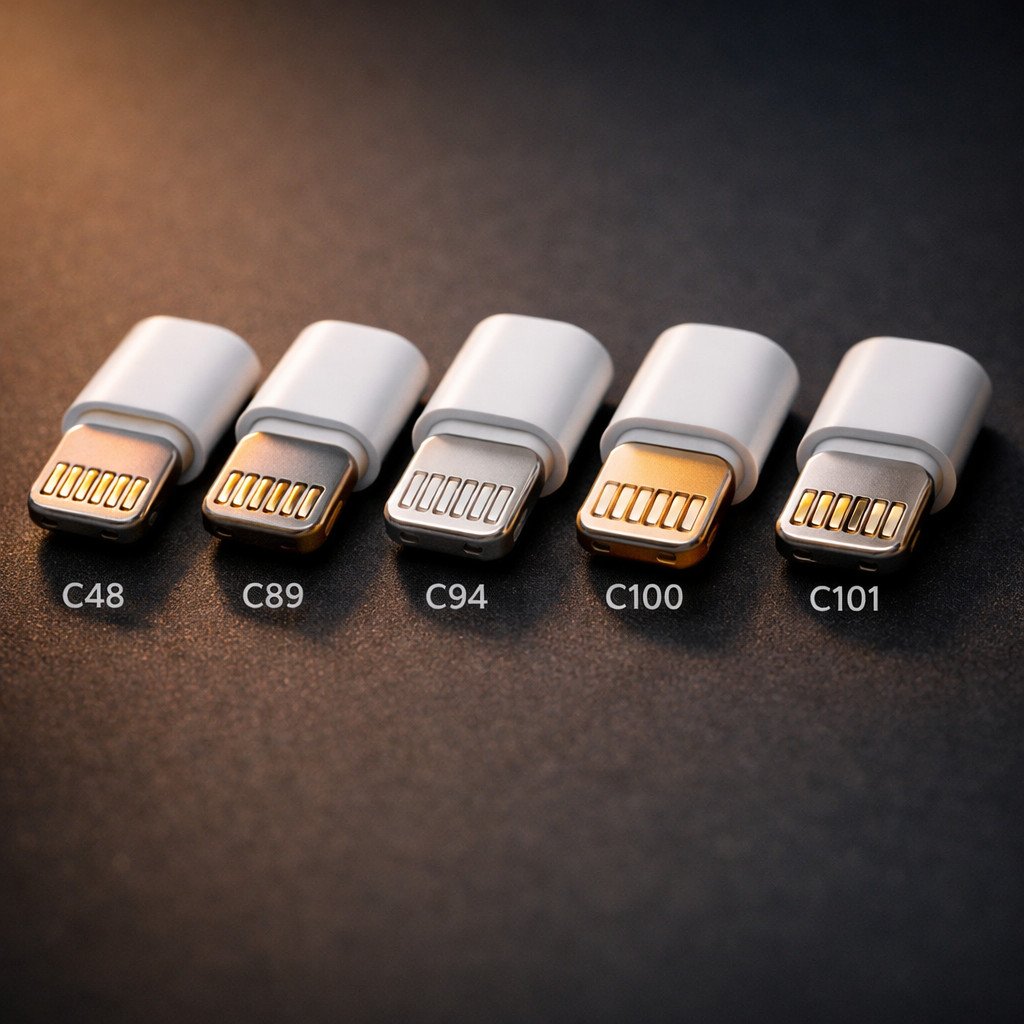
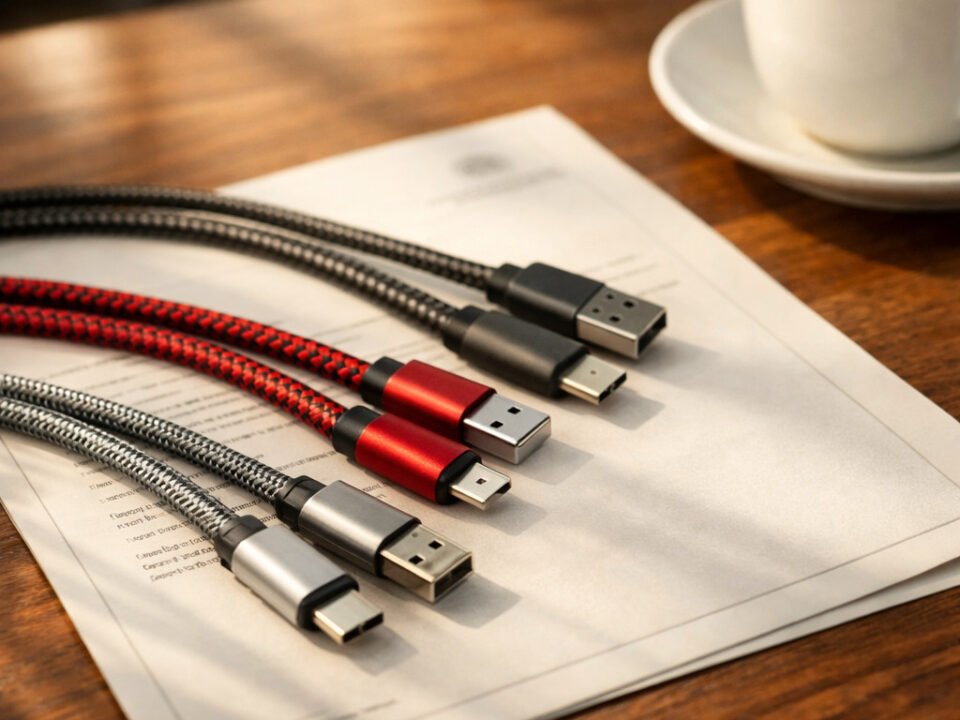
Da sinistra a destra: connettori Lightning C48, C89, C94, C100 e C101, ciascuno progettato per applicazioni e requisiti prestazionali specifici.
Comprendere i diversi Tipo di chip MFi per connettore Lightning è essenziale per gli acquirenti B2B che si riforniscono di accessori Apple. Il connettore Lightning, introdotto da Apple nel 2012, ha alimentato oltre un decennio di iPhone, iPad e accessori. Ma nonostante il suo familiare aspetto esterno a 8 pin, il chip di autenticazione MFi interno si è evoluto attraverso diverse generazioni, ognuna con funzionalità, applicazioni e implicazioni di costo distinte. Questa guida completa analizza ogni Connettore Lightning, tipo di chip MFiDai modelli tradizionali C48 ai C94 a ricarica rapida e ai C100/C101 pensati per l'audio, ti aiutiamo a trovare il prodotto giusto per il mercato giusto.
Sommario
- Perché le differenze tra i connettori Lightning sono importanti per gli acquirenti B2B
- Comprendere la certificazione MFi e le nozioni di base sui chip Lightning.
- Connettore Lightning C48: lo standard di riferimento
- Connettore Lightning C89: l'aggiornamento di sicurezza avanzato
- Connettore Lightning C94: da USB-C a Lightning con ricarica rapida PD
- Connettore Lightning C100: chip audio dedicato
- Connettore Lightning C101: Specialista in adattatori audio
- C48 vs C89 vs C94: Tabella comparativa completa
- Come identificare i chip Lightning MFi originali
- Matrice decisionale per l'approvvigionamento B2B per applicazione
- Tendenze di mercato e futuro dei fulmini
- Riepilogo e supporto all'approvvigionamento WJWSY
1. Perché le differenze tra i connettori Lightning sono importanti per gli acquirenti B2B
In apparenza, tutti i cavi Lightning sembrano uguali: un connettore reversibile a 8 pin che si collega a iPhone e iPad. Ma all'interno di quel piccolo connettore si cela un chip di autenticazione MFi che determina le effettive funzionalità del cavo. Le differenze tra le versioni del chip influiscono direttamente su:
- Velocità di ricarica: Solo i chip C94 e C79 supportano la ricarica rapida PD da USB-C a Lightning (18W-30W)
- durabilità e sicurezzaI chip più recenti, come il C89, presentano una crittografia migliorata e pin in argento resistenti alla corrosione.
- Struttura dei costiI diversi chip hanno prezzi differenti, il che influisce sulla distinta base e sulla strategia di prezzo al dettaglio.
- Compatibilità dell'applicazioneI prodotti audio richiedono i cavi C100/C101; i cavi di ricarica utilizzano i cavi C48/C89/C94.
Per gli acquirenti B2B che si riforniscono di accessori Lightning per Amazon, rivenditori o clienti aziendali, scegliere il chip sbagliato significa avere in magazzino prodotti che non offrono prestazioni ottimali o che non sono compatibili con le aspettative dei clienti, con conseguenti resi, recensioni negative e perdita di fatturato.
Per informazioni sul contesto in cui Lightning si inserisce nell'ecosistema USB più ampio, consultare il nostro Guida ai vantaggi del cavo USB Type-C.
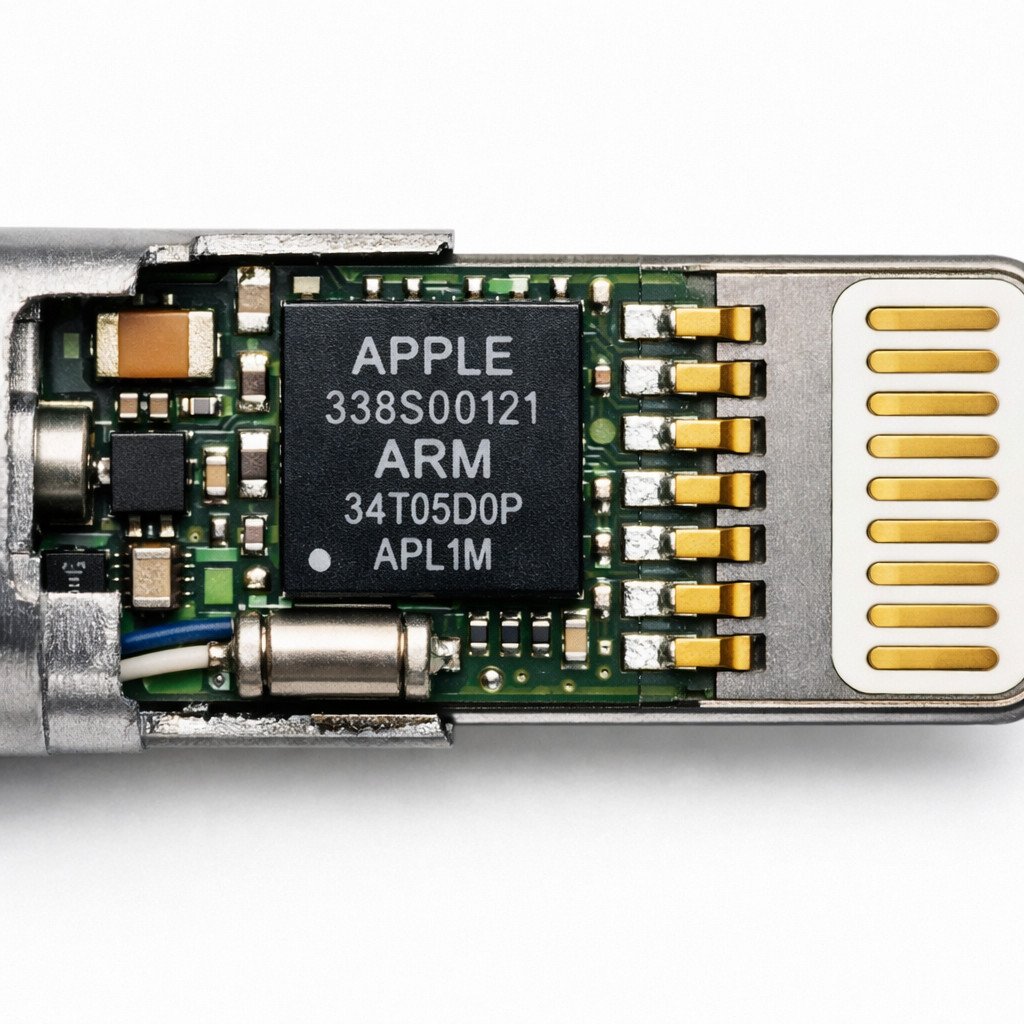
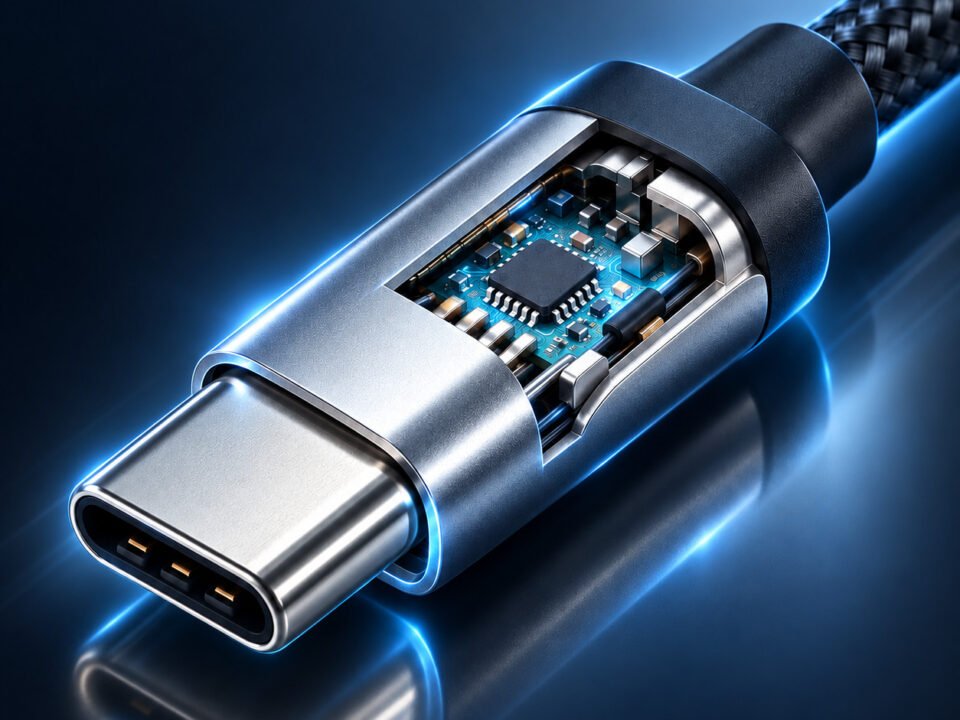
Struttura interna di un connettore Lightning che mostra il chip di autenticazione MFi e la disposizione dei contatti a 8 pin.
2. Tipi di chip MFi per connettori Lightning: nozioni di base
MFi (Made for iPhone/iPad/iPod) è il programma proprietario di Apple per la concessione di licenze e la certificazione di accessori di terze parti. Per produrre e vendere legalmente accessori compatibili con il connettore Lightning, i produttori devono aderire al programma MFi, superare gli audit di fabbrica e acquistare chip MFi originali autorizzati da Apple.
2.1 Qual è la funzione di un chip Lightning MFi?
Il chip MFi funge da "verifica dell'identità" tra l'accessorio e il dispositivo Apple. Quando si collega un cavo Lightning a un iPhone, si verifica la seguente sequenza:
- L'iPhone invia un segnale di sfida all'accessorio
- Il chip MFi risponde con dati di autenticazione crittografati
- Se l'autenticazione ha esito positivo, l'iPhone abilita tutte le funzionalità (ricarica, dati, audio).
- If authentication fails or chip is missing, the iPhone displays "This accessory may not be supported" and limits functionality [citation:7]
Questo meccanismo di autenticazione protegge gli utenti da accessori non sicuri o di scarsa qualità che potrebbero danneggiare i loro dispositivi.
2.2 L'evoluzione del chip MFi di Apple e lo standard R32
Apple regularly updates its MFi technical specifications. As of the Accessory Interface Specification R32, Apple officially supports four primary Lightning connector types: C89, C94, C78, and C79 [citation:1][citation:4]. Older chips like C48 and C68 have been discontinued but remain in circulation in the secondary market and older inventory.
Per una comprensione più approfondita di come MFi si confronta con altri standard di certificazione, fare riferimento al nostro Guida alla certificazione USB-IF vs MFi.
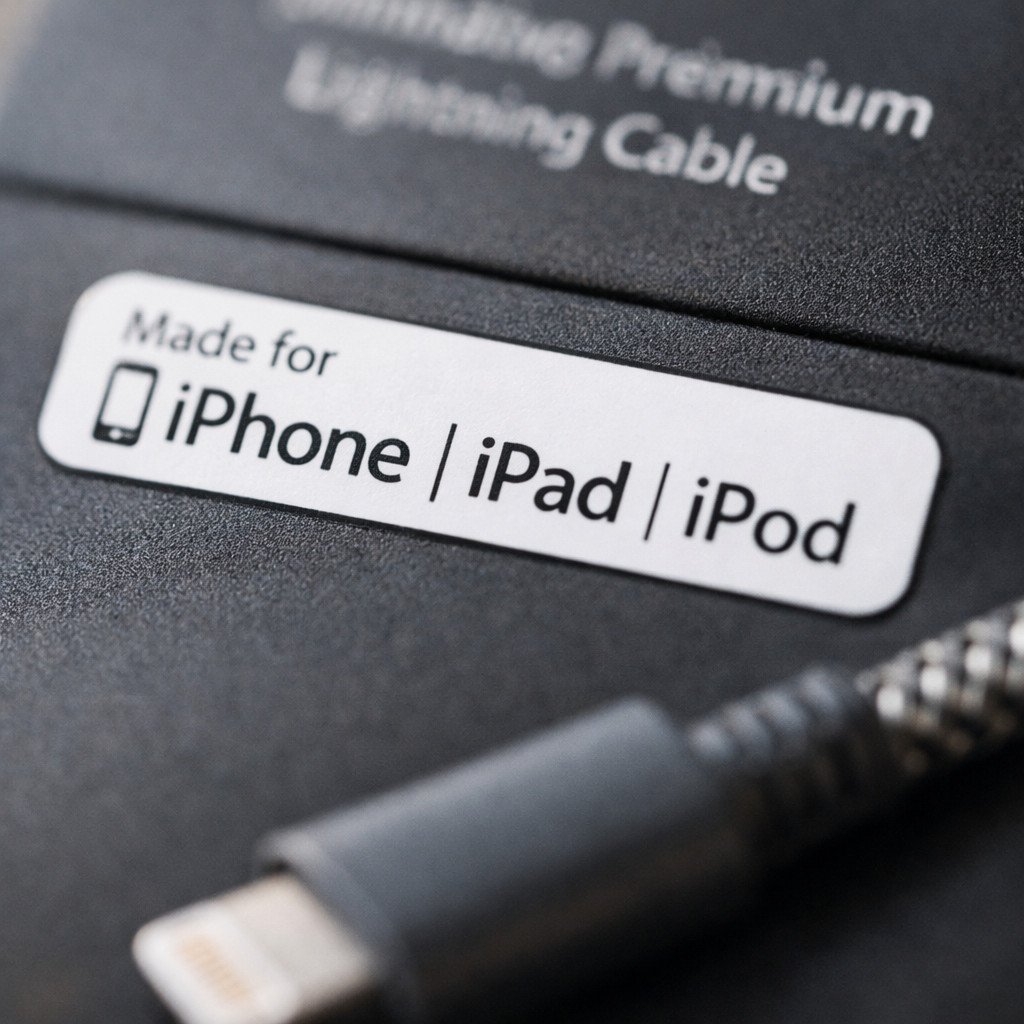
Il badge "Made for iPhone/iPad/iPod" è l'indicatore visibile al consumatore della certificazione MFi.
3. Connettore Lightning C48: lo standard tradizionale
The C48 Lightning connector was the industry standard for USB-A to Lightning cables for many years. While Apple officially discontinued C48 in February 2019, it remains relevant for B2B buyers dealing with legacy inventory or servicing price-sensitive markets [citation:7].
3.1 Specifiche tecniche
- Tipo di chipConnettore Lightning C48
- Applicazione principale: Cavi di ricarica da USB-A a Lightning
- Supporto per la ricarica: Standard 5V/2.4A (12W massimo)
- Il Trasferimento Dei Dati: USB 2.0 (480 Mbps)
- Pin Placcatura: Lenti a contatto color oro Spille d'oro
- Stato: Discontinued by Apple (February 2019) [citation:10]
3.2 Identificazione visiva
C48 connectors are characterized by their distinctive gold-plated contact pins and a PCB design featuring multiple small ICs rather than a single integrated chip [citation:10]. This multi-chip architecture made C48 more vulnerable to reverse engineering and counterfeiting.
3.3 Considerazioni sull'approvvigionamento B2B per C48
Sebbene lo standard C48 non sia più supportato dalle nuove certificazioni MFi, gli acquirenti B2B potrebbero imbattersi in cavi basati su C48 in diverse situazioni:
- Inventario in liquidazione/svendita: Scorte obsolete liquidate a prezzi bassi
- Cavi aftermarket non MFiCavi non certificati che utilizzano design C48 clonati
- Pacchetti di accessori LegacyProdotti progettati prima della scadenza del 2019
4. Connettore Lightning C89: l'aggiornamento di sicurezza avanzato
Il connettore Lightning C89 ha sostituito il C48 come standard per i cavi da USB-A a Lightning. Presenta miglioramenti significativi in termini di sicurezza, durata e uniformità di produzione.
4.1 Specifiche tecniche
- Tipo di chipConnettore Lightning C89
- Applicazione principale: Cavi da USB-A a Lightning (sostituzione per C48)
- Supporto per la ricarica: Standard 5V/2.4A (12W massimo)
- Il Trasferimento Dei Dati: USB 2.0 (480 Mbps)
- Pin Placcatura: Placcatura in rodio/rutenio color argento Spille d'argento
- Sicurezza: Integrated single-chip design with enhanced encryption [citation:7]
- StatoStandard MFi attivo e attuale per i cavi USB-A
4.2 Miglioramenti chiave rispetto al C48
Il connettore C89 ha introdotto diversi importanti miglioramenti:
- Integrazione su singolo chip: Unlike C48's multi-IC design, C89 integrates all functions into one chip—making it significantly harder to clone or reverse-engineer [citation:10]
- placcatura in argento: Rhodium/ruthenium plating offers superior corrosion resistance compared to gold, extending connector lifespan in humid environments [citation:10]
- Sicurezza dei dati migliorataLa crittografia avanzata protegge dagli accessi non autorizzati e garantisce un'autenticazione affidabile.
- Controlli di qualità di produzione più rigorosi: Apple requires C89 cables to pass more rigorous production line testing, including over-voltage protection and current limit verification [citation:7]
4.3 Identificazione visiva: C48 vs C89
| Funzione | C48 | C89 |
|---|---|---|
| Colore della spilla | Oro | Argento |
| Progettazione PCB | Molti piccoli circuiti integrati | singolo circuito integrato di grandi dimensioni |
| Livello di sicurezza | Di base | Migliorato |
| Stato MFi | Interrotto (2019) | Attivo |
4.4 Raccomandazioni per l'approvvigionamento B2B per C89
Il chip C89 è quello consigliato agli acquirenti B2B che cercano cavi USB-A-Lightning standard per:
- Caricabatterie da auto e vecchi adattatori di alimentazione USB-A
- SKU di vendita al dettaglio orientate al valore in cui la ricarica rapida non è necessaria
- Ordini all'ingrosso per implementazioni aziendali/IT con infrastrutture miste USB-A e USB-C.
Verificate sempre che i fornitori siano in grado di fornire una documentazione valida di certificazione MFi per i loro cavi C89: sul mercato esistono chip C89 contraffatti.
5. Connettore Lightning C94: da USB-C a Lightning con ricarica rapida PD
Il connettore Lightning C94 è lo standard attuale per i cavi da USB-C a Lightning, e consente la ricarica rapida Power Delivery (PD) per iPhone 8 e modelli successivi. Questo è il modello Lightning più venduto dagli acquirenti B2B nel periodo 2025-2026.
5.1 Specifiche tecniche
- Tipo di chipConnettore Lightning C94
- Applicazione principale: Cavi di ricarica rapida da USB-C a Lightning
- Supporto per la ricarica: USB-PD fino a 18W-30W (richiede un caricabatterie USB-C PD da 20W o superiore)
- Il Trasferimento Dei Dati: USB 2.0 (480 Mbps)
- Caratteristica principale: USB-CC pin for PD protocol communication [citation:1]
- Aspetto: Visually identical to C89 (silver pins, single IC) [citation:7]
- Stato: Standard MFi attivo e attuale per la conversione da USB-C a Lightning
5.2 C94 vs C91: Qual è la differenza?
Potreste imbattervi in entrambi i codici C94 e C91 menzionati nelle discussioni sui chip Lightning. La distinzione è semplice:
- C91Utilizzato esclusivamente nei cavi originali OEM di Apple.
- C94: Used in third-party MFi-certified cables (functionally identical to C91) [citation:7]
Per gli acquirenti B2B che si riforniscono da produttori terzi, la specifica del chip di riferimento è C94. Prestazioni e compatibilità sono identiche a quelle dei cavi Apple basati sullo standard C91.
5.3 Perché C94 è importante per la ricarica rapida
La caratteristica distintiva del C94 è il pin USB-CC (Configuration Channel) che consente la comunicazione con i caricabatterie USB-C PD. Ciò permette al cavo di negoziare livelli di tensione e corrente più elevati, tipicamente 9V/2A o 9V/2.2A per gli iPhone, consentendo una ricarica dallo 0 al 50% in circa 30 minuti. Senza il pin CC (come nel C89), il cavo è limitato alla ricarica standard a 5V indipendentemente dalla fonte di alimentazione.
5.4 Raccomandazioni per l'approvvigionamento B2B per C94
I cavi C94 da USB-C a Lightning sono i SKU da tenere in magazzino per acquirenti B2B che si rivolgono a:
- Utenti di iPhone dalla serie 8 alla serie iPhone 14 (tutti compatibili con la ricarica rapida USB-PD)
- Pacchetti di accessori per la vendita al dettaglio e online (combinazioni cavo + caricabatterie PD da 20 W)
- Implementazioni in ambito aziendale e didattico con moderne infrastrutture di ricarica USB-C.
- Posizionamento del prodotto nella fascia premium e media (la ricarica rapida è un'aspettativa fondamentale dei consumatori).
6. Connettore Lightning C100: chip audio dedicato
Il connettore Lightning C100 è un chip specializzato progettato esclusivamente per applicazioni audio, nello specifico per gli auricolari EarPods dotati di connettore Lightning e altri accessori audio cablati simili.
6.1 Specifiche tecniche
- Tipo di chipConnettore Lightning C100
- Applicazione principale: Auricolari Lightning EarPods e cuffie Lightning con cavo
- Supporto per la ricarica: Non applicabile (chip solo audio)
- Il Trasferimento Dei Dati: Solo trasmissione del segnale audio
- Stato: Attivo per accessori audio
6.2 Applicazioni e limitazioni del C100
Il C100 è progettato specificamente per l'uscita audio. Gestisce la conversione digitale-analogica (DAC) direttamente all'interno del connettore Lightning, consentendo la trasmissione audio cablata tramite la porta Lightning. Considerazioni chiave per gli acquirenti B2B:
- Non adatto ai cavi di ricaricaIl modello C100 non può essere utilizzato per applicazioni di ricarica o trasferimento dati.
- mercato in declinoCon il passaggio di Apple all'audio wireless (AirPods) e il mantenimento della porta Lightning solo sui modelli più vecchi dell'iPhone, il mercato degli auricolari Lightning cablati si sta riducendo.
- domanda di sostituzione: Ancora valido per gli utenti che preferiscono gli EarPods con filo o che hanno perso gli accessori originali
7. Connettore Lightning C101: Specialista in adattatori audio
Il connettore Lightning C101 è strettamente imparentato con il C100, ma ottimizzato per un'applicazione diversa: l'adattatore da Lightning a jack per cuffie da 3,5 mm.
7.1 Specifiche tecniche
- Tipo di chipConnettore Lightning C101
- Applicazione principaleAdattatori da Lightning a jack audio da 3,5 mm
- Supporto per la ricarica: Nessuno
- Funzione chiaveDAC integrato per convertire l'audio digitale Lightning in uscita analogica da 3,5 mm.
- Costo: Slightly higher than C100 [citation:7]
- StatoDomanda di sostituzione attiva e costante
7.2 C101 vs C100: Differenze principali
Sebbene fisicamente identici nell'aspetto, C100 e C101 hanno scopi diversi:
| Funzione | C100 | C101 |
|---|---|---|
| Applicazione | Auricolari Lightning | Adattatore da Lightning a 3,5 mm |
| Integrazione DAC | Di base | Ottimizzato (per amplificatore per cuffie) |
| Costo | Inferiore | Leggermente più alto |
| Volume del mercato | Declino | Domanda di sostituzione costante |
7.3 Considerazioni sull'approvvigionamento B2B di chip audio
C100 e C101 rappresentano mercati di nicchia ma stabili:
- C100 (Auricolari)Opportunità limitate, a meno che non si tratti di un abbinamento con modelli di iPhone più vecchi o di un prodotto destinato a utenti con budget limitato che utilizzano sistemi audio cablati.
- C101 (Adattatore audio)Richiesta costante di sostituzione da parte di utenti con cuffie da 3,5 mm di alta qualità che necessitano dell'adattatore per iPhone con connettore Lightning.
Per la maggior parte degli acquirenti di cavi B2B, i canali C94 e C89 rappresentano le principali opportunità in termini di volume.
8. Tipi di chip MFi per connettori Lightning: tabella comparativa completa
| Chip | Applicazione | Addebito | Velocità dei dati | Colore della spilla | Stato MFi | Priorità B2B |
|---|---|---|---|---|---|---|
| C48 | Adattatore da USB-A a Lightning | 12W max | 480 Mbps | Oro | Interrotto | Evitare - obsoleto |
| C89 | Adattatore da USB-A a Lightning | 12W max | 480 Mbps | Argento | Attivo | SKU secondario |
| C94 | USB-C di Fulmine | 18-30W PD | 480 Mbps | Argento | Attivo | Codice articolo principale |
| C100 | Auricolari Lightning | N / A | Solo audio | Argento | Attivo | Solo di nicchia |
| C101 | Da Lightning a 3,5 mm | N / A | Audio + DAC | Argento | Attivo | Mercato di sostituzione |
9. Come identificare i chip Lightning MFi originali
I chip Lightning contraffatti sono molto diffusi nel mercato degli accessori. Per gli acquirenti B2B, verificare l'autenticità è fondamentale per evitare di immettere sul mercato prodotti che genereranno errori di "accessorio non supportato" e resi.
9.1 Ispezione visiva (fisica)
- Colore della spilla: Genuine C89/C94 connectors have silver-colored pins (rhodium/ruthenium plating); gold-colored pins on new cables suggest counterfeit or outdated C48 stock [citation:10]
- Ispezione dei PCB: I chip C89/C94 originali utilizzano un singolo circuito integrato; i progetti multi-chip sono C48 o contraffatti
- Qualità costruttivaI connettori MFi originali presentano uno stampaggio preciso, una finitura liscia e nessuna traccia di colla o spazio vuoto visibile.
9.2 Verifica della documentazione
- lettera di certificazione MFiI fornitori devono fornire la documentazione di certificazione MFi di Apple per i loro prodotti.
- PPID (ID del piano prodotto)Ogni prodotto certificato MFi ha un PPID univoco registrato presso Apple.
- Distintivi per confezioniI prodotti MFi originali riportano l'etichetta "Made for iPhone/iPad/iPod" sulla confezione.
9.3 Test funzionali
- Nessun avviso a comparsaI cavi MFi originali non generano mai avvisi del tipo "Questo accessorio potrebbe non essere supportato".
- verifica della ricarica rapidaI cavi C94 dovrebbero fornire una ricarica PD a 9V con caricabatterie compatibili (utilizzare un misuratore di potenza USB-C per verificare).
- Compatibilità con gli aggiornamenti iOSI chip originali rimangono funzionanti anche dopo gli aggiornamenti di iOS; i chip contraffatti, invece, spesso si rompono dopo le principali versioni di iOS.
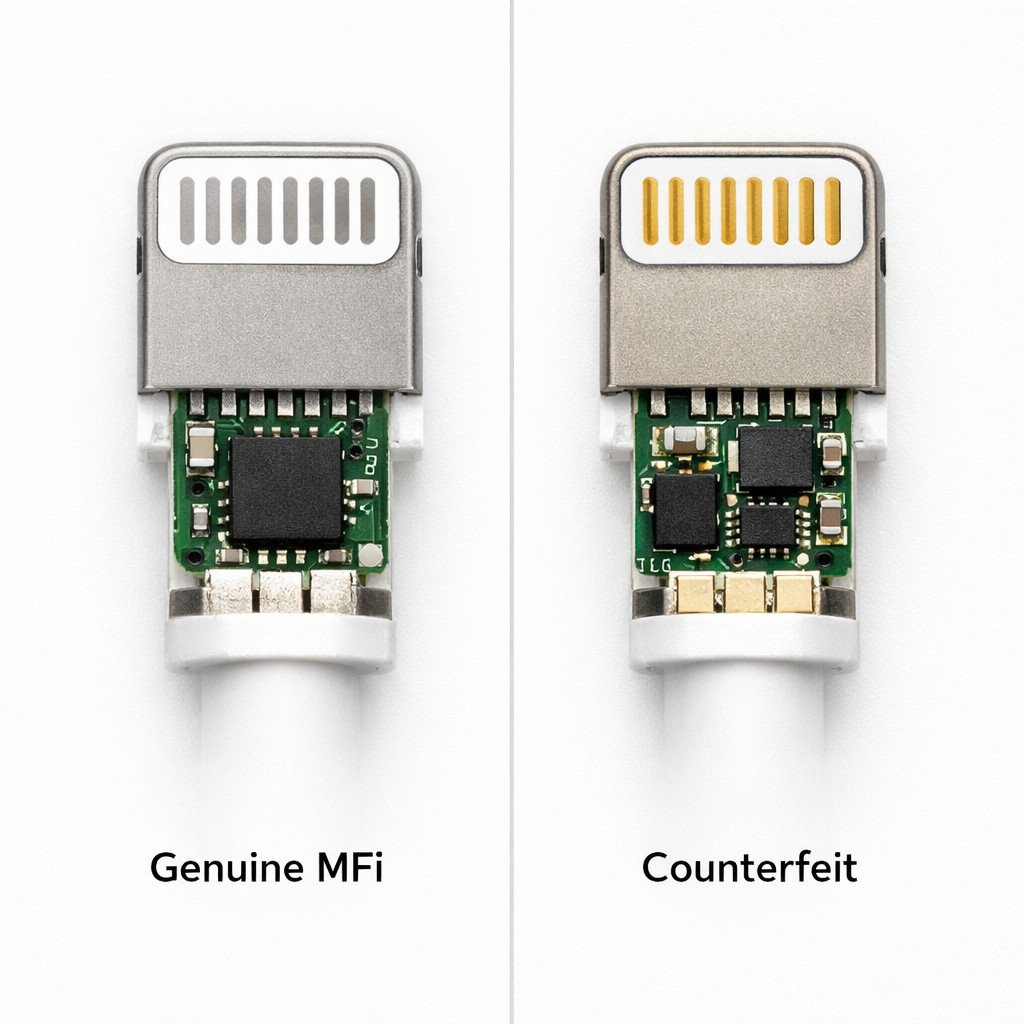
A sinistra: C89/C94 originale con singolo circuito integrato e pin argentati. A destra: Contraffazione/clone con design multi-chip.
10. Matrice decisionale per l'approvvigionamento B2B per applicazione
10.1 Per categoria di prodotto
| Tipo Di Prodotto | Chip consigliata | Motivazione |
|---|---|---|
| Da USB-A a Lightning (ricarica base) | C89 | Standard MFi attivo, pin argentati, sicurezza avanzata |
| Da USB-C a Lightning (ricarica rapida) | C94 | Unico chip compatibile con USB-PD per la ricarica rapida di iPhone 8+ |
| Sostituzione degli auricolari Lightning EarPods | C100 | Progettato specificamente per l'uscita audio Lightning |
| Adattatore da Lightning a jack audio da 3,5 mm | C101 | Convertitore digitale-analogico integrato per la compatibilità con cuffie analogiche. |
| Confezioni multiple/pacchetti convenienza | C89 (lato A) + C94 (lato C) | Copre sia gli scenari di ricarica tradizionali che quelli moderni. |
10.2 Per posizionamento di mercato
Mercato di fascia bassa/economica
Chip: C89 (USB-A)
Strategia: Opzione con certificazione MFi di livello più basso; da abbinare a caricabatterie base da 5W/12W
Priorità dei costi
Commercio tradizionale / Commercio elettronico
Chip: C94 (USB-C)
Strategia: La ricarica rapida è un requisito fondamentale per la vendita al dettaglio online; includi nel pacchetto il caricabatterie PD da 20 W.
Driver di volume
Premium / Di marca
Chip: C94 + giacca intrecciata
Strategia: MFi + materiali di alta qualità (treccia di nylon, connettori in metallo) consentono di ottenere un prezzo di vendita più elevato
Margine di profitto
10.3 Lista di controllo per l'approvvigionamento B2B di cavi Lightning
- Verificare lo stato della certificazione MFi e richiedere la documentazione.
- Verifica che il modello del chip (C89 o C94) corrisponda alle specifiche del tuo prodotto.
- Controlla il colore del perno: argento per C89/C94 originali, oro indica un modello più vecchio o potenzialmente contraffatto.
- Richiedi un campione per i test funzionali con dispositivi iOS e misuratore di potenza USB-C
- Verificare la coerenza dei lotti e i processi di controllo qualità del fornitore.
- Per ordini di grandi volumi, si consiglia di valutare la verifica dell'autenticità del chip da parte di un laboratorio indipendente.
11. Tendenze di mercato e futuro dei fulmini
11.1 La transizione all'USB-C e la durata residua del connettore Lightning
Apple ha iniziato la transizione dal connettore Lightning con l'iPhone 15 nel 2023 e, a partire dal 2025, gli iPhone dotati di connettore Lightning non vengono più venduti come nuovi. Tuttavia, la base installata di dispositivi con connettore Lightning rimane enorme:
- iPhone 14 e modelli precedenti: centinaia di milioni ancora in uso attivo in tutto il mondo.
- iPad con connettore Lightning: gli iPad di nona generazione e precedenti sono ancora in circolazione.
- Accessori per AirPods e Magic: molti utilizzano ancora le custodie con ricarica Lightning
Industry analysts project that Lightning cable demand will remain significant through 2028-2030 as these devices age and require replacement cables [citation:2].
11.2 Strategia di transizione dell'inventario B2B
Rapporto di inventario Lightning-USB-C raccomandato per anno:
- 2025-2026: 50% Lightning / 50% USB-C (transizione bilanciata)
- 2027-2028: 30% Lightning / 70% USB-C (solo per la sostituzione)
- 2029+: <10% Lightning (minimal legacy support)
11.3 Opportunità nel periodo del tramonto dei fulmini
Con il passaggio dei principali marchi di accessori allo standard USB-C, il mercato Lightning si fa meno affollato, creando opportunità per gli acquirenti B2B che mantengono un inventario di prodotti Lightning di qualità. Opportunità chiave:
- Cavi di ricambio per utenti iPhone (cavi di scorta, da viaggio, per auto)
- Confezioni multiple e pacchetti convenienti (per clienti sensibili al prezzo con dispositivi meno recenti)
- Accessori Lightning specializzati (adattatori audio, adattatori OTG per iPad di vecchia generazione)
Per trovare alternative USB-C durante la transizione del mercato, esplora la nostra Capacità di produzione di cavi USB-C.
12. Riepilogo: Differenze tra i connettori Lightning e strategia di approvvigionamento B2B
Punti chiave per gli acquirenti B2B
- C48 è obsoleto—evitare di tenere in magazzino a meno che non sia specificamente richiesto per la compatibilità con i sistemi precedenti
- C89 è lo standard per la conversione da USB-A a Lightning.—economico, certificato MFi, durabilità dei pin in argento
- C94 è il codice prodotto indispensabile per la ricarica rapida da USB-C a Lightning.—massimo volume, migliori margini
- C100/C101 sono chip audio di nicchia—opportunità limitate al di fuori dei mercati specializzati dei ricambi
- Verifica sempre l'autenticità dell'MFi. attraverso la documentazione e l'ispezione fisica (pin d'argento, singolo circuito integrato)
- Piano per la graduale dismissione dei fulmini per oltre 5 anni: bilanciare le scorte con la crescita dell'USB-C
Considerazioni finali sulla scelta del connettore Lightning.
Understanding Tipo di chip MFi per connettore Lightning—C48, C89, C94, C100 e C101— sono fondamentali per un approvvigionamento B2B redditizio di accessori. Ecco i punti chiave...
Con la transizione del settore verso l'USB-C, il mercato Lightning si ridurrà, ma non scomparirà da un giorno all'altro. I prossimi 3-5 anni rappresenteranno un declino controllato, con una domanda di sostituzione costante. Gli acquirenti B2B che comprendono le differenze tra i chip e mantengono un inventario di qualità con certificazione MFi potranno ottenere un valore aggiunto, mentre i concorrenti usciranno prematuramente dal mercato.
Hai bisogno di cavi Lightning certificati MFi con il chip giusto?
WJWSY fornisce cavi Lightning OEM e all'ingrosso dotati di chip MFi C89 e C94 originali. Tutti i prodotti sono completamente certificati MFi con relativa documentazione e sono disponibili in lunghezze, colori e confezioni personalizzate. Che si tratti di cavi da USB-A a Lightning per il mercato di fascia bassa o da USB-C a Lightning per prodotti premium a ricarica rapida, garantiamo uniformità tra i lotti e un'autenticazione affidabile.
Sfoglia i cavi Lightning → Richiedi campioni e preventivo MFi →
Per ulteriori informazioni sulla certificazione dei cavi e sugli standard di qualità, consultare la nostra pagina relativa alla garanzia di qualità e alla certificazione o leggi il nostro Guida comparativa alle certificazioni USB-IF e MFi.