

How to Select the Right USB Cable for Data Applications
How to Select the Right USB Cable for Data Applications
USB cables provide the physical signal path for data transfer between devices. The USB specification defines a range of data rates and signal constructions, from USB 2.0 twisted-pair signaling at 480 Mbps to SuperSpeed differential pairs and USB4 multi-protocol tunneling at 40 Gbps and 80 Gbps. A data cable must match the host interface, target device, required data rate and physical distance to maintain signal integrity and achieve the expected throughput.
Part 1: Selecting by Data Requirement
USB data cables fall into three broad categories based on the maximum data rate and signal construction they support. Each category is suited to different device types, data volumes and transfer scenarios. Selecting the correct category is the first step in matching a cable to the target application.

USB 2.0 Data Cable
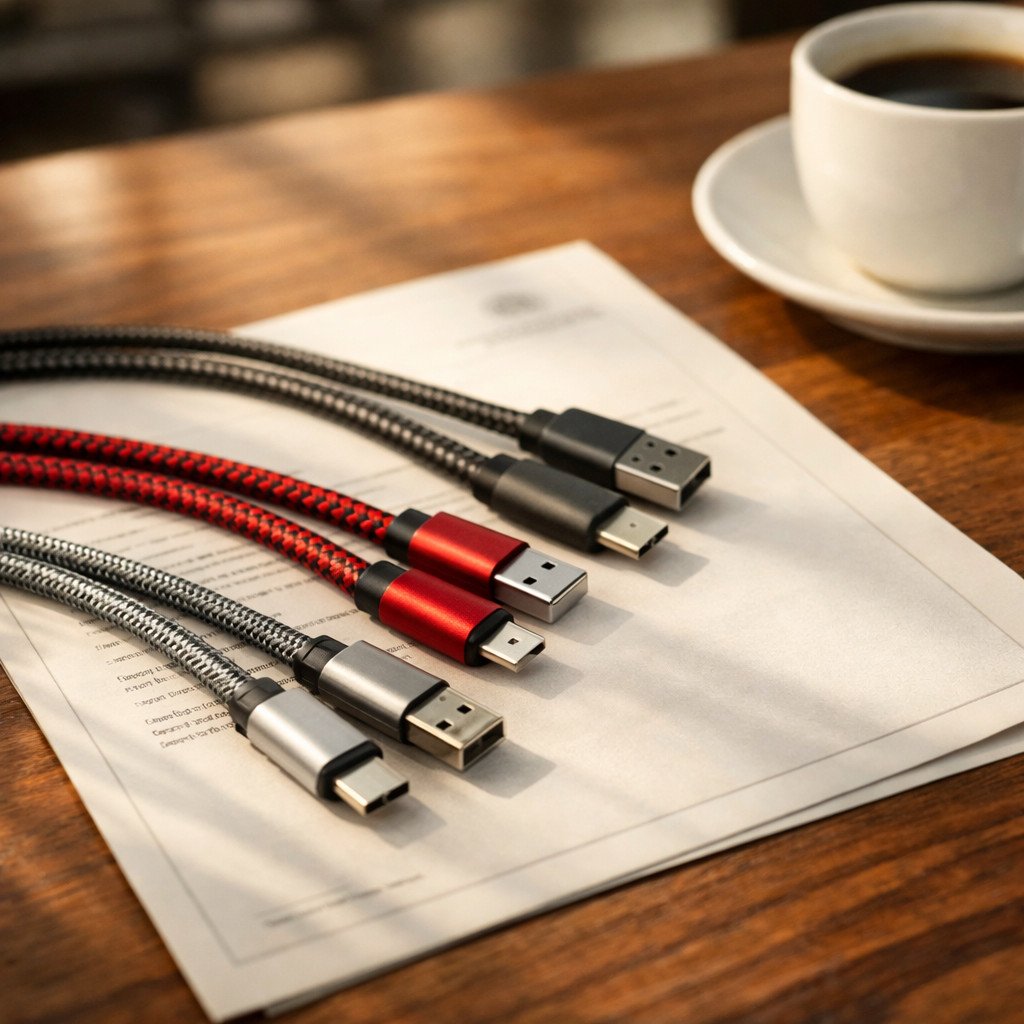
USB 2.0 data cables carry signals at rates up to 480 Mbps. They use a single twisted-pair data configuration with a specified characteristic impedance and are available in connector combinations including USB-A to USB-B, USB-A to USB-C, USB-A to Micro-USB and USB-C to USB-C. Shielding construction depends on the applicable USB cable requirements, connector configuration and intended EMC environment and should be confirmed for the selected design.
These cables handle basic file transfer, peripheral connectivity, device synchronization and charging-and-data applications where higher throughput is not required. Typical use cases include connecting keyboards, mice, printers and legacy peripherals to host computers, as well as syncing mobile devices at standard USB 2.0 speed.
A USB 2.0 cable connected between a SuperSpeed host and device will limit the link to USB 2.0 speed regardless of the host or device capability. USB 2.0 cable reach is limited by the electrical requirements of the applicable cable and connector specification. Exceeding the validated passive length may cause data errors or connection drops. When higher data rates are needed, a cable supporting the target USB data specification must be selected.
- Basic transfer
USB 5Gbps to USB 20Gbps Data Cable
USB 5Gbps, USB 10Gbps and USB 20Gbps cable assemblies support higher data rates than USB 2.0, subject to connector combination, cable construction, model availability and validation. These cables use controlled-impedance high-speed differential pairs and appropriate shielding. USB 20Gbps requires a compatible two-lane USB-C implementation. USB 40Gbps and USB 80Gbps products should be identified separately as USB4 cable designs.
These cables are suited for transferring large files, streaming high-resolution media and connecting professional equipment. The selected cable should be verified against the target device data specification and the host USB capability, as throughput is limited by the lowest-performing element in the link.
- Camera
- Almacenamiento
- Equipos profesionales
USB4 Cable
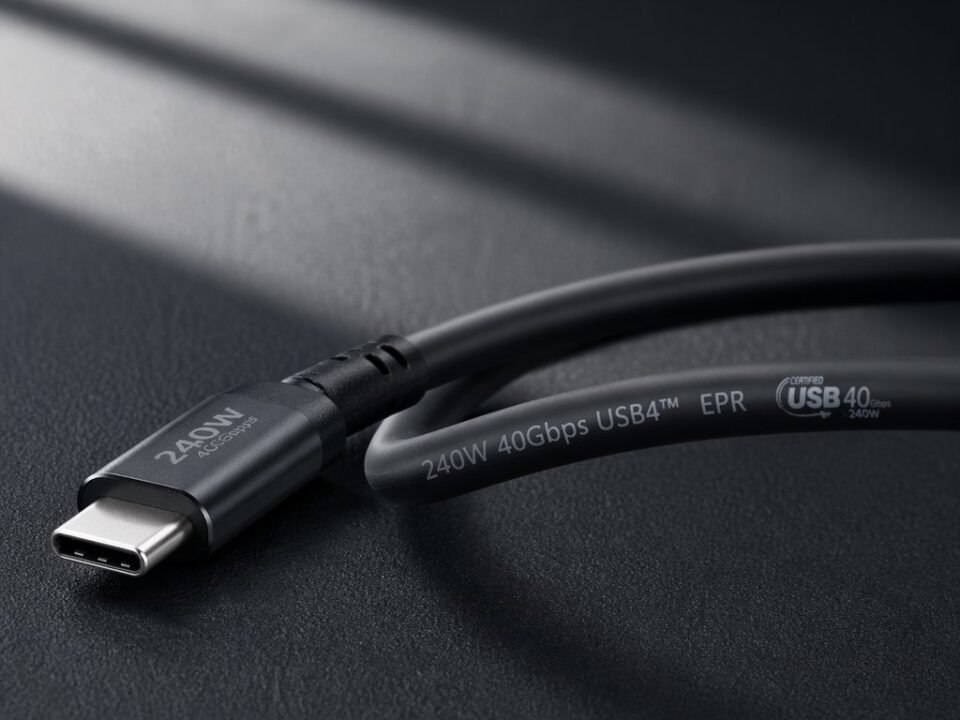
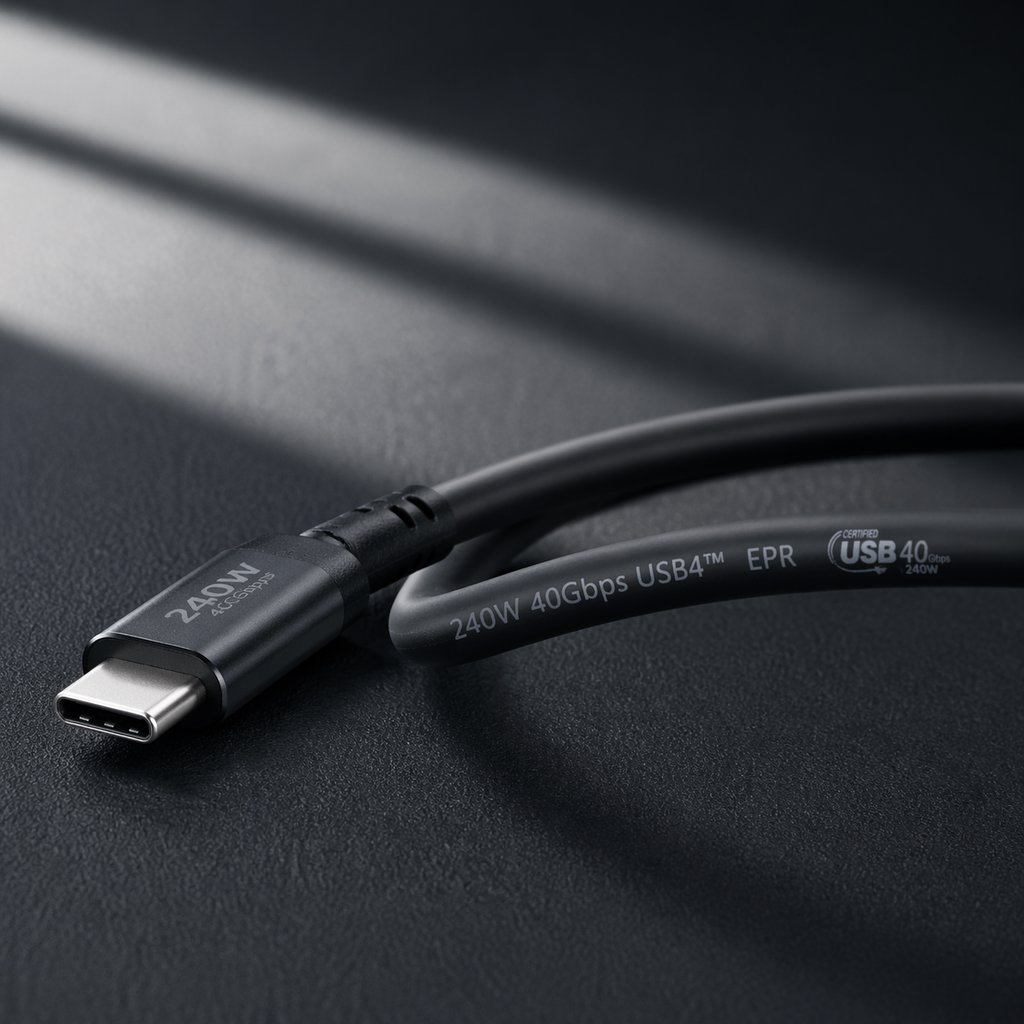
USB4 cable designs may support USB 20Gbps, USB 40Gbps or, under USB4 Version 2.0, USB 80Gbps, subject to model availability and validation. USB4 uses the USB-C interface and provides an architecture for tunneling USB data, DisplayPort and, in supported implementations, PCIe traffic. Actual protocol, display and data capabilities depend on the cable and both connected devices and must be confirmed for the selected configuration.
USB4 cable power rating and video capability must be specified separately from data performance. USB-C connector appearance alone does not confirm USB4, USB Power Delivery, video support or a particular data rate.
USB4 cables are suited for high-bandwidth applications including docking stations, high-resolution display connectivity and selected external GPU enclosures, when the host, peripheral and cable support the required USB4 functions.
- High-bandwidth applications
Part 2: Selection Factors
Once the data-rate category is identified, five factors determine whether a cable is suitable for the target application: transfer speed, cable length, connector and device compatibility, power requirements, and operating environment and construction. These factors should be evaluated together.
1. Transfer Speed
The cable's rated data speed must match or exceed the target requirement. Throughput is limited by the lowest-performing element in the link: a USB 10Gbps cable between a USB 5Gbps host and device operates at 5 Gbps; a USB 2.0 cable between two SuperSpeed devices operates at USB 2.0 speed. The cable, host controller and target device should be checked for compatible USB data-rate specifications before selection.
USB data-rate names describe the rated signaling capability of a compatible link. Actual application throughput may be lower because of protocol overhead, host and device performance, storage speed, operating conditions and software configuration.
Where the connector combination and device interfaces are physically compatible, higher-rated USB cables can usually operate with lower USB data generations, but the link runs at the lowest supported data rate. Backward compatibility should not be assumed when connector type, alternate modes, active electronics or protocol-specific functions differ.
For high-speed cables, applicable signal-integrity and interoperability testing should be selected according to the target USB specification, data rate, cable length and passive or active construction. Specific test requirements depend on the product type, target market and applicable certification program.
2. Cable Length
Passive cable reach depends on the target USB data rate, connector configuration, cable construction and the electrical limits defined by the applicable specification. Higher data rates generally allow less signal-loss margin, but there is no single universal length that applies to each cable design. The supported passive length should therefore be confirmed for the selected model and validated data rate. Longer reach may require an active cable or another compatible extension solution.
Power-conductor gauge affects DC resistance and voltage drop, while high-speed signal performance depends mainly on differential-pair geometry, conductor size, dielectric material, characteristic impedance, insertion loss, pair skew and shielding. Increasing conductor size alone does not establish high-speed compliance. Cable construction and length should be validated against the target USB data rate, bend-radius requirements and routing conditions.
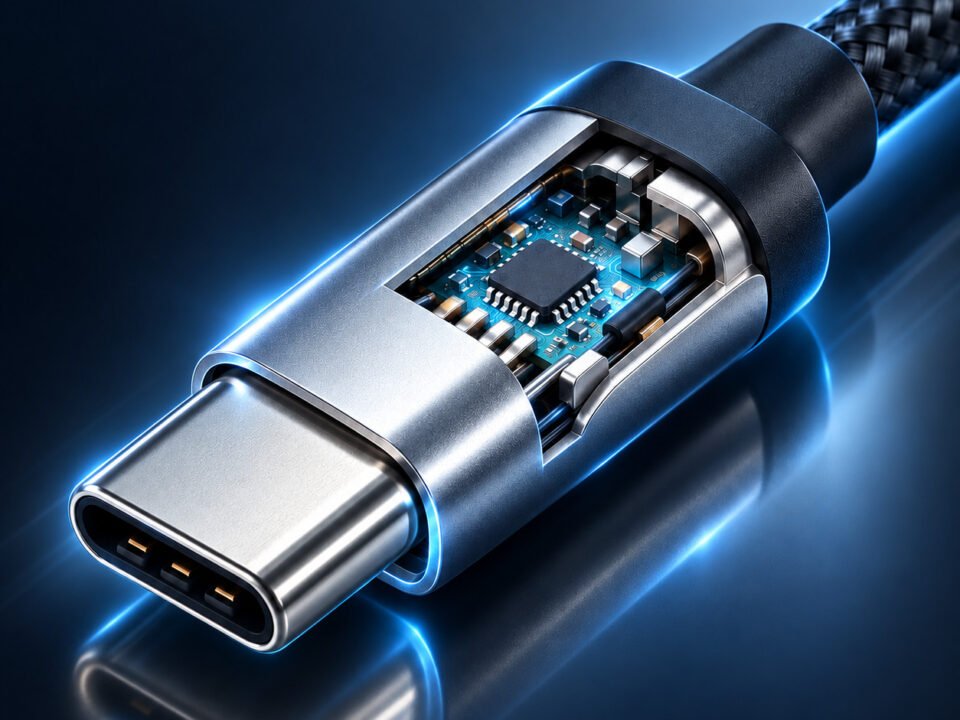
When the required distance exceeds the passive specification limit, active cable designs with built-in signal-conditioning electronics may be used. Active cables regenerate or condition the high-speed signals to extend reach beyond the passive limit. Active designs draw power through the supported connector architecture, such as USB-C VCONN where applicable, or through a specified external power arrangement. The active cable must be confirmed for compatibility with the source, host, connected device and intended protocol, as signal-conditioning designs are specific to the target data rate and USB specification version.
3. Connector and Device Compatibility
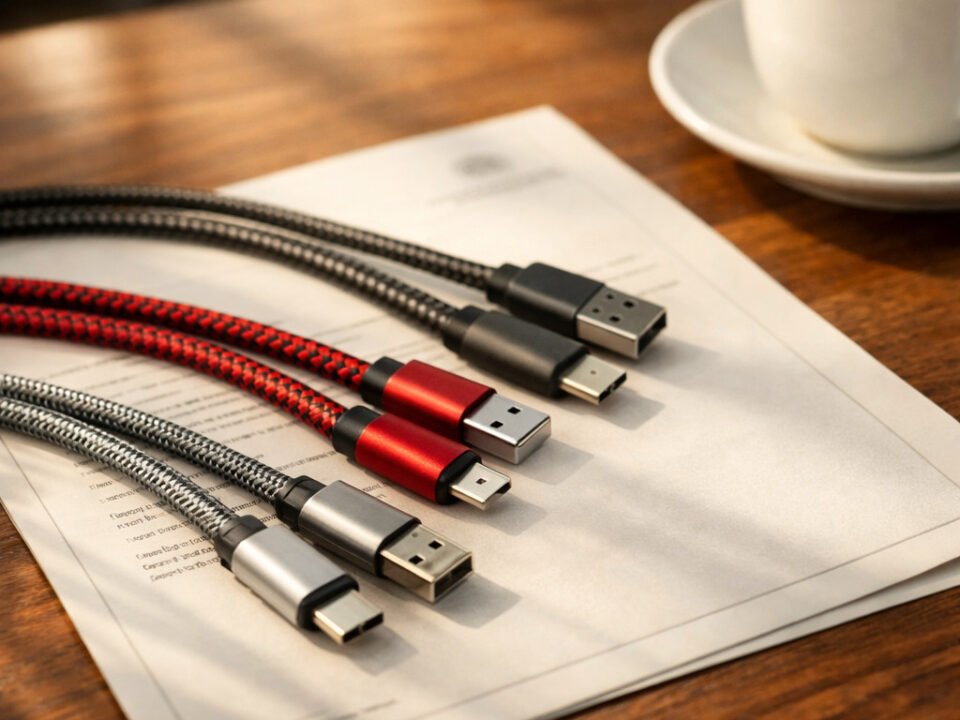
The connector at each end must physically match the host and target device, but connector shape alone does not determine data or power capability. Selected USB-C to USB-C cables may support USB4, USB Power Delivery or video functions when the cable and connected devices provide the required capabilities. USB-A to USB-C cables may support USB 2.0, USB 5Gbps or USB 10Gbps data, depending on the USB-A port and cable design, but a USB-A source does not provide standard USB PD negotiation over the USB-C Configuration Channel. USB-A to USB-B cables are commonly used for printers and legacy peripherals. USB-C to Lightning cables should be confirmed for the target Apple device, required data and charging functions, and applicable MFi Program requirements.
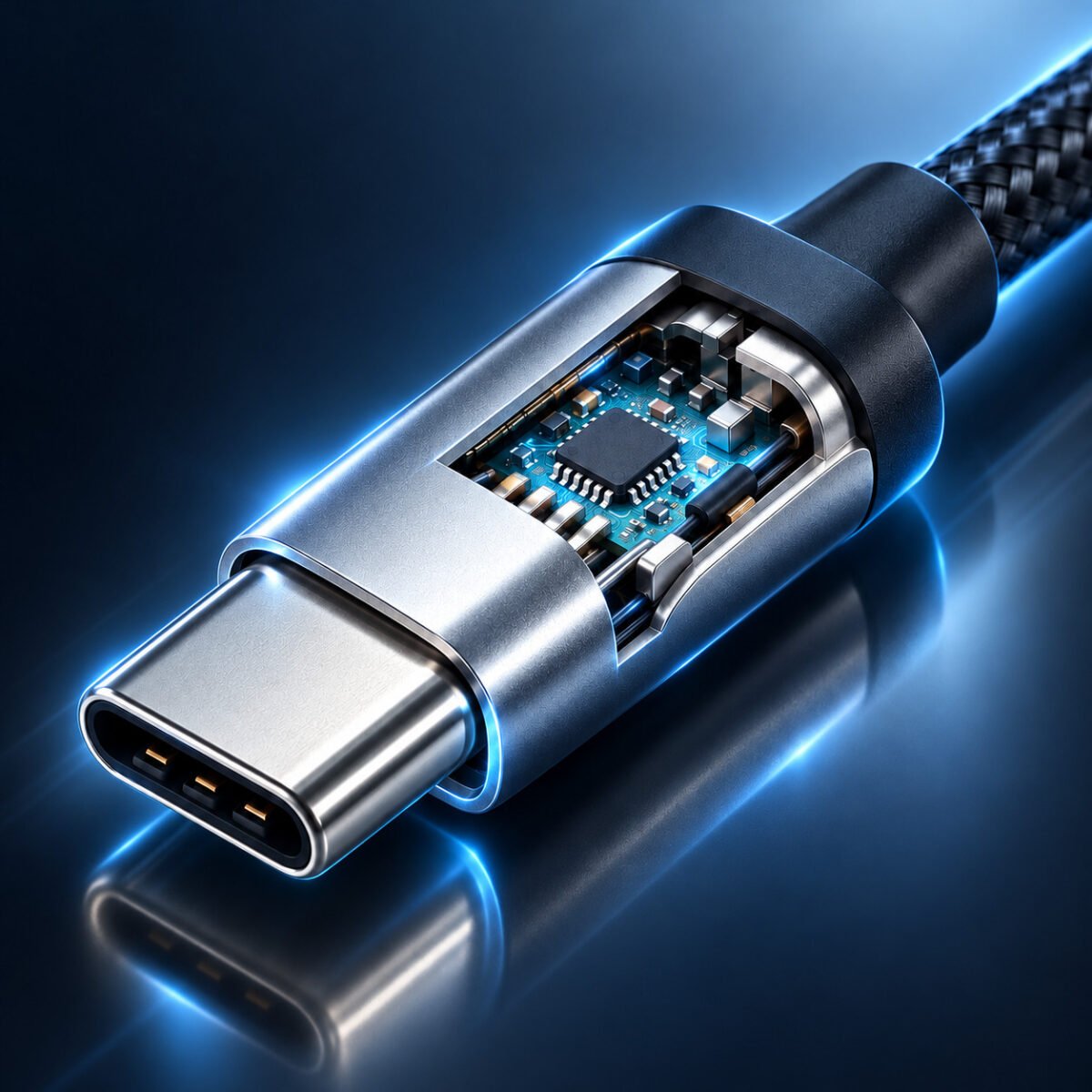
For USB-C cables, the internal wiring and electronic components — not the connector appearance — determine the supported data rate, power level and alternate-mode capability. A USB-C cable may support USB 2.0 data only, or it may support higher data rates, depending on its construction. The cable's rated capabilities should be reviewed against the target device and host specifications.
Industrial or embedded devices may use non-standard or custom connector interfaces. For these applications, cable availability, pinout configuration and specification should be verified with the equipment manufacturer or cable supplier to ensure the cable matches the device interface and signal requirements.
4. Power Requirement
Data capability does not indicate charging or bus-power capability. For bus-powered storage, cameras and other peripherals, confirm the required current, voltage drop, cable power rating and applicable USB Power Delivery requirement. The cable, host and device must support the intended power arrangement.
5. Environment and Construction
Confirm jacket material, shielding, bend radius, flexing requirement, temperature range, moisture or chemical exposure and installation conditions. Material or shielding claims should be based on the selected cable design and validation requirements rather than the material name alone.
Selection factors include:
- Transfer speed
- Longitud del cable
- Connector and device compatibility
- Power requirement
- Environment and construction
Part 3: Applications
The following scenarios highlight cable considerations specific to common data-transfer applications. Confirm that the cable, host and device support compatible USB data-rate specifications.
Camera
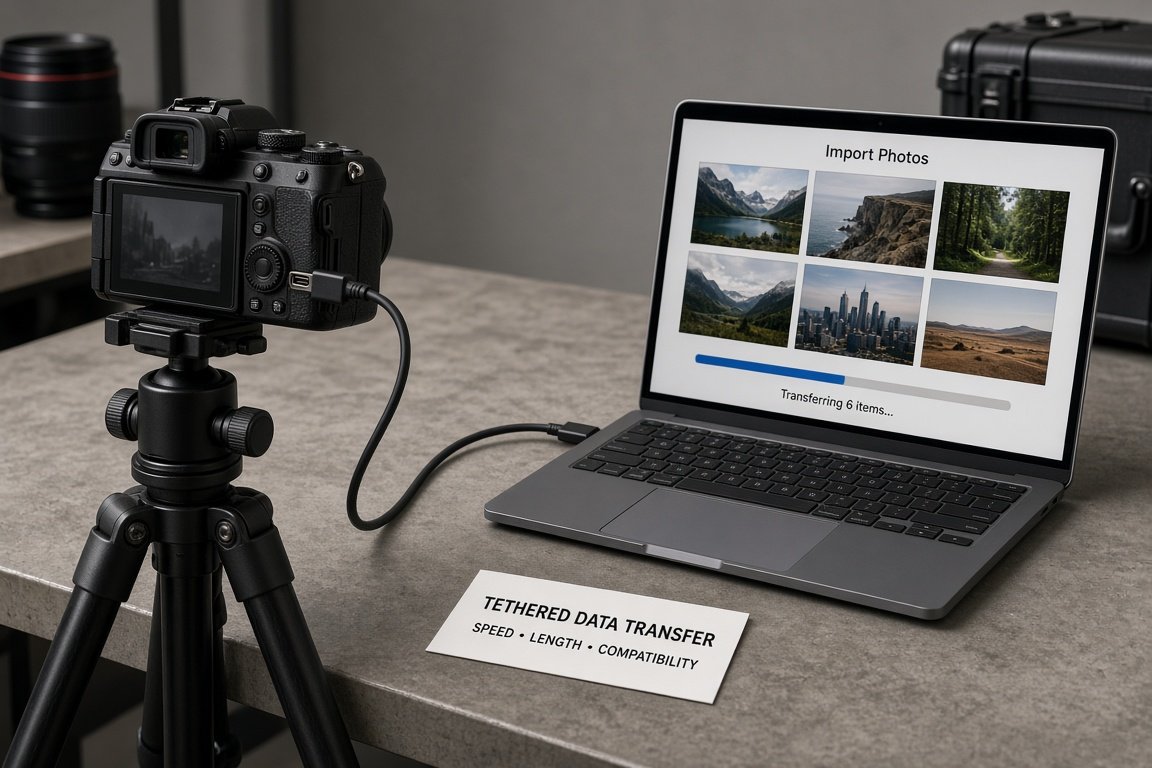
Cameras and imaging devices use USB cables for file transfer, tethered shooting and remote control. The data rate needed depends on the camera's USB interface and the file sizes involved. Cameras with USB 2.0 interfaces transfer at standard USB 2.0 speed; cameras with SuperSpeed interfaces may support USB 5Gbps or USB 10Gbps. For professional workflows involving raw image transfer or tethered live-view where low latency matters, a cable with appropriate shielding and signal construction helps maintain a stable link and reduces the risk of dropped frames or connection interruptions.
Studio and field setups often place the camera several metres from the host computer. When the distance exceeds the passive cable limit for the target data rate, an active cable may be considered, subject to compatibility with the camera and host. The cable should also be confirmed for mechanical durability if it will be moved frequently between locations.
Almacenamiento externo
External SSDs and HDD enclosures rely on USB cables for high-speed data transfer. Storage devices with USB 5Gbps, USB 10Gbps, USB 20Gbps and USB 40Gbps interfaces are available. The cable, host controller and storage device must support the same or compatible USB data-rate specification for the target transfer speed to be achieved. Using a lower-rated cable between a high-speed storage device and host will bottleneck the connection and reduce effective throughput.
Bus-powered storage devices also draw current through the USB connection, so the cable conductor gauge must be sufficient to avoid voltage drop that could affect device operation. This is particularly important for portable HDD enclosures that require higher inrush current during spin-up. The selected cable should be checked for both data-rate and power-delivery compatibility with the target storage device and host.
Equipos Industriales
Test instruments, programmable controllers and embedded systems may use USB cables for data acquisition, programming and configuration. Industrial environments can expose cables to electromagnetic interference, oil, chemicals, vibration and temperature extremes. Reinforced shielding may be needed to maintain signal integrity in high-interference environments; oil-resistant and flame-performance-rated jacket compounds may be required depending on the facility and applicable standards.
For industrial applications, cable material, sealing and mechanical specifications should be evaluated against the target operating environment. High flexing durability may be required for cables in cable chains or moving equipment, specified by the number of bending cycles at a defined bend radius. A waterproof or IP claim must refer to the tested complete assembly and the specified mated or unmated condition. Compliance should be based on the applicable material system, completed cable construction and required test method rather than the jacket material name alone.
Available customization may include connector combinations, cable length, jacket material, shielding construction, conductor configuration, overmold design, color, packaging and labeling, subject to specification review and production feasibility.
Request a USB Data Cable Selection Review
Provide the target device type, connector combination, required data rate, cable length, power requirement, material preference, operating environment, destination market and estimated order quantity. These details support specification review, sample planning and OEM/ODM quotation.