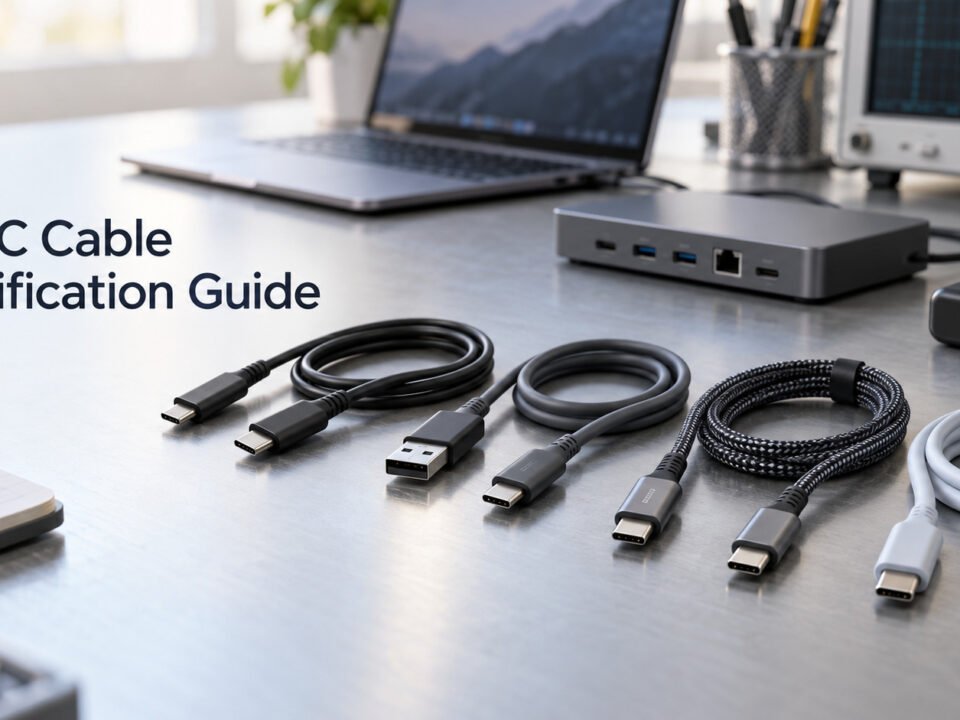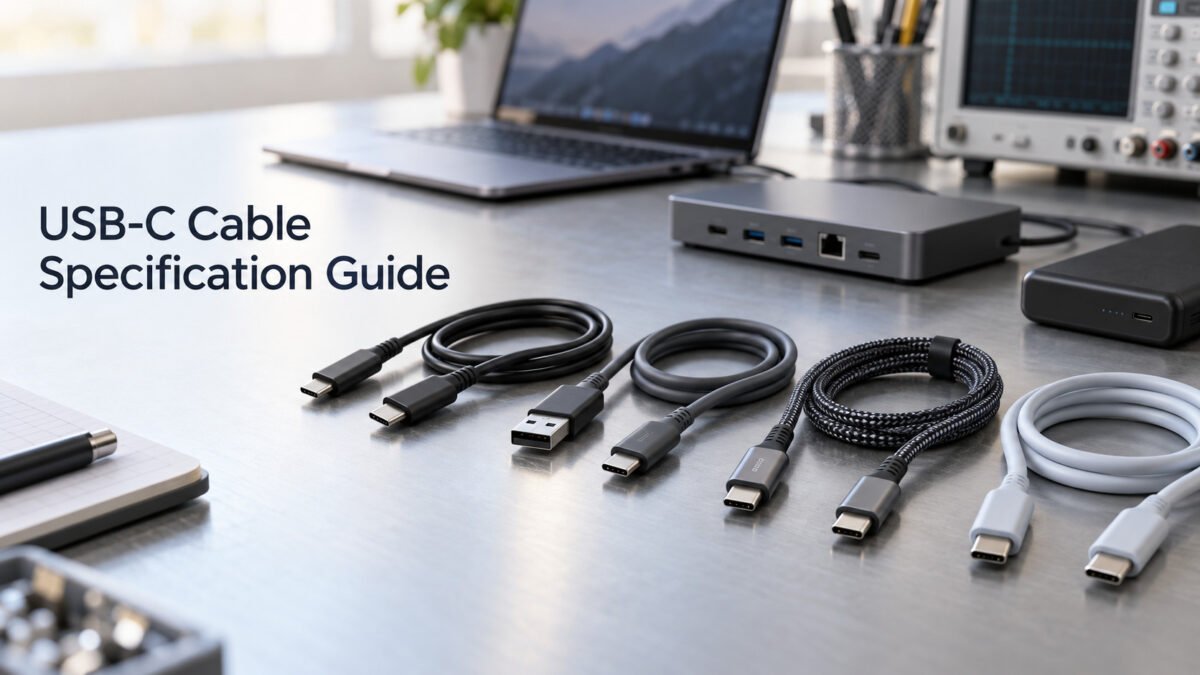

USB-C Cable Specification Guide
2026-09-10
How to Select a USB-C Cable for Charging Applications
How to Select a USB-C Cable for Charging Applications
USB Type-C is a reversible connector system used across a wide range of consumer, commercial and industrial devices. USB Power Delivery is a separate power-negotiation protocol that can operate over compatible USB-C connections. Actual charging power depends on the capabilities of the power source, connected device and cable. Selecting a cable therefore requires confirmation of its current rating, voltage category, electronic marking, length, mechanical construction and operating environment.
Part 1: Understanding USB-C Charging Requirements
USB-C charging power is determined by the combined capabilities of the power source, connected device and cable. Terms such as standard charging, fast charging and high-power charging are commonly used in product marketing but do not define standardized USB cable categories.
For practical cable selection, the current and power rating provide a clearer basis:
- A compliant 3A USB-C cable can support applicable USB PD Standard Power Range configurations up to 60W at 20V and 3A. Electronic marking is not required solely for a 3A current rating, although some cables may include electronic components for other capabilities.
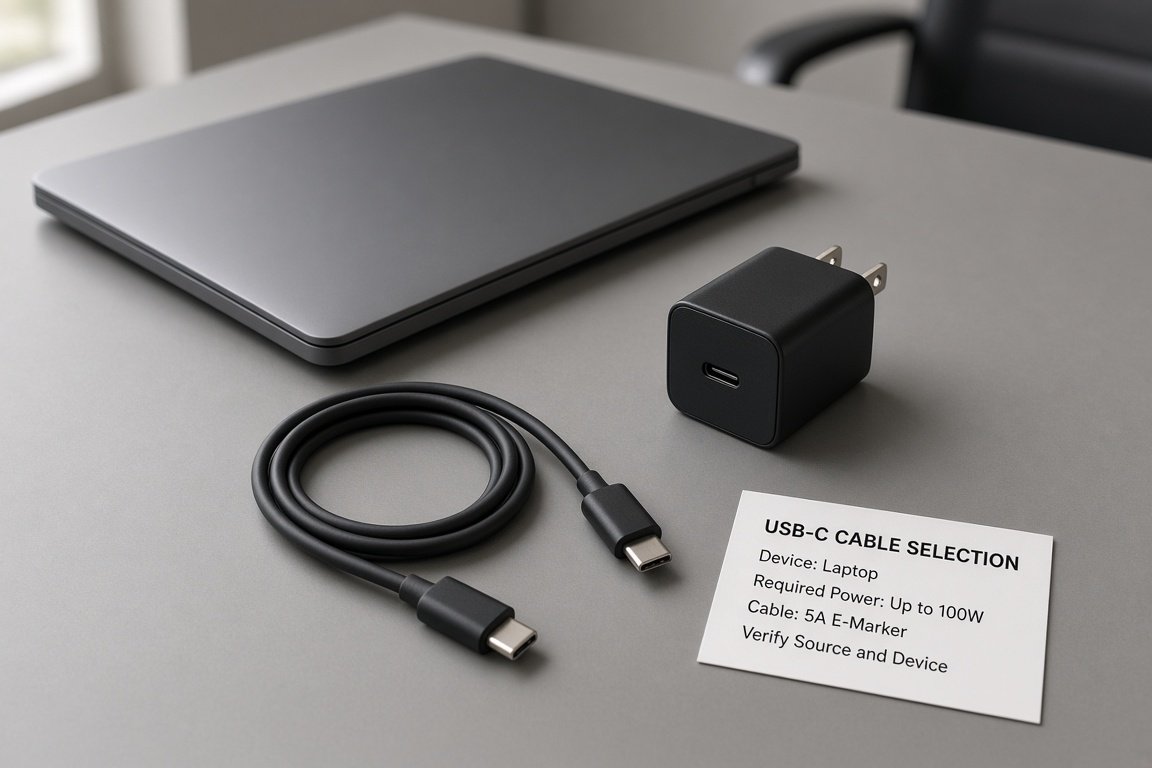
- An electronically marked 5A USB-C cable with an E-Marker can support applicable USB PD Standard Power Range configurations up to 100W at 20V and 5A.
- An EPR-rated electronically marked 5A USB-C cable with an E-Marker can support compatible Extended Power Range configurations up to 240W at 48V and 5A.
An E-Marker reports the cable’s identity and rated capabilities to the connected USB PD system. It does not increase charging power by itself. Actual power delivery remains limited by the lowest supported capability among the source, cable and connected device and by the negotiated USB PD profile.
Part 2: Selecting by Power Level
USB-C charging cables can also be selected by the power level they are designed to support. The following categories group cables by the maximum system power level available through USB Power Delivery. Actual power delivery depends on the cable, source, sink and negotiated PDO, and must be confirmed for each model.
60W Cable
Cables rated for 60W operation support USB PD Standard Power Range configurations up to 20V at 3A. At this power level, the cable carries 3A current without requiring an E-Marker. The 60W power level corresponds to PDO combinations including 5V, 9V, 15V and 20V at current levels up to 3A, subject to the charger’s advertised PDOs and rated output.
60W cables are suitable for smartphones and tablets that support standard USB PD charging. The actual charging speed depends on the cable rating, power source and connected device. The selected cable should be confirmed against the target device’s charging specification and the power source’s advertised PDOs.
- teléfonos inteligentes
- tabletas
100W Cable
Cables rated for 100W operation support USB PD Standard Power Range configurations up to 20V at 5A. At this power level, the cable must carry 5A current and requires an E-Marker compliant with the USB Type-C specification. The E-Marker communicates cable capabilities to the source and sink to enable 5A operation.
100W cables are suitable for laptops and other devices that support higher USB PD power levels within the Standard Power Range. Actual charging performance depends on the cable rating, power source, connected device and negotiated PDO. The cable’s E-Marker must be functional and compliant with the USB Type-C specification for 5A operation to be enabled.
- portátiles
240W Cable
Cables rated for 240W operation support USB PD Extended Power Range configurations up to 48V at 5A. EPR adds 28V, 36V and 48V fixed supply voltages to the USB PD specification, supporting system power levels up to 240W. EPR operation requires a compatible source, sink and EPR-rated electronically marked 5A cable with an E-Marker.
240W cables are constructed and tested to meet the voltage, current, thermal and safety requirements defined by the USB PD specification for EPR operation. The E-Marker in an EPR-rated cable communicates EPR capability to the source and sink. EPR operation cannot be established without an EPR-rated cable and compatible source and sink devices.
240W cables are suitable for high-performance devices that require power levels above the Standard Power Range maximum of 100W. For EPR operation, the source must offer and the sink must request a compatible EPR power profile. The cable must be an appropriate EPR-rated electronically marked 5A cable with voltage and current ratings suitable for the negotiated power level.
- High-performance devices
Part 3: Selection Factors
Beyond cable power rating, four factors should be evaluated when selecting a USB-C charging cable: cable length, connector combination, data and video requirements, and usage environment. These factors should be confirmed separately because charging power does not indicate data-transfer or video capability.
1. Cable Length
Cable length affects both voltage drop and charging performance. For charging cables, longer length increases conductor resistance and voltage drop, which may reduce the voltage at the device end below the level required for the negotiated PDO. Excessive voltage drop may cause the device to draw less current than the charger can supply, resulting in slower charging.
Conductor gauge selection influences voltage drop. Thicker conductors reduce resistance and voltage drop but increase cable outer diameter and cost. The selected conductor gauge should be confirmed against the charging current, cable length and acceptable voltage drop range to ensure the device receives the required voltage.
For applications requiring longer cable runs, conductor gauge may need to be increased to compensate for additional resistance. The relationship between cable length, conductor gauge and voltage drop should be evaluated according to the target charging current and the voltage tolerance of the connected device.
2. Connector
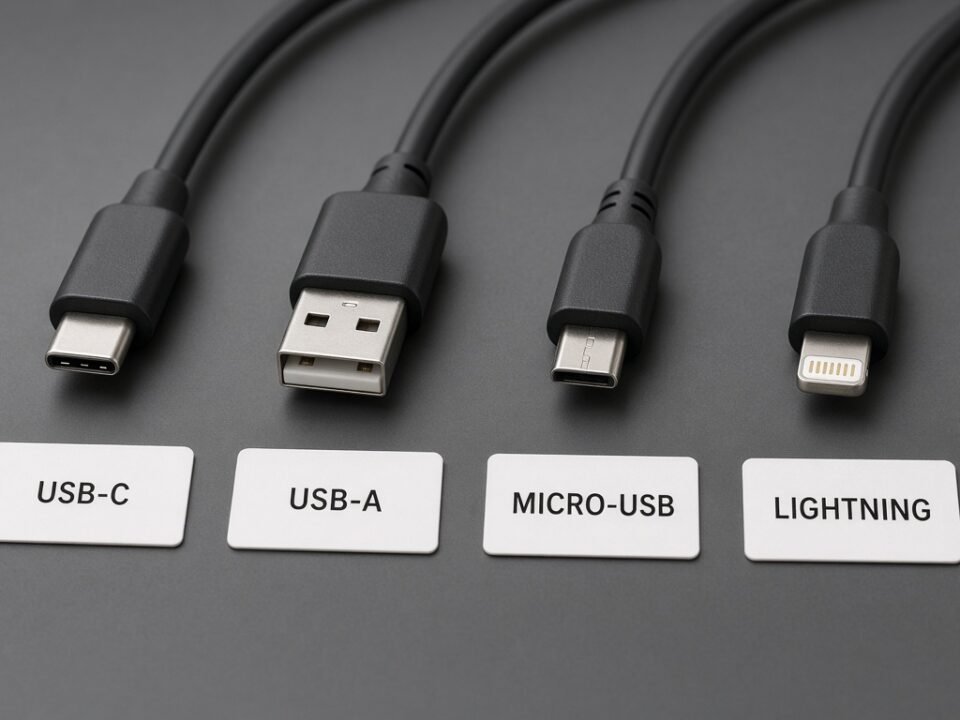
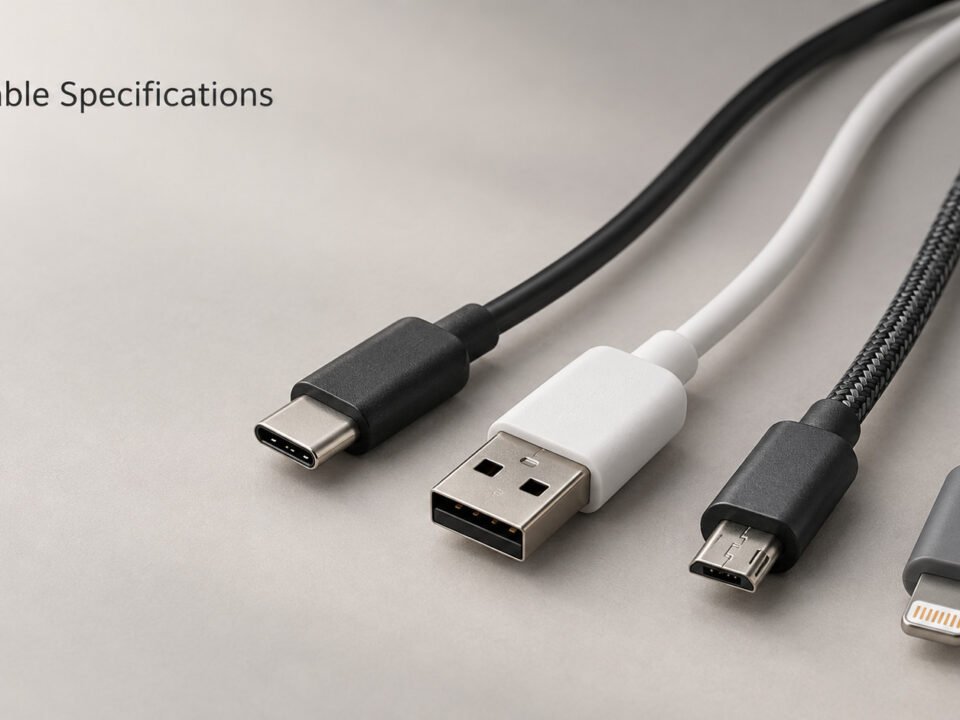
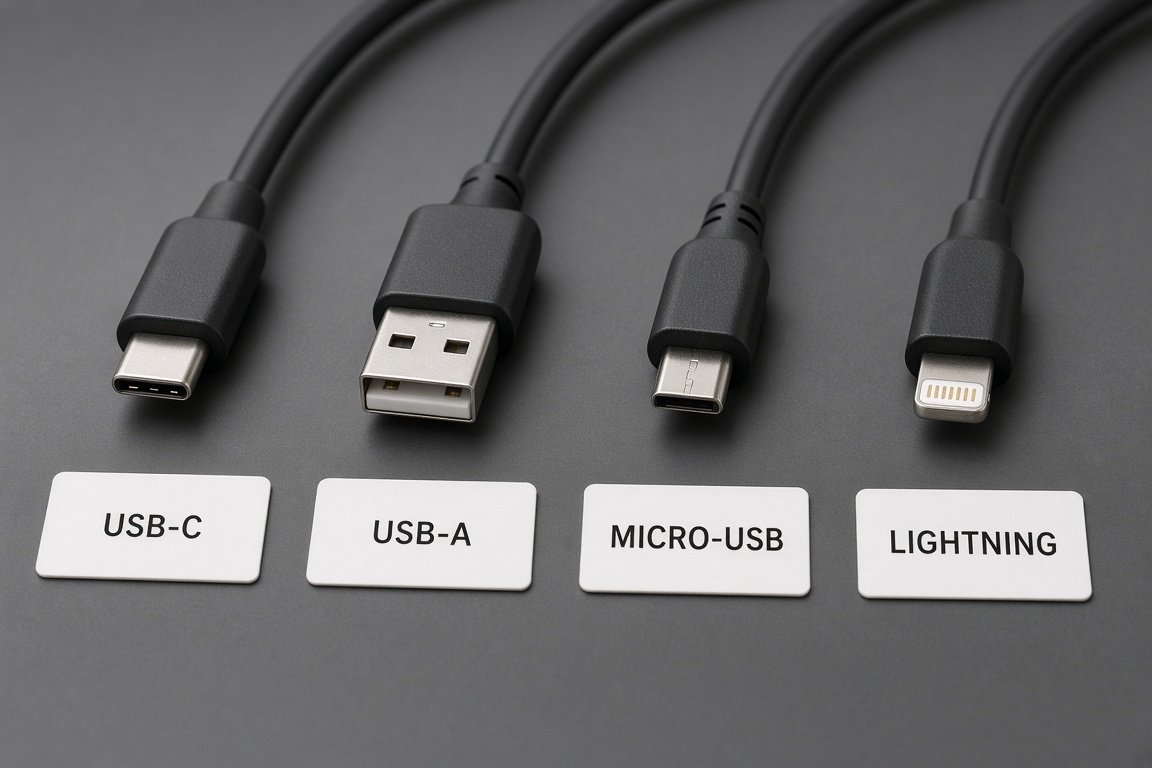
The USB-C connector is defined by the USB Type-C Cable and Connector Specification. USB-C cables may have USB-C connectors on both ends, or a USB-C connector on one end with a different connector type on the other end, such as USB-A to USB-C or USB-C to Lightning configurations.
The connector type at each end must match the interfaces on the power source and target device. USB-C to USB-C cables support USB PD negotiation when connected between compatible source and sink devices. USB-A to USB-C cables may support charging at levels determined by the USB-A source, which may not support USB PD negotiation. USB-C to Lightning cables connect to Apple devices that retain the Lightning receptacle and should be confirmed for applicable MFi Program requirements.
The USB-C connector is reversible, allowing insertion in either orientation. Connector durability, contact plating and mechanical construction affect the cable’s insertion cycle life and long-term reliability. These parameters should be confirmed against the target application’s expected usage frequency and environmental conditions.
3. Data and Additional Functions
A USB-C cable’s power rating does not indicate its data-transfer or video capability. A cable rated for 100W or 240W may support USB 2.0 data only, a higher USB data rate or no data transfer, depending on its design.
If data transfer is required, specify the target capability separately, such as USB 2.0 up to 480 Mbps or a selected USB 5Gbps, USB 10Gbps, USB 20Gbps, USB 40Gbps or USB 80Gbps design. Video or alternate-mode support must also be confirmed separately from charging power.
Actual data and video performance depends on the cable construction, cable length, source device and connected equipment. USB-C connector appearance, E-Marker presence and power rating alone do not confirm data speed or video support.
4. Usage Environment
The usage environment affects material selection, sealing and mechanical durability. Cables designed for indoor consumer use may not perform reliably in outdoor, industrial or vehicular applications without appropriate material and construction specifications.
Indoor applications commonly use selected PVC or TPE jacket compounds. Depending on the material grade and completed cable construction, these materials can provide suitable flexibility and abrasion resistance for consumer and office environments at normal room temperatures. Indoor cables may not require special UV resistance, oil resistance or wide operating temperature ranges.
Outdoor applications may require UV-resistant jacket materials to prevent degradation from sunlight exposure. Moisture resistance may be needed for cables exposed to rain, humidity or condensation. Wider operating temperature ranges may be required for cables installed in environments with seasonal temperature variation. A waterproof or IP claim must refer to the tested complete assembly and the specified mated or unmated condition.
Industrial or vehicular applications may require oil and chemical resistance, reinforced shielding, high flexing durability or specified flame-performance requirements. Compliance should be based on the applicable material system, completed cable construction and required test method rather than the jacket material name alone. Material, sealing and mechanical specifications should be confirmed against the target operating environment.
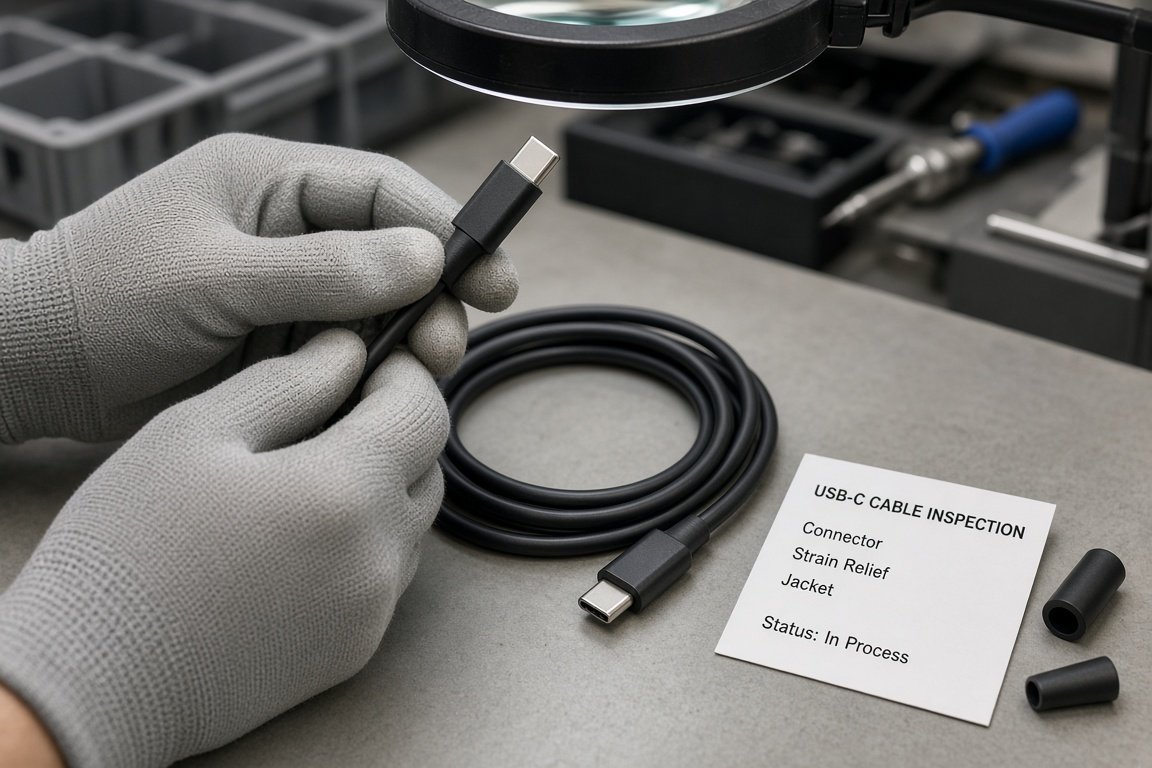
Selection factors include:
- Longitud del cable
- Connector combination
- Data and video requirements
- Usage environment
Request a USB-C Charging Cable Selection Review
Provide the target device type, connector combination, required charging power, data and video requirements, cable length, material preference, usage environment, destination market and estimated order quantity.