
Custom Electronics Project Requirements Guide
2026-09-19
Electronics Manufacturing Capability Overview
2026-09-19
OEM/ODM Manufacturing Partnership for Cables, Chargers & Power Adapters
OEM/ODM Manufacturing Partnership for Cables, Chargers & Power Adapters
OEM and ODM manufacturing for USB cables, chargers, and AC/DC power adapters, from design review and prototyping through volume production and ongoing supply. Brands, distributors, and equipment manufacturers are supported with specification-based development, program-specific quality control, and supply programs tailored to each product and market.
1. Partnership Scope
The partnership covers three connected areas: product development, manufacturing, and supply support. The scope for each program is defined according to the product specification, target market, forecast, and required documentation.
1.1 Product Development
Product development is the first stage of the partnership, where customer requirements are converted into a manufacturable design. Engineering teams work from the customer’s specification, reference design, or concept sketch, and provide technical feedback on feasibility before tooling and materials are committed. This early review helps to identify risks related to electrical performance, mechanical fit, material selection, and production yield, so that issues are addressed while the cost of change is still low.
Typical activities in this stage include:
- Design review and feasibility assessment. The proposed design is checked against the intended function, target cost, and production constraints. Electrical schematics, connector selection, housing structure, and cable construction are evaluated before development proceeds.
- Prototyping and engineering samples. Prototypes and engineering samples are built to evaluate dimensions and function, with durability testing and supporting test documentation provided where required by the program. Engineering samples are supplied to the customer for fit testing, compatibility testing, and internal evaluation.
- Component selection. Components such as connectors, conductors, power-management ICs, capacitors, and housing materials are selected as applicable to the product design, to meet the performance and cost targets of the program. Where multiple suppliers can meet the same specification, alternates are qualified to reduce supply risk.
- Manufacturing readiness. Before volume production begins, a pilot run is conducted to validate tooling, fixtures, test programs, and work instructions. Outputs of this step include the bill of materials (BOM), the product specification, and the test plan.
The development process is organized in stages, and each milestone is reviewed before the next stage starts. This staged approach reduces rework and gives the customer visibility into progress at defined checkpoints. Specification changes are handled through a controlled change process, with the impact on cost and schedule communicated in advance.
1.2 Manufacturing
Manufacturing covers volume production of the agreed product range, delivering repeatable quality against the agreed specification and control plan. Production is carried out in a facility with documented procedures for incoming inspection, in-process control, final testing, and packaging.
Key elements of the manufacturing model include:
- Production planning and scheduling. Orders are scheduled against available capacity, and production plans are aligned with customer forecasts. Delivery dates are confirmed after capacity, materials, and order requirements are reviewed. Peak-season demand is managed through line allocation and shift arrangements.
- Quality control. Incoming materials are inspected before use, in-process checks are performed at defined stations, and finished goods pass a final inspection before packaging. Defect data is collected by batch and reviewed for corrective action.
- Testing. Testing is performed according to the agreed product-specific test plan. For cables, testing may include continuity, pin mapping, conductor resistance or voltage drop, insulation, and data performance where applicable. For chargers and adapters, testing may include output voltage, output current, charging performance, efficiency, and protection functions. Selected models may also undergo reliability tests such as connector insertion and extraction cycles, cable flexing, pull force, temperature cycling, or salt spray, subject to the product specification and agreed test coverage.
- Traceability. Each production batch is traceable to its materials, equipment, and inspection records. In the event of a quality issue, the affected batch can be identified and contained quickly.
Production workmanship follows defined standards for soldering, assembly, and finishing, and the facility supports customer audits at agreed intervals. When the customer requires a specific inspection level or documentation format, the quality plan is adjusted accordingly.
1.3 Supply Support
Supply support covers the material and logistics side of the partnership, using supply planning and qualified sourcing to reduce the risk of material shortages. Safety stock, buffer stock, scheduled replenishment, and consignment arrangements are available only where supported by the product, forecast, MOQ, and agreed commercial terms.
Elements of supply support include:
- Procurement. Key materials such as connectors, cables, power ICs, and plastic parts are sourced from qualified suppliers. Multi-source qualification is applied to critical components so that dependency on a single source is limited.
- Inventory management. Inventory planning covers materials with long lead times and finished goods where scheduled replenishment is agreed. Stock levels are reviewed against the forecast on a regular basis.
- Order fulfillment and logistics. Orders are shipped according to the agreed delivery terms, with export documentation and packaging prepared for the destination market. Mixed-SKU shipments and scheduled deliveries can be arranged where agreed for the program.
- After-sales support. Quality issues are handled through a defined process covering return, rework, and replacement. Feedback from the field is fed back into production so that recurring issues are addressed at the source.
Supply support also includes periodic exchange of forecast and lead-time information. With visibility into the customer’s demand pattern, the production plan and material position can be adjusted in advance, which can help the customer plan inventory with better visibility.
2. Manufacturing Capabilities
2.1 Cable Manufacturing
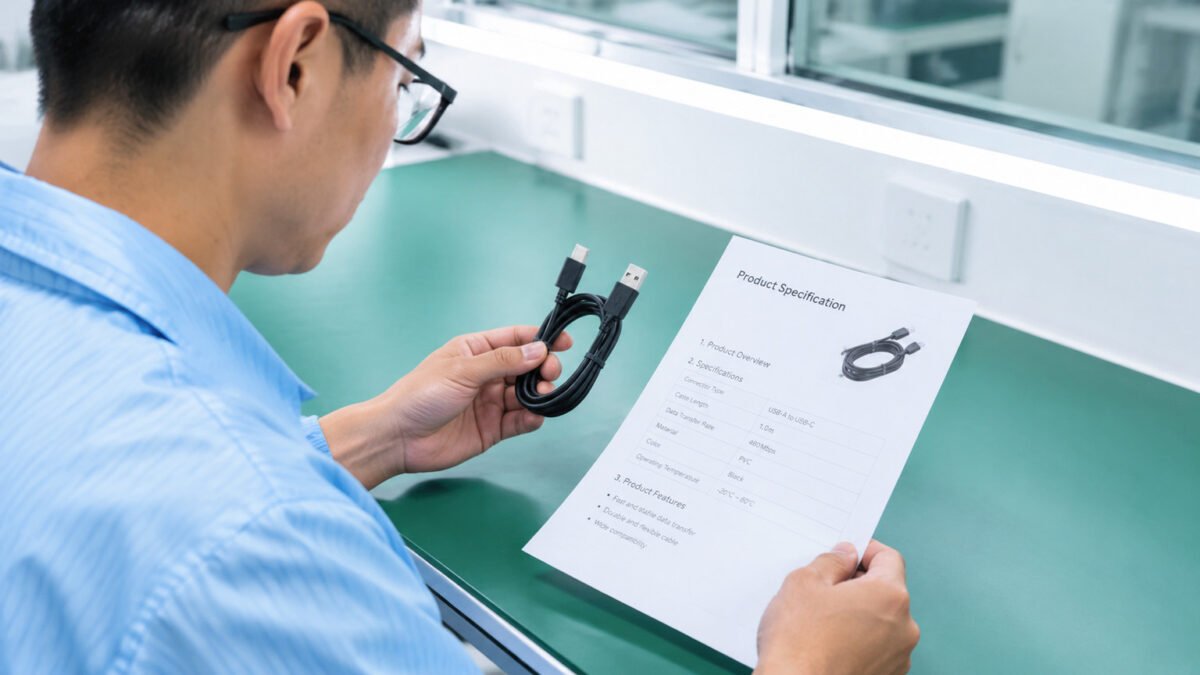
Cable manufacturing is the core capability of the facility, covering USB data and charging cables for applications such as mobile accessories and consumer electronics. Industrial and other demanding use conditions are reviewed as design conditions for the program.
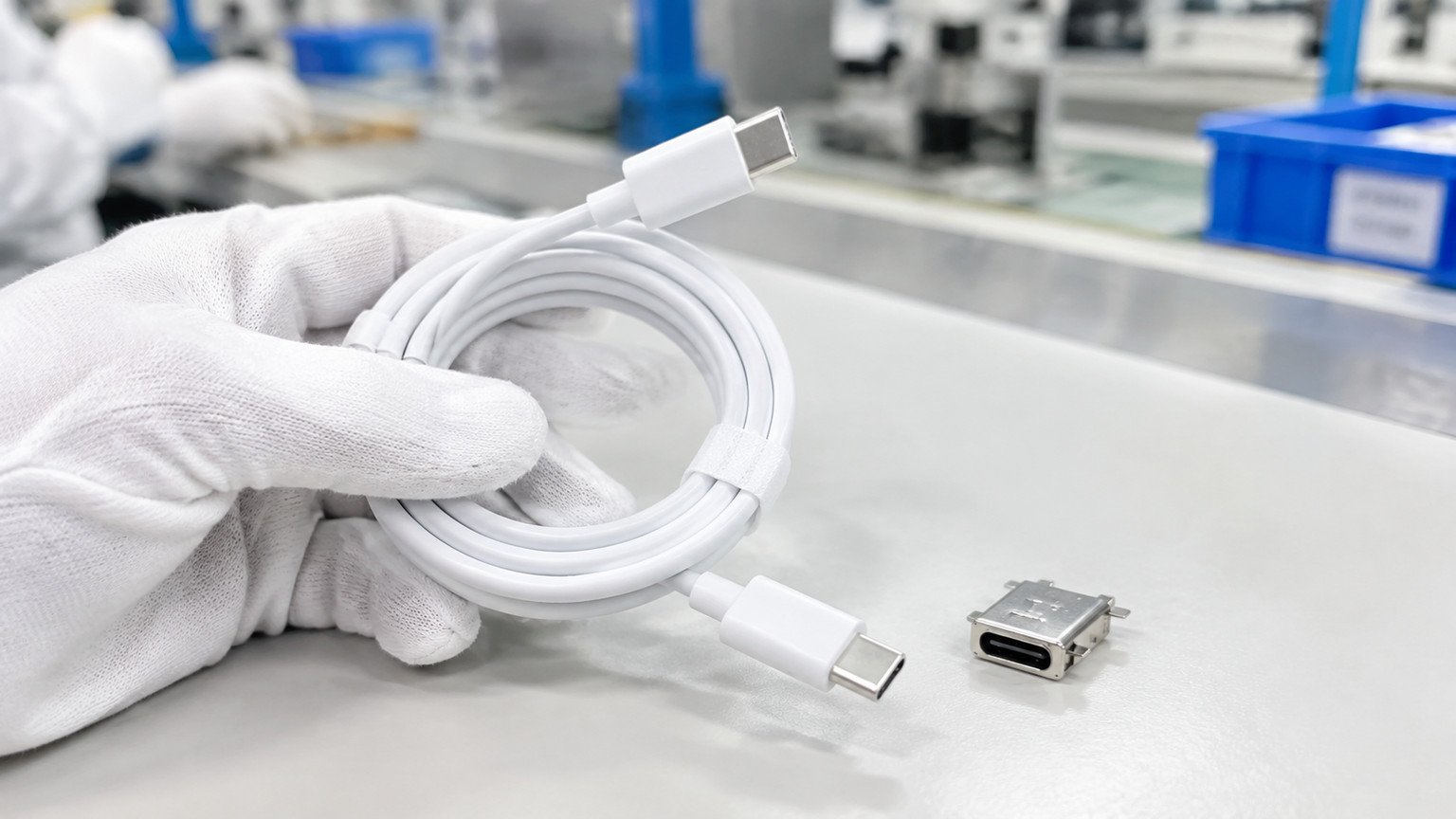
- Interface options. Cables are available with connector combinations such as USB-A to USB-C, USB-C to USB-C, USB-A to Micro-USB, and other configurations defined by the product specification. Charging, data transfer, and video support depend on the specific connector combination, cable design, and connected equipment. Lightning configurations are available only for applicable models and programs that meet the required licensing and compliance conditions; availability and documentation are confirmed during technical review.
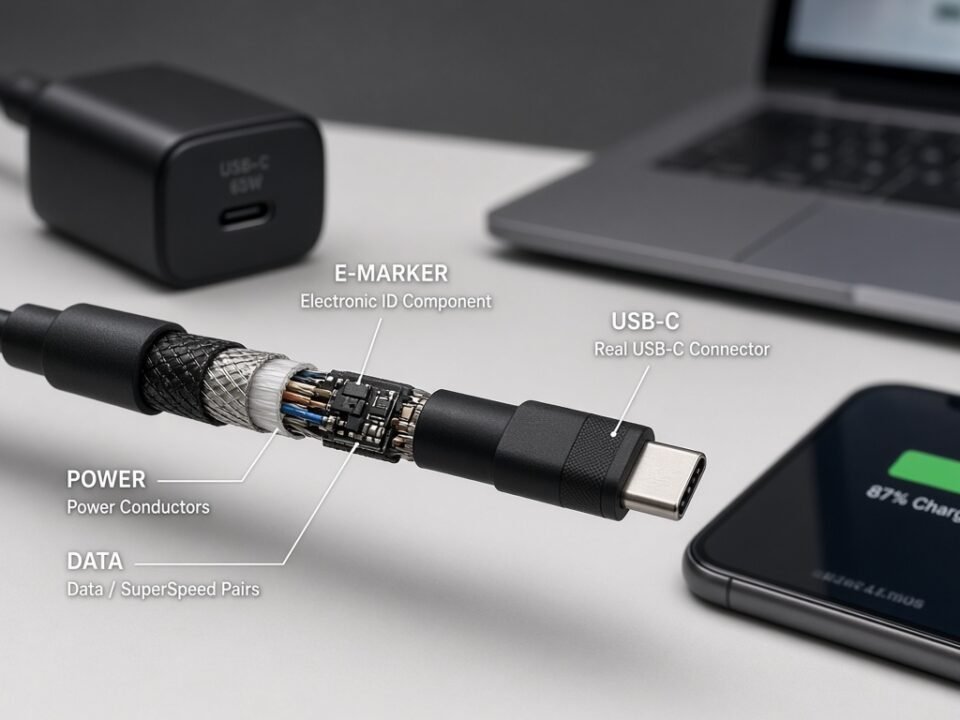
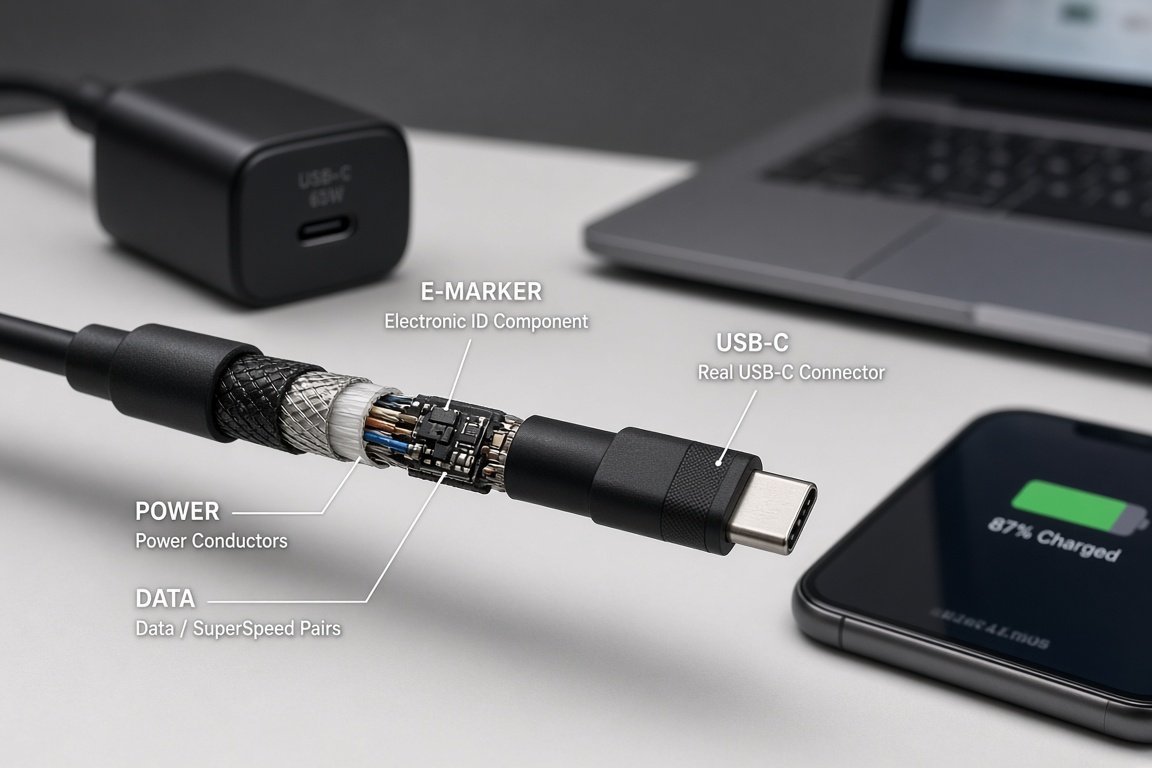
- Conductor and gauge. Conductor size and construction are selected according to the required current, cable length, data rate, and voltage-drop target. Depending on the model, the cable may use dedicated power conductors and differential data pairs with specifications defined in the product drawing and test plan.
- Jacket and construction. Jacket materials include TPE, PVC, and nylon braided options, depending on the durability, flexibility, and appearance requirements of the product. Strain-relief structures are selected by model and validated against the agreed flexing and pull-force requirements.
- Length and packaging. Cable length, color, connector finish, packaging, and related details can be reviewed for customization, subject to technical feasibility, MOQ, tooling, material availability, certification requirements, and artwork approval. Retail packaging, industrial packaging, and bulk packaging are available.
- Compliance. For specified models, conductor size, connector configuration, and, where required, E-Marker configuration are selected for the target current and data requirements. Charging and data performance depend on the cable specification and on support from the host device, charger, and connected equipment. USB-related design and test requirements are defined by SKU, and compliance documentation is provided where available. USB-IF certification status is confirmed by SKU, and supporting documentation is provided for applicable certified models.
2.2 Charger Manufacturing
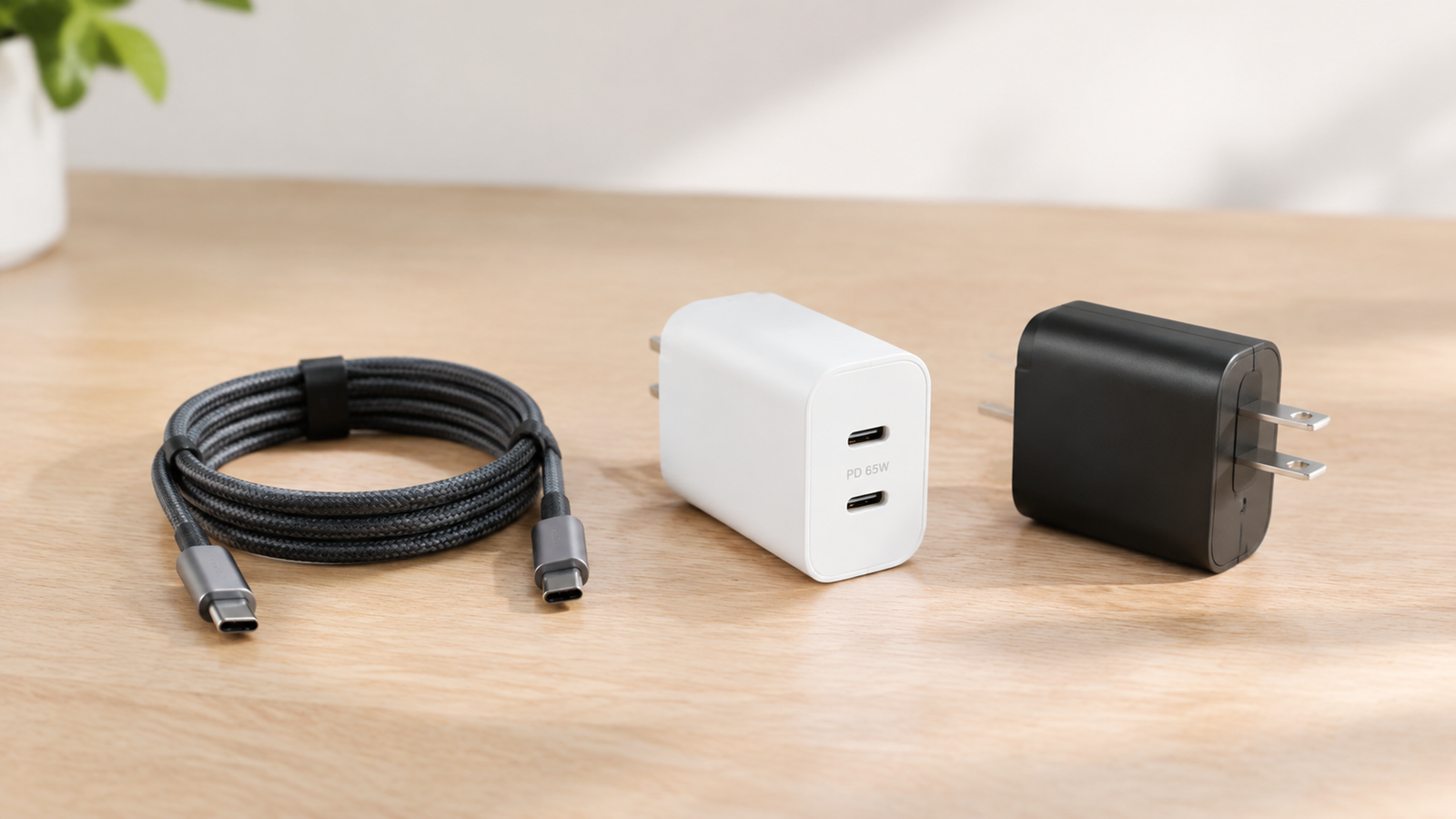
Charger manufacturing produces wall chargers and travel chargers in a range of power ratings and configurations, from compact single-port models to multi-port desktop units.
- Output options. Chargers are available in single-port and multi-port configurations, combining USB-A and USB-C outputs. Selected charger models support output ratings up to 140 W under the applicable USB Power Delivery specification. The available power depends on the port configuration, power-allocation design, charger model, compatible cable, and connected device.
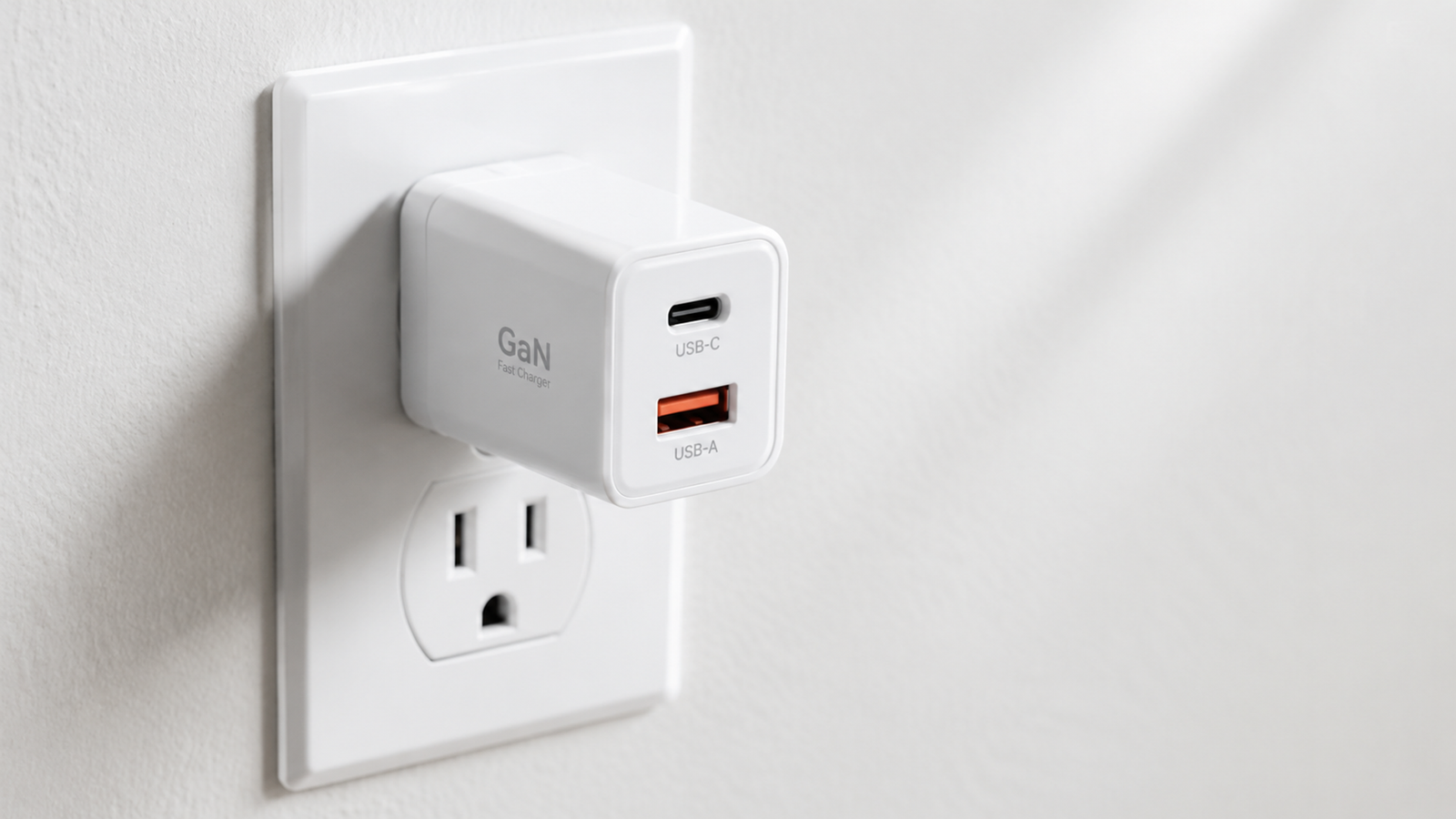
- Form factors. The product range includes direct-plug chargers, folding-pin chargers, and desktop chargers. GaN-based models are available for programs that require a compact form factor or a defined efficiency target. Thermal performance depends on the circuit design, enclosure, load, and operating conditions.
- Input. Specified models support a wide AC input range, typically 100-240 VAC at 50/60 Hz, subject to the model specification and destination-market requirements.
- Protection. Over-current, over-voltage, over-temperature, and short-circuit protection are provided in accordance with the model specification.
- Certifications. Compliance and certification requirements are reviewed by model and destination market. Available documentation may include applicable safety, EMC, and market-access documents such as UL, CE-related documentation, FCC, PSE, KC, or SAA documentation, where supported by the specific product and current certification status.
Charger testing is defined by the product-specific control plan and may include output accuracy, ripple, efficiency, protection functions, and applicable safety tests under specified load and input conditions. Test coverage, sampling, and customer documentation are agreed for each program. Where the customer supplies a brand or logo, marking and packaging are applied according to the approved artwork.
2.3 Adapter Manufacturing
Adapter manufacturing covers AC/DC power adapters used to power electronic devices such as routers, set-top boxes, security equipment, LED devices, and portable electronics.
- Output range. Adapters provide regulated DC output according to the model specification, with common ratings such as 5 V, 9 V, and 12 V and a power range that varies by model. Output voltage and current are set according to the device requirement.
- Plug configurations. Common plug types include US, EU, UK, and AU configurations. The applicable plug, input requirements, and market-access documentation are selected according to the destination market and product specification.
- Construction. Designs address creepage distance, insulation, and temperature rise according to the product construction and applicable destination-market requirements. Automated winding or assembly processes are used for applicable models where they are included in the approved manufacturing process.
- Testing. Adapter testing is defined by the product-specific safety class and agreed control plan. Applicable tests may include high-potential testing, insulation-related checks, and ground continuity for products with a protective-earth connection. Test coverage and sampling are agreed for each program.
- Customization. Output voltage and current, cable length, connector type, housing color, and marking can be reviewed for customization, subject to technical feasibility, MOQ, tooling, material availability, certification requirements, and artwork approval. Customer-specific packaging and labeling are supported where agreed.
3. Program Requirements
Project requirements are reviewed across connector type, power, data performance, length, materials, operating environment, packaging, and destination-market compliance. This information is used to define the product specification, test plan, quotation, and production schedule.
For cables, the main selection factors are:
- Connecteur : USB-A, USB-C, Micro-USB, and, where applicable, Lightning, including the specific connector combination for each cable end.
- Pouvoir: rated voltage, current, and power; USB Power Delivery or other applicable fast-charging configurations, with cable current and E-Marker requirements defined per cable SKU.
- Data: USB version, data rate, video requirements, and whether an E-Marker is required.
- Length: cable length, voltage-drop target, and the space in which the product will be used.
- Matériel: PVC, TPE, braided jacket, housing, and strain-relief structure.
- Environnement: temperature, flexing, pull force, salt spray, indoor or outdoor use, and industrial operating conditions, where these are defined as design conditions for the program.
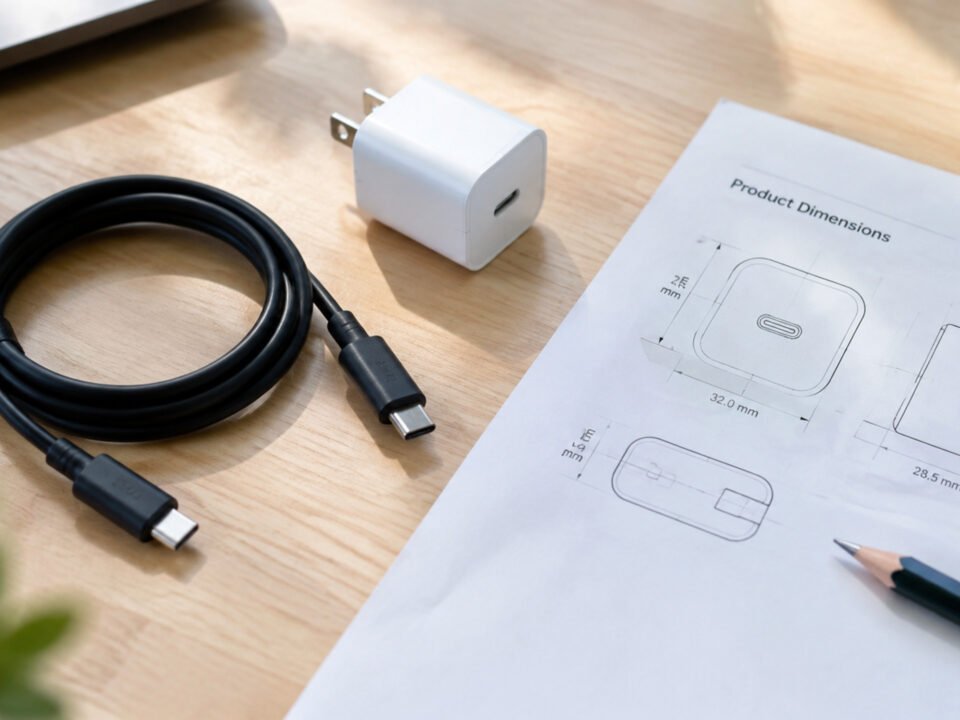
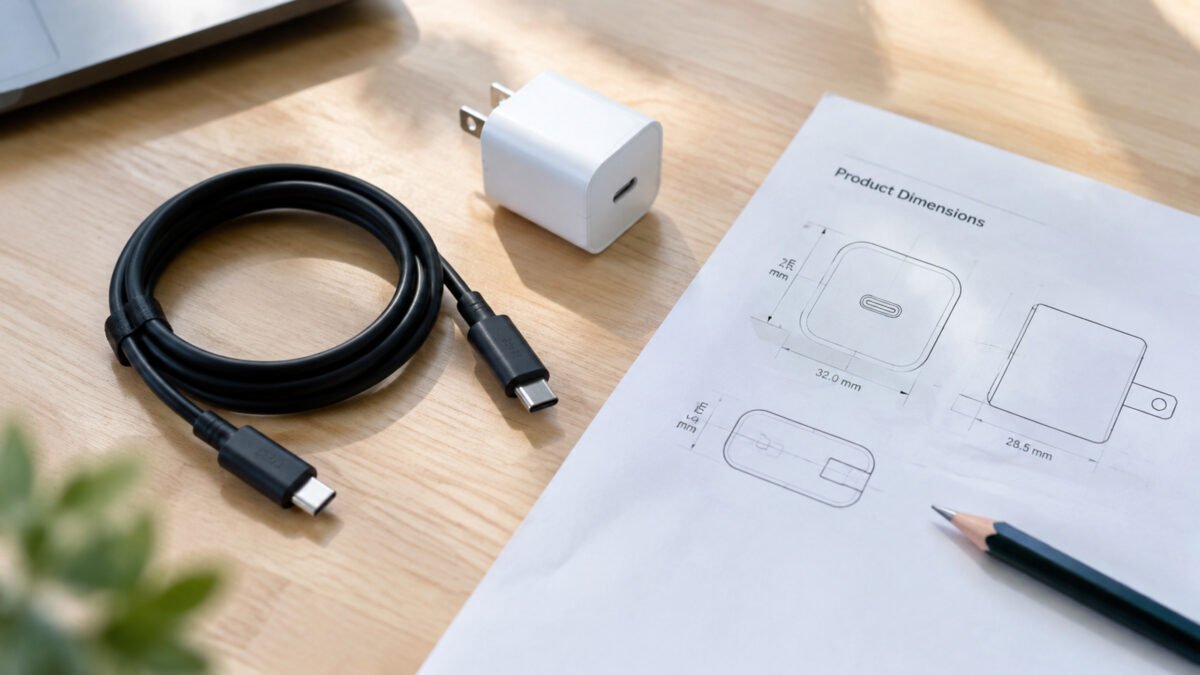
For chargers and adapters, the main selection factors are output specification, input range, plug type, form factor, protection, and destination-market certifications. Providing the target product, a technical drawing or reference sample, and the intended market helps to define a specification that can be quoted accurately.
4. Suitable Customers
4.1 Global Brands
Global brands that sell electronic accessories under their own label use this partnership for private-label manufacturing. Brand programs typically require a combination of custom design, controlled quality, and delivery according to the agreed schedule, which this cooperation model is structured to support.
- Custom design and packaging. The product, its marking, and its packaging are developed according to the brand’s identity, with artwork approved before production.
- Repeatable quality. Repeatable output is managed against the approved specification, inspection plan, and change-control requirements.
- Audit and compliance support. Available quality, test, and market-access documentation can support the customer’s own compliance and supplier-qualification activities. The exact document package depends on the product, destination market, and current certification status.
- Order quantities and lead times. Order quantities and lead times are agreed for each program after the specification, BOM, forecast, capacity, and material requirements have been reviewed.
Confidentiality and project-support arrangements are defined in the applicable agreement.
4.2 Distributors
Distributors and importers use the partnership for scheduled replenishment of standard product lines. The distribution model depends on predictable supply, and the manufacturing and supply support areas are organized accordingly.
- Volume orders with scheduled deliveries. Standard lines can be ordered in volume, with shipments scheduled to match the distributor’s stocking plan.
- Multi-SKU management. Mixed-SKU orders and mixed pallets are supported where agreed for the program, so that a single shipment can cover a range of products.
- Buffer stock. Where agreed, finished-goods buffer stock reduces the risk of stock-out during demand fluctuations.
- Documentation. Available customs, quality, test, certification, and reliability documents depend on the product, destination market, current document status, and the agreed customer documentation package.
For distributors, lead times and packaging requirements are defined and managed through the approved production and supply plan.
4.3 Equipment Manufacturers
Equipment manufacturers integrate cables, chargers, or adapters into their own products, for example POS terminals, kiosks, industrial instruments, networking equipment, and consumer electronics.
- Specification-driven procurement. Power supplies and connection cables are produced against the equipment specification, with output, connector, and cable parameters matched to the device requirement.
- Long-life product support. Long-term supply programs can be supported through component-life-cycle management, approved product revisions, and change control, subject to component availability, forecast, and mutually agreed terms. Any product revision is communicated and approved according to the agreed change-control process.
- Quality documentation. Inspection reports, batch traceability, and reliability data are provided where included in the agreed documentation package, subject to the product and current document status.
For equipment manufacturers, the partnership is structured to support supply continuity and documented quality against the approved product and control plan.
5. Request an OEM/ODM Evaluation
To start an evaluation, provide the target product with its connector and cable requirements, a technical drawing or reference sample, the target market, estimated volume, packaging needs, and required certifications. Feasibility is reviewed against these inputs, and the customer receives a proposed specification, development scope, and quotation basis.
amet, consectetur adipiscing elit. Ut elit tellus, luctus nec ullamcorper mattis, pulvinar dapibus leo.