

Private Label Charging Product Manufacturing
2026-09-18
OEM/ODM Manufacturing Partnership for Cables, Chargers & Power Adapters
2026-09-19
Custom Electronics Project Requirements Guide
Custom Electronics Project Requirements Guide
Starting an OEM project for custom electronics requires more than a product idea. The manufacturer needs a clear statement of what the product is, how it will be used, which technical parameters it must meet, and the commercial conditions of the program. This guide explains the information a manufacturer needs to evaluate a custom product requirement and prepare a response. It can be used as an OEM requirement checklist when preparing an inquiry for USB cables, chargers, adapters, connectors, and related electronic accessories.

1. Project Basic Information
The first area defines the product at the program level. It gives the supplier the context needed to judge whether the requirement fits existing production capabilities and which points need further discussion. Three items make up this area: product type, application, and target market.
1.1 Product Type
The product type states what is being developed. A clear definition of the product category and its main function prevents misunderstanding at the quotation stage.
- Product category. USB data and charging cable, wall charger, AC/DC adapter, connector assembly, or another electronic accessory. Products outside these categories can also be discussed; the category helps the supplier identify the relevant production line and engineering resources.
- New design or modification. Whether the project is a fully new design or an adaptation of an established catalog product. Many OEM projects are adaptations of established designs, such as a new cable length, a different connector combination, or customer branding. These projects may require less development work than a fully new design when the required changes do not affect the core structure, electrical performance, tooling, or compliance testing.
- Key functions. Charging, data transfer, video signal transmission, or a combination of functions. The function set defines the electrical and mechanical requirements in the following sections.
- Existing reference. Whether the customer has a reference design, a drawing, or an existing sample that the supplier should work from. A physical or documented reference provides a reliable basis for an accurate quotation.
1.2 Application
The application describes where and how the product will be used. This information is important because the operating conditions determine material selection, connector choice, cable construction, and testing requirements.
- Usage scenario. Mobile accessories, consumer electronics, home appliances, office equipment, industrial devices, or other fields. The scenario indicates the expected level of daily use and the durability required.
- Operating environment. Indoor or outdoor use, the expected temperature range, and exposure to moisture, dust, or chemicals. For example, a cable used in a fixed installation faces different stresses than a cable carried daily between a laptop and a workstation.
- Mechanical stress. Repeated bending, pulling, or plugging and unplugging cycles. Products that are handled frequently need reinforced strain relief and connectors with a longer rated insertion life.
Stating the application clearly also helps the supplier suggest alternatives when the original design is not well suited to the intended environment.
1.3 Target Market
The target market defines where the product will be sold and who will use it. This affects technical choices as well as packaging and documentation.
- Destination markets. Specify the countries or regions and sales channel for the target SKU. For products with mains input, also specify the applicable plug type and input voltage. The applicable markings, testing, and certifications depend on the product category, electrical design, wireless or digital functions, and local regulatory requirements. Confirm the compliance route for the exact product and market; examples may include CE marking, FCC requirements, UL or other NRTL evaluation, PSE, KC, or SAA where applicable.
- End users. Retail consumers, business users, or industrial customers. Consumer products typically need retail packaging and clear user information, while industrial products may place more emphasis on durability and documentation.
- Sales channel. Retail, e-commerce, wholesale distribution, or bundling with host devices. The channel influences packaging format, quantity structure, and delivery mode.
2. Technical Requirements
Technical requirements are the core of the quotation. The supplier uses these values to select materials, components, and test methods, and to confirm that the product can be manufactured within the stated parameters. Each item should be stated with concrete values wherever possible; where a value is not yet fixed, a target range is acceptable.
2.1 Power
Power requirements describe the electrical rating of the product. They are the first technical items the supplier checks against production capability.
- Chargers and adapters. Input voltage range, output voltage and current, and power rating. For multi-port models, define the output parameters for each port, the total output available when ports operate simultaneously, and the required power-allocation behavior. Fast-charging support, for example USB Power Delivery, should be stated together with the output profiles required.
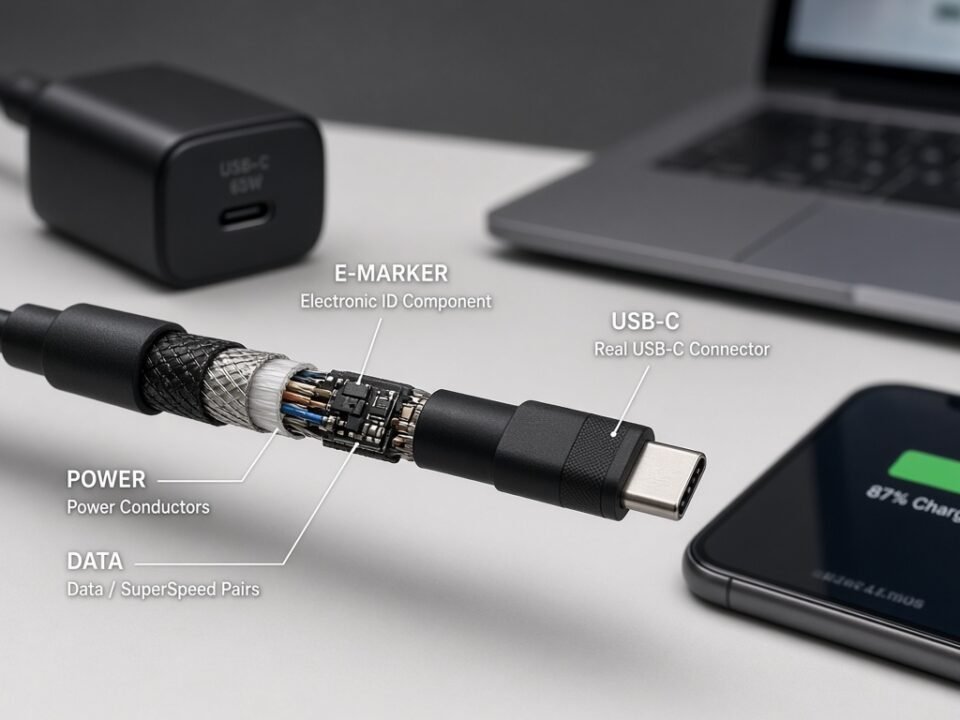
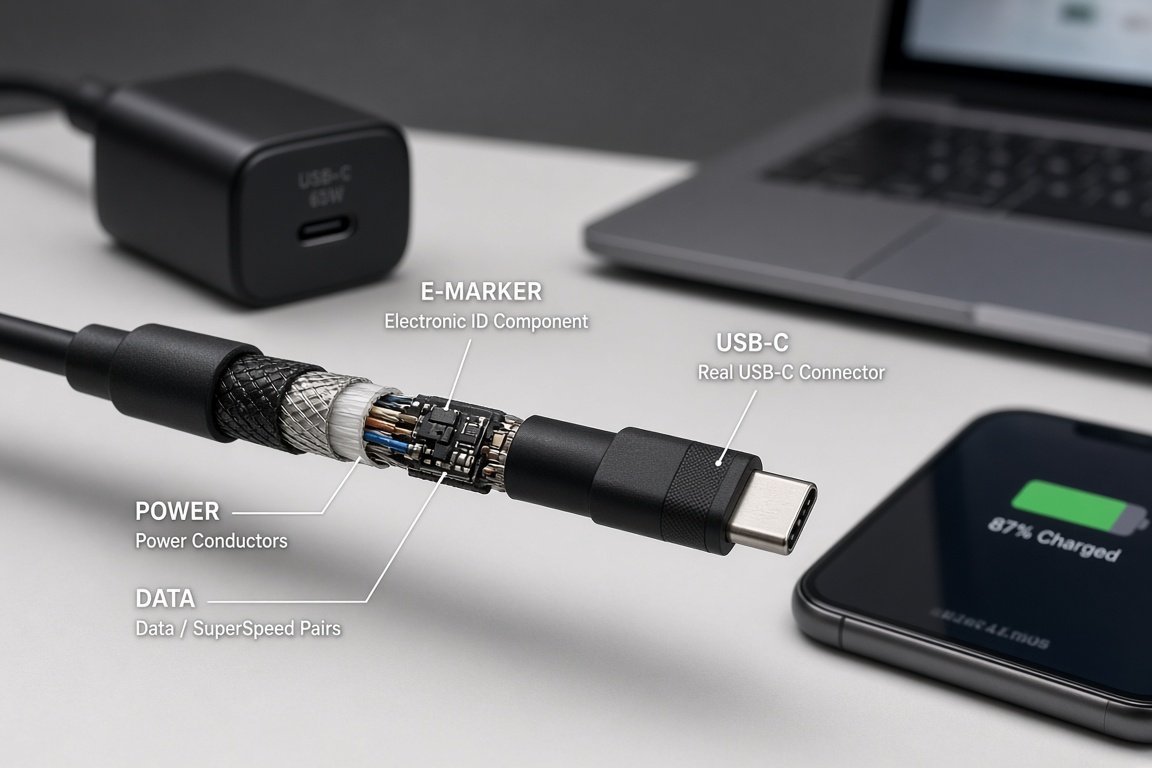
- Cables. Specify the rated current, power-conductor gauge, cable length, and maximum voltage drop under the required load. For USB-C Power Delivery designs, also state the required power range, PD configuration, and whether an Marqueur électronique is required. Power capability depends on the complete cable construction and the capabilities of the cable, charger, source, and device. The supplier should confirm the achievable power rating for the selected SKU based on the specified configuration and test conditions.
- Protection functions. Over-current, over-voltage, and short-circuit protection requirements, where the product specification includes them.
Power parameters should be evaluated against the complete product design, connector rating, conductor construction, thermal conditions, and intended use. The supplier can conduct an initial feasibility review at the quotation stage, while final performance and compliance should be confirmed through the agreed specifications and applicable testing.
2.2 Connector
Connector requirements define the interface between the product and the host device. Connector selection affects cost, mechanical reliability, and compatibility.
- Interface types. USB-A, USB-C, Micro-USB, Mini-USB, or custom connector types. The customer should specify the connector on the host side and the connector on the device side for cables.
- Configuration. Connector combination, plug-to-plug or plug-to-receptacle arrangement, number of ports on a hub or charger, and plug or receptacle orientation.
- Mechanical parameters. Insertion and withdrawal cycles, retention force, and strain relief design, particularly for cables handled frequently.
- Contact requirements. Contact plating and resistance where high reliability or repeated use is expected.
- Compatibility. Connector fit does not by itself confirm charging, data, video, or protocol compatibility. Specify the host and device models, connector orientation, required functions, and applicable standards, and validate the complete product combination during the technical review.
2.3 Data and Signal Requirements
Data and signal requirements should identify the required USB generation or data-rate class, target signaling rate or minimum measured throughput, video function where applicable, cable length, and test conditions. Where possible, distinguish between signaling rate and measured throughput; for example, specify USB 2.0 High-Speed with a 480 Mbps signaling rate or a defined minimum measured throughput, rather than using USB 3.x as the only description. Data, video, and signal-integrity performance depend on the complete cable design and the capabilities of the host and device; the selected model should be validated against the required use case.

2.4 Size
Size requirements cover the physical dimensions of the product. They constrain the design and affect tooling and packaging.
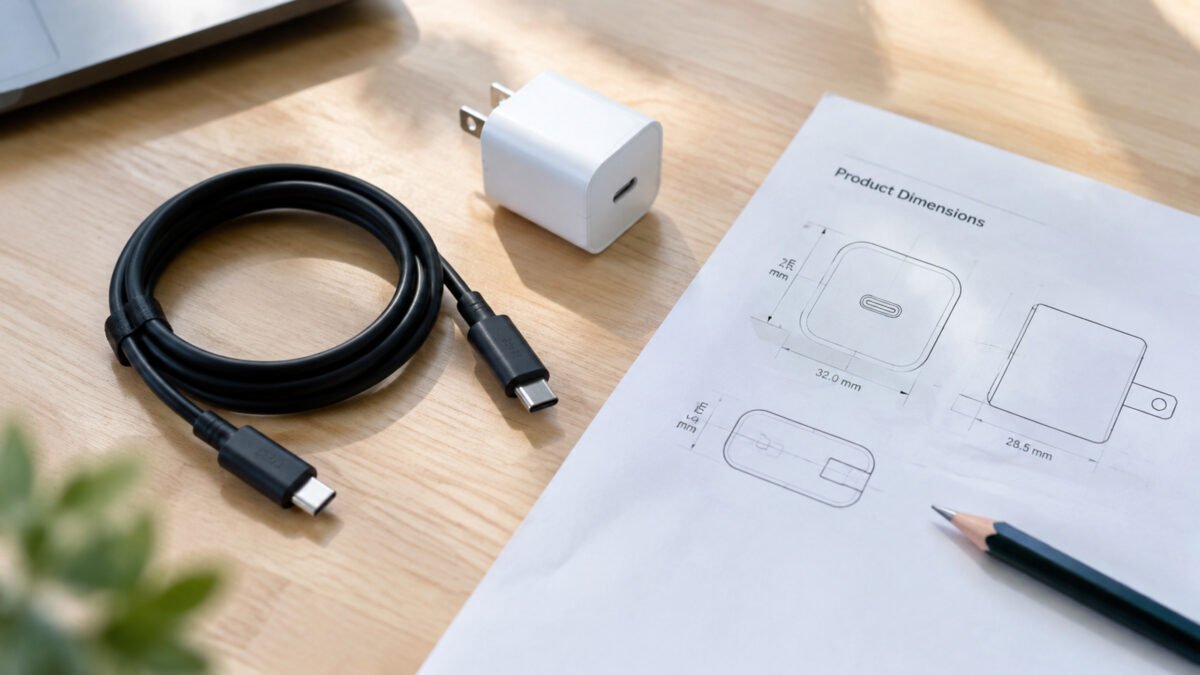
- Overall dimensions. Cable length, connector dimensions, housing size, and total product dimensions, with acceptable tolerances.
- Fit constraints. Available space in the end device, the size of the retail package, or the dimensions of the installation point.
- Weight. Maximum weight where shipping cost or handling is a factor.
For cables, specify the measurement reference, nominal length, and acceptable tolerance so that quotations and samples are evaluated on the same basis.
2.5 Material
Material requirements define the construction of the product. They are usually driven by appearance, durability, cost, and compliance.
- Housing material. ABS, PC, nylon, aluminum, or zinc alloy, with a finish compatible with the selected material, such as matte, glossy, or anodized aluminum where applicable.
- Cable jacket. TPE, PVC, nylon braid, or silicone, selected for flexibility, durability, and appearance.
- Conductors. Conductor material or construction, gauge or cross-sectional area, and strand count, selected to meet the current rating, voltage-drop limit, and flexibility targets.
- Shielding. Foil, braid, or a combination, where signal integrity or noise resistance is required.
- Compliance. State applicable material requirements, such as RoHS or a defined halogen-free requirement, together with the required declaration, test method, or supporting documentation so that the bill of materials can be reviewed.
3. Commercial Requirements
Commercial requirements define the business conditions of the program. They allow the supplier to structure pricing, production planning, and logistics around the customer’s needs.
3.1 Quantity
Quantity information is the basis for pricing and production planning.
- Minimum order quantity. L' MOQ per model and per order. Pricing may vary with the production batch size, material commitments, tooling, and order frequency.
- Annual volume. Expected yearly consumption and a forecast where available. A forecast helps the supplier reserve capacity and procure materials with long lead times.
- Order pattern. One-time purchase, repeat orders, or scheduled deliveries. Scheduled programs allow stable planning for both parties.
- Commercial terms. Target price or budget range, currency, Incoterms, payment terms, tooling and NRE cost responsibility and ownership, confidentiality or IP requirements, warranty expectations, and after-sales responsibilities, where applicable.
3.2 Timeline
Timeline information defines the expected schedule of the program.
- Key milestones. Availability of engineering samples, pilot run, mass production start, and first shipment date.
- Overall duration. From order confirmation to first delivery. The supplier uses this to plan tooling, testing, and capacity.
- Compliance lead time. Time required for applicable testing, documentation, marking review, third-party evaluation, or registration where required by the target market.
- Schedule changes. Schedule changes should be communicated early so that the production plan can be adjusted without unnecessary cost.
3.3 Packaging
Packaging requirements cover how the product is packed for sale and shipment.
- Retail packaging. Box style, size, color, branding, and artwork. Retail packaging design affects tooling and per-unit cost.
- Bulk packaging. Carton dimensions, quantity per carton, and pallet configuration.
- Labeling. Barcode, applicable country-of-origin marking, required compliance marks, and language requirements for the destination market. Confirm the required markings for the exact product, market, packaging level, and regulatory route before artwork approval.
- Packaging specifications. Packaging specifications should be provided in the RFQ when the product is sold through retail channels.

4. Preparing for RFQ Submission
A complete RFQ package gives the supplier the information needed to prepare a more accurate quotation and a realistic preliminary schedule. The quotation and schedule may remain subject to confirmation until the design details, bill of materials, tooling, testing, quantity, and commercial terms are agreed.
4.1 Drawings
Drawings define the geometry and structure of the product.
- Dimensional drawings with tolerances for the product and its key components.
- Connector layouts, housing drawings, and cable construction details.
- 2D drawings or 3D model files in STEP ou IGES format where available.
- Notes on materials, surface finish, and marking.
4.2 Specifications
Specifications define the performance and acceptance criteria of the product.
- Electrical specifications, where applicable. Rated voltage and current, output parameters, signal requirements, and test conditions.
- Mechanical specifications, where applicable. Dimensions, insertion and withdrawal life, flex endurance, and pull force.
- Environmental specifications, where applicable. Operating temperature range, humidity limits, and storage conditions.
- Compliance requirements. Applicable regulatory requirements, testing, declarations, markings, certifications or registrations, and material restrictions for the target market.
- Acceptance criteria. Acceptance criteria and the test methods used to verify them.
4.3 Samples
Samples provide a physical reference for the project.
- Reference samples. An existing product that represents the desired appearance, size, or function.
- Golden samples. A customer-approved sample used as the production reference after approval.
- Prototype requests. The quantity needed and the purpose of testing, such as fit, function, or market evaluation.
- Sample versioning. Samples should carry version or date information so that both sides refer to the same reference.

A clearly stated requirement package can reduce clarification cycles and support a more accurate initial quotation. Where some items are not yet defined, the supplier can work from approximate parameters and refine them during the technical review. Buyers who document their custom product requirements before contacting a manufacturer can compare quotations on the same basis and make the development process more predictable.