What Is USB Power Delivery (USB PD)?
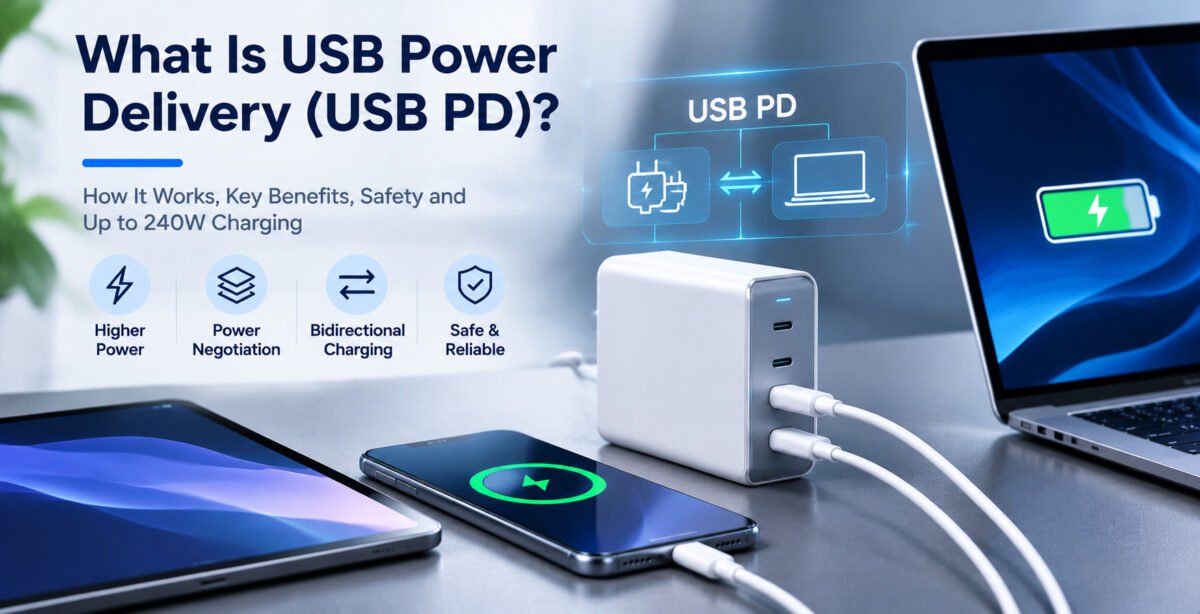
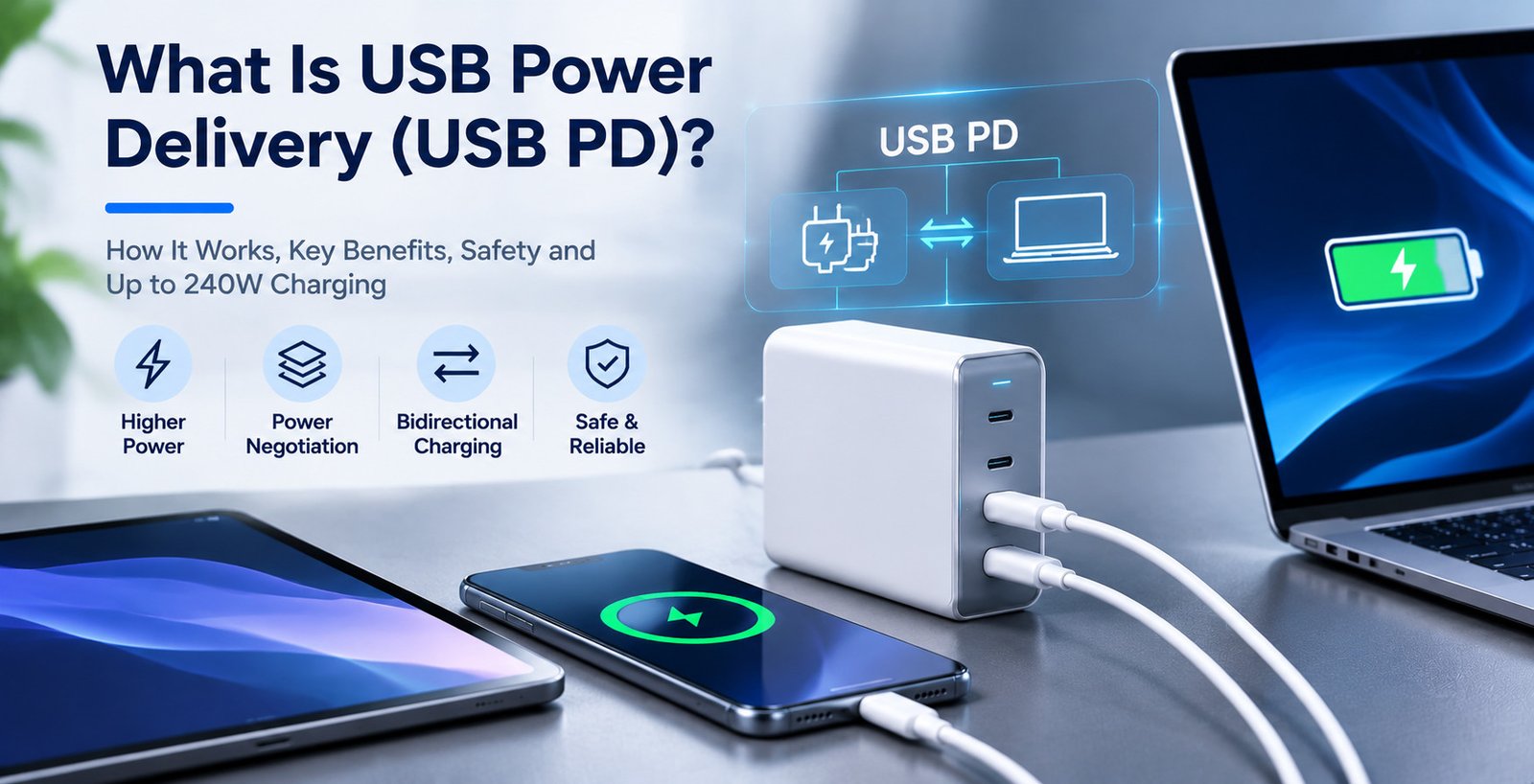
What Is USB Power Delivery (USB PD)?
USB technology has evolved significantly since its introduction, expanding from a standard data connection into a widely used solution for powering and charging electronic devices.
Early USB standards provided relatively limited power output, mainly supporting smaller peripherals and mobile devices. As smartphones, tablets, laptops, and other electronics became more demanding, the need for a more flexible and powerful charging standard increased.
USB Power Delivery (USB PD) was developed to address these requirements. It allows compatible devices and power sources to negotiate suitable voltage and current levels, providing more flexible power delivery through a USB connection.
Today, USB PD is widely used in smartphones, tablets, laptops, monitors, docking stations, and other electronic products. With the introduction of Extended Power Range (EPR), USB PD 3.1 increased its maximum supported power to 240W, expanding its applications to higher-power equipment.
Let's take a closer look at how USB Power Delivery works, its main benefits, safety features, and future applications.
1. USB Power Delivery
USB Power Delivery is a charging and power management protocol developed within the USB standard ecosystem. It enables compatible power sources and devices to negotiate the voltage and current required for different applications.
USB PD operates over compatible USB Type-C connections and supports flexible power delivery through a single cable.
Unlike traditional USB charging methods that rely on more limited power configurations, USB PD allows compatible devices to request higher power levels when needed.
This makes it suitable for a wide range of applications, including:
- Smartphones and tablets.
- Laptops and notebooks.
- Wireless headphones and accessories.
- Portable monitors.
- Docking stations.
- External storage devices.
- Other USB-powered electronics.
1.1 How Much Power Can USB PD Deliver?
USB Power Delivery has developed through several specification revisions, with each generation expanding or refining its capabilities.
USB PD 3.0 and earlier implementations support power delivery up to 100W under the applicable Standard Power Range (SPR) configurations.
USB PD 3.1 introduced Extended Power Range (EPR), increasing the maximum supported output to 240W.
The EPR specification introduced three additional fixed voltage levels:
| Voltage | Maximum Current | Maximum Power |
|---|---|---|
| 28V | 5A | 140W |
| 36V | 5A | 180W |
| 48V | 5A | 240W |
These higher power levels make USB PD suitable for applications that previously required dedicated power adapters.
The USB-IF subsequently published USB Power Delivery Specification Revision 3.2 Version 1.2 in September 2026. The 240W maximum power capability originates from the EPR functionality introduced in PD 3.1.
1.2 USB PD and USB-C: What Is the Difference?
USB-C and USB Power Delivery are closely related, but they are not the same technology.
USB-C refers to the physical connector and cable interface, while USB PD is a power delivery protocol that enables compatible devices to negotiate charging power.
A USB-C connector does not automatically mean that a device supports USB PD.
For example, some USB-C devices support basic charging without implementing USB Power Delivery. Other products support USB PD and can negotiate higher voltage and current configurations.
To achieve USB PD charging, the power source, connected device, and cable must support the required capabilities.
2. Benefits of USB Power Delivery
USB Power Delivery offers several advantages for both consumers and manufacturers.
By providing flexible power configurations, intelligent power management, and bidirectional charging capabilities, USB PD supports a broader range of electronic products through a standardized charging ecosystem.
Let's look at its main benefits.
2.1 Increased Power Level
One of the main advantages of USB Power Delivery is its ability to deliver higher power than earlier USB charging implementations.
Traditional USB charging standards were primarily designed for lower-power devices. USB PD expanded these capabilities, making it possible to charge larger electronics such as tablets and laptops through compatible USB connections.
For example:
- Smartphones can use USB PD for compatible fast-charging configurations.
- Tablets can benefit from higher charging power.
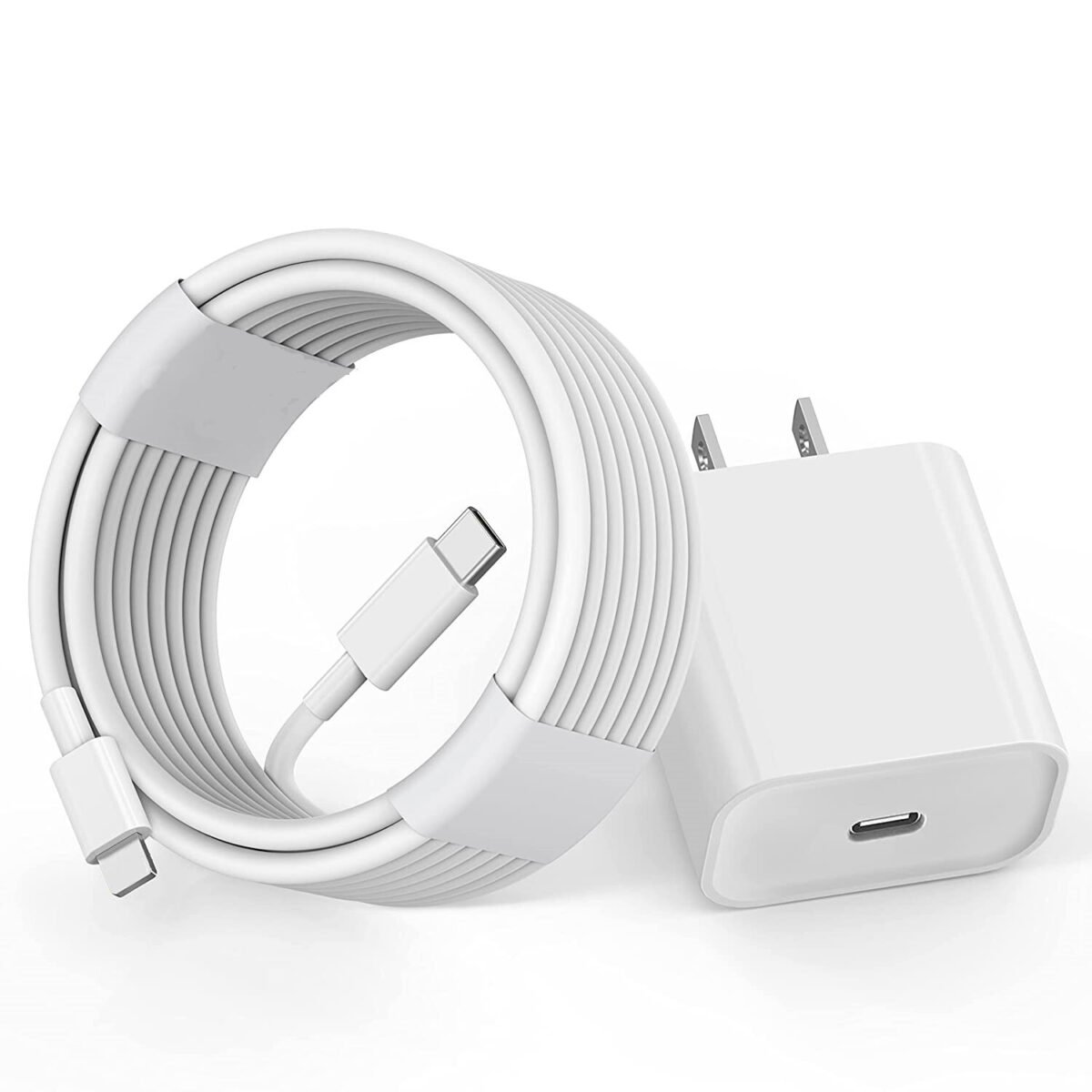
- Laptops can receive power through USB-C adapters.
- Compatible monitors and docking stations can use USB PD for power delivery.
With USB PD 3.1 EPR supporting up to 240W, the technology can also accommodate compatible high-performance laptops and other power-demanding equipment.
This flexibility allows manufacturers to develop different charger power ratings for a wider range of applications.
2.2 Intelligent Power Management Using Power Negotiation
Another important advantage of USB PD is its intelligent power management capability.
When a compatible power source and device are connected, they communicate to determine which power configurations are supported.
The power source first advertises its available power profiles. The connected device then evaluates these options and sends a request for a suitable voltage and current combination.
Once the power source accepts the request, the agreed power configuration is established.
For example, a USB PD charger may support several output configurations, such as:
- 5V output.
- 9V output.
- 15V output.
- 20V output.
A compatible smartphone may request a lower-power configuration, while a laptop can request a higher-power option when supported by the charger and cable.
This negotiation process helps ensure that the connected device receives power within the supported operating conditions.
It also makes one USB PD charger suitable for different types of compatible electronics.
2.3 Bidirectional Power Delivery
USB Power Delivery also supports flexible power direction.
Unlike traditional charging arrangements where power generally flows from a fixed power source to a connected device, USB PD allows compatible devices to change their power roles.
USB PD supports flexible power-role management, allowing compatible devices to operate as either a power source or a power sink. Depending on the device design and connection, power direction can change when needed.
For example:
- A laptop can charge a smartphone.
- A power bank can charge a laptop.
- A smartphone can supply power to compatible accessories.
- A USB-C device can provide power to another connected device.
This capability is particularly useful for portable electronics and accessories that need to share power.
Bidirectional power delivery can also simplify product design by reducing the need for separate power connections in certain applications.
3. Is USB Power Delivery Technology Safe for Use?
USB Power Delivery is designed to provide flexible and controlled power delivery between compatible devices.
Its power negotiation mechanism helps prevent a power source from simply delivering its maximum rated output to every connected device.
However, safe operation depends on more than the charging protocol itself. The charger, device, cable, connectors, and overall electrical design must all meet the appropriate requirements.
3.1 Intelligent Power Negotiation
USB PD allows the power source and connected device to establish a mutually supported power configuration.
For example, connecting a 100W USB PD charger to a smartphone does not automatically force 100W into the phone.
The smartphone requests a supported charging configuration, and the charger supplies power according to the negotiated arrangement.
This helps accommodate devices with different power requirements.
3.2 Cable Compatibility and Power Ratings
The charging cable is another important part of a USB PD system.
Not all USB-C cables support the same current or power level.
Standard USB-C cables rated for 3A can support up to 60W at 20V.
For charging applications requiring more than 3A, a compatible 5A cable with an appropriate E-Marker is required.
For USB PD 3.1 EPR charging up to 240W, a suitable EPR-rated USB-C cable is necessary.
USB-IF compliance requirements also specify power capability markings for USB-C to USB-C cables, using the appropriate 60W or 240W power logo.
For higher-power applications, buyers should verify the cable's rated power capability and E-Marker functionality rather than relying on the USB-C connector alone.
Using an appropriately rated cable helps ensure that the charging system operates within the cable's supported electrical limits.
3.3 Electrical Protection and Product Quality
Reliable USB PD chargers should incorporate appropriate electrical protection and power management functions.
Common protection features include:
- Overvoltage protection.
- Overcurrent protection.
- Short-circuit protection.
- Overtemperature protection.
- Overpower protection.
The specific protection design depends on the charger architecture and intended application.
For manufacturers and product developers, electrical testing, component selection, thermal management, and compliance verification are essential parts of developing reliable USB PD products.
4. USB Power Delivery: The Future
USB Power Delivery continues to develop as electronic devices require higher power levels and more flexible charging solutions.
The introduction of USB PD 3.1 EPR was an important step in expanding USB-C charging beyond the previous 100W limit.
With support for up to 240W, USB PD can serve a broader range of applications, including high-performance laptops and other power-demanding electronics.
Several developments are influencing the future of USB PD.
4.1 Higher-Power Charging Applications
USB PD 3.1 EPR introduced 28V, 36V, and 48V fixed voltage levels, enabling power delivery of up to 140W, 180W, and 240W respectively.
This creates more opportunities for USB-C charging in applications that previously required higher-power dedicated adapters.
As compatible devices and charging accessories continue to develop, higher-power USB PD products can serve an increasingly diverse market.
4.2 More Flexible Charging Solutions
USB PD supports different power configurations through a standardized connection.
This allows manufacturers to develop chargers with different output ratings, including:
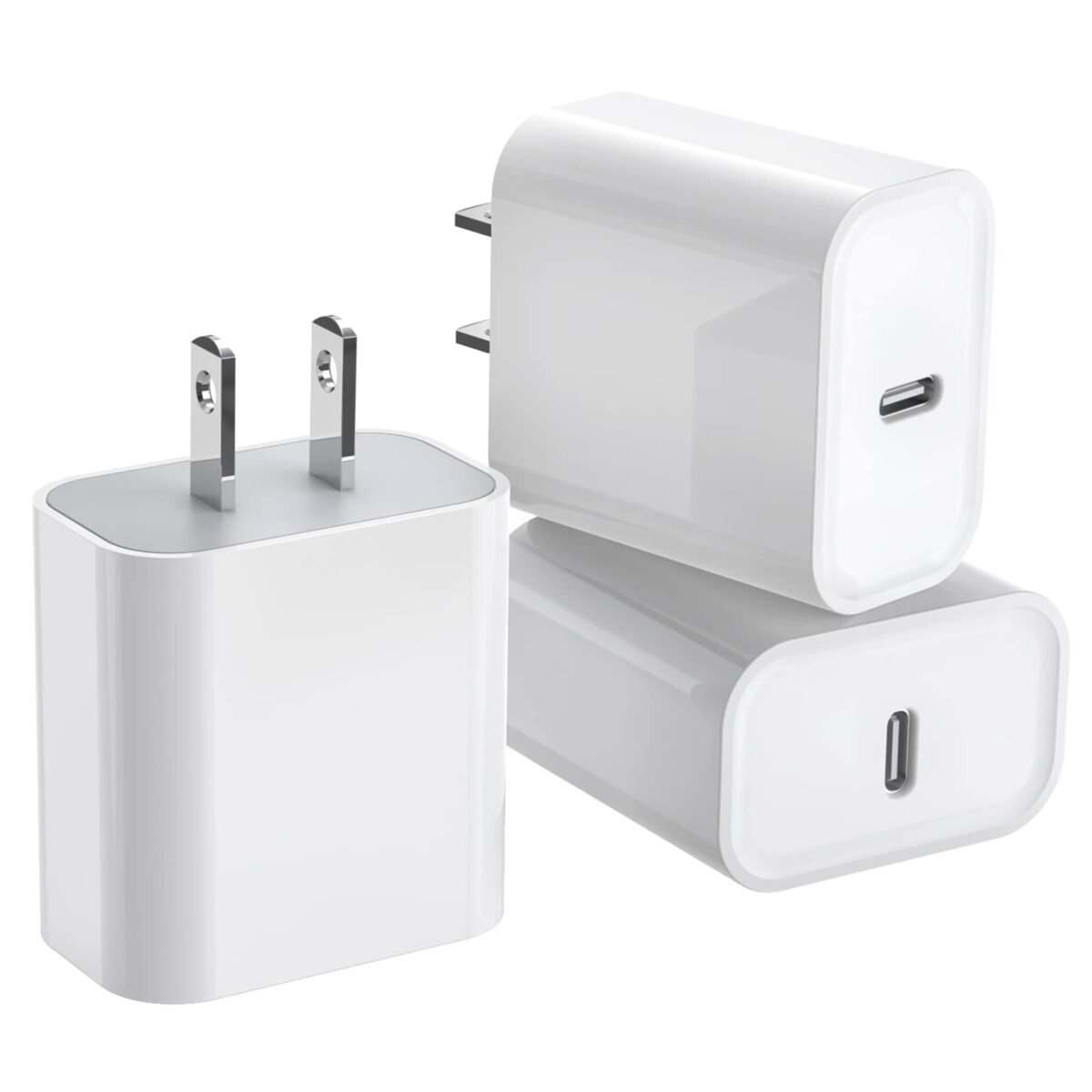
- 20W and 30W smartphone chargers.
- 45W and 65W tablet and laptop chargers.
- 100W USB-C laptop chargers.
- 140W and 240W EPR charging solutions.
Multi-port chargers can also use USB PD to provide power to several compatible devices, with available output distributed according to the product's power management design.
4.3 Wider Adoption Across Electronic Devices
USB-C charging is becoming increasingly common across different categories of electronic products.
Smartphones, tablets, laptops, monitors, power banks, and other accessories can all benefit from compatible USB PD implementations.
The ability to deliver power through a shared connector ecosystem helps simplify charging arrangements and gives manufacturers greater flexibility when developing new products.
4.4 Opportunities for Charger and Cable Manufacturers
The continued development of USB PD creates opportunities for manufacturers to develop charging products for different markets and applications.
Charger development involves more than selecting an output wattage. It also requires consideration of supported power profiles, port configurations, cable compatibility, thermal performance, and electrical protection.
USB-C cable manufacturers must also consider current ratings, E-Marker functionality, and EPR requirements when developing cables for higher-power charging applications.
For brands and wholesalers, these technical factors are important when selecting suitable USB PD chargers and compatible USB-C cables.
5. Conclusion
USB Power Delivery has significantly expanded the capabilities of USB charging by enabling compatible devices to negotiate flexible voltage and current configurations.
From smartphones and tablets to laptops and high-power electronic equipment, USB PD provides a standardized approach to delivering power across a wide range of applications.
Its main advantages include higher power output, intelligent power negotiation, bidirectional charging, and flexible device compatibility.
With USB PD 3.1 EPR supporting up to 240W and continued development of the specification, USB Power Delivery remains an important technology for the future of USB charging.
For brands, wholesalers, and product developers, understanding USB PD specifications, cable requirements, and charger design considerations is essential when selecting or developing reliable charging products.