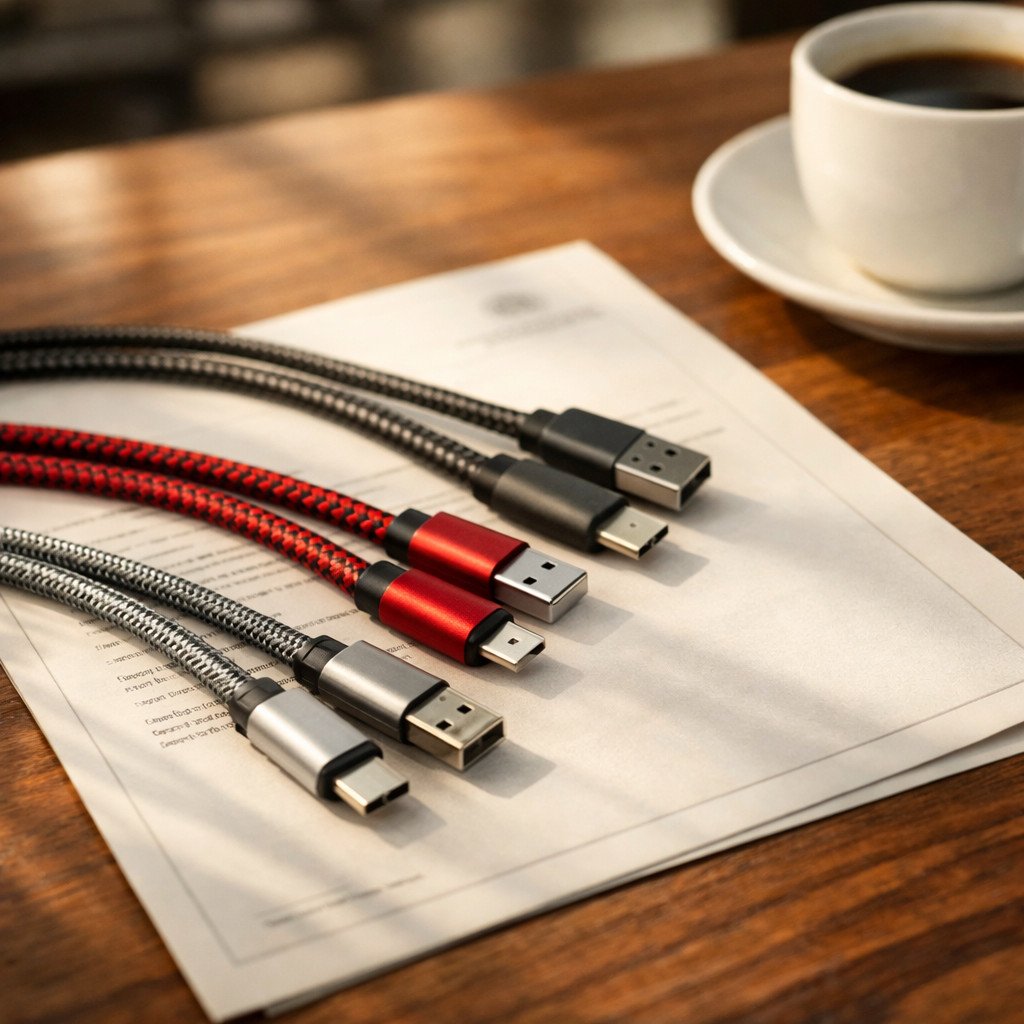


USB Cable Specification Guide
USB Cable Specification Guide
This guide provides a structured overview of the key specifications buyers should review when sourcing or developing a USB cable. A USB cable datasheet typically covers connector, electrical, data, mechanical, and material parameters. Before placing an order, buyers commonly need to confirm which items truly matter and how each parameter is documented. The sections below organize those items and highlight the areas with the greatest impact on performance, compatibility, and cost.
1. Basic Specification Structure of USB Cables
A complete USB cable specification usually covers five groups of parameters. Each group answers a different question during the sourcing process: what the cable plugs into, how much power it can carry, how fast it transfers data, how it behaves mechanically, and what it is made of. Checking each group against the intended application before the first sample order makes the procurement process more efficient.
1.1 Connector Specification
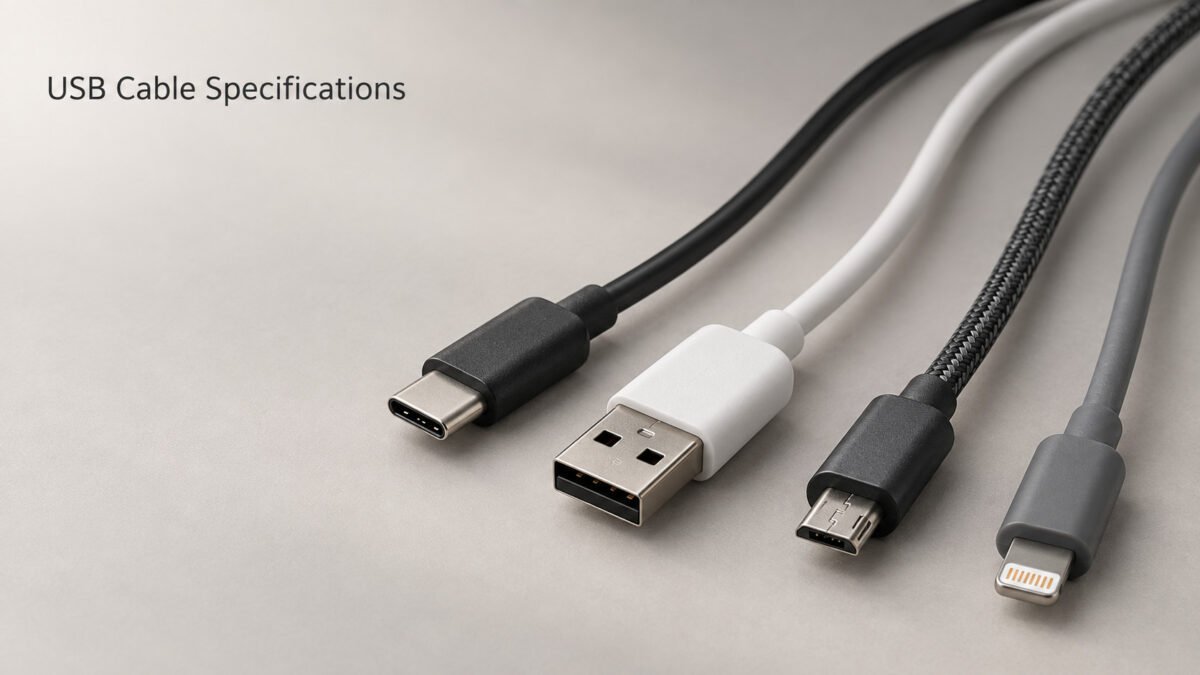
The connector defines how the cable connects to a device and which families of devices it serves. It is usually the first item reviewed, because the wrong connector makes the cable unusable regardless of the other ratings. Common connector types include:
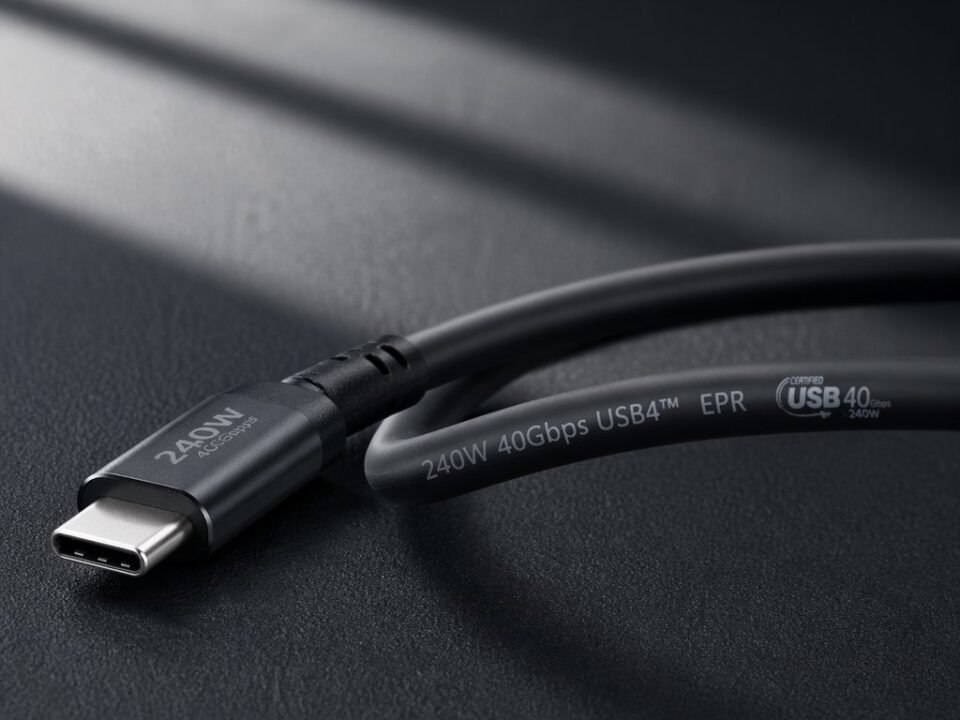
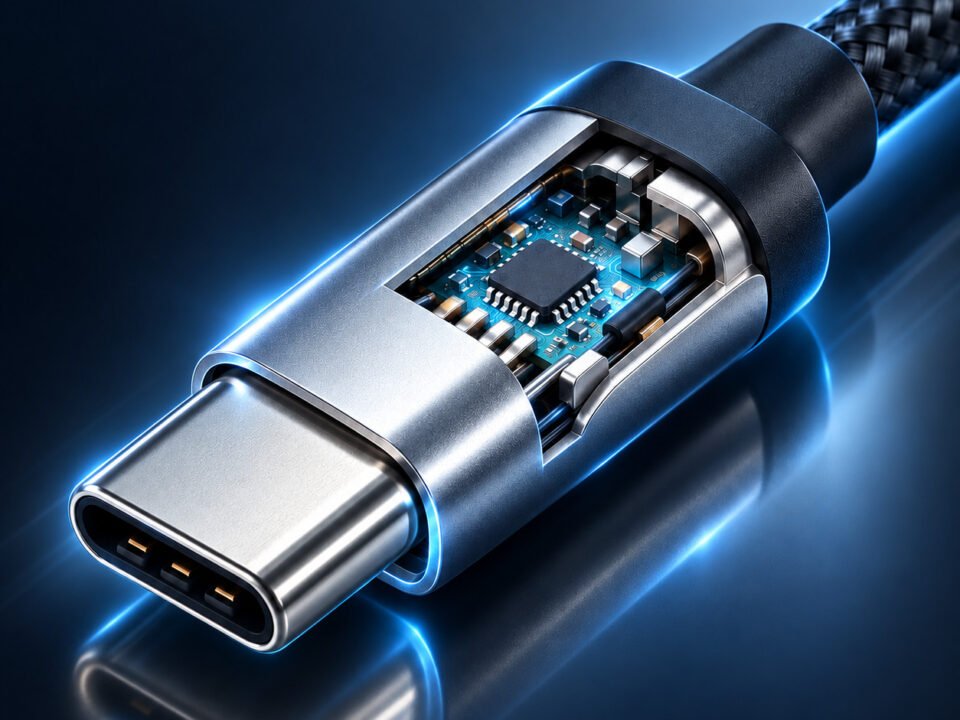
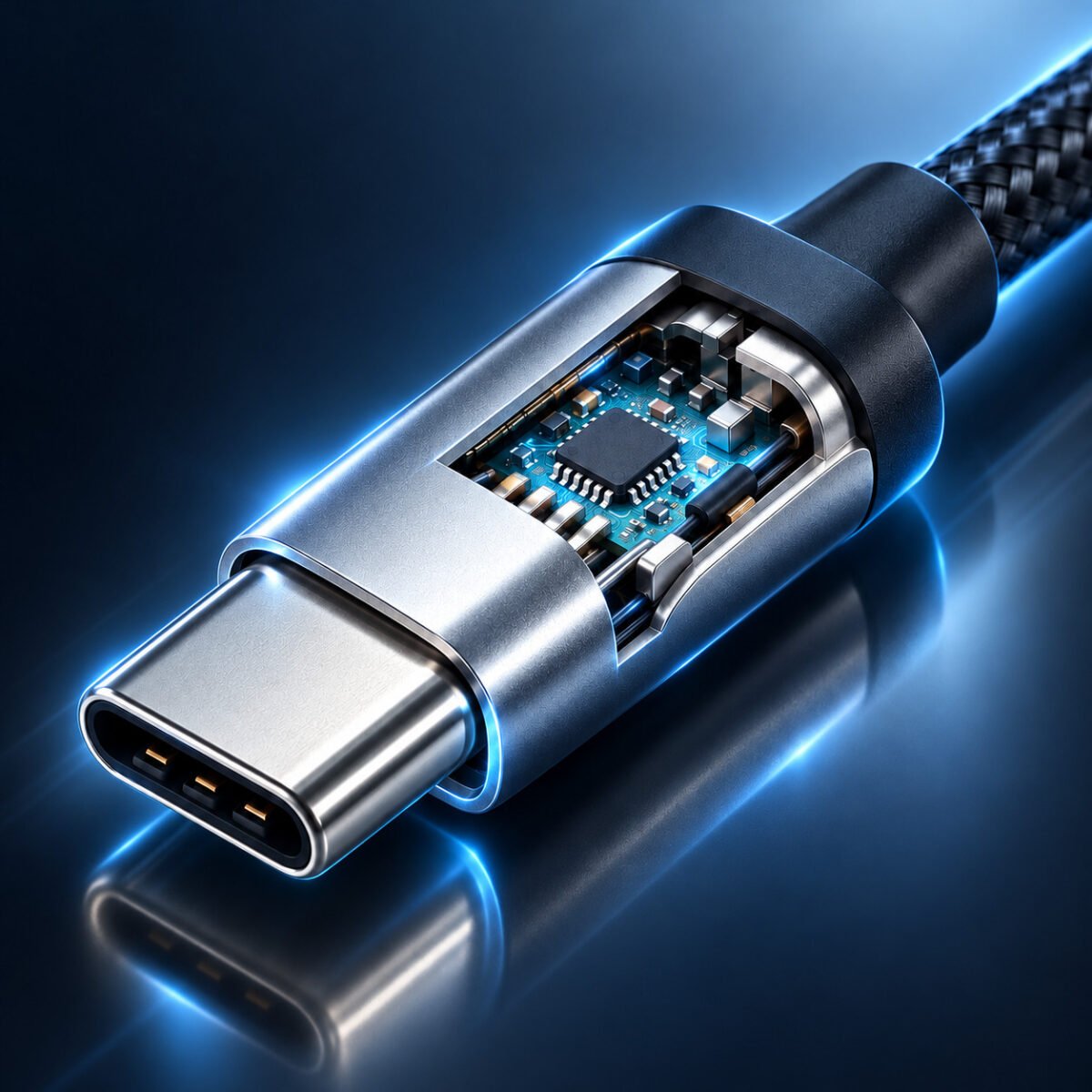
- USB-C: A reversible connector used across laptops, tablets, smartphones, docks, and peripherals. USB-C describes the connector type, not the cable's complete performance. Depending on the cable design, a USB-C cable may support charging only, USB 2.0 data, higher USB data rates, USB Power Delivery, and/or video transmission. These capabilities must be confirmed separately. USB-C to USB-C cables rated above 3 A require an electronically marked cable with an E-Marker that identifies the cable's power capability.
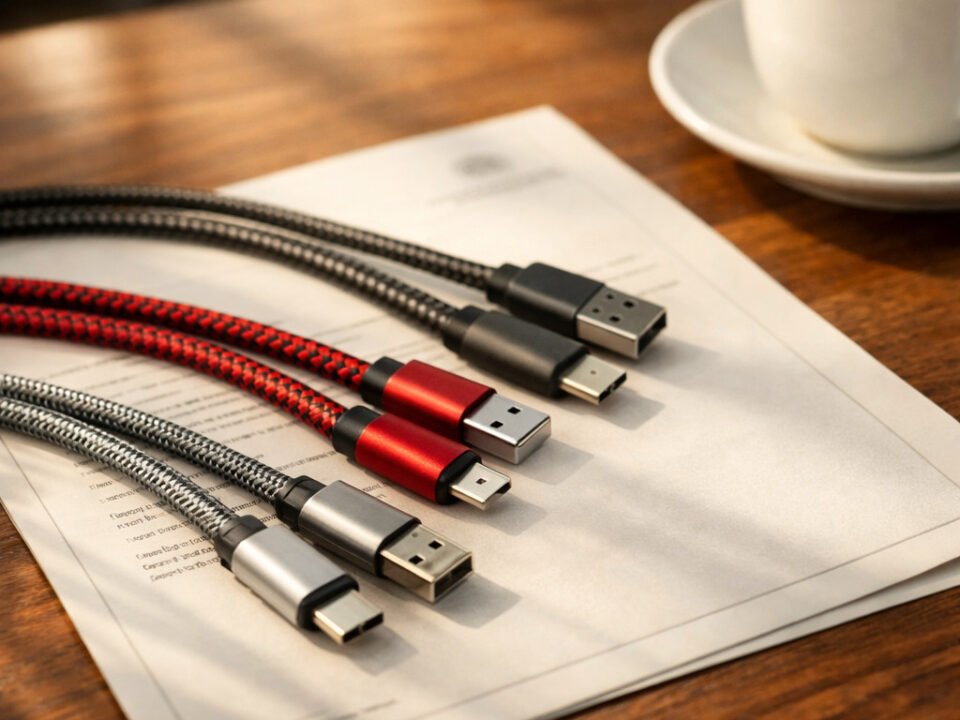
- USB-A: The traditional rectangular connector used on chargers, computers, hubs, and legacy equipment. USB-A remains a common host-side connector in many commercial and industrial environments.
- Micro USB: A compact connector used on a wide range of portable devices, power banks, and older-generation hardware that still relies on this interface.
- Lightning: Apple's proprietary connector used on selected earlier-generation iPhone, iPad, and accessory models. Lightning-to-USB cable projects should be evaluated separately from standard USB connector configurations. Where applicable, buyers should confirm MFi program requirements, authorized components, target device compatibility, and labeling before development or production.
Connector shape alone does not determine charging power, data speed, or video capability. A USB-C connector, for example, may be used on cables with very different internal structures and performance ratings. Buyers should therefore confirm the connector combination, power rating, data rate, and video support as separate specification items.

The connector spec records the exact plug type on each end, the connector configuration, contact arrangement where applicable, and wiring assignment, along with the plug shell finish and material, and whether an E-Marker, authentication component, or other specified electronic component is required for the selected cable configuration. Matching both ends to the target device family is the first step in selecting a cable series.
1.2 Electrical Specification
Electrical parameters determine how the cable behaves while carrying power. This group typically includes:
- Voltage Capability: The voltage levels the cable is designed to carry under the applicable charging specification. Basic USB charging commonly operates at 5 V, while selected USB Power Delivery cables may support higher negotiated voltages. USB PD Extended Power Range configurations can operate at up to 48 V, depending on the cable, charger, device, and supported PD specification.
- Current Rating: The maximum current the cable is designed to carry under specified conditions. Common cable ratings include 1 A, 2 A, and 3 A. Selected USB-C to USB-C cables support up to 5 A and require an appropriate E-Marker.
- Power Rating: The maximum advertised power capability of the cable. Depending on the specification, USB-C power cables may be rated for up to 60 W, 100 W, or 240 W. Actual charging power is limited by the lowest supported capability among the cable, charger, connected device, and charging protocol.
Conductor material and cross-sectional area are important factors in cable resistance, voltage drop, and temperature rise. The finished cable's current rating also depends on cable length, connector and termination resistance, internal construction, and the applicable test conditions. The electrical spec listed in a datasheet should always be read as the cable's rated capability, not as a guaranteed continuous operating condition for every device and charger in the field.
1.3 Data Specification
Data parameters describe how the cable handles signal transmission. This group includes:
- Data Transfer Capability: USB cables may be charging-only or may support different data performance levels, depending on their internal construction. Depending on the product range, available data options may include USB 2.0 at up to 480 Mbps and selected models rated for USB 5Gbps, USB 10Gbps, USB 20Gbps, or selected USB4 cable ratings such as 40Gbps or 80Gbps. The connection negotiates a data rate supported by the cable, host, and connected device, while actual throughput may be lower depending on the complete system and operating conditions.
- Signal Performance: High-speed cable designs must meet the applicable electrical requirements for impedance, insertion loss, crosstalk, and shielding. Cable length, conductor construction, connector design, and assembly consistency affect whether the finished cable can meet its stated data rating.
- Video Capability: Selected full-featured USB-C cables may carry video when the cable, host, and connected display or adapter support the required display mode. A USB-C connector alone does not guarantee video output. Buyers should specify the required display interface, resolution, refresh rate, cable length, and host/device configuration for project verification.
For devices that move large files or stream high-bandwidth content, the data specification is the deciding factor between a charging-only cable and a full-featured data cable. Confirming the required data rate early in the project is important, because the choice directly shapes conductor arrangement, differential pair construction, and shielding complexity, and therefore the cost of the final product.
1.4 Mechanical Specification
Mechanical parameters affect how the cable feels, bends, and lasts in daily use. This group includes:
- Length: Finished lengths commonly range from approximately 0.1 m to 3 m across typical product ranges, with other lengths evaluated according to the required power, data performance, voltage-drop limit, and application. High-speed passive cables cannot be offered at arbitrary lengths, since signal performance limits the maximum practical length.
- Outer Diameter: The finished cable diameter, determined by conductor size, insulation, shielding, fillers, jacket construction, and any outer braid.
- Flexibility: The ease with which the cable bends, often related to jacket hardness and the strand count of the conductors.
- Durability: The cable's resistance to repeated bending, pulling, and connector strain, often quantified by bend-cycle tests, pull-force testing, and strain-relief design.
A flexible cable with a soft jacket is easier to route in tight spaces and is preferred where the cable is handled often. Fixed installations may use more robust constructions where routing space and minimum bend radius allow, while moving applications require cable structures specifically designed and validated for repeated flexing. Confirm the required minimum bend radius, flex-cycle test, pull-force requirement, and connector mating-cycle requirement against the actual application, being aware that bend/flex cycles relate to the cable and strain relief while mating cycles relate to connector plug-and-unplug durability.
1.5 Material Specification
Material parameters define what the cable is made of and how it resists its environment. This group includes:
- Jacket and Outer Covering: Common jacket materials include PVC, TPE, and silicone. Selected models may also include a nylon or polyester outer braid for appearance and abrasion protection, applied over the underlying insulation jacket.
- Shielding: Conductive layers around the signal pairs, such as foil or braided shielding, used on data cables to reduce external interference from nearby power lines and equipment.
- Structure: The internal arrangement of conductors, insulation, and shielding between the two connectors.
Material selection should be matched to the operating environment. A standard PVC jacket suits indoor consumer use, while a tougher braided or heavy-duty jacket suits higher-wear environments. Silicone jackets offer softer handling under a wide range of conditions on selected models. Reviewing the internal structure also helps confirm that the shielding and conductor choice correspond to the stated data rate and current rating.
2. Application‑Specific Considerations
Different customer groups apply different priorities when they read a specification. The same cable parameter can be a deciding factor for one buyer and nearly irrelevant for another. Two representative applications illustrate how the emphasis shifts.
2.1 Consumer Electronics
For retail and consumer device markets, buyers tend to focus on:
- Appearance: Jacket color, finish, braid pattern, and connector styling, since the cable is visible and touches the user daily.
- Charging Performance: The cable's rated current and power capability, which must match the charger, device, and charging protocol. Actual charging power is determined by the lowest supported capability in the complete charging system.
- Length: A balance between reach and portability, with common retail lengths between 0.5 m and 2 m.
Consumer-oriented cables also place weight on packaging, labeling, and consistent quality from batch to batch, because these cables are typically sold in high volume through retail and e-commerce channels. Visual consistency of color and finish across production lots is important when the cable is part of a branded product lineup, so buyers often request color and gloss samples before the first production order.
2.2 Industrial
For industrial and professional deployments, buyers tend to prioritize:
- Durability: Higher bend-cycle counts, rugged strain relief, and reinforced connectors for machinery, kiosks, and field equipment that experience repeated movement.
- Flexibility: Cables that can be routed repeatedly without cracking, using cable constructions and jacket materials selected and validated for the required flexing conditions.
- Environmental Resistance: Environmental resistance should be specified and verified for the selected model. Depending on the application, this may include an operating temperature range and defined resistance to moisture, oil, abrasion, UV exposure, or chemicals. Any IP rating applies only to the specified mated connector system and installation condition, not automatically to every USB cable using the same connector type.
Industrial cables usually require documented testing and consistent mechanical performance, with a wider range of lengths and custom terminations available for integration into larger equipment. Because industrial failures cause downtime, buyers in this segment tend to request validation samples and test reports covering bend, pull, temperature, and environmental performance before committing to a full production run.
3. How to Specify a USB Cable Project
To select or develop the correct cable, buyers should confirm the following items:
- Connector type and orientation at both ends
- Required charging protocol, maximum voltage, current, and power
- Charging-only or data-enabled construction
- Required USB data performance
- Whether video capability is required
- Finished cable length and acceptable tolerance
- Cable diameter, flexibility, and minimum bend radius
- Jacket material, color, surface finish, and branding requirements
- Operating temperature and required resistance to moisture, oil, abrasion, or chemicals
- Applicable testing, certification, packaging, and labeling requirements
- Estimated order quantity and target application
Providing these details at the quotation stage supports evaluation of a suitable standard model or preparation of an OEM/ODM cable specification for sampling.
4. OEM/ODM USB Cable Options
Depending on the selected cable platform and project requirements, available customization may include connector combinations, cable length, conductor construction, jacket material, color, braid design, connector housing, logo application, packaging, and specified electrical or mechanical testing.
Not every combination of power, data rate, length, flexibility, and outer diameter is technically interchangeable. High power, high data performance, long cable length, and compact diameter may require different conductor sizes, shielding structures, or active components. Final specifications should therefore be confirmed through engineering review and sample validation.
Need help confirming a USB cable specification? Provide your target devices, connector combination, power requirement, data rate, cable length, operating environment, and estimated order quantity. These details support a review of the requirements and a recommendation of a standard or custom cable configuration for evaluation.
5. Related Resources
The specification structure and application notes above are the starting point for choosing a cable. For deeper guidance on selecting the right series and configuration, refer to the following resources:
- USB Cable Selection Guide
- USB-C Cable Solutions
- Custom USB Cable Manufacturing
These pages cover connector options, electrical and data ratings, mechanical options, and customization paths for procurement and development teams confirming the specification that fits each project.
Need Help Confirming a USB Cable Specification?
Whether you need standard USB cables or fully customized OEM/ODM configurations with specific connector combinations, power ratings, data performance, cable lengths, jacket materials, or branding, our team can help you review the requirements and recommend a standard or custom cable configuration for evaluation. From USB 2.0 to USB4 80Gbps, we support custom cable projects with competitive pricing and flexible MOQ.