

What Is Samsung Super Fast Charging 3.0?
What Is Samsung Super Fast Charging 3.0?
I know the frustration of watching the battery inch upward while you're running late. It happens to all of us — the phone hits 2% right before you walk out the door, and you stand there unplugging and replugging the cable, willing it to charge faster.
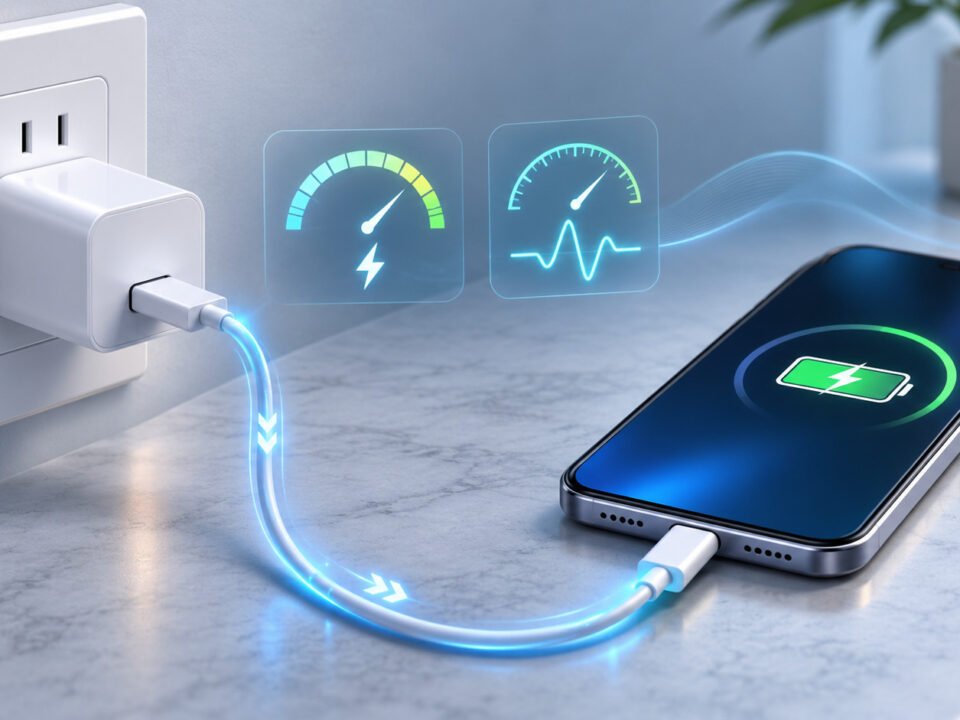
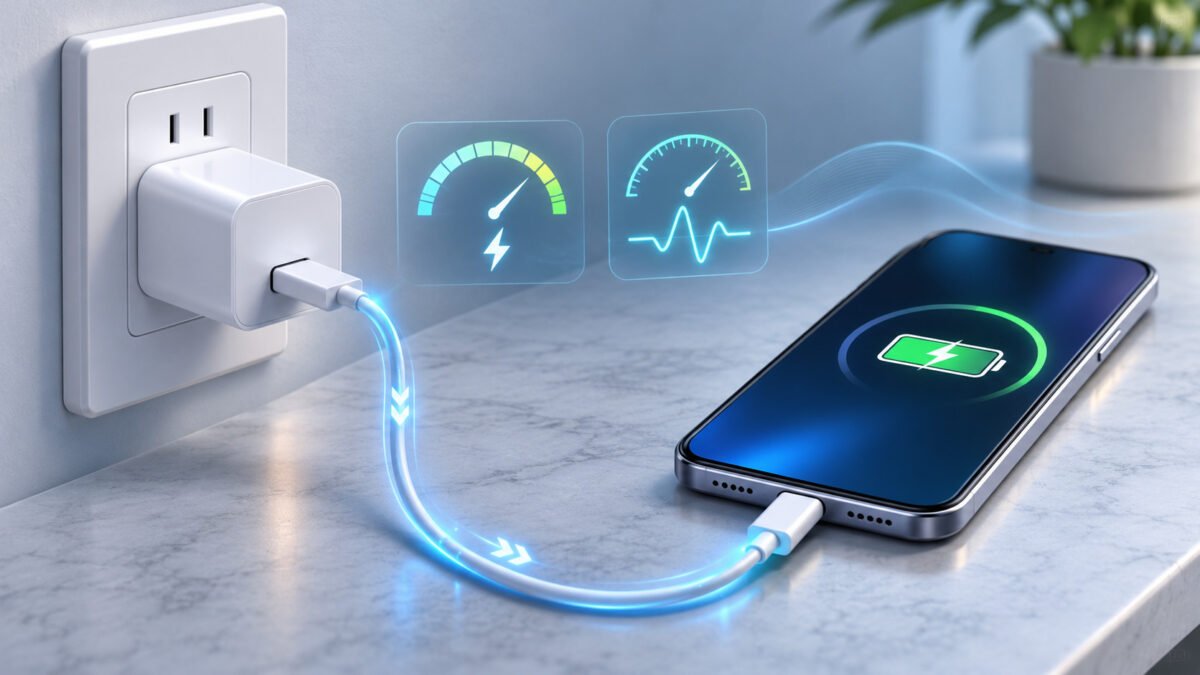
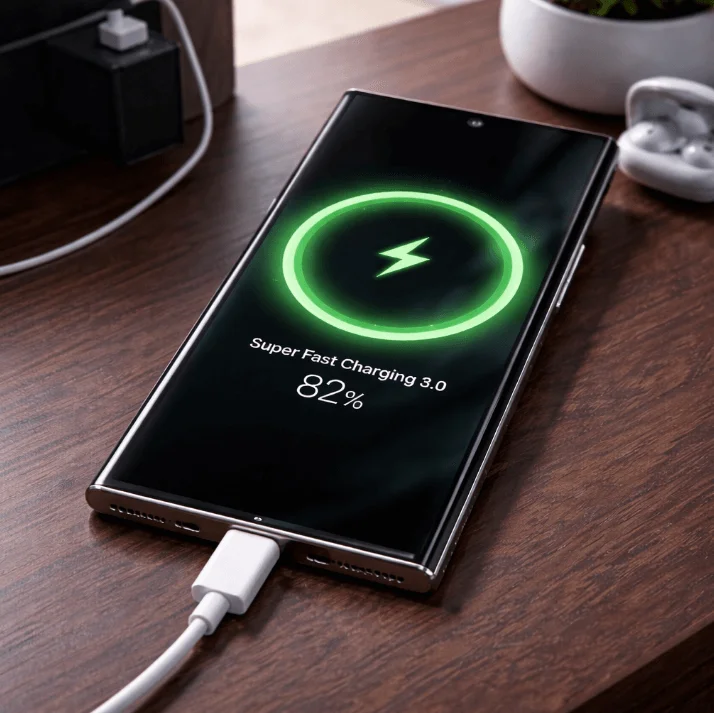
Samsung Super Fast Charging 3.0 is Samsung's newest fast-charging standard for Galaxy phones. It is built on USB Power Delivery 3.1 with PPS (Programmable Power Supply), raising the peak charging ceiling from 45 W to 60 W on supported devices — mainly the Galaxy S26 Ultra. Samsung's own spec sheet advertises a 0–75% top-up in around 30 minutes with the bundled 60 W adapter.
- 1. What Is Samsung Super Fast Charging 3.0?
- 2. What Is the Difference Between Super Fast Charging 2.0 and 3.0?
- 3. Which Phones Support Super Fast Charging 3.0?
- 4. Can I Use a Super Fast Charging 3.0 Charger With Older Samsung Phones?
- 5. How Many Watts Does Super Fast Charging 3.0 Actually Deliver?
- 6. Does Super Fast Charging 3.0 Need a Special 5 A USB-C Cable?
- 7. Is Super Fast Charging 3.0 Safe for My Battery?
- 8. Conclusion
1. What Is Samsung Super Fast Charging 3.0?
Every charger brand seems to have its own word for "fast", and Samsung's naming is no exception. Super Fast Charging, Super Fast Charging 2.0, and now 3.0 all show up on spec sheets and phone boxes, and it is easy to mix them up.
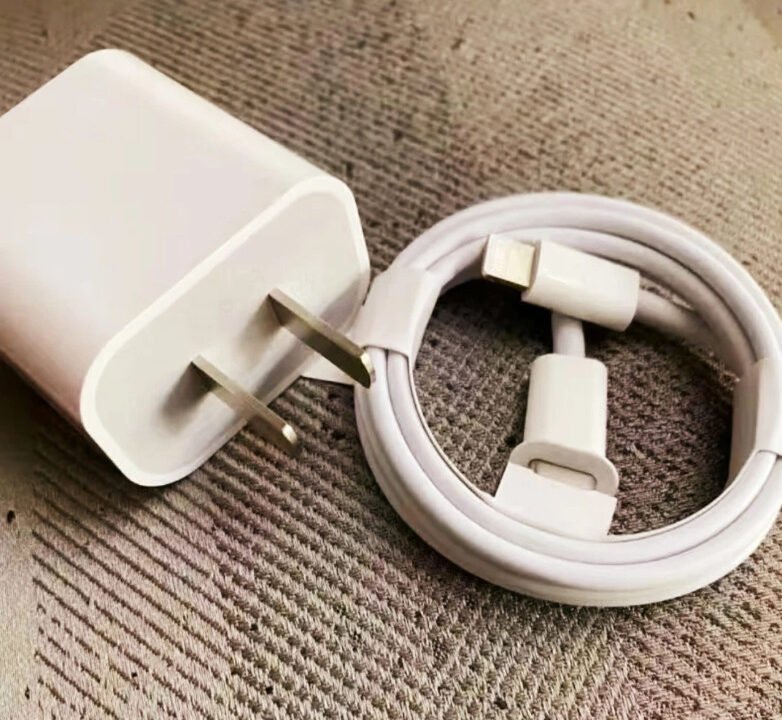
At its core, Samsung Super Fast Charging 3.0 is a USB PD 3.1 PPS fast-charging profile. Samsung's 60 W adapter (EP-T6010) delivers fixed PDOs at 9 V, 15 V and 20 V — all at 3 A, so 20 V × 3 A = 60 W — plus a PPS range from 5 V to 20 V at up to 3 A. Instead of jumping only between fixed voltage steps, the charger and the phone negotiate a continuously adjustable voltage so the phone pulls exactly the power its battery can take at that moment.
Think of older chargers like a fixed-pressure water tap. Once turned on, the pressure stays the same no matter how full the glass is. Too high early on, and the battery gets hot; too low later, and the last 20% takes forever. PPS is more like a smart tap that eases back as the glass fills.
Why PPS matters
| Recurso | Benefit |
|---|---|
| Dynamic voltage | Matches the battery's real-time draw |
| Efficient conversion | Less energy lost as heat |
| Faster top-up | Stays near peak wattage longer before tapering |
A common misconception is that a "60 W charger" blasts a constant 60 W into the phone until it is full. That is not how it works. A PPS charger pulls hard in the early stage (roughly 0–50%), then gradually steps the voltage and current down as the battery fills. That taper is what protects the battery chemistry and keeps the phone cool.
2. What Is the Difference Between Super Fast Charging 2.0 and 3.0?

The main difference is peak power. Super Fast Charging 2.0 tops out at 45 W (via a 10 V/4.5 A PPS profile or a 15 V/3 A fixed PDO). Super Fast Charging 3.0 raises that ceiling to 60 W via 20 V/3 A on the Samsung EP-T6010 adapter, which ships to the USB PD 3.1 spec. The PPS negotiation logic is the same; only the agreed-upon wattage is higher.
A simple comparison
| Item | Carregamento Super Rápido 2.0 | Super Fast Charging 3.0 |
|---|---|---|
| Peak power | 45 W | 60 W |
| Protocolo | USB PD 3.0 with PPS | USB PD 3.1 with PPS |
| Typical use case | Flagship S/Note series | Galaxy S26 Ultra and above |
| Heat control | Good | Same PPS-based curve, tuned for 60 W |
The real-world gap is smaller than the numbers suggest. If you top up from 0% to 50%, 60 W shaves a few minutes off compared with 45 W. If you are charging from 50% to 100%, both chargers settle into the same gentle taper, and the difference becomes minor. The version name matters most when you are buying a charger for a brand-new flagship.
3. Which Phones Support Super Fast Charging 3.0?

As of 2026, Super Fast Charging 3.0 (60 W) is supported primarily by the Galaxy S26 Ultra. Samsung advertises a 0–75% top-up in around 30 minutes with the 60 W adapter. The Galaxy S26+ tops out at 45 W and the base Galaxy S26 at 25 W, while older Galaxy devices — S25, S24, A-series — fall back to their own rated speeds (15 W, 25 W or 45 W).
Samsung keeps the fastest charging speeds for the "Ultra" tier. The base model phones have smaller batteries and a smaller charging IC, so forcing 60 W into them would not be safe or useful. You can confirm your phone's support in Settings → Battery and device care → Battery → More battery settings → Super fast charging. If that toggle offers 60 W, your phone speaks 3.0. If it only offers "Fast charging" or "Super fast charging", it tops out at an older level.
4. Can I Use a Super Fast Charging 3.0 Charger With Older Samsung Phones?
Yes. A 60 W PD 3.0 PPS charger works perfectly with older Samsung phones, iPhones, earbuds and tablets — the phone simply negotiates the highest wattage it supports and the charger delivers that. There is no risk of overcharging or forcing too much power into an older device.
This is the upside of USB-C and PD. You do not need a different brick for every gadget on your desk. One good 45 W or 60 W PD charger can sit by the bed and handle the Galaxy phone, the wireless earbuds case, the tablet, and the partner's iPhone. The charger negotiates down — earbuds ask for 5 W, the phone asks for 45 W or 60 W, and the charger delivers exactly what each device requests.
Two things to keep in mind:
- A higher-wattage charger does não charge an older phone faster than its rated speed. If your phone tops out at 25 W, a 60 W charger still only pushes 25 W.
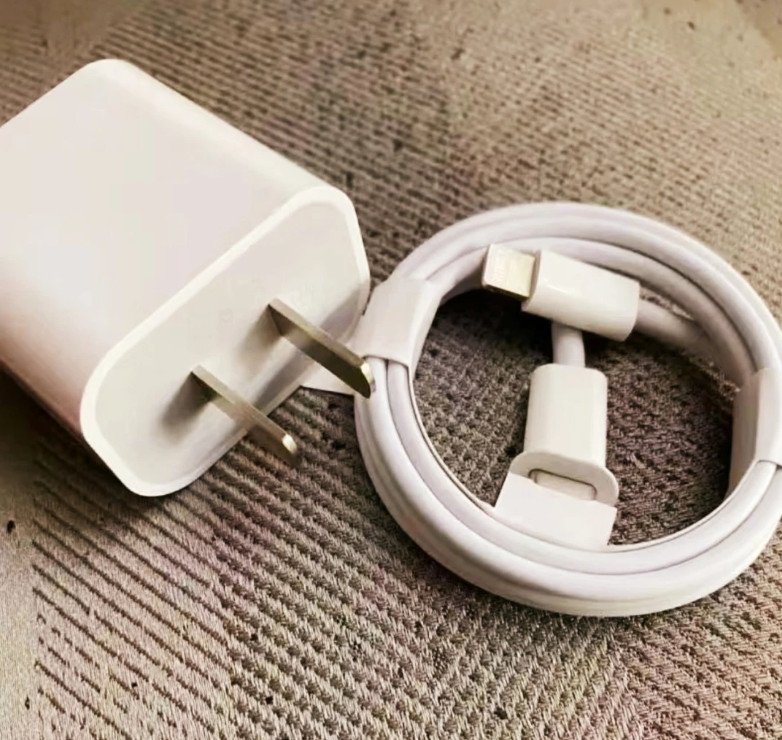
- The cable matters as much as the charger. A thin 3 A cable will cap the whole system regardless of how much the charger can deliver.
5. How Many Watts Does Super Fast Charging 3.0 Actually Deliver?
The rated peak is 60 W (20 V × 3 A), but that number is a ceiling, not a constant. In real use, the phone pulls close to 60 W only in the early part of the cycle, then tapers down through PPS as the battery fills — Samsung's advertised 0–75% in 30 minutes reflects that early-window peak, not a sustained 60 W from 0% to 100%.
The actual wattage you see on a power meter depends on several things:
- Phone model — only the S26 Ultra can draw 60 W.
- Battery level — peak only happens early; by 80% the phone throttles itself.
- Phone temperature — if the phone is warm (e.g. after a game), the charging curve drops early.
- Carregador — must be a USB PD 3.0 PPS charger rated for at least 60 W.
- Cable — a good-quality 3 A USB-C cable is enough, because 60 W here runs at 20 V × 3 A, not at high current.
6. Does Super Fast Charging 3.0 Need a Special 5 A USB-C Cable?

No — and this is a common misunderstanding. The 60 W Samsung ships to (20 V × 3 A) runs at 3 A, not 5 A, so any decent 3 A USB-C cable will deliver the full 60 W. A 5 A / E-Marker cable is not required for this specific wattage.
What does matter is cable quality. A thin, high-resistance cable can cause voltage drop, intermittent charging, or the phone falling back to a slower speed even when the charger and phone both support 60 W. Samsung's own 60 W adapter is often sold without a cable (sold separately), so pair it with a reputable USB-C cable rated at 3 A or higher — a 5 A / E-Marker cable will also work, it just isn't mandatory. Note that the older 45 W Super Fast Charging 2.0 used a 10 V/4.5 A PPS profile, which is closer to 5 A and is why people sometimes associate 45 W with thicker cables.
7. Is Super Fast Charging 3.0 Safe for My Battery?
Yes, when the phone, charger and cable are all matched. Samsung's PPS curve, combined with the phone's own temperature monitoring and software limits, is designed to avoid the two things that age lithium-ion batteries: sustained high heat and sustained high voltage.
The question is never really "is fast charging safe?" — it is "how is fast charging managed?" A well-managed 60 W charge is gentler on a battery than a poorly-managed 25 W charge.
What ages a battery most
| Factor | Impact on long-term battery health |
|---|---|
| Heat | The single biggest accelerant |
| Cheap no-name chargers | Poor voltage ripple |
| Low-quality cables | Voltage drop, inconsistent current |
| Keeping the phone at 100% all day | Full-charge storage stress |
Modern Galaxy phones already layer in temperature sensors, charging-current cuts when the phone is warm, and an 85% charge-limit option ("Protect battery"). As long as you use a name-brand PD charger and a decent cable, 60 W PPS is no harder on your battery than the older 45 W mode.
8. Conclusion
Samsung Super Fast Charging 3.0 is not a brand-new protocol — it is the same PPS negotiation (shipped to the USB PD 3.1 spec) extended to 60 W for the Galaxy S26 Ultra. It charges a few minutes faster than 45 W in the early half of the cycle, behaves identically in the second half, and stays safe as long as you pair it with a decent 3 A USB-C cable. If you own an S26 Ultra, a 60 W PD charger is worth it. If you own an older Galaxy, a 45 W PD charger already gives you everything your phone can take.