

Why Choose a Type C Charger for Faster Charging and Universal Compatibility?
Why Choose a Type C Charger for Faster Charging and Universal Compatibility?
As smartphones, tablets, laptops, and other electronic devices continue to evolve, charging requirements are becoming more demanding. Users increasingly expect chargers that deliver higher power, support multiple devices, and reduce the need for different charging accessories.
USB Type-C has become an important part of this transition. Its reversible connector design, broad device adoption, and compatibility with advanced charging technologies make it a practical choice for modern charging solutions.
Unlike older USB connectors, Type-C can support different power levels, data transfer capabilities, and additional functions depending on the device, cable, and implementation.
For consumers, this means greater convenience and fewer charging cables. For brands, wholesalers, and product developers, Type-C chargers provide opportunities to develop versatile charging products for different markets and applications.
In this guide, we explore the advantages of Type C chargers, their compatibility with different devices, fast-charging capabilities, and how they compare with traditional charger types.
- 1. The Advantages of Type C Chargers for Faster Charging
- 2. Universal Compatibility: Why Type C Works with Multiple Devices
- 3. Understanding the Fast Charging Capabilities of Type C
- 4. Comparison of Type C with Other Charger Types
- 5. Future-Proofing Your Devices with Type C Technology
- 6. Common Myths About Type C Chargers Debunked
- 7. Domande frequenti
- 8. Conclusion
1. The Advantages of Type C Chargers for Faster Charging
USB Type-C chargers offer several advantages over older charging solutions. Their design supports modern power delivery requirements while providing a convenient connection for everyday devices.
1.1 Higher Charging Power
One of the main advantages of Type-C is its ability to support higher charging power when combined with compatible charging protocols.
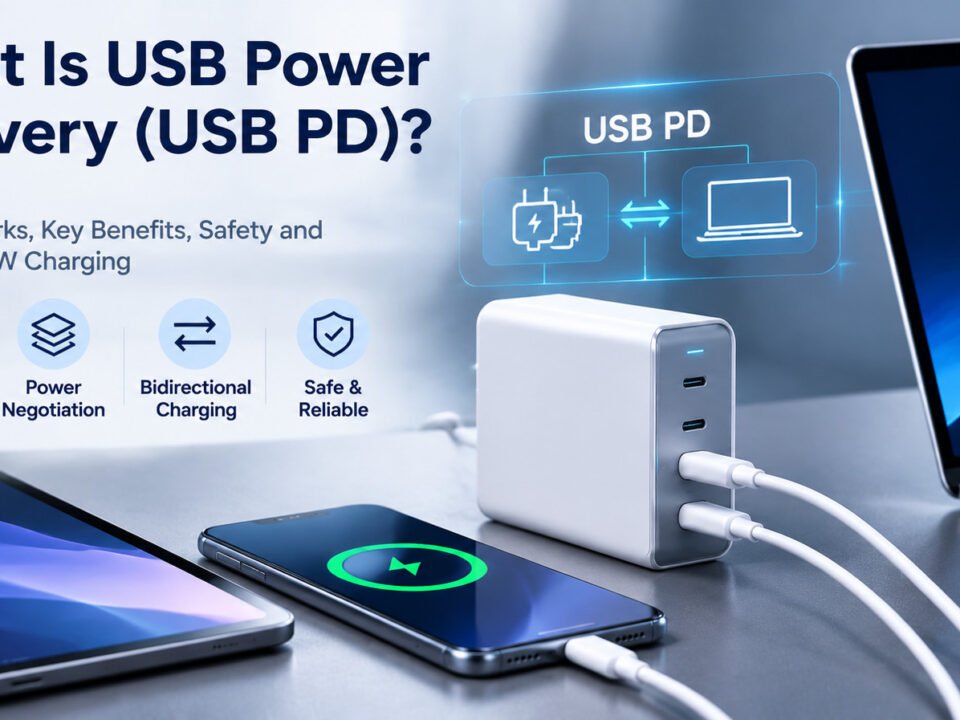
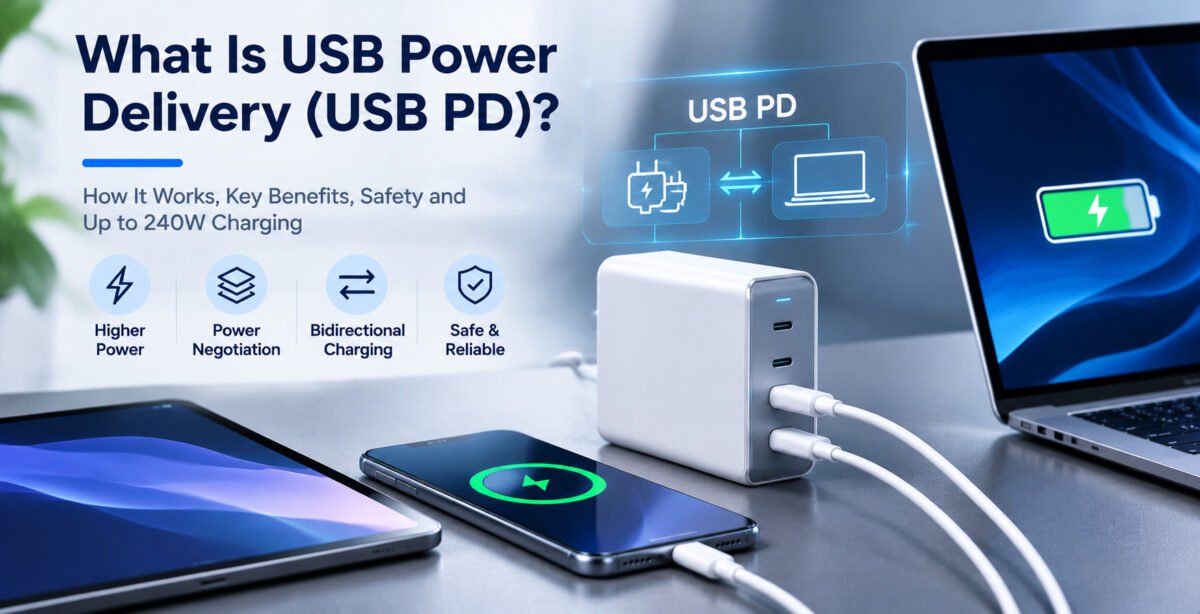
USB Power Delivery (USB PD) allows compatible chargers and devices to negotiate suitable voltage and current levels according to their power requirements.
USB PD 3.0 supports power delivery up to 100W, while USB PD 3.1 extends the maximum supported power to 240W through Extended Power Range (EPR).
This makes Type-C suitable for a wide range of products, including:
- Smartphones.
- Tablets.
- Ultrabooks and laptops.
- Portable monitors.
- Gaming devices.
- Other USB-C powered electronics.
However, the actual charging speed depends on the charger's output capability, device compatibility, and cable rating. A USB-C connector alone does not guarantee high-speed charging.
1.2 Reversible Connector Design
Another important advantage of USB Type-C is its reversible design.
Unlike older USB-A connectors, which require a specific insertion orientation, USB-C plugs can be connected in either direction.
This simple improvement makes everyday charging more convenient and reduces the frustration of repeatedly checking connector orientation.
For product manufacturers, the reversible design also provides a consistent connector interface across different charging products.
1.3 More Efficient Charging Solutions
USB Type-C supports modern power management technologies that allow compatible devices to request the power they need.
With USB Power Delivery, the charger and connected device negotiate an appropriate power configuration rather than simply delivering the charger's maximum rated output.
This helps support different device categories using a common charger platform.
For example, a suitable USB-C PD charger can charge a smartphone at a lower power level and provide higher output to a compatible tablet or laptop.
1.4 Reduced Cable and Charger Clutter
As more devices adopt USB-C, users can reduce the number of different charging cables and adapters they need to carry.
A single compatible USB-C charger may support several devices, provided its output power and charging protocols meet their requirements.
This is particularly useful for people who regularly use smartphones, tablets, laptops, wireless earbuds, and other portable electronics.
2. Universal Compatibility: Why Type C Works with Multiple Devices
USB Type-C has become widely adopted across different categories of electronic devices.
Its compatibility is one of the main reasons it has become a preferred connector for modern charging applications.
However, a common physical connection does not guarantee identical charging performance across all devices. Actual power delivery depends on supported charging protocols, voltage and current profiles, cable capabilities, and the device's own power management system.
2.1 Smartphones and Tablets
Many modern smartphones and tablets use USB-C as their primary charging interface.
Different manufacturers, including Apple, Samsung, and Google, have adopted USB-C across many of their device models.
This allows users to share compatible chargers and cables across different brands.
However, charging performance still depends on the specific device's supported charging protocols and maximum input power.
For example, a phone supporting 25W fast charging will not automatically charge at 65W simply because it is connected to a 65W USB-C adapter.
2.2 Laptops and Portable Computers
USB-C has also become increasingly important in laptop charging.
Many modern laptops support USB Power Delivery through USB-C, allowing users to charge their computers with compatible USB-C power adapters.
Depending on the laptop's power requirements, charging adapters may range from approximately 30W to 140W or higher.
USB PD 3.1 extends the available power range to 240W, supporting more demanding applications.
For laptop charging, both the charger and USB-C cable must support the required power level.
2.3 Wireless Earbuds and Accessories
USB-C is also widely used in smaller electronic products, including wireless earbuds, portable speakers, keyboards, and other accessories.
These products generally require less charging power than laptops or tablets.
A compatible USB-C charger can therefore serve multiple types of devices without requiring a separate adapter for every product.
2.4 Multi-Device Charging
For users with several electronic devices, multi-port USB-C chargers provide another practical advantage.
A multi-port charger can supply power to multiple devices simultaneously, reducing the number of individual adapters needed.
Common configurations include:
- Dual USB-C chargers.
- USB-C and USB-A combination chargers.
- Three-port desktop chargers.
- Multi-port GaN chargers.
When selecting a multi-port charger, buyers should consider total output power and individual port power distribution.
The available power may change when multiple devices are connected simultaneously.
3. Understanding the Fast Charging Capabilities of Type C
One of the most important reasons for choosing a Type C charger is its compatibility with advanced fast-charging technologies.
However, it is important to understand that fast charging depends on more than the physical connector.
3.1 USB Power Delivery (USB PD)
USB Power Delivery is a charging protocol designed to provide flexible power delivery through compatible USB connections.
It allows chargers and devices to negotiate voltage and current configurations based on their supported power requirements.
USB PD is particularly important for devices that require more power, such as tablets and laptops.
Different USB PD specifications support different power levels:
| USB PD Specification | Potenza massima | Main Application |
|---|---|---|
| USB PD 2.0 | Fino a 100 W | Smartphones, tablets, laptops |
| USB PD 3.0 | Fino a 100 W | Smartphones, tablets, laptops |
| USB PD 3.1 SPR | Fino a 100 W | General-purpose USB-C charging |
| USB PD 3.1 EPR | Fino a 240 W | High-power laptops and compatible equipment |
USB PD 3.1 introduced Extended Power Range (EPR), adding 28V, 36V, and 48V fixed voltage levels.
These voltage levels support power outputs of up to 140W, 180W, and 240W, respectively.
For applications above 100W, compatible EPR chargers and cables are required.
3.2 Programmable Power Supply (PPS)
Programmable Power Supply (PPS) is an optional feature of USB PD 3.0 and later implementations.
It allows compatible chargers to adjust their output voltage dynamically within supported ranges.
This provides more flexible power management for compatible smartphones and other electronic devices.
PPS is particularly relevant to certain Samsung Galaxy fast-charging applications.
However, both the charger and the connected device must support compatible PPS functionality to use it.
3.3 Charging Cable Requirements
The charging cable also influences how much power can be delivered.
USB-C cables have different current and power ratings. Standard 3A cables can support up to 60W at 20V.
For applications requiring more than 3A, a compatible 5A cable with an E-Marker chip is required.
USB PD 3.1 EPR charging above 100W also requires an EPR-rated cable designed for the corresponding power level, up to 240W.
Therefore, selecting the correct cable is essential when developing high-power USB-C charging products.

3.4 What Determines Actual Charging Speed?
Even when using a high-power USB-C charger, the connected device does not necessarily receive the charger's maximum output.
Actual charging performance depends on several factors:
- Maximum charging power supported by the device.
- USB PD or other compatible charging protocols.
- Cable current and power rating.
- Battery condition and charging level.
- Operating temperature.
- Power distribution when using a multi-port charger.
A compatible charging system requires the charger, cable, and device to work together.
4. Comparison of Type C with Other Charger Types
USB Type-C offers several advantages over older USB connector types, particularly in terms of convenience, power delivery, and device integration.
However, the connector itself should not be confused with the charging protocol or data transfer standard.
4.1 USB Type-C vs. USB-A vs. Micro USB
| Funzione | USB Type-C | USB-A | Micro USB |
|---|---|---|---|
| Progettazione dei connettori | Reversibile | Non-reversible | Non-reversible |
| Insertion Orientation | Both directions | One Direction | One Direction |
| Protocolli di ricarica | USB PD and other compatible protocols | USB BC 1.2 and proprietary fast-charging protocols | USB BC 1.2 and compatible legacy charging protocols |
| USB PD Support | Supportato | Not supported through the USB-C PD interface | Not supported through the USB-C PD interface |
| Potenza massima USB PD | Up to 240W with compatible PD 3.1 EPR equipment | Not applicable | Not applicable |
| Il Trasferimento Dei Dati | Depends on USB specification and implementation | Depends on USB specification and implementation | Commonly USB 2.0 |
| Uscita Video | Supported on compatible devices and cables | Depends on implementation | Generally not supported |
| Applicazioni tipiche | Smartphones, tablets, laptops, monitors | Computers, chargers, accessories | Older smartphones and accessories |
USB-A and Micro USB are not inherently limited to one charging speed. They can support different charging technologies and power configurations.
However, USB-C provides a more flexible connector design and is the physical interface used by modern USB Power Delivery implementations.
4.2 Type C vs. Traditional USB Charging
Traditional USB charging solutions often rely on fixed voltage configurations or specific charging technologies.
USB-C combined with USB Power Delivery offers a more flexible approach by allowing compatible devices to negotiate power according to their requirements.
This makes it suitable for a wider range of charging applications, from low-power accessories to high-performance laptops.
For manufacturers, the ability to develop different power ratings around a common USB-C interface also simplifies product planning and portfolio development.
5. Future-Proofing Your Devices with Type C Technology

As electronic devices continue to evolve, charging standards must accommodate increasing power requirements and a wider range of applications.
USB Type-C is well positioned to support this development because of its flexible connector design and compatibility with advanced USB specifications.
5.1 Wider Adoption Across Device Categories
USB-C adoption continues to expand across smartphones, tablets, laptops, monitors, and other electronic products.
The European Union's Common Charger requirements have also accelerated the adoption of USB-C.
The requirements began applying to specified portable electronic devices on December 28, 2024, and extended to laptops on April 28, 2026.
The EU Common Charger Directive also harmonizes fast-charging technology. For covered devices, USB Power Delivery (USB PD) is required when their rated wired-charging voltage, current, and power all exceed the respective thresholds of 5V, 3A, and 15W. If additional charging protocols are supported, they must not prevent the full functionality of USB PD.
The European Commission's guidance also clarifies that briefly exceeding these thresholds during charging does not automatically trigger the USB PD requirement. The assessment is based on the equipment's rated charging capabilities.
This requirement helps improve compatibility between devices and chargers from different manufacturers.
5.2 Support for Higher Power Requirements
The development of USB PD 3.1 has extended USB-C charging capabilities to 240W.
This provides greater flexibility for manufacturers developing charging solutions for high-performance laptops and other power-demanding equipment.
As compatible devices adopt higher power levels, USB-C charging products can continue to evolve without requiring a completely different connector design.
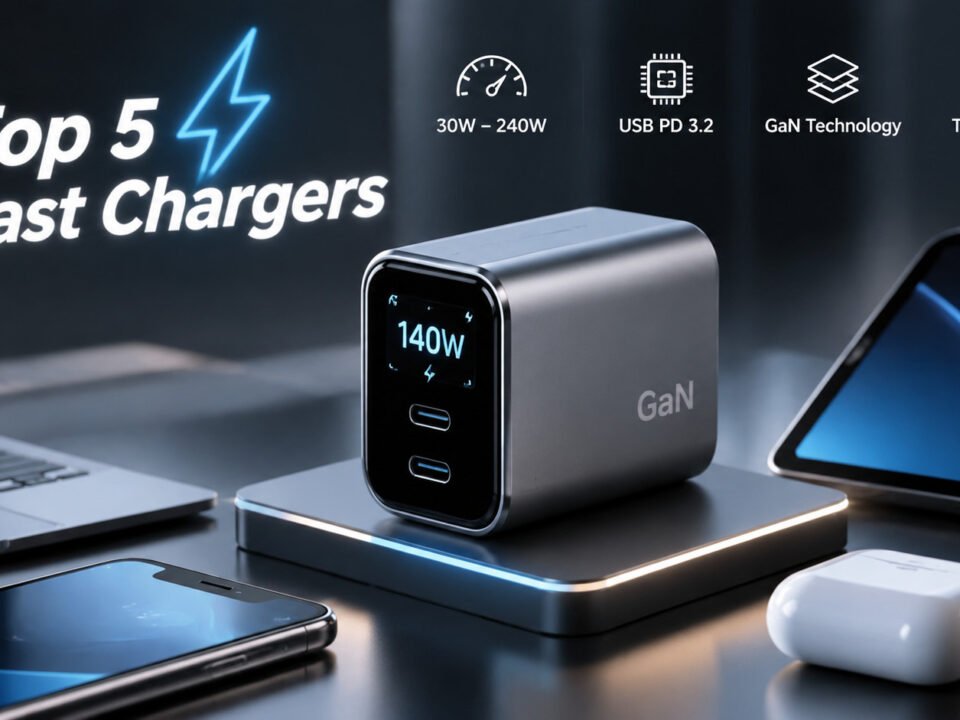
5.3 GaN Charger Technology
Gallium Nitride (GaN) technology is another important development in modern USB-C chargers.
GaN power components enable higher switching frequencies and can help manufacturers develop more compact, high-power charger designs.
Actual conversion efficiency and thermal performance depend on the overall circuit topology, component selection, and thermal management.
This makes GaN particularly useful for:
- Compact travel chargers.
- High-power laptop adapters.
- Multi-port USB-C chargers.
- Desktop charging stations.
- High-wattage fast chargers.
For brands and wholesalers, GaN technology provides opportunities to develop smaller and more powerful charging products for different customer segments.
5.4 Multi-Port Charging and Product Integration
Modern users increasingly need to charge multiple devices simultaneously.
Multi-port USB-C chargers provide a convenient solution by combining several charging outputs into one product.
With appropriate power management, a single charger can support smartphones, tablets, and laptops while distributing available power between connected devices.
This makes multi-port charging products an important area for future charger development.
6. Common Myths About Type C Chargers Debunked
Although USB Type-C has become widely adopted, several misconceptions remain about its charging capabilities and compatibility.
Myth 1: All Type C Chargers Provide the Same Charging Speed
This is incorrect.
USB-C describes the connector interface, not a single charging power rating.
Different USB-C chargers may support different output powers, charging protocols, and voltage configurations.
For example, a 20W USB-C charger and a 100W USB-C PD charger have very different charging capabilities.
The actual charging speed also depends on the connected device and cable.
Myth 2: A Higher-Wattage Type C Charger Will Damage a Phone
A properly designed, standards-compliant charger does not automatically force its maximum rated power into a connected device.
With compatible USB Power Delivery charging, the charger and device negotiate an appropriate power configuration.
For example, a phone designed for 20W charging can generally use a compatible 65W USB-C PD charger without drawing the full 65W output.
However, charger quality, electrical safety, and protocol compatibility remain important.
Myth 3: Every USB-C Cable Supports 100W or 240W Charging
Not all USB-C cables have the same power capability.
Some cables support up to 3A, while compatible 5A cables with E-Marker identification are required for higher-current charging.
For USB PD 3.1 EPR applications, cables must meet the appropriate EPR requirements.
Buyers should always check the cable's rated power capability rather than assuming that every USB-C cable supports the same output.
Myth 4: USB-C Only Supports Charging
USB-C is more than a charging connector.
Depending on the device, cable, and implementation, it can support:
- Data transfer.
- USB Power Delivery.
- DisplayPort Alternate Mode.
- Other supported alternate modes.
- Peripheral connectivity.
Not every USB-C port supports all these functions. The supported capabilities depend on the specific product design.
Myth 5: One Type C Charger Can Charge Every Device at Maximum Speed
A USB-C charger may physically connect to many different devices, but that does not guarantee maximum charging speed for every device.
Charging performance depends on compatible power profiles, device input limits, cable ratings, and supported charging protocols.
A charger designed for multiple device categories should therefore be selected according to the power requirements of the intended applications.
7. Domande frequenti
What is a Type C charger?
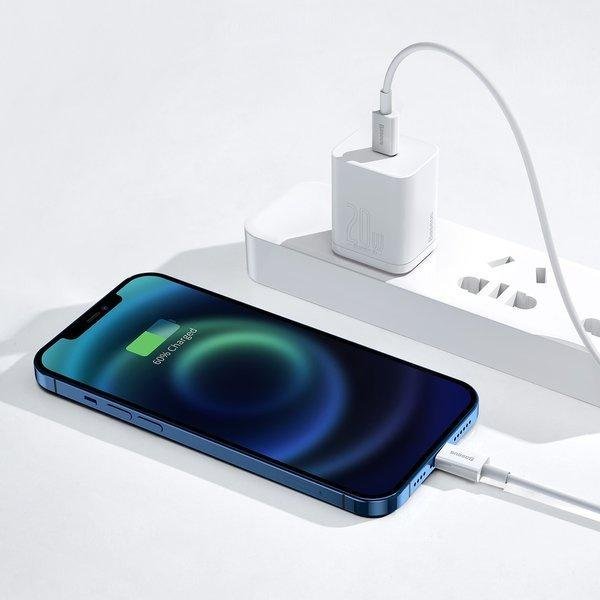
A Type C charger is a charger equipped with a USB Type-C output port. Depending on its design, it may support standard USB charging, USB Power Delivery, PPS, or other compatible charging technologies.
Is a Type C charger faster than a USB-A charger?
It can be, especially when combined with USB Power Delivery and compatible devices. However, USB-A chargers can also support fast-charging technologies. Actual charging speed depends on the charger's power output and the connected device.
Can a Type C charger charge both phones and laptops?
Yes. A sufficiently powerful USB-C charger can charge compatible smartphones, tablets, and laptops. The required output power depends on the device.
What is the maximum power of a Type C charger?
USB Power Delivery 3.1 supports up to 240W through compatible USB-C chargers, cables, and devices. Not every USB-C charger or cable supports this power level.
Do all Type C chargers support Power Delivery?
No. USB Type-C is a connector standard, while USB Power Delivery is a separate charging protocol. Some Type-C chargers do not support USB PD.
Can I use a 65W Type C charger for a 20W phone?
Generally, yes, provided the charger and phone support a compatible charging arrangement. The phone regulates the power it accepts and does not automatically draw the charger's full 65W output.
What should I look for when buying a Type C charger?
Consider the following factors:
- Output power and supported voltage profiles.
- USB Power Delivery and PPS compatibility.
- Number and type of output ports.
- Cable power rating.
- Electrical safety and applicable certifications.
- Charging requirements of the intended devices.
Are Type C chargers suitable for OEM and wholesale projects?
Yes. USB-C chargers are widely used in OEM and wholesale product programs because they can be developed in different power ratings, port configurations, housing designs, and charging protocol combinations.
8. Conclusion
USB Type-C has become an important connector standard for modern charging products because of its reversible design, broad device adoption, and compatibility with advanced power delivery technologies.
When combined with USB Power Delivery, Type-C can support a wide range of charging applications, from smartphones and tablets to high-performance laptops.
However, choosing the right Type C charger requires more than checking the connector type. Output power, charging protocols, cable specifications, device compatibility, and electrical safety all influence the actual charging experience.
For consumers, a compatible USB-C charger can simplify everyday charging and reduce the need for multiple adapters.
For brands, wholesalers, and product developers, Type-C provides a flexible foundation for developing modern charging products across different markets and power requirements.