


GaN Technology Explained: The Semiconductor Revolution in Charging
Understanding Gallium Nitride - The Material That's Making Chargers Smaller, Faster, and More Efficient
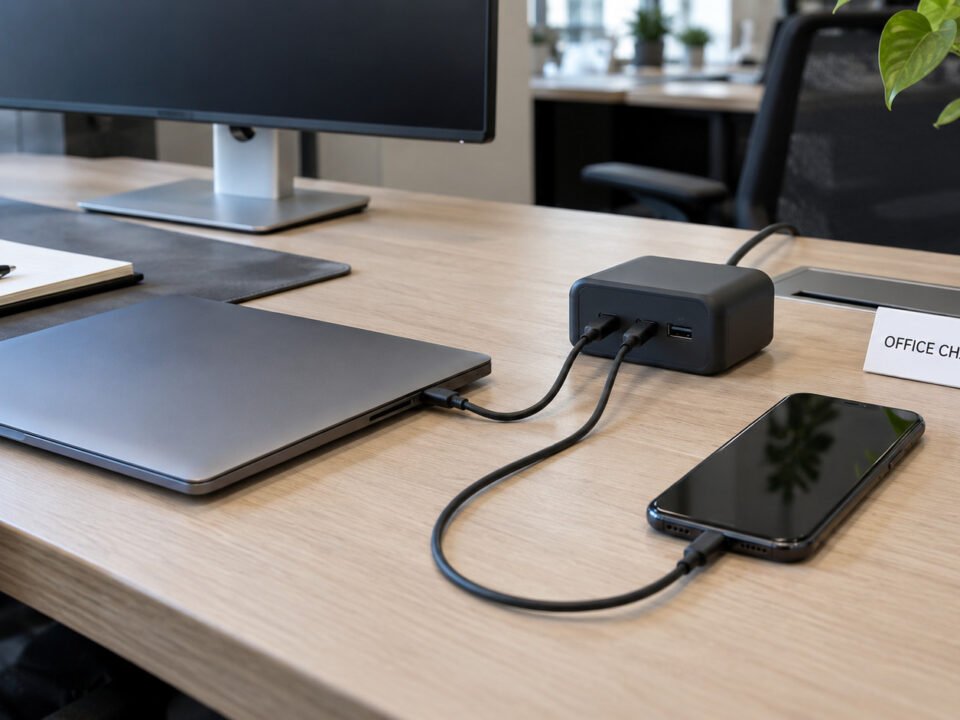
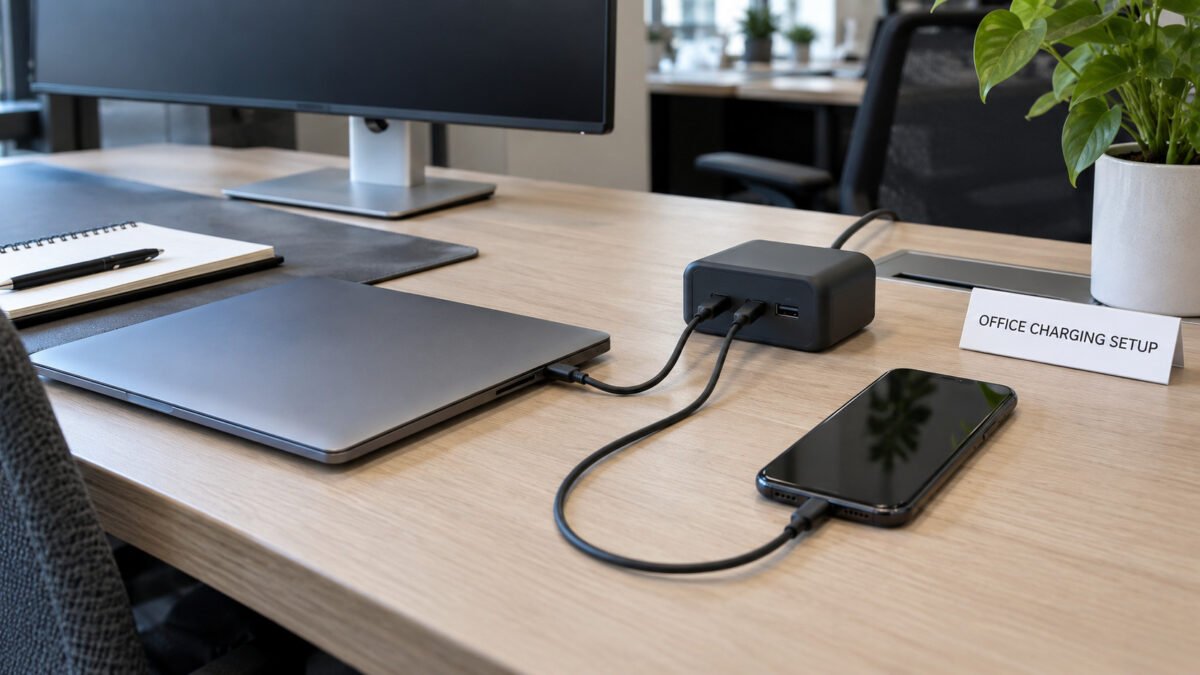
The Modern Charging Dilemma: You have a laptop that needs 65W, a smartphone that supports 45W fast charging, a tablet at 30W, and wireless earbuds. Traditional silicon chargers would require multiple bulky adapters creating cable chaos on your desk. The travel version is even worse - a tangle of cords and heavy power bricks that consume precious bag space. GaN chargers solve all these problems through fundamental semiconductor innovation.
Gallium Nitride (GaN) represents the third generation of semiconductor materials, following silicon (first generation) and silicon carbide (second generation). While silicon has been the backbone of electronics for decades, it's reaching its physical limits in power conversion applications. GaN's superior material properties enable higher electron mobility, wider bandgap (3.4 eV vs silicon's 1.1 eV), and higher critical electric field strength. These technical advantages translate into practical benefits that consumers can immediately appreciate.
Thermal Performance
GaN chargers operate at significantly lower temperatures than silicon-based counterparts. The wider bandgap means electrons require more energy to jump from valence to conduction band, resulting in less energy lost as heat during operation.
This cooler operation extends component lifespan by reducing thermal stress and allows for more compact designs without overheating concerns.
Size & Power Density
GaN can switch at frequencies up to 100 times faster than silicon (MHz vs kHz range). Higher switching frequencies allow for dramatically smaller magnetic components (transformers, inductors) - typically the largest parts in any charger.
A 100W GaN charger can be 50% smaller than a comparable silicon charger while delivering identical power output.
Energy Efficiency
GaN chargers achieve efficiency ratings of 92-95%, compared to 85-90% for quality silicon chargers. This 5-10% improvement reduces energy waste and heat generation.
For a device charged daily, this efficiency gain translates to approximately 15-25 kWh saved annually - reducing both electricity bills and environmental impact over the charger's lifespan.
GaN Generations: Understanding the Evolution
GaN technology has rapidly evolved through multiple generations:
- GaN I (First Generation): Initial commercial implementations with basic efficiency improvements over silicon. Primarily used in niche applications until manufacturing costs decreased.
- GaN II (Current Mainstream): Enhanced thermal management, improved reliability, and optimized switching characteristics. Represents most GaN chargers available in 2024-2026 with excellent price-performance balance.
- GaN III (Emerging Technology): Further efficiency gains (approaching 97%), even smaller form factors, and integration of advanced features like digital power management. Beginning to appear in premium 2026 models.
- GaN-on-GaN (Future): Native GaN substrates rather than GaN-on-silicon, promising the highest possible performance but currently cost-prohibitive for consumer chargers.
Technical Deep Dive: Bandgap Engineering
The wider bandgap of GaN (3.4 eV vs silicon's 1.1 eV) is the fundamental reason for its superior performance. This property allows GaN devices to operate at much higher temperatures, voltages, and frequencies. In practical terms, it means your GaN charger can deliver more power in less space while running cooler and more efficiently than any silicon charger could achieve.
Power Requirements: Advanced Calculation & Real-World Scenarios
Beyond Basic Wattage Matching - Understanding Dynamic Power Allocation, Peak vs Continuous Power, and Future-Proofing Your Purchase
Selecting the correct wattage for your GaN charger involves more than simply matching numbers. Modern devices have complex power profiles, and quality GaN chargers employ intelligent power management that dynamically allocates wattage based on connected devices' requirements. Understanding these nuances ensures you neither underbuy (resulting in slow charging) nor overbuy (wasting money on unused capacity).
Comprehensive Device Power Requirements Guide 2026
| Device Category & Examples | Minimum GaN Wattage | Optimal GaN Wattage | Fast Charging Protocols | Special Considerations |
|---|---|---|---|---|
| Flagship Smartphones (iPhone 15 Pro Max, Samsung S24 Ultra, Google Pixel 8 Pro) |
20W | 30-45W | USB-PD, PPS (Samsung), Apple Fast Charge | Peak charging occurs at specific battery %; sustained power lower |
| Mainstream Smartphones (Mid-range Android, previous-gen iPhones) |
15W | 20-30W | USB-PD, QC 4.0+ | Most efficient at 18-25W range; diminishing returns above |
| Tablets & Large Mobile Devices (iPad Pro, Samsung Tab S9, Microsoft Surface Go) |
30W | 45-65W | USB-PD, PPS | Higher capacity batteries benefit from >30W for reasonable charge times |
| Ultrabooks & Business Laptops (MacBook Air, Dell XPS 13, Lenovo ThinkPad X1) |
45W | 65-100W | USB-PD 3.0 | Check manufacturer spec; some require specific wattage for full performance |
| Performance & Gaming Laptops (MacBook Pro 16", Razer Blade, ASUS ROG Zephyrus) |
100W | 140-240W | USB-PD 3.1, Proprietary standards | May throttle performance on less than original charger wattage |
| Multi-Device Workstations (Desktop setups, family charging stations) |
100W | 150-240W | Multi-port USB-PD with dynamic allocation | Intelligent power distribution essential for optimal charging of all devices |
Advanced Power Calculation Methodology
For multi-device scenarios, use this formula:
Total Required Power = (Primary Device Wattage × 1.1) + (Σ Secondary Devices Wattage × 0.7)
Example: Laptop (65W) + Phone (30W) + Tablet (20W) = (65 × 1.1) + ((30+20) × 0.7) = 71.5 + 35 = 106.5W minimum.
The multiplication factors account for efficiency losses (1.1) and the reality that secondary devices rarely charge at maximum speed simultaneously (0.7).
Real-World Charging Scenarios
- Travel Minimalist: Single 65W GaN charger for laptop + phone sequentially
- Home Office: 100W+ multi-port GaN charger for laptop, phone, tablet simultaneously
- Family/Kids: 120-140W GaN charger with 3-4 ports for multiple devices
- Content Creator: 140W+ GaN charger for high-performance laptop + accessories
- Mixed Ecosystem: GaN charger supporting USB-PD, PPS, and QC for diverse devices
Intelligent Power Allocation in Multi-Port GaN Chargers
Modern multi-port GaN chargers don't simply divide power evenly. They employ sophisticated algorithms to:
- Prioritize high-power devices like laptops over phones/tablets
- Detect device type and deliver optimal voltage/current combination
- Dynamically reallocate power when devices are connected/disconnected
- Manage thermal loads to prevent overheating during simultaneous charging
- Communicate with devices using USB-PD protocol for optimal charging profiles
This intelligence means a 100W 3-port GaN charger can deliver 65W to a laptop, 30W to a tablet, and 18W to a phone simultaneously - totaling 113W output from a 100W charger by intelligently managing power flow based on actual device needs rather than simple arithmetic division.
Pro Tip: The 80% Rule for Future-Proofing
When calculating your power needs, add 20% to your current requirements. This buffer accommodates future device upgrades (next-gen phones/laptops often need more power), accounts for charger aging (efficiency slightly decreases over years), and ensures your charger isn't constantly operating at its maximum capacity (extending its lifespan). A charger operating at 80% of its rated capacity will run cooler and last longer than one consistently pushed to 100%.
Ports, Protocols & Ecosystem Compatibility
Navigating USB-C, USB-PD 3.1, PPS, QC 5.0, and Proprietary Standards Across Apple, Samsung, Google, and Gaming Ecosystems
The physical USB-C port has become nearly universal, but the protocols it supports vary significantly between chargers. Understanding these invisible communication standards is essential for ensuring your devices charge at their maximum potential speed. In 2026, we're seeing convergence around USB Power Delivery (PD) as the universal standard, with proprietary extensions for specific ecosystems.
USB Power Delivery 3.1
The gold standard for universal fast charging. PD 3.1 extends maximum power to 240W (48V/5A) through Extended Power Range (EPR) cables, enabling single-cable charging for even the most power-hungry gaming laptops and workstations.
Key advancement: Programmable Power Supply (PPS) integration allows voltage adjustment in 20mV steps for optimal efficiency and thermal management.
Programmable Power Supply (PPS)
An extension of USB-PD that enables fine-grained voltage and current control. Particularly important for Samsung Galaxy devices that use Super Fast Charging 2.0 and Google Pixel phones with Adaptive Charging.
Benefit: Reduces heat generation by up to 30% compared to fixed-voltage charging, extending battery lifespan significantly.
Quick Charge 5.0
Qualcomm's latest fast charging technology, backward compatible with previous QC versions. QC 5.0 is essentially a subset of USB-PD 3.0 with PPS, meaning most USB-PD 3.0 PPS chargers support QC 5.0 devices.
Performance: Can charge phones from 0-50% in approximately 5 minutes under optimal conditions with supported devices.
Protocol Compatibility Matrix
| Device Ecosystem | Primary Protocol | Secondary Protocols | Maximum Power | Cable Requirements |
|---|---|---|---|---|
| Apple (2023+) | USB-PD 3.0 | Apple Fast Charge (PD-based) | 140W (16" MacBook Pro) | USB-C to MagSafe 3 or USB-C |
| Samsung Galaxy | USB-PD 3.0 with PPS | Super Fast Charging 2.0 | 45W (S24 Ultra) | USB-C with E-mark chip for >3A |
| Google Pixel | USB-PD 3.0 with PPS | Adaptive Charging | 30W (Pixel 8 Pro) | Standard USB-C |
| Gaming Laptops | USB-PD 3.1 | Proprietary (some models) | 240W (high-end models) | USB-C EPR cable (240W rated) |
| Legacy Android | Quick Charge 3.0/4.0 | USB-PD (QC4+ only) | 18-27W | USB-A to USB-C or USB-C |
Critical: Cable Matters!
The charging cable is as important as the charger itself. For USB-PD 3.1 EPR (240W), you need a certified 240W EPR cable with an e-mark chip. For 100W charging, a standard 100W USB-C cable suffices. Using an under-spec cable will limit charging speed regardless of charger capabilities. Look for cables certified by USB-IF with clear wattage ratings.
Top GaN Charger Brands & Product Comparison 2026
Evaluating Anker, UGREEN, Baseus, Satechi, and Emerging Brands - Features, Quality, and Value Analysis
The GaN charger market has matured significantly, with several brands establishing strong reputations for quality, innovation, and reliability. While dozens of companies now offer GaN chargers, a handful have consistently delivered excellent products that balance performance, safety, and value.
Key Differentiators Between Premium and Budget Brands
Premium Brands (Anker, Satechi)
- Higher grade components with longer lifespan ratings
- More extensive safety certifications beyond basic requirements
- Better thermal management with higher quality materials
- Longer warranties (24-30 months vs 12-18 months)
- Tighter quality control and more consistent performance
- Better customer support and replacement policies
Value Brands (UGREEN, Baseus, Others)
- Lower price points for similar wattage specifications
- Faster adoption of new configurations and port combinations
- Good enough performance for most users' needs
- Wider variety of options for specific use cases
- Adequate safety features for typical usage scenarios
- Competitive features at each price point
Frequently Asked Questions About GaN Chargers
Expert Answers to Common Questions, Concerns, and Misconceptions
Yes, when from reputable brands with proper certifications. Quality GaN chargers include multiple safety protections (over-voltage, over-current, over-temperature, short-circuit) that make them as safe as or safer than traditional chargers for extended use. Their superior thermal performance actually makes them better suited for prolonged charging sessions.
No. Modern devices and chargers communicate through protocols like USB-PD to negotiate the appropriate voltage and current. A 100W GaN charger will only deliver 30W to a phone that requests 30W. The charger provides available power, not forced power. This intelligent communication prevents damage from mismatched power capabilities.
High-quality GaN chargers typically outlast silicon chargers due to lower operating temperatures and higher efficiency. While a good silicon charger might last 3-5 years with daily use, a quality GaN charger can last 5-7 years or more. The reduced thermal stress on components is the primary factor in this extended lifespan.
For optimal performance, yes. To achieve maximum charging speeds (especially above 60W), you need USB-C cables rated for the appropriate wattage. For 100W charging, use 100W-rated cables; for 240W charging with USB-PD 3.1 EPR, you need specially certified 240W EPR cables. Standard USB-C cables may work but will limit charging speed to 60W or less.
For most users, absolutely. The benefits include: 40-60% size reduction for equivalent power, 30-50% weight reduction, significantly cooler operation, higher efficiency (saving energy costs), and future-proofing for upcoming devices. The initial premium (typically 20-40% over comparable silicon chargers) is justified by these advantages, especially for travelers and those with multiple devices.
Complete 2026 GaN Charger Buying Checklist
Your Step-by-Step Decision Framework for Making the Perfect Choice
Ultimate GaN Charger Selection Checklist
The comprehensive conclusion: A quality GaN charger represents one of the most impactful technology investments you can make for daily convenience and productivity. While the initial cost may be 20-40% higher than equivalent silicon chargers, the benefits in size reduction, weight savings, efficiency gains, thermal performance, and future compatibility deliver value that far exceeds the price premium over the charger's 5-7 year lifespan.
Final Recommendation: The Sweet Spot for 2026
For most users in 2026, we recommend a 100W GaN II charger with 2-3 USB-C ports supporting USB-PD 3.0 with PPS. This configuration handles almost all laptops (except high-performance gaming/workstation models), charges multiple devices simultaneously, provides future-proofing for several years, and offers an excellent balance of capability, portability, and value. Add a compact 30-45W single-port GaN charger for travel minimalism, and you have a complete charging solution for all scenarios.