

USB-C Cable Products: Charging, Data Transfer and Custom Manufacturing
USB-C Cable Products: Charging, Data Transfer and Custom Manufacturing
USB-C cable solutions for charging, data transfer, display connectivity, and customized OEM/ODM applications. This product page presents a structured overview of USB-C cable configurations, specifications, application areas, and custom manufacturing capabilities for overseas buyers, brand owners, and industrial clients.
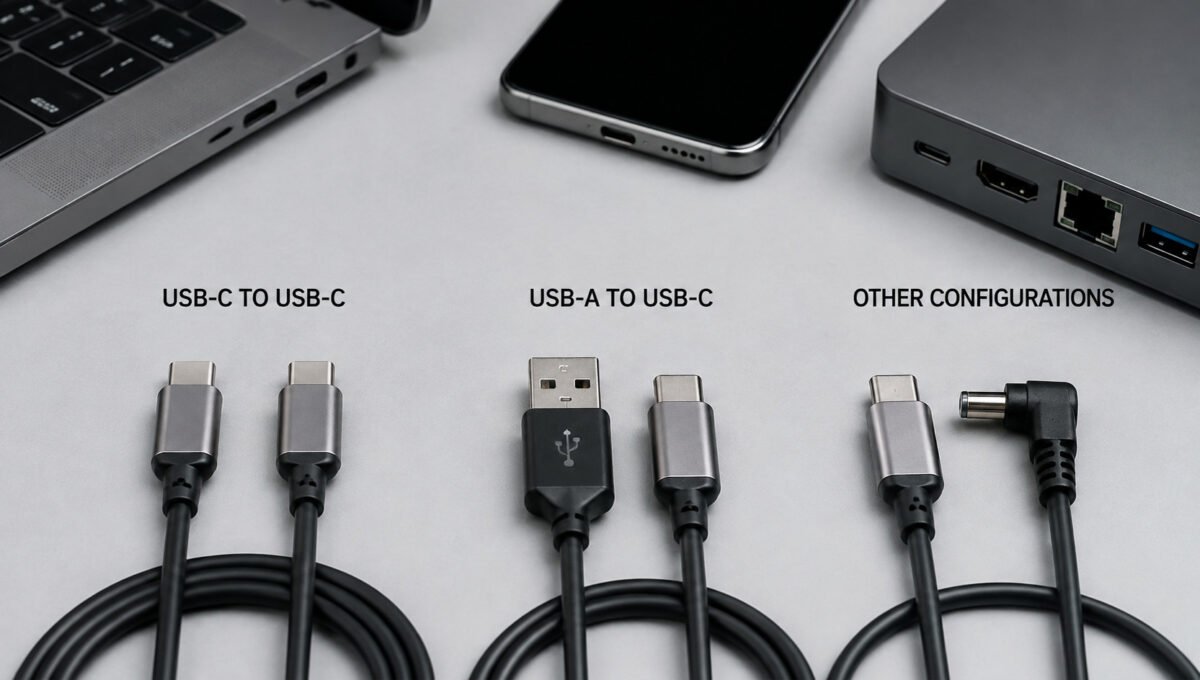
1. USB‑C Cable Configurations

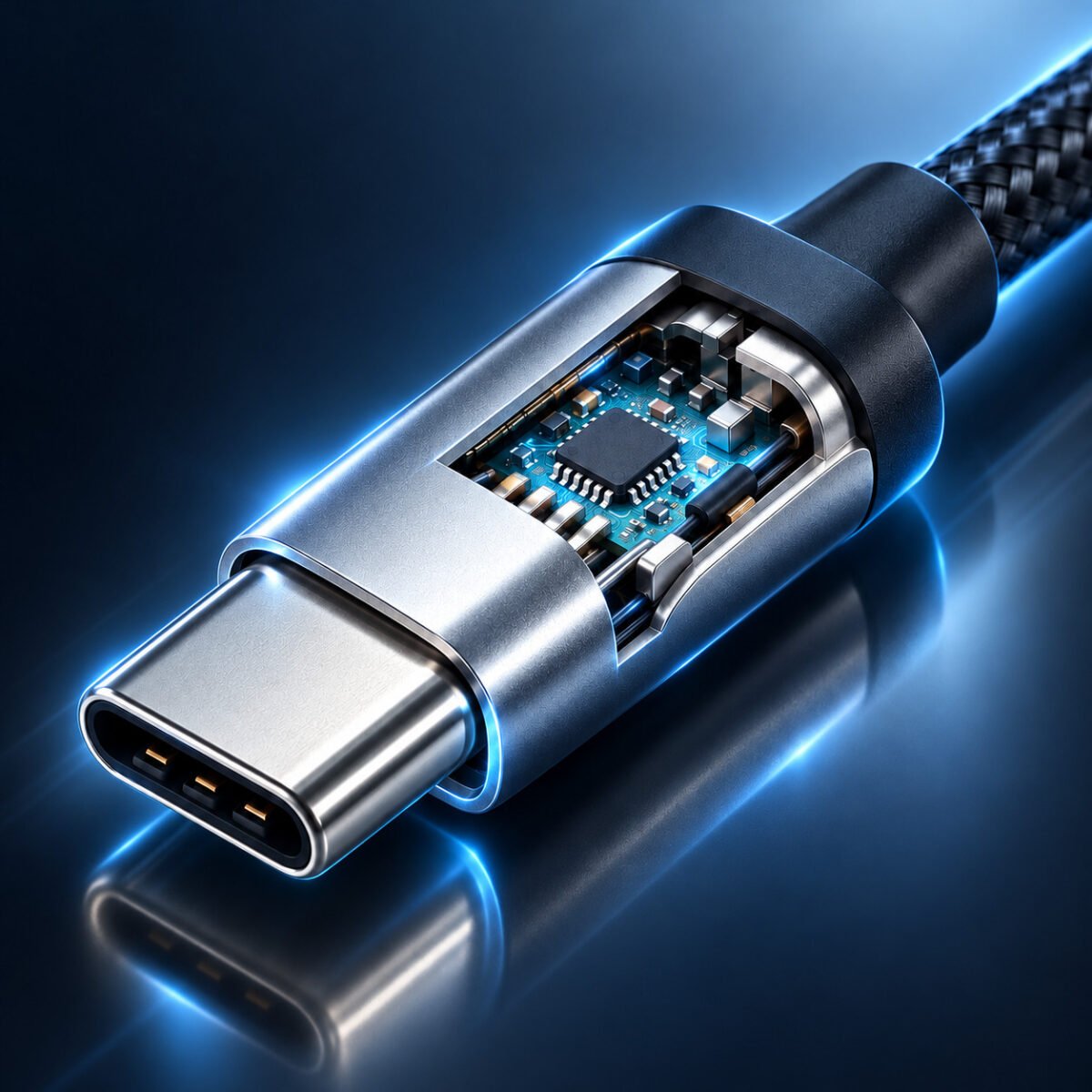
USB-C cables are available in different connector configurations to match the host and device interfaces. USB-C cables can be designed for charging, data transfer, display connectivity, or a combination of these functions. The USB-C connector itself does not determine the cable's power, data, or video capability. The actual performance of a USB-C cable depends on its internal construction, supported USB specification, and rated power capacity.
1.1 USB‑C to USB‑C Cable
USB-C to USB-C cables feature USB Type-C connectors on both ends and can support power delivery and data transfer when the connected devices and cable configuration support these functions. USB Power Delivery can negotiate power roles and charging levels between compatible devices. The reversible connector design allows easy insertion in either orientation.
Applications :
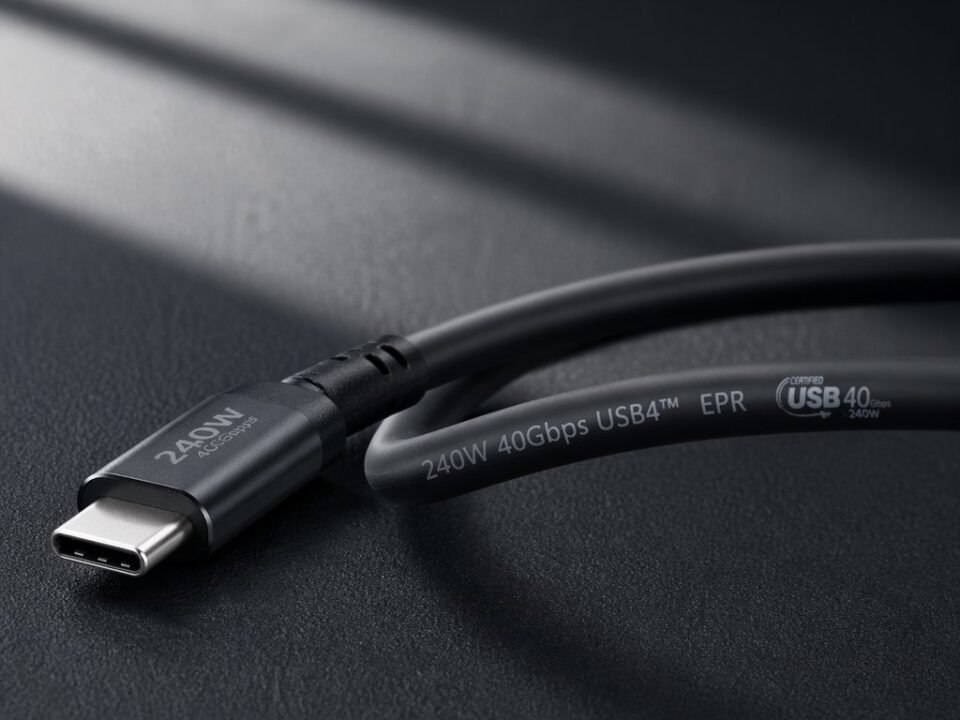
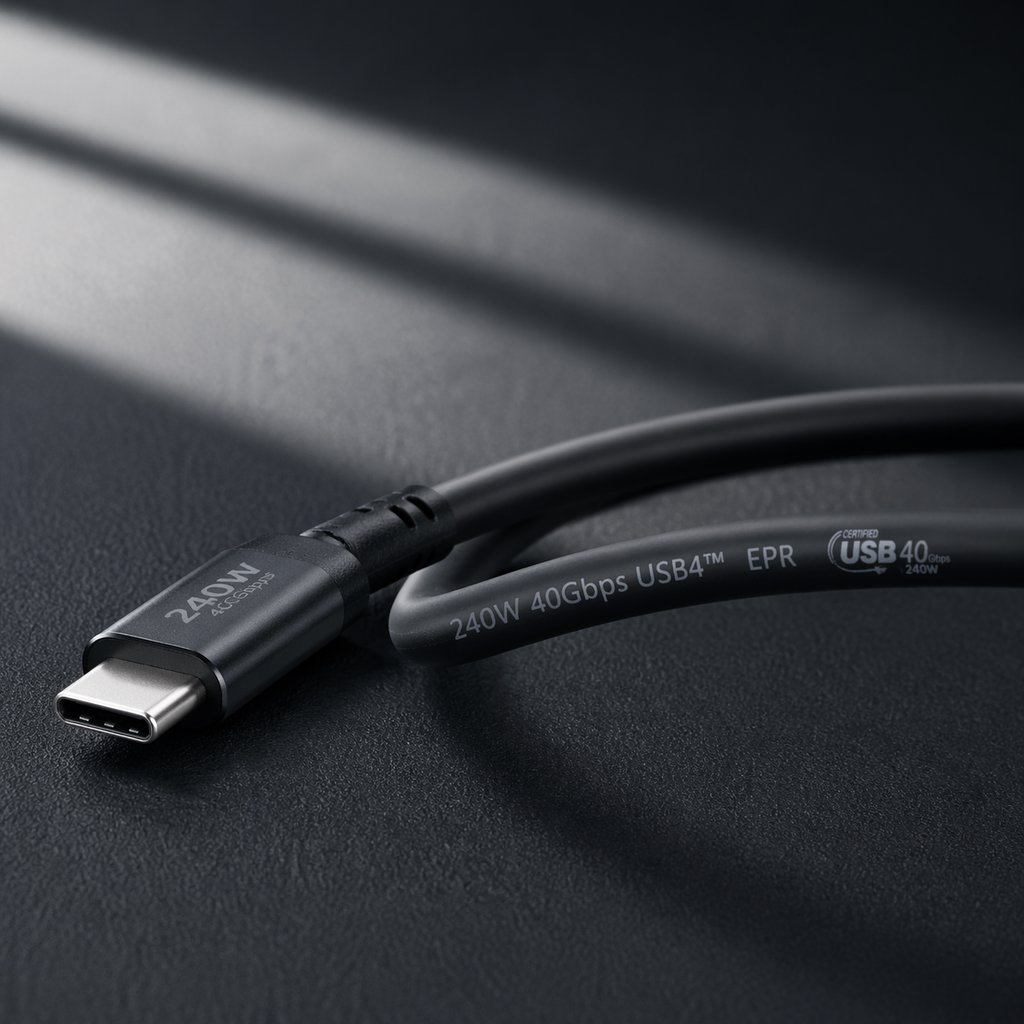
- Laptop Charging: Suitable cable configurations are available for laptops requiring 60W, 100W, or up to 240W USB PD charging. 5A and EPR-capable cables use E-Marker technology where required by the applicable USB-C and USB PD specifications.
- Fast Charging: Supports USB Power Delivery applications up to the cable's rated power capability, including selected SPR and EPR configurations. Actual charging performance depends on the charger, device, cable rating, and supported charging protocol.
- High Speed Data: USB-C data cables are available in multiple performance tiers, including USB 2.0 (480 Mbps), USB 5Gbps, USB 10Gbps, USB 20Gbps, USB 40Gbps, and selected USB 80Gbps configurations. Selected USB 40Gbps and USB 80Gbps products are based on USB4 technology, while USB 5Gbps, USB 10Gbps, and USB 20Gbps products may be based on USB 3.2 implementations. The applicable USB specification and cable architecture should be confirmed for each product model. Actual performance depends on the host, device, cable design, connector implementation, and supported USB specification.
1.2 USB‑A to USB‑C Cable
USB-A to USB-C cables bridge legacy USB Type-A host ports with USB-C peripheral devices. These cables serve as transitional solutions for environments where USB-A chargers and host ports remain in active use, providing continuity during infrastructure migration to USB-C.
Applications :
- Existing Chargers: USB-A to USB-C cables are commonly used with legacy USB-A chargers, computers, hubs, and charging stations. Because the USB-A side does not provide USB Power Delivery negotiation in the same way as a USB-C PD source, charging performance depends on the power source, connected device, cable current rating, and supported charging protocol. For this reason, the actual charging power should be specified for each cable and application rather than treated as a universal 15W limit.
- Consumer Electronics: Suitable for connecting USB-C peripherals, accessories, and mobile devices to USB-A equipped computers, hubs, and charging stations. Data rates depend on the cable's USB specification tier, ranging from USB 2.0 (480 Mbps) to USB 5Gbps in available configurations.
1.3 Other Connector Configurations
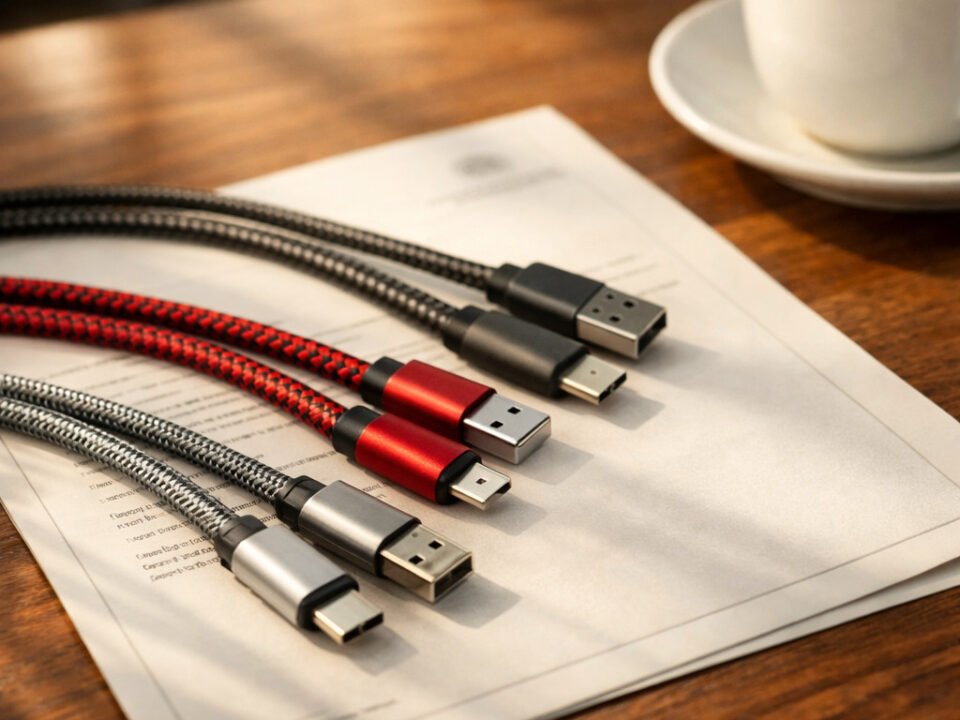
USB-C cables can also be supplied with selected legacy or application-specific connector combinations, depending on device requirements.
2. USB‑C Cable Specifications
USB-C cable selection is mainly driven by power capability, data performance, video requirements, cable length, construction, and operating environment. The right combination depends on the connected devices, required bandwidth, charging power, installation conditions, and intended application.
2.1 Power
| Power Capability | Typical Cable Configuration | Marqueur électronique |
|---|---|---|
| Jusqu'à 60 W | Up to 3A | Generally not required solely for 3A capability |
| Jusqu'à 100 W | 5A SPR-capable | Required for 5A capability |
| Up to 240W | 5A EPR-capable | Requis |
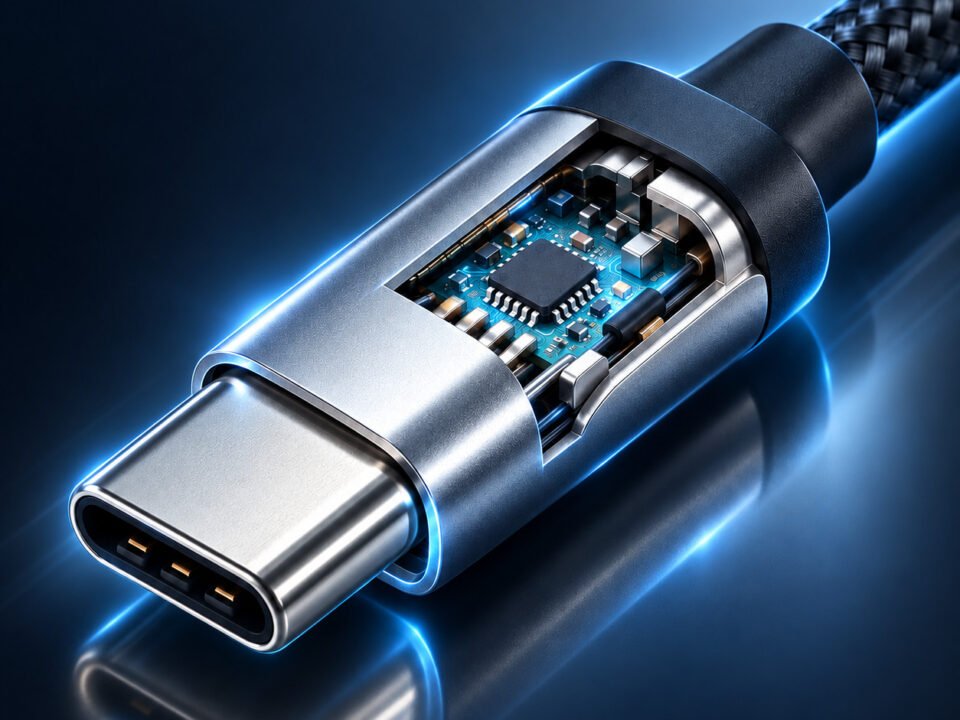
The USB PD 3.1 specification supports Standard Power Range (SPR) applications up to 100W and Extended Power Range (EPR) applications up to 240W. For 5A USB-C cable configurations, an E-Marker is used to communicate the cable's supported current and power capabilities to the USB Power Delivery system. EPR-capable cables must meet the applicable electrical, thermal, and safety requirements for their rated performance. The presence of an E-Marker does not by itself mean that the complete cable assembly is USB-IF certified or suitable for a specific application.
For USB-C to USB-C cable products, USB-IF certification and cable marking requirements should be checked separately from the cable's advertised charging capability. Current USB-IF cable compliance programs use 60W and 240W power capability categories for applicable USB-C to USB-C cable markings.

2.2 Data
| USB Performance | Maximum Signaling Rate | Cas d'utilisation typique |
|---|---|---|
| USB 2.0 | 480 Mbps | Basic data synchronization |
| USB 5Gbps | 5 Gbit/s | Peripherals, hubs, external storage |
| USB 10Gbps | 10 Gbit/s | High-speed storage and data transfer |
| USB 20Gbps | 20 Gbit / s | High-bandwidth data transfer |
| USB 40Gbps | 40 Gbit/s | High-performance docks, storage, displays |
| USB 80Gbps | 80 Gbit / s | Selected high-performance USB4 applications |
Selected USB 40Gbps and USB 80Gbps products are based on USB4 technology, while USB 5Gbps, USB 10Gbps, and USB 20Gbps products may be based on USB 3.2 implementations. USB4 builds on the USB 3.2 and USB 2.0 architectures and supports interoperability with selected compatible Thunderbolt 3 systems. Actual operating speed depends on the capabilities of the host, device, cable, and USB implementation. A high-speed cable does not increase the maximum speed supported by the connected devices.
When selecting a data cable, buyers should verify that the cable's speed tier matches or exceeds the highest-bandwidth device in the connection. USB-IF compliance testing is a separate consideration and should be confirmed for the specific cable model and certification requirement.
2.3 Video
Selected USB-C cables can support DisplayPort Alt Mode and USB4-based display applications when the connected host, device, and display system support the required video mode. Video resolution and refresh rate depend on the USB-C port, DisplayPort version, USB4 implementation, cable performance, and the overall system configuration. Therefore, 4K or 8K support should be specified for the complete cable and device combination rather than assumed from the USB data rate alone.
Selected USB4 connections can carry high-speed USB data and compatible display traffic through a single USB-C connection. When used with a compatible docking station and USB Power Delivery system, the same connection can also support laptop charging, reducing the need for separate connections between the laptop and the dock.
2.4 Cable Length
Custom cable lengths are available for different applications, from short assemblies for compact internal connections to extended-length solutions for industrial and commercial installations. For high-speed USB 3.2 and USB4 applications, achievable length depends on the required data rate and cable architecture. Longer high-speed cables may require optimized cable construction, active electronics, repeaters, or redrivers to maintain signal integrity. The final length and performance should therefore be confirmed according to the specific USB specification and system requirements.
- Passive or Active: High-speed USB cables may be supplied in passive or active configurations depending on the required data rate and cable length. Active designs may incorporate signal-conditioning electronics to support longer high-speed connections.
2.5 Cable Construction and Environment
| Matériel | Typical Characteristics | Suitable Applications |
|---|---|---|
| PVC | Cost-effective, durable, and widely used | Standard consumer and commercial applications |
| TPE | Flexible and soft, with good bendability | Mobile accessories, consumer electronics, flexible cable designs |
| tresse en nylon | Improves abrasion resistance and provides a premium exterior finish | Heavy-use consumer products, travel, gaming |
| Silicone | Highly flexible and suitable for selected demanding environments | Applications requiring flexibility or specific temperature/chemical resistance |
Actual temperature, chemical resistance, bending life, and mechanical performance depend on the selected material grade and complete cable construction. Please confirm the required operating conditions for customized applications.
3. USB‑C Cable Applications
USB-C cables serve a wide range of applications across consumer electronics and industrial sectors. The connector's support for power delivery, high-speed data, and video output through a single interface makes it suitable for diverse deployment scenarios.
3.1 Électronique grand public
- Smartphone: USB-C cables can support fast charging for compatible smartphones, with actual charging power depending on the phone, charger, cable, and supported charging protocol.
- Laptop: High-performance laptops may require higher-power USB-C charging, with selected systems supporting up to 100W or, in specific applications, higher power through USB Power Delivery EPR. The required cable power rating should be matched to the laptop, charger, and charging specification rather than assumed from the laptop category alone. Selected USB-C cables can support DisplayPort Alt Mode and USB4-based display applications when the connected host, device, and display system support the required video mode.
- Tablet: Tablets benefit from PD-compatible cables for charging and USB 3.2 or USB4 cables for high-speed data transfer. DisplayPort Alternate Mode support enables direct video output to external monitors through a single USB-C connection, subject to host, device, and cable compatibility.
3.2 Industriel
- Equipment: USB-C cables provide connectivity for industrial test and measurement equipment, supporting data acquisition and device configuration. Industrial cable constructions can be customized for mechanical stress, EMI, temperature variation, and selected chemical environments through appropriate jacket materials, shielding, strain relief, and connector design.
- Automation: USB-C cables can be used in selected automation equipment for device configuration, controller programming, peripheral communication, and data transfer. In environments with elevated electromagnetic interference, appropriate shielding, grounding, connector construction, and cable routing should be considered to support reliable signal transmission.
- Machine Vision: Machine vision applications can require high-bandwidth USB connectivity for image and video streaming. USB 3.2 and selected high-speed USB4 cable configurations can be used for machine vision applications where the camera, host system, cable length, and required bandwidth are compatible.
4. USB‑C Cable Custom Development
Custom USB-C cable development addresses specific application requirements that standard off-the-shelf products may not fully meet. The following customization options are available for OEM and ODM partnerships, supporting volume production with tailored specifications.
4.1 Connector Customization
Custom connector housings, right-angle orientations, extended shells, overmolding, strain relief, and selected mechanical modifications are available for OEM/ODM applications. Custom mechanical and interface configurations may be developed for selected proprietary applications, subject to technical review and compatibility requirements. Selected cable assemblies can be engineered with sealing and IP-rated protection for applications requiring enhanced resistance to dust and water. The achievable IP rating depends on the complete connector, overmold, sealing structure, and cable assembly.
4.2 Custom Cable Length
Custom cable lengths are available for different applications. For high-speed USB 3.2 and USB4 products, achievable length depends on the required data rate, cable architecture, and passive or active design.
4.3 Custom Material and Shielding
Jacket materials, conductor configurations, shielding structures, and strain-relief designs can be customized according to flexibility, temperature, EMI, chemical, and mechanical requirements. Actual temperature, chemical resistance, bending life, and mechanical performance depend on the selected material grade and complete cable construction.
4.4 Charging Cable Current Rating
Charging-optimized USB-C cables are available in 3A and 5A configurations depending on cable construction, connector design, and application requirements. High-current versions use optimized conductor sizes and connector designs to support higher power requirements with controlled heat generation. For 5A and EPR-capable cables, an E-Marker communicates the cable's supported power capabilities to the USB PD system.
4.5 Data Cable Video Capability
Data-optimized USB-C cables prioritize signal integrity and transfer speed, supporting high-bandwidth data applications and, on selected configurations, compatible display functions. USB4 can dynamically share bandwidth for USB data and display-related traffic over a single USB-C connection. For high-speed USB4 applications, cable construction, signal integrity, cable length, and active or passive design all affect the achievable performance.
4.6 Appearance
Custom exterior finishes include color matching to brand specifications, surface texture options (matte, gloss, soft-touch), and connector housing designs that align with product aesthetics. Pantone-matched coloring and custom overmold designs are available for selected models.
4.7 Branding
Custom branding options include logo printing or laser engraving on connector housings, custom sleeve and packaging design, and private-label product labeling for OEM and ODM partnerships. Minimum order quantities apply to custom branding configurations.
5. How to Request a USB‑C Cable Quotation and Related Resources
When requesting a USB-C cable quotation, buyers should confirm the following six specifications:
- Connector Configuration: USB-C to USB-C, USB-A to USB-C, or another connector combination.
- Power Requirement: Specify the required power rating, such as 60W, 100W, 240W, or a custom requirement.
- Data Speed: Choose USB 2.0, USB 5Gbps, USB 10Gbps, USB 20Gbps, USB 40Gbps, or a selected USB 80Gbps configuration.
- Video Requirement: If the cable will be used for display output, confirm the required DisplayPort Alt Mode or USB4 video configuration.
- Cable Length and Construction: Specify cable length, conductor configuration, shielding, jacket material, flexibility, passive or active design, and connector design.
- Application Environment: For industrial or demanding applications, provide the required temperature range, bending conditions, EMI requirements, chemical exposure, sealing requirements, or other environmental specifications.
If you are unsure which configuration is suitable, send us your device interface, required power, data speed, cable length, and application environment. Our engineering team can recommend a suitable cable configuration and support sample development for OEM/ODM projects.
5.1 Related Resources
- USB-C Cable Specification Guide: Complete technical specifications including electrical parameters, mechanical dimensions, and applicable USB-IF compliance standards.
- USB-C Cable Selection Guide: Selection methodology for matching cable specifications to device requirements, power levels, and data speeds.
- USB-C Cable OEM Manufacturing: OEM and ODM manufacturing capabilities, production processes, quality control standards, and partnership information.
Need a Custom USB‑C Cable Solution?
Whether you need standard USB-C cables or fully customized assemblies with specific power, data, video, or environmental requirements, our team can help you specify the right solution for your application. From custom connector housings to specialized cable lengths and overmolding, we support OEM/ODM projects with competitive pricing and flexible MOQ.