

What Is Samsung Super Fast Charging 2.0?
What Is Samsung Super Fast Charging 2.0?
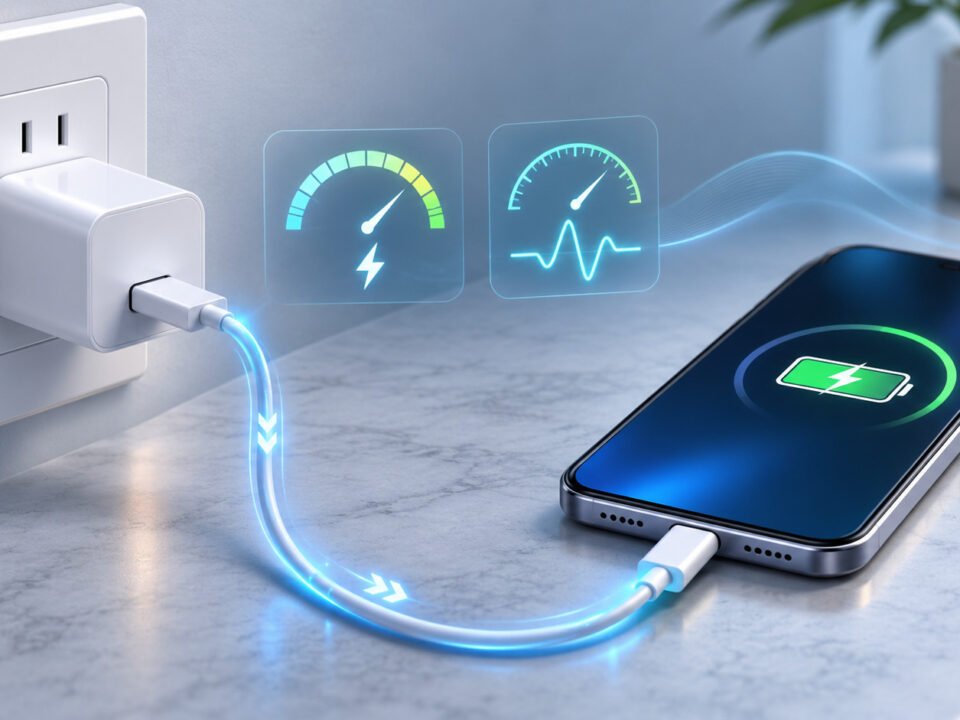
Waiting for a smartphone to charge can be inconvenient, especially when using a device throughout the day. To improve charging performance, Samsung introduced Super Fast Charging 2.0, a fast-charging technology designed for compatible Galaxy devices.
Unlike conventional charging methods that rely on fixed voltage levels, Super Fast Charging 2.0 uses USB Power Delivery (USB PD) with Programmable Power Supply (PPS). This allows the charger to adjust its output according to the device's charging requirements.
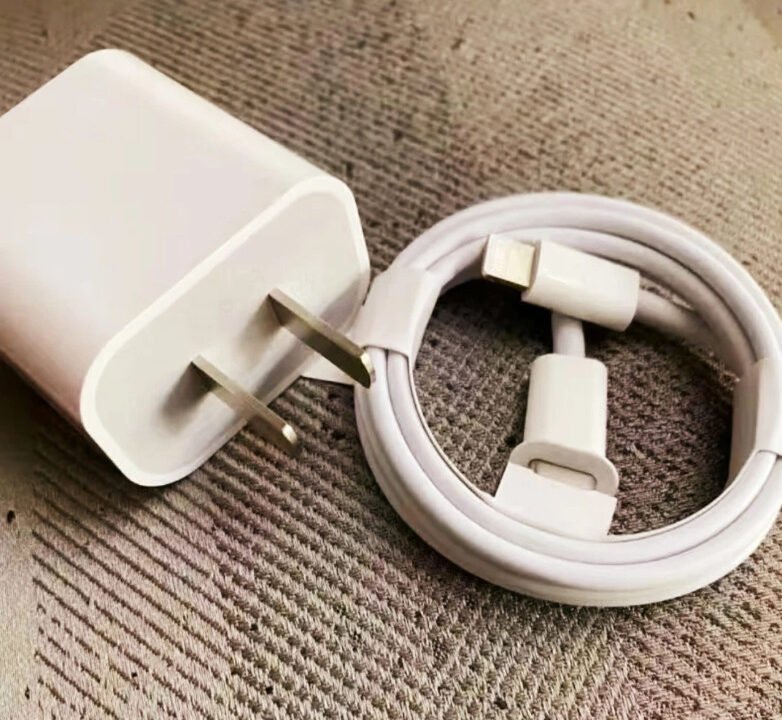
With a compatible 45W charger and the appropriate USB-C cable, supported Samsung smartphones can access charging power of up to 45W.
But what exactly is Super Fast Charging 2.0? How does it differ from previous charging technology, which Galaxy devices support it, and what charger and cable specifications are required?
This guide explains the technology, compatibility, charging requirements, and practical considerations.
- 1. What Is Samsung Super Fast Charging 2.0?
- 2. How Does Super Fast Charging 2.0 Differ from Previous Versions?
- 3. Which Devices Support Super Fast Charging 2.0?
- 4. Does Super Fast Charging 2.0 Affect Battery Health Over Time?
- 5. How Can You Enable Super Fast Charging 2.0 on Your Samsung Device?
- 6. Choosing a Compatible Charger and USB-C Cable
- 7. Conclusion

1. What Is Samsung Super Fast Charging 2.0?
Samsung Super Fast Charging 2.0 is a fast-charging technology designed for selected Samsung Galaxy devices. It uses USB Power Delivery with PPS to support charging at up to 45W on compatible devices and chargers.
The technology first appeared with the Galaxy Note10+ in 2019, introducing Samsung's 45W charging capability.
Unlike conventional USB charging that uses fixed voltage profiles, PPS allows the charger to adjust voltage and current dynamically within supported operating limits.
This enables the charging system to respond to the device's changing power requirements during charging.
Key Specifications of Super Fast Charging 2.0
| Fonctionnalité | Spécification |
|---|---|
| Maximum charging power | Up to 45W |
| Charging protocol | USB PD 3.0 with PPS |
| Typical compatible charger | 45W USB-C PD PPS charger |
| Traditional cable requirement | 5A USB-C to USB-C cable |
| First compatible device | Samsung Galaxy Note10+ |
| Device compatibility | Selected Samsung Galaxy models |
The actual charging power depends on the phone model, battery level, temperature, charger output profiles, and cable capabilities.
A charger rated at 45W does not necessarily deliver 45W continuously throughout the entire charging process.
2. How Does Super Fast Charging 2.0 Differ from Previous Versions?
The main difference between Samsung Super Fast Charging and Super Fast Charging 2.0 is their supported charging power and device compatibility.
Standard Super Fast Charging commonly supports up to 25W, while Super Fast Charging 2.0 supports up to 45W on compatible devices.
Both technologies use USB Power Delivery with PPS, but their supported power requirements and charging configurations differ.
Super Fast Charging vs Super Fast Charging 2.0
| Fonctionnalité | Super Fast Charging | Super Fast Charging 2.0 |
|---|---|---|
| Maximum charging power | Up to 25W | Up to 45W |
| Charging protocol | USB PD with PPS | USB PD with PPS |
| Typical charger | 25W PD PPS charger | 45W PD PPS charger |
| Traditional cable requirement | Compatible 3A USB-C cable | 5A USB-C cable |
| Device compatibility | Selected Galaxy devices | Selected Galaxy devices supporting 45W charging |
What Is the Role of PPS?
PPS stands for Programmable Power Supply, a feature of USB Power Delivery.
It allows compatible chargers to adjust voltage and current in smaller increments rather than relying only on fixed voltage profiles.
During charging, the smartphone and charger communicate to determine an appropriate power output.
This can help reduce unnecessary voltage conversion inside the device and support more precise power management.
However, PPS alone does not guarantee 45W charging. The charger, phone, and cable must all support the required configuration.
Does a 45W Charger Always Charge Faster Than a 25W Charger?
Not necessarily.
A 45W charger can provide more available power, but the smartphone must support the corresponding charging mode to benefit from it.
If a device supports only 25W charging, connecting it to a 45W charger will not automatically increase its charging speed to 45W.
Actual charging performance also changes according to battery temperature, remaining battery capacity, and the device's charging-management system.
How Does Super Fast Charging 2.0 Differ from Super Fast Charging 3.0?
Samsung has also introduced Super Fast Charging 3.0, which supports up to 60W on compatible devices using a suitable 60W USB-C PD PPS charger.
This is a separate charging generation from Super Fast Charging 2.0.
| Fonctionnalité | Super Fast Charging 2.0 | Super Fast Charging 3.0 |
|---|---|---|
| Puissance maximale | Up to 45W | Jusqu'à 60 W |
| Charging technology | USB PD 3.0 with PPS | USB PD 3.1 with PPS |
| Compatible charger | 45W PD PPS | 60W PD PPS |
| Example charger | EP-T4511 | EP-T6010 |
| Cable configuration | Traditional 5A cable; approved 3A exception on newer models | Compatible 3A cable |
The charger, phone, and cable must support the same charging configuration. A 60W charger does not automatically enable Super Fast Charging 3.0 on a phone that supports only an earlier charging generation.
3. Which Devices Support Super Fast Charging 2.0?
Not every Samsung Galaxy smartphone supports Super Fast Charging 2.0.
The feature is available on selected models that support compatible 45W USB PD PPS charging.
Examples of compatible models listed by Samsung include:
- Galaxy Note10+.
- Galaxy S20 Ultra.
- Galaxy S22+ and S22 Ultra.
- Galaxy S23+ and S23 Ultra.
- Galaxy S24+ and S24 Ultra.
- Galaxy S25+ and S25 Ultra.
- Selected Galaxy A-series models, including the A36 and A56.
- Compatible Galaxy Tab models.
Samsung's compatibility information can vary by product generation and region. The list above is not a guarantee that every device in these families supports 45W charging.
For example, the Galaxy S25 and S25+ should not be treated as having identical charging specifications simply because they belong to the same generation.
How to Check Whether Your Samsung Phone Supports It
Before purchasing a 45W charger, check the following:
- Find your phone's exact model number.
- Visit Samsung's official product specifications or support page.
- Check its maximum wired charging power.
- Confirm whether it supports Super Fast Charging 2.0 and USB PD PPS.
- Check the cable requirements for the specific model.
This is particularly important when purchasing charging accessories for multiple Samsung devices.
4. Does Super Fast Charging 2.0 Affect Battery Health Over Time?
Battery health is an important consideration when using higher-power charging technology.
Super Fast Charging 2.0 uses USB PD PPS to manage the power supplied to a compatible device.
The charging system can adjust voltage and current according to the phone's requirements, while the smartphone's battery-management system monitors charging conditions.
How PPS Helps Manage Charging
PPS supports adjustable voltage and current output.
This allows the charger to respond to changing charging requirements rather than maintaining one fixed output throughout the process.
During charging:
- Higher power may be available when the battery is at a lower state of charge.
- Charging power can decrease as the battery approaches full capacity.
- The device can adjust its charging behavior according to temperature and battery conditions.
These mechanisms help manage charging performance and thermal conditions.
Safety and Battery Longevity Considerations
A compatible fast-charging system is designed to operate within supported electrical and thermal limits.
However, battery aging still depends on several factors:
- Battery temperature.
- Charging cycles.
- Usage patterns.
- Environmental conditions.
- Battery-management settings.
- Charger and cable quality.
Using a higher-wattage charger does not automatically damage a smartphone battery, provided the complete charging system is compatible and operating correctly.
However, fast charging does not eliminate normal battery aging. For long-term battery care, users should follow the manufacturer's charging recommendations and avoid exposing devices to excessive heat.
5. How Can You Enable Super Fast Charging 2.0 on Your Samsung Device?
Using a 45W charger does not automatically guarantee Super Fast Charging 2.0.
The charger, cable, smartphone, and charging settings must all support the required configuration.
Requirements for Enabling Super Fast Charging 2.0
1. Use a Compatible 45W Charger
The charger should support USB Power Delivery with PPS and provide the output profiles required by the Samsung device.
A charger with a 45W maximum rating but without the appropriate PPS output may not activate Super Fast Charging 2.0.
2. Use the Correct USB-C Cable
For traditional Samsung 45W charging configurations, a 5A USB-C to USB-C cable is required.
The cable must support the required current and meet the relevant USB-C specifications.
There is an important exception: Samsung states that Galaxy S25 and later supported models can use the included 3A USB cable for Super Fast Charging 2.0 with compatible chargers.
Therefore, cable requirements should always be checked against the exact phone and charger combination.
3. Check Device Compatibility
Confirm that the smartphone supports Super Fast Charging 2.0 rather than only standard Super Fast Charging.
4. Check Charging Settings
On supported Galaxy devices, open:
Settings → Battery → Charging settings
Check that the fast-charging option is enabled where available. Menu names and available settings may vary depending on the device model and software version.
Super Fast Charging 2.0 Checklist
| Exigence | What to Check |
|---|---|
| Chargeur | Compatible 45W USB-C PD PPS charger |
| Charging protocol | Required PPS output profiles |
| Câble | Traditional 5A cable or Samsung-approved 3A exception |
| Smartphone | Supports Super Fast Charging 2.0 |
| Settings | Fast charging enabled where applicable |
If one of the required components is incompatible, the phone may charge using a lower-power charging mode.
6. Choosing a Compatible Charger and USB-C Cable
For Super Fast Charging 2.0, selecting the correct charger and cable is just as important as choosing a compatible smartphone.
Choosing a 45W USB-C Charger
A suitable charger should provide:
- USB Power Delivery support.
- PPS functionality.
- Appropriate programmable voltage and current ranges.
- A maximum output suitable for the target Samsung device.
- Applicable electrical safety and compliance certifications.
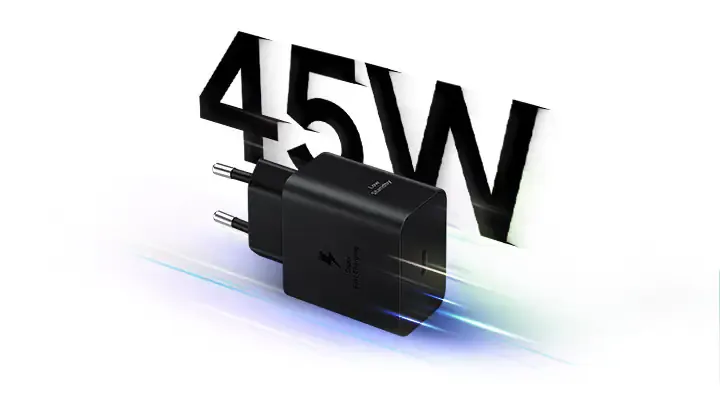
For example, Samsung's EP-T4511 45W adapter supports USB PD 3.0 PDO/PPS and is specified for Super Fast Charging 2.0.
Its published PPS output range is 5–20V, with a maximum current of 2.25A. The actual operating output depends on the negotiated charging profile.
A charger should therefore be evaluated based on its complete output specification rather than its advertised wattage alone.
Choosing a USB-C to USB-C Cable
For traditional 45W Samsung charging configurations, a suitable 5A USB-C cable is required.
The cable should have the appropriate electronic marking (E-Marker) for its 5A current capability.
When selecting a cable, consider:
- Maximum supported current.
- USB-C connector quality.
- Conductor specifications.
- Cable length.
- Electrical resistance.
- Charging compatibility.
A cable designed only for 3A should not be assumed to support the traditional 5A charging configuration.
However, as noted earlier, certain newer Galaxy models can use a compatible 3A cable for Super Fast Charging 2.0.
For cable manufacturers and B2B buyers, these specifications should be confirmed during product development and sample testing.
7. Conclusion
Samsung Super Fast Charging 2.0 provides a higher-power charging option for selected Galaxy smartphones and tablets.
By combining USB Power Delivery with PPS, compatible chargers can dynamically adjust their output to meet the device's charging requirements.
However, achieving the full 45W charging capability requires more than simply purchasing a high-wattage adapter. Device compatibility, PPS output specifications, and the appropriate USB-C cable all play important roles.
Traditional 45W configurations use a 5A USB-C cable, while Samsung specifies a 3A cable exception for Galaxy S25 and later supported models.
For users, checking the exact phone and charger specifications is the best way to ensure compatibility.
For brands, wholesalers, and product developers, understanding these requirements helps when selecting USB-C chargers and cables for Samsung-compatible fast-charging applications.