

Cable Material and Durability Specification Guide
USB Cable Material & Construction Guide
USB cable material and construction choices affect flexibility, appearance, signal integrity and service life. For B2B buyers, the appropriate design depends on how the cable will be used, handled and exposed to its operating environment. This guide compares common jacket materials, key construction factors and practical options for consumer and industrial applications.
1. Material Selection
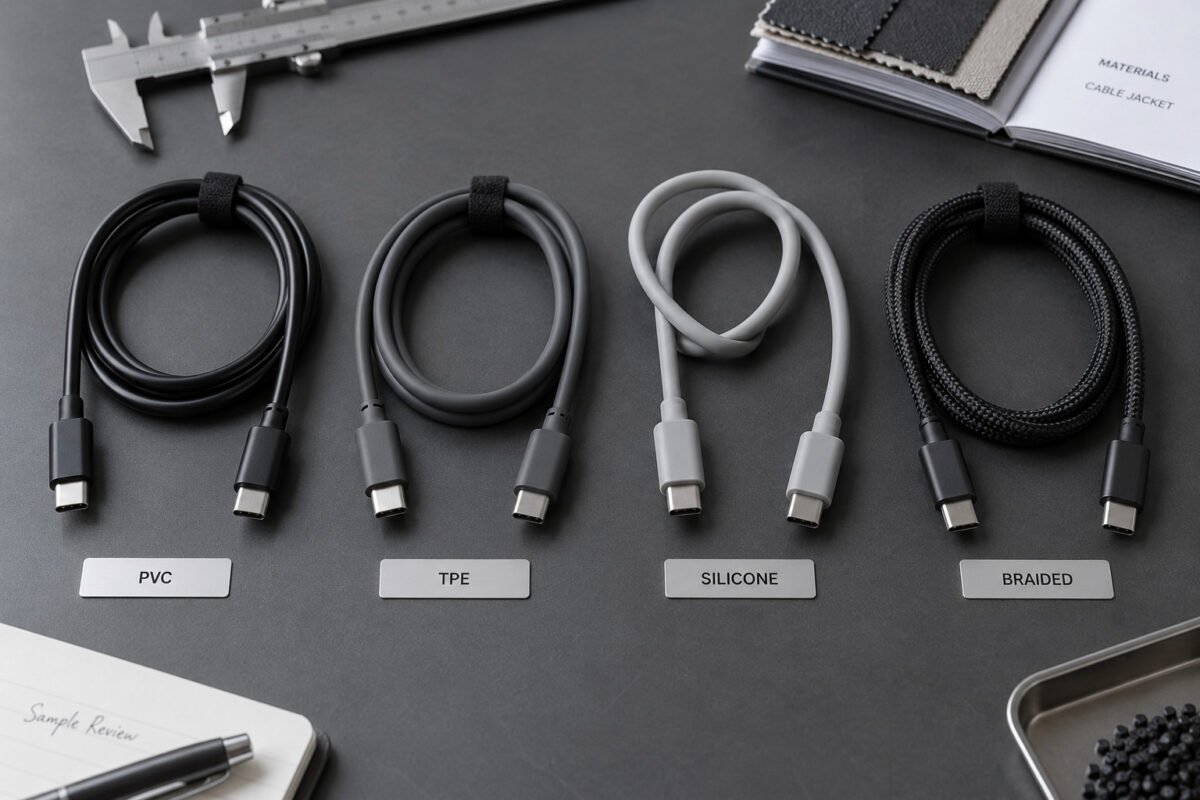
The outer construction influences cable feel, abrasion resistance, temperature performance and product appearance. PVC, TPE and silicone are common primary jacket materials. Braided cable is a construction in which nylon or polyester yarn is applied over an inner insulated jacket. Actual performance depends on the selected material grade and the complete cable design.
1.1 PVC
PVC is widely used for USB cable jackets because it offers a practical balance of cost, flexibility and mechanical protection. Different compounds and hardness grades can be selected to adjust surface feel, stiffness and application performance.
Características típicas
- Typical service temperature: approximately -10°C to +60°C for selected standard PVC compounds; the finished cable rating may differ.
- Suitable flexibility for many standard consumer, office and general equipment applications.
- Available in custom colors and matte, glossy or textured finishes.
- Cost-efficient for volume production.
- Compatible with many USB 2.0, USB 3.2 and USB-C cable constructions when the complete assembly is designed for the required performance.
PVC is a suitable starting point for standard indoor applications where extreme flexibility, high-temperature exposure or harsh chemical conditions are not primary requirements. Final durability depends on the PVC compound, conductor construction, shielding, strain relief and completed cable testing.
1.2 TPE
TPE combines rubber-like flexibility with thermoplastic processing. Compared with many standard PVC compounds, it can provide a softer feel, improved low-temperature flexibility and good performance during frequent handling and coiling.
Características típicas
- Typical service temperature: approximately -20°C to +80°C for selected standard TPE grades; the completed cable may have a narrower rating.
- Soft tactile feel and good flexibility.
- Suitable for portable charging cables, travel cables and frequently handled accessories.
- Available in custom colors, hardness levels and surface finishes.
- Bend performance must be verified on the finished cable rather than assumed from the jacket material alone.
TPE is commonly selected when flexibility and user handling are more important than the lowest possible material cost. The exact grade should be matched to the required temperature, abrasion and aging performance.
1.3 Silicone
Silicone is a highly flexible jacket material that can remain soft across a wider temperature range than many standard PVC and TPE compounds. It is used for selected products requiring low-temperature flexibility, heat resistance or a premium soft-touch construction.
Características típicas
- Typical service temperature: approximately -40°C to +200°C for selected silicone compounds; the finished cable rating may be lower because of other components.
- High flexibility and soft tactile feel.
- Good UV and ozone resistance for selected outdoor-grade compounds.
- Chemical resistance depends on the substance, concentration, exposure time and operating temperature.
- Higher material and processing cost than many standard PVC and TPE constructions.
Silicone may be considered for specialized consumer, outdoor and industrial projects requiring enhanced flexibility or temperature performance. Medical or healthcare use requires application-specific material documentation and regulatory assessment; a silicone jacket alone does not establish biocompatibility or medical-device compliance.
1.4 Braided
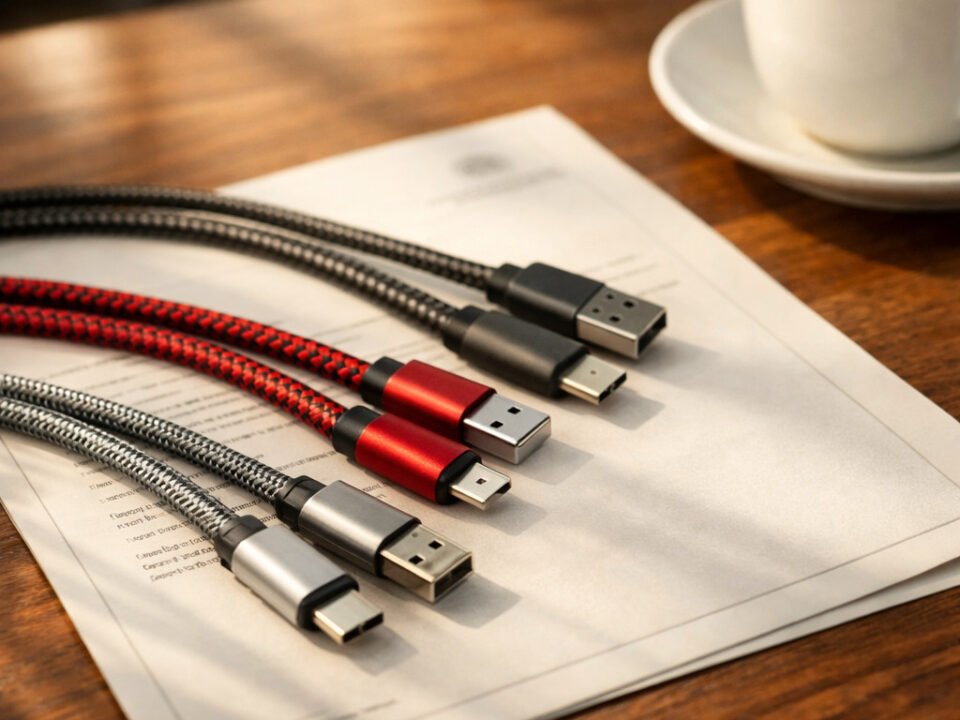
A braided cable normally uses woven nylon or polyester yarn over an inner PVC, TPE or other insulated jacket. The braid can improve surface abrasion resistance and visual differentiation, while the inner jacket remains responsible for electrical insulation and much of the cable's base flexibility.
Características típicas
- Improved resistance to surface abrasion in suitable constructions.
- Multiple weave patterns, densities and colors for brand differentiation.
- Braid density and yarn selection affect stiffness, surface feel and durability.
- May help reduce tangling in selected designs, depending on overall cable flexibility.
- Outdoor use requires documented UV resistance for the complete jacket and braid system.
Braided construction is commonly selected for premium accessories and applications requiring additional surface protection. It should not be treated as proof of a specific bend life, tensile rating or outdoor service capability without completed cable testing.
2. Construction Factors
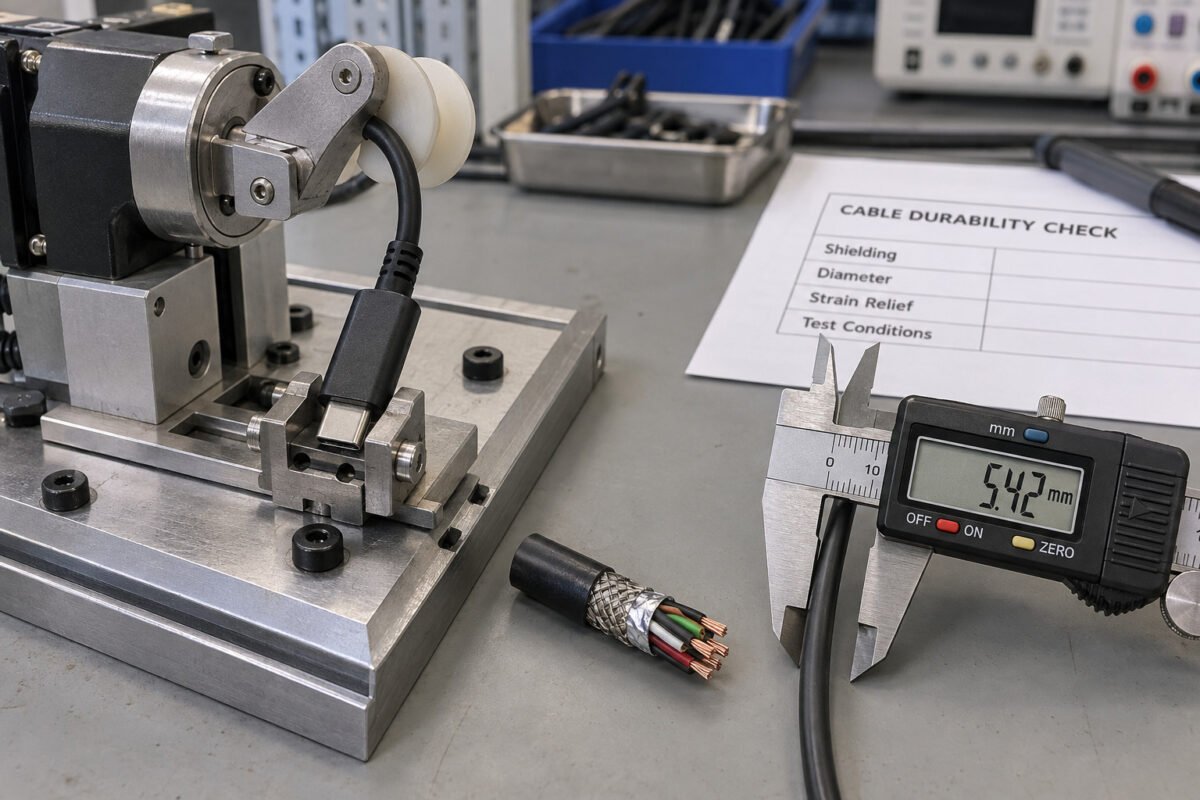
Jacket material alone does not determine cable durability or performance. Shielding, cable diameter and strain relief must be selected together with the required connector, power, data rate, cable length and operating environment.
2.1 Shielding
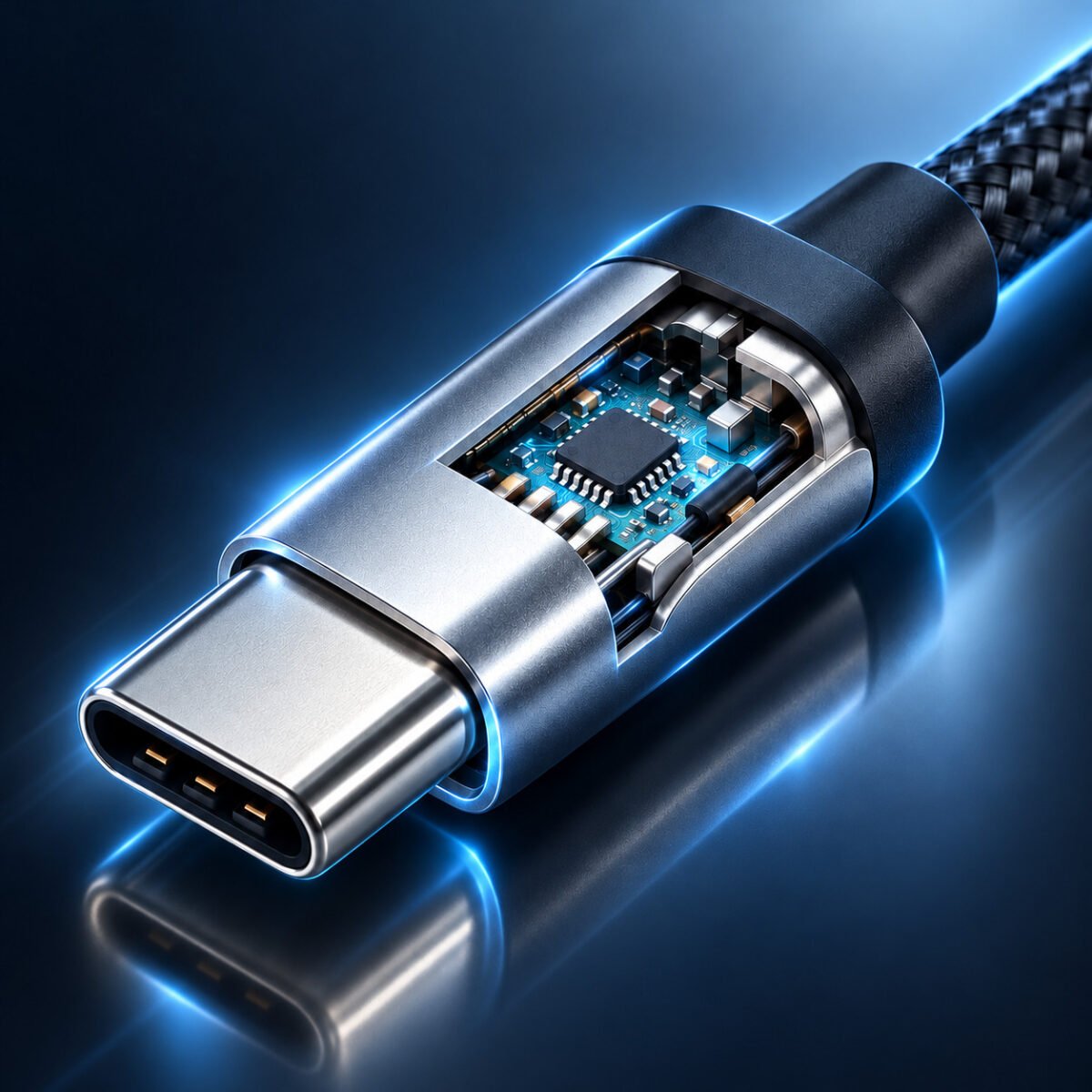
Shielding helps control electromagnetic interference and supports signal integrity during data transmission. A USB cable may use foil, copper or tinned-copper braid, individually shielded high-speed pairs, or a combination selected for the target performance.
Common Shielding Options
- Foil shield — commonly applied around high-speed pairs or the full conductor bundle to help control high-frequency interference.
- Braided shield — woven copper or tinned-copper braid that can provide shielding coverage, mechanical reinforcement and connector-shell termination.
- Foil-and-braid construction — used in selected higher-performance designs when additional shielding effectiveness is required.
- Drain wire — used with selected foil-shielded constructions to support reliable shield termination.
USB 2.0, USB 3.2 and USB4 cables have different signal-integrity requirements. Higher data rates generally require tighter control of conductor geometry, pair impedance, insertion loss, crosstalk and shield termination. A foil-and-braid combination is common in many SuperSpeed and USB4 designs, but it is not a universal construction rule for every cable.
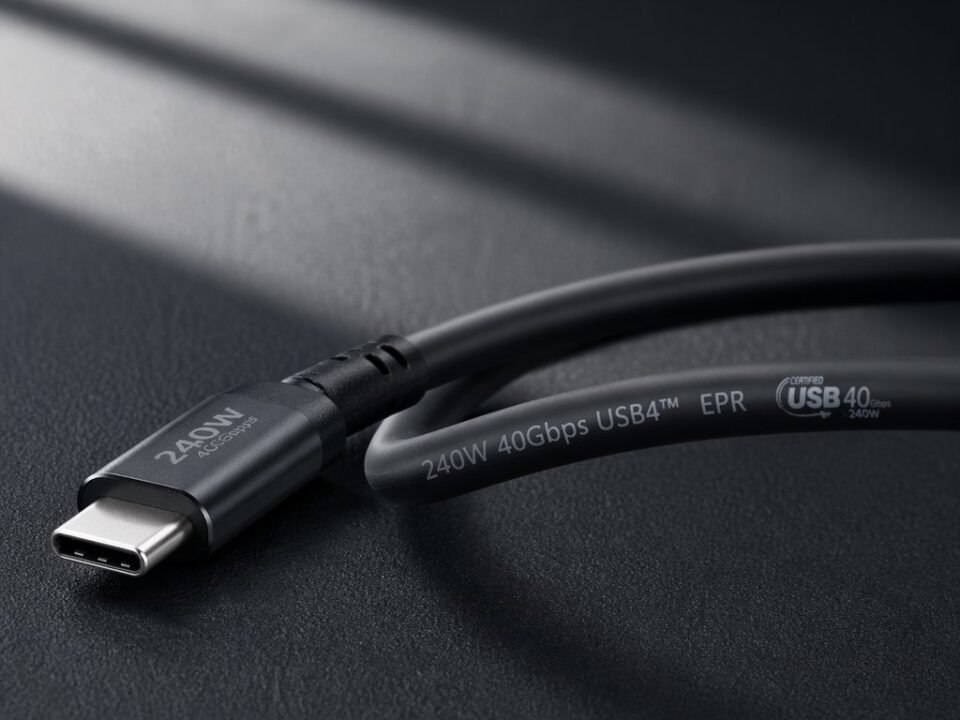
USB4 products should be described by the verified aggregate data capability of the cable, such as USB 20Gbps, USB 40Gbps or USB 80Gbps. The number of shielding layers alone does not prove support for a particular data rate. Final performance must be confirmed for the specified cable length and complete assembly.
2.2 Diameter
Cable outer diameter is determined by conductor count and size, insulation, shielding, fillers and jacket wall thickness. It affects flexibility, bend radius, voltage drop, mechanical durability and connector housing dimensions.
Design Considerations
- USB 2.0 charge-and-data cables can often use a smaller, more flexible construction.
- USB 5Gbps, USB 10Gbps and USB 20Gbps cables normally require additional high-speed conductors and more tightly controlled signal structures.
- USB4 cables may require a larger or more complex construction, especially when high data rates, longer lengths and high-power delivery are combined.
- Larger conductors can reduce voltage drop and support higher current, but they may increase diameter and stiffness.
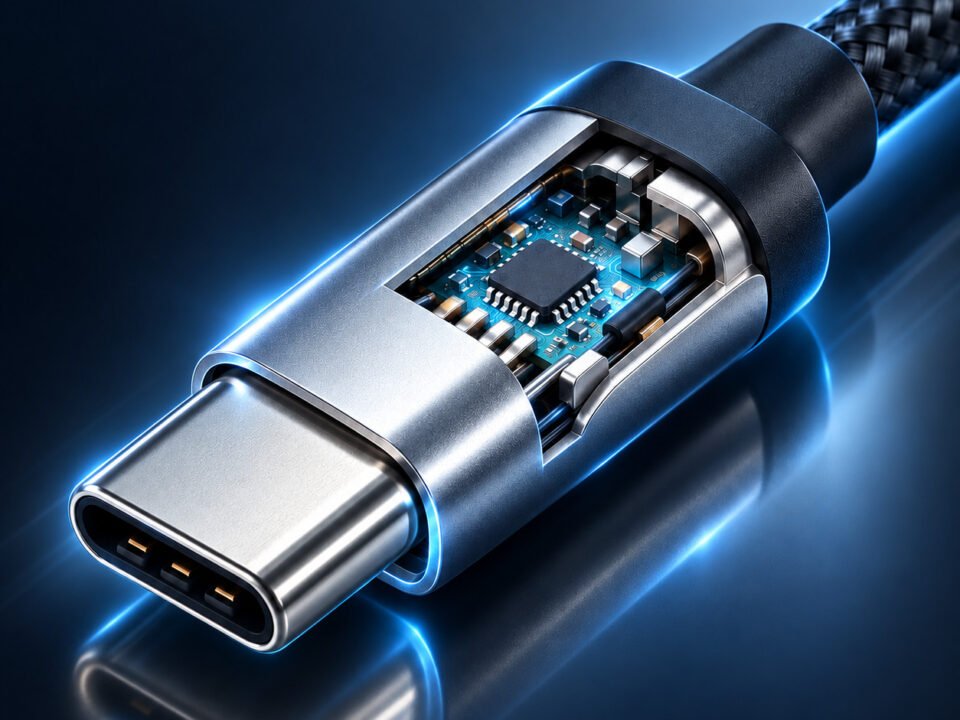
- Active cables contain signal-conditioning electronics and must be evaluated separately from passive cables.
USB standards do not assign one universal outer diameter or AWG value to every USB version. Power conductors must be sized so that the completed cable meets the applicable current, temperature-rise and voltage-drop requirements. The final diameter should therefore be confirmed from the approved drawing or sample.
2.3 Strain Relief
Strain relief is the transition between the cable jacket and connector housing. It distributes bending and pulling forces at a common failure point and helps protect conductors, terminations and the jacket-to-connector interface.
Common Strain Relief Designs
- Overmolded strain relief — molded TPE, PVC or another compatible material integrated with the connector housing.
- Braided sleeve transition — a braided layer secured into the connector overmold to support tensile reinforcement.
- Ribbed strain relief — molded ribs that distribute bending over a longer transition area.
- Spring strain relief — a metal or polymer spring used in selected industrial applications with elevated mechanical stress.
Strain relief length, geometry, material hardness and jacket adhesion should be developed together. Harder material does not automatically provide longer flex life, and a longer strain relief is not automatically better if its geometry is unsuitable for the cable.
Bend-cycle results are meaningful only when the test method defines the bending angle, radius, applied load, cycling speed, electrical monitoring and failure criteria. For procurement and sample approval, buyers should compare documented test conditions rather than cycle counts alone.
3. Aplicaciones
Material and construction selection should follow the target application. Consumer cables usually place greater emphasis on appearance and flexibility, while industrial projects often place greater emphasis on mechanical durability and environmental protection. These are general priorities; the final design must still match the required power, data, length and connector functions.
3.1 Consumer Applications
Consumer USB cables include phone and tablet charging cables, laptop cables, travel accessories, docking cables and branded retail products. The design should provide a practical balance of appearance, handling experience, electrical performance and production cost.
Apariencia
- PVC and TPE jackets can be produced in a wide range of colors and surface finishes.
- Braided nylon or polyester can provide visible texture and premium product positioning.
- Custom colors, Pantone matching, connector housings, logo marking and packaging can support brand differentiation.
- Transparent or semi-transparent constructions are possible for selected designs, subject to material and process requirements.
Appearance choices should be confirmed with physical color samples and approved cable samples because surface texture, material thickness and lighting can affect the final result.
Flexibilidad
- TPE and silicone can provide higher flexibility than many standard PVC compounds.
- Smaller-diameter constructions are generally easier to coil, but diameter cannot be reduced without considering power, voltage drop and data performance.
- Braided cables can provide abrasion resistance but may feel stiffer depending on yarn type and weave density.
- Strain relief geometry is important for cables that are repeatedly bent near the connector.
For portable products, flexibility should be evaluated together with tangling behavior, bend radius and connector-junction durability on the final sample.
3.2 Industrial Applications
Industrial USB cable projects may involve fixed equipment, control systems, diagnostic devices, machine interfaces, outdoor installations or other environments with elevated mechanical and environmental demands. The exact hazards should be identified before material selection.
Durabilidad
- Abrasion resistance — select the jacket or braid system according to routing conditions and contact surfaces.
- Dynamic flexing — define the required bend-cycle method, radius, angle, load and failure criteria.
- Pull resistance — specify the required cable-to-connector retention or pull-force test.
- Vibration and retention — consider locking or screw-lock connector designs when accidental disconnection is a risk.
- Shield termination — define the required shielding performance for equipment operating in elevated EMI conditions.
Industrial durability claims should be supported by agreed testing on the completed cable assembly. Material names such as PVC, silicone or braided nylon do not establish a specific service life by themselves.
Protección
- Chemical exposure — identify the exact oil, cleaning agent, solvent or reagent, together with concentration, temperature and contact duration.
- Temperature — rate the complete cable according to its lowest-rated component, including jacket, conductor insulation, connector, overmold and embedded electronics.
- Liquid ingress — selected industrial connector assemblies can be designed and tested for ratings such as IP65, IP67 or IP68; the rating may apply only when correctly mated, locked or protected by the specified cap.
- UV and ozone exposure — use compounds with documented resistance for the intended outdoor conditions; a braid alone is not proof of outdoor suitability.
Environmental ratings must be confirmed for the complete cable assembly under specified test conditions. Jacket material alone does not establish an IP rating, chemical-resistance claim or environmental certification.
For a material and construction recommendation, provide the connector combination, required power and data performance, cable length, expected bending or pulling conditions, operating temperature, chemical or liquid exposure, required tests and estimated order quantity. These details allow the supplier to evaluate a practical cable design and prepare samples for approval.
Need a Custom USB Cable Design?
Whether you need standard USB charging cables, high-speed data cables, or fully customized assemblies with specific materials, shielding, strain relief, and branding, our team can help you specify the right solution for your application. From consumer retail to industrial equipment, we support OEM/ODM projects with competitive pricing and flexible MOQ.