

Replacement Power Adapter Solutions
Replacement Power Adapter Solutions
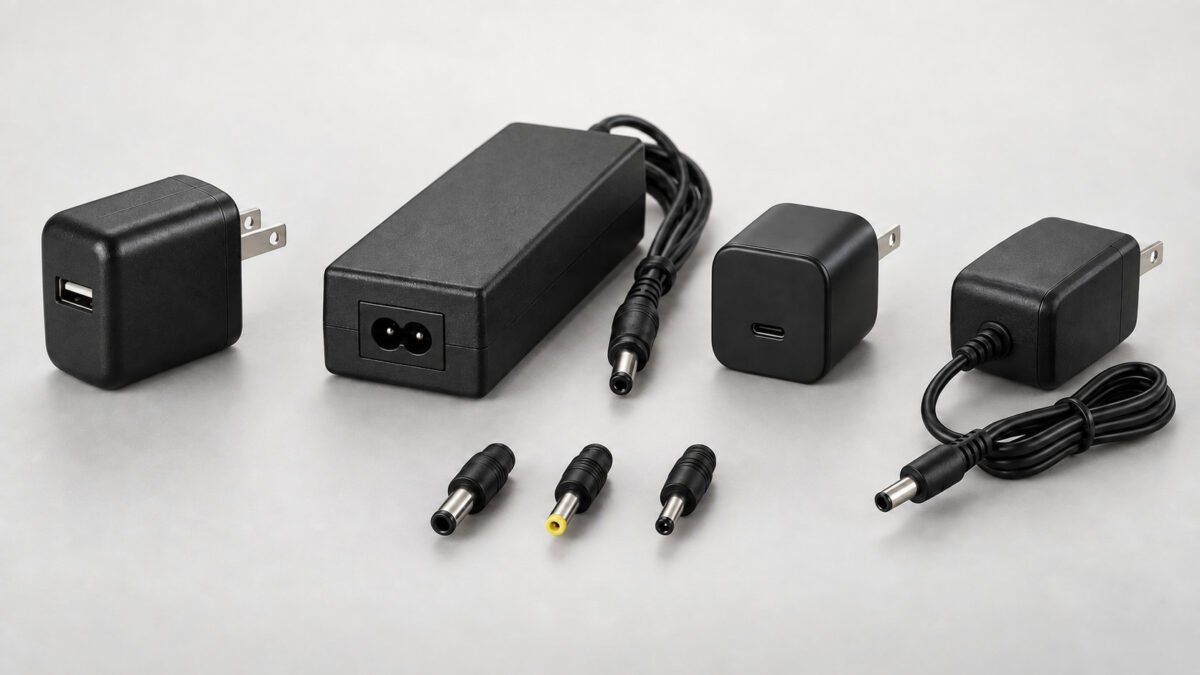
Replacement power adapter solutions for OEMs, brand owners, and industrial buyers seeking reliable supply continuity and performance alignment.

1. Replacement Adapter Demand
Organizations pursue replacement power adapters for a range of operational and strategic reasons. Understanding the underlying driver helps define the right scope, technical requirements, and qualification path for a replacement program.
1.1 Original Supplier Discontinued
A common trigger for replacement power adapter sourcing occurs when the original supplier discontinues a specific model or product line. Component obsolescence, factory retooling, or shifts in a supplier's product roadmap can remove an existing adapter from active production, leaving buyers with limited time to identify a qualified alternative.
In these scenarios, form, fit, and function matching takes priority. Buyers typically seek a drop-in replacement that matches the original unit's electrical output, mechanical interface, and connector geometry so that existing product designs, packaging, and end-user documentation require minimal revision. Selected replacement models can often meet these criteria without requiring a full redesign cycle.
1.2 Product Upgrade
Product upgrade programs represent another significant source of replacement adapter demand. As manufacturers refresh existing product lines with enhanced features, improved processing power, or expanded functionality, the power delivery requirements of the end device may change accordingly.
A replacement adapter developed for a product upgrade scenario may involve adjusted output voltage levels, increased current capacity, or modified connector configurations to support new features. For example, an upgrade that introduces USB-C power input may require a USB Power Delivery adapter that supports the voltage, current, wattage, and negotiation features specified by the device. Depending on the design, this may include selected fixed-voltage PDOs, PPS, or Extended Power Range operation. USB-C connector compatibility alone does not confirm power compatibility, so the required USB PD profile must be verified during development.
In upgrade scenarios, the replacement adapter program often runs in parallel with the product redesign, allowing engineering teams to validate electrical compatibility, thermal performance, and regulatory compliance before the upgraded product enters production.
1.3 Performance Improvement
Performance improvement initiatives drive a third category of replacement adapter demand. In these cases, the original adapter remains available but no longer meets the performance expectations of the product or its end users.
Performance-driven replacement can target several dimensions:
- Efficiency gains — Higher efficiency ratings reduce energy consumption during operation and standby modes, supporting lower operating costs for end users.
- Thermal management — Improved thermal design contributes to more stable operation under sustained load conditions and in higher ambient temperature environments.
- Reliability improvement — Component derating, thermal design review, calculated MTBF data, qualification testing, and available field-performance records. Calculated MTBF should be identified as an estimate rather than presented as a guarantee of service life or field return rate.
- Size and weight reduction — Advances in power supply design enable more compact form factors, which can improve portability and reduce shipping costs for finished products.
Performance improvement replacements typically involve a side-by-side benchmarking phase, where selected replacement models are evaluated against the original unit across the target performance parameters.
1.4 Alternative Source Qualification
Alternative source qualification involves approving a second supplier or adapter model to reduce dependence on a single source and improve supply continuity. Organizations may initiate such programs to address regional logistics constraints or establish buffer capacity for peak demand periods.
A well-executed alternative source qualification program involves qualifying selected adapter models from alternate manufacturers against the same electrical, mechanical, and regulatory specifications as the primary source. Once qualified, the alternate supply can be activated on short notice, helping to maintain production continuity if the primary source experiences lead time extensions, allocation, or disruption.
Alternative source qualification programs often include periodic requalification cycles to ensure that the alternate source continues to meet specifications as manufacturing processes and component sourcing evolve over time.
2. Replacement Solution Matching
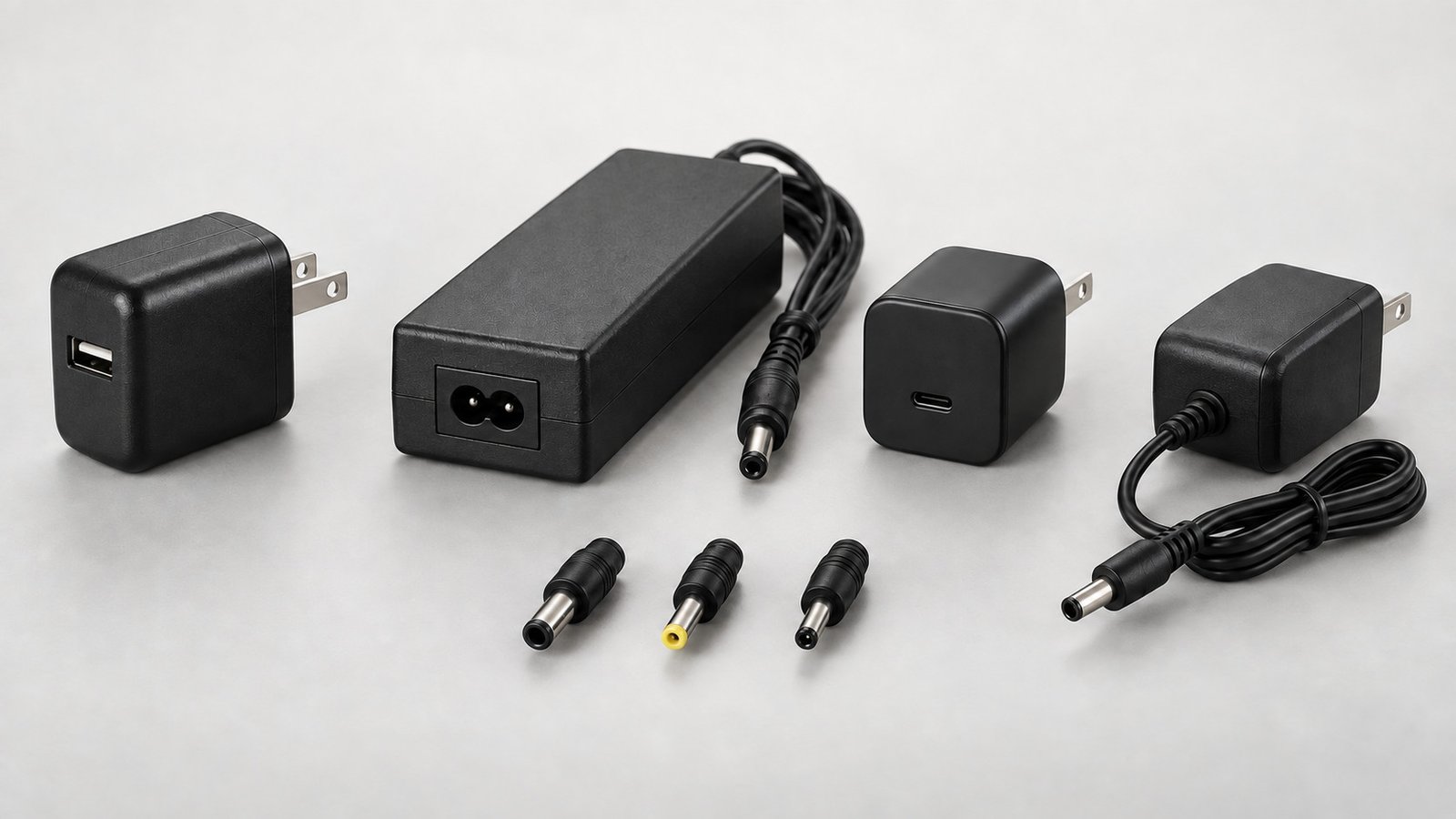
Matching the correct replacement power adapter to a given application requires systematic verification of key parameters. The following five parameters form the core of a structured replacement adapter evaluation.
2.1 Voltage
Output voltage is the primary electrical parameter to confirm when evaluating a replacement power adapter. The replacement unit's nominal output voltage must match the original adapter's rating to ensure proper device operation.
Common nominal output voltages include 5 V, 9 V, 12 V, 15 V, 19 V, 20 V, y 24 V, although other values are available for application-specific designs. The replacement adapter's nominal voltage, tolerance, ripple, regulation, and connector-end voltage under load must remain within the powered device's specified input limits. For USB Power Delivery applications, the adapter must support the power profiles and negotiation features required by the device.
Voltage Matching Checklist:
- Confirm the device's required nominal voltage and allowable input range
- Verify output tolerance, ripple, line regulation, and load regulation
- Account for cable voltage drop at the required load
- For USB Power Delivery, confirm the required PDOs and PPS or AVS support where applicable
2.2 Current and Power
For a conventional fixed-voltage DC adapter, the replacement unit should normally have a continuous output-current rating equal to or greater than the device's maximum current requirement, provided that the output voltage, polarity, connector, and output characteristics are compatible. The connected device draws the current it requires; a higher adapter current rating does not normally force additional current into the device.
The total output wattage should also be checked. Equipment with motors, heaters, batteries, or high startup loads may require additional capacity to accommodate inrush current or transient demand. For USB-C Power Delivery applications, compatibility must be evaluated using the required PDOs, PPS or AVS range where applicable, maximum current, total power, and cable capability — not by the current rating alone.
2.3 Connector
The DC output connector is a critical mechanical interface that must match between the original and replacement adapter. Connector compatibility involves several dimensions:
- Connector type — Barrel connectors, USB-A output ports, USB-C ports or captive cables, and proprietary connectors require both mechanical and electrical verification. For USB outputs, the supported charging or power-delivery protocol must also match the device requirements.
- Physical dimensions — For barrel connectors, inner diameter (ID), outer diameter (OD), and pin length must align with the device's jack. Common barrel sizes include 5.5×2.1 mm, 5.5×2.5 mm, y 3.5×1.35 mm.
- Polarity — Center-positive and center-negative configurations must match. Most consumer and industrial equipment uses center-positive polarity, but verification is essential.
- Retention mechanism — Some applications require threaded connectors, locking barrels, or strain relief features for environments with vibration or frequent handling.
For USB-C replacement programs, confirm whether the adapter uses a USB-C receptacle or captive cable and verify the required USB Power Delivery profiles, maximum power, current capability, and cable rating.
The AC-side interface must also be confirmed, including the regional wall plug, interchangeable plug system, fixed input cord, or IEC inlet type. A mechanically compatible DC connector does not by itself confirm electrical compatibility.
2.4 Longitud del cable
DC output cable length affects both the user experience and electrical performance of a power adapter. Replacement adapters should offer a cable length that matches or approximates the original unit to maintain compatibility with existing product packaging, installation setups, and end-user expectations.
Cable length affects voltage drop, thermal performance, flexibility, and installation convenience, particularly at higher current levels. For adapters with a captive USB-C cable, cable construction and supported power capability must also be verified. Longer cable runs can result in measurable voltage drop at the device end, which may affect performance in applications operating near the lower boundary of the device's input voltage range. Selected replacement models should use appropriate wire gauge to compensate for cable length and keep voltage drop within acceptable limits.
Common DC output-cable options are approximately 1.0 m a 2.0 m, although available and suitable lengths depend on the adapter design, current level, wire gauge, voltage-drop limit, and installation requirements.
2.5 Application
The target application shapes several additional requirements for a replacement power adapter beyond the core electrical and mechanical parameters. Application-specific considerations include:
- Operating environment — Indoor, outdoor, or industrial-grade temperature ranges; humidity and dust exposure levels
- Market access and compliance — Applicable safety approvals, EMC requirements, energy-efficiency regulations, environmental requirements, and conformity markings for each target market. Depending on the model and destination, these may include UL or ETL listing, GS, CCC, PSE, and CE-related conformity documentation. Required approvals and reports must be confirmed for the exact adapter model rather than assumed from a similar product
- Form factor and installation — Wall-plug or desktop construction, AC inlet or fixed input cord, regional plug type, mounting requirements, and available installation space
- Protection functions — Over-voltage, over-current, short-circuit, and over-temperature protection, depending on the application
- Input requirements — Supported AC input range, frequency, regional plug or inlet type, and required surge or transient immunity
DIN-rail and open-frame power supplies are separate product categories and should be evaluated when the equipment requires an installed industrial power supply rather than an external adapter.
3. Application Areas
Replacement power adapters serve a wide range of application areas. Each segment carries distinct technical requirements, regulatory expectations, and supply chain priorities.
3.1 Electrónica de consumo
Consumer electronics represents one of the largest segments for replacement power adapters. Product lifecycles in this segment move quickly, and original adapters may become unavailable while significant installed bases of end products remain in active use.
Replacement adapters for consumer electronics must meet the safety, EMC, energy-efficiency, and environmental requirements applicable to the exact product and destination market. Buyers should verify model-specific certificates, declarations, test reports, and marking authorization before placing the adapter on the market. Compliance documents for one model, output rating, or construction should not be assumed to cover another.
The consumer segment also places emphasis on form factor and aesthetics, as replacement adapters that visibly differ from the original unit may affect user perception. Compact design, consistent finish quality, and matching connector style contribute to a seamless replacement experience.
3.2 Industrial Equipment
Industrial equipment applications impose more demanding operating conditions on power adapters compared with consumer products. Replacement adapters for industrial use must often withstand wider temperature ranges, higher vibration levels, and longer continuous operating hours.
Industrial applications may require wider operating-temperature ranges, higher surge immunity, secure or locking output connectors, longer continuous-duty operation, and application-specific environmental protection. Depending on the selected model, available features may include reinforced insulation, over-temperature protection, and wider operating-temperature ratings. These requirements are not standard features of external adapters and must be defined and verified against the model-specific specification and test documentation.
Most external AC-DC adapters operate from single-phase AC input. If the equipment is powered from a three-phase system, control cabinet, or DC distribution bus, a DIN-rail, enclosed, or open-frame industrial power supply may be more appropriate than a conventional external adapter.
Reliability and longevity are critical considerations in industrial applications. Equipment downtime in a factory or process environment carries measurable cost, so replacement adapters for industrial use are typically selected based on demonstrated reliability data, component derating practices, and long-term supply commitment from the manufacturer.
3.3 Legacy Equipment
Legacy equipment — systems that have been in service for extended periods and whose original manufacturers may no longer support specific models — represents a specialized area of replacement adapter demand. These installations often rely on power adapters with non-standard voltage levels, proprietary connector designs, or specific certification profiles that are difficult to source through standard distribution channels.
Replacement adapters for legacy equipment may require reverse engineering of the original unit's electrical characteristics and mechanical form factor. In some cases, the replacement adapter may incorporate modern circuit topologies and components while maintaining the same external interface and electrical output as the original unit, effectively extending the service life of the legacy system without requiring modification to the equipment itself.
Examples may include laboratory instruments, telecom equipment, control systems, and selected medical-related equipment. Medical applications require separate review of the applicable safety standard, insulation level, leakage-current limits, risk classification, and system certification impact.
4. OEM Replacement Development
For organizations requiring replacement adapters at production scale — rather than individual replacement units — OEM-level development programs provide a structured path from initial requirement definition through mass production.
4.1 Original‑Sample Analysis and Specification Reconstruction
When complete technical documentation is unavailable, an original adapter sample and the powered device can be evaluated to reconstruct the requirements for a compatible replacement. This service is intended to establish the necessary interface and performance specification, subject to the customer's authorization and applicable intellectual-property requirements.
- Step 1: Requirement Review — Review available labels, drawings, device input specifications, application conditions, target markets, and required compliance documentation.
- Step 2: Electrical Characterization — Evaluate nominal output voltage, polarity, ripple, regulation, transient behavior, startup characteristics, and protection response. Required continuous and peak current are established using available documentation, device load analysis, thermal evaluation, and controlled testing rather than a single current measurement.
- Step 3: Mechanical and Cable Analysis — Record enclosure dimensions, connector type and dimensions, pin assignment, cable length, wire gauge, strain relief, and locking or mounting features.
- Step 4: Replacement Specification — Document the agreed electrical, mechanical, environmental, compliance, labeling, and packaging requirements for prototype development and qualification.
Final compatibility should be confirmed through testing with the intended device and operating conditions before mass production.
4.2 Custom Production
Custom production of replacement power adapters addresses scenarios where off-the-shelf models do not fully match the original unit's specifications or the application's unique requirements. Custom production allows precise tailoring of electrical, mechanical, and cosmetic attributes to the target application.
Customization options available in replacement adapter production include:
- Electrical customization — Specific output voltages, current ratings, USB Power Delivery profiles where applicable, and application-specific protection thresholds.
- Mechanical customization — Custom connector types and pinouts, specialized cable lengths and wire gauges, and housing modifications for specific mounting requirements.
- Cosmetic customization — Branded labeling, custom enclosure colors, and packaging alignment with existing product lines.
- Regulatory customization — Certification targeting for specific geographic markets and industry-specific standards.
The custom production process typically begins with prototype builds based on the agreed specification, followed by design verification, compliance testing or certification where required, and pilot production before volume manufacturing. Selected custom projects may also include first-article inspection and process validation steps as required by the buyer's quality management system.
4.3 Volume Production and Supply
Volume production and supply capabilities are essential for replacement adapter programs that support ongoing production lines, aftermarket channels, or large-scale equipment fleets. A robust production and supply framework encompasses manufacturing capacity, quality consistency, supply chain resilience, and logistics coordination.
Key elements of a volume production and supply program for replacement power adapters include:
- Production capacity — Scalable manufacturing lines capable of accommodating both steady-state volume and seasonal demand fluctuations, with lead time transparency across the production cycle.
- Quality systems — Incoming material inspection, in-process quality controls, and finished goods testing protocols designed to maintain consistent output quality across production batches.
- Component sourcing — Multi-source component strategies and approved vendor lists that reduce exposure to single-source component supply disruption.
- Inventory and logistics — Flexible shipping terms, regional warehousing options where available, and order management systems that support scheduled releases and blanket purchase orders.
- Change management — Structured notification processes for engineering changes, component substitutions, and end-of-life transitions, allowing buyers to plan and qualify updates proactively.
Volume production and supply arrangements for replacement adapters are typically governed by supply agreements that define pricing structures, minimum order quantities, delivery lead times, warranty terms, and quality acceptance criteria. These agreements provide both parties with a clear framework for ongoing collaboration and supply continuity.
5. Start Your Replacement Adapter Project
To evaluate a replacement or custom power adapter, please provide as much of the following information as possible:
- Photo and label information from the original adapter
- Device input voltage, current, and power requirements
- DC connector type, dimensions, polarity, and pin assignment
- Required cable length and installation space
- AC input range, inlet or regional plug type
- Target countries and required compliance documentation
- Operating temperature and environmental conditions
- Estimated order quantity and project schedule
If a complete specification is not available, an authorized original sample and the powered device can be evaluated to help define the replacement requirements. Contact the sales team to discuss model selection, prototype evaluation, compliance planning, and volume production.
Need a Replacement Power Adapter Solution?
Whether you need a drop-in replacement for a discontinued adapter, a performance upgrade for an existing product line, an alternative source qualification, or a fully custom OEM replacement program for legacy equipment, our team can help you match the right solution to your application. From voltage, current, and connector matching to regulatory compliance and volume supply, we support replacement adapter projects with competitive pricing and flexible MOQ.