

Custom Power Adapter Solutions
Custom Power Adapter Solutions
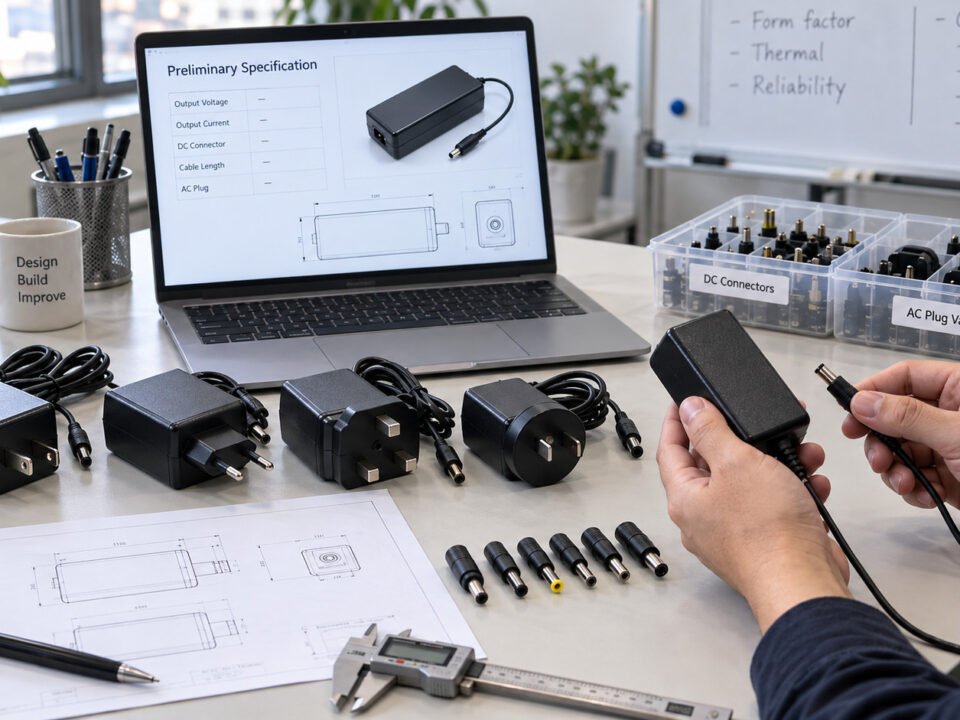
Power adapters convert AC mains input into the regulated DC output required by electronic devices. Standard models meet many common applications, but certain products require a specific output rating, enclosure, AC plug, DC connector, cable assembly, or compliance configuration. In these cases, a custom AC/DC power adapter can provide a better fit. This page introduces typical applications, the available customization options, and the OEM development process for wall-mount and desktop power adapters.
1. Custom Power Adapter Applications
Custom power adapters serve a broad range of industries, each with its own technical constraints. The way an end product is used determines the required electrical parameters, mechanical form, materials, and safety considerations that must be handled during development. Understanding these categories helps buyers define their requirements before the project begins.
1.1 Consumer Products
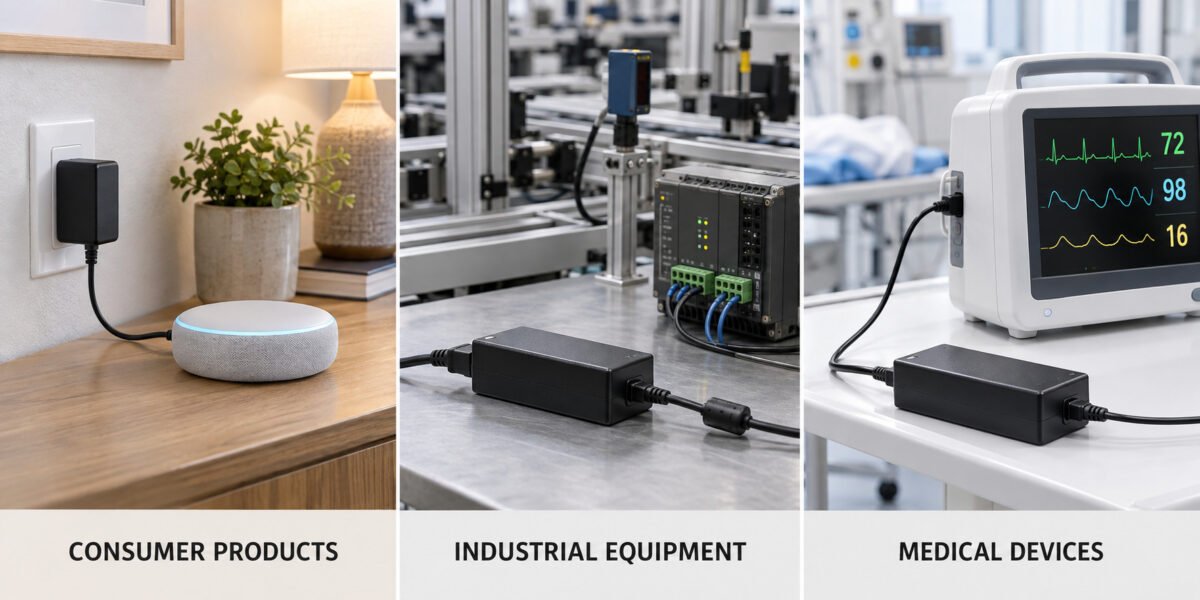
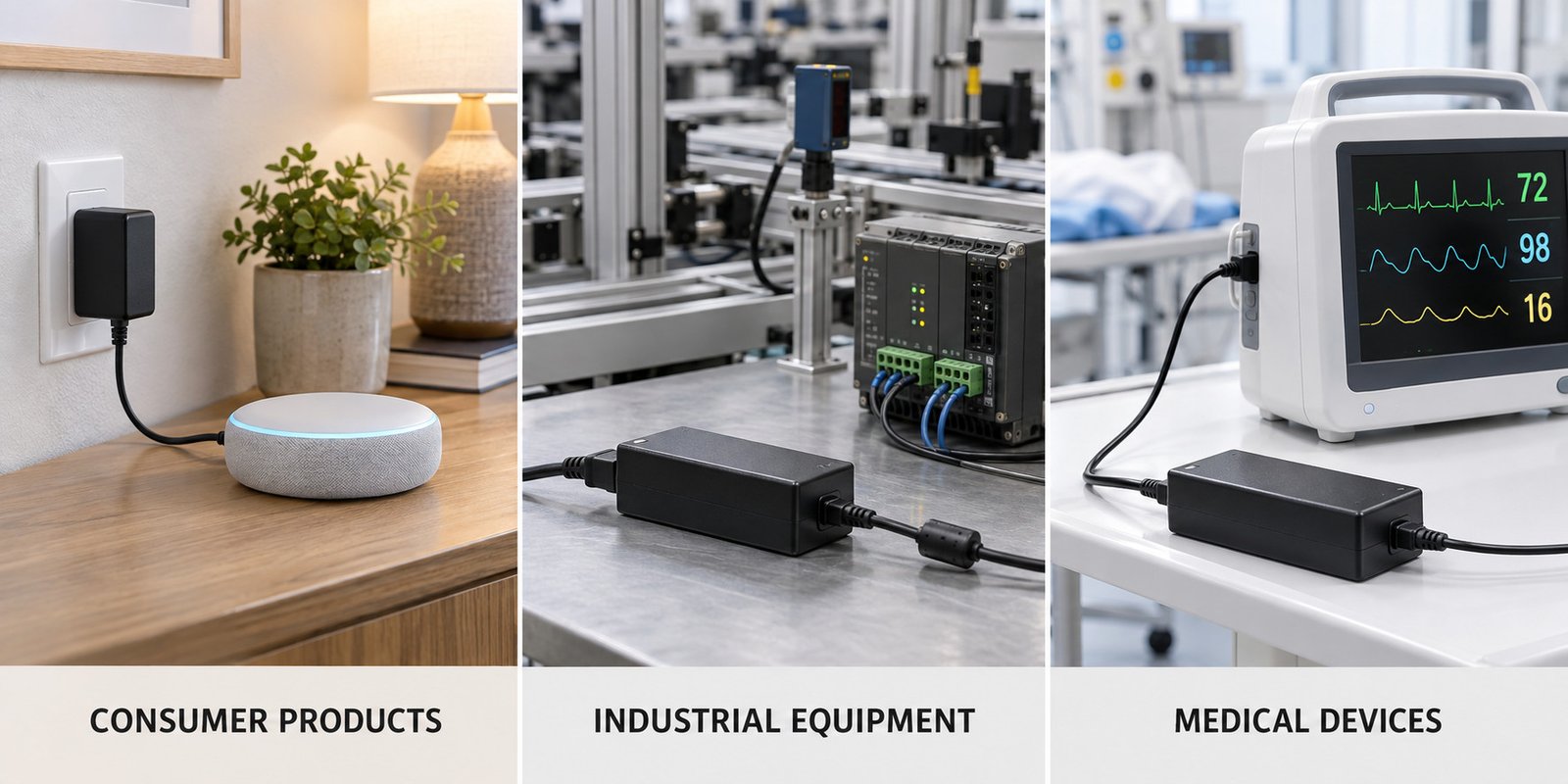
Consumer electronics such as smart home hubs, wireless charging stands, LED lighting systems, security cameras, and smaller household appliances often benefit from adapters that reflect the brand's identity and packaging rather than a generic commercial unit. Depending on the selected housing platform, order quantity, and tooling requirements, available options may include housing color, label design, logo marking, cable appearance, and retail packaging. For consumer applications, common priorities include compact dimensions, low audible noise, stable output within the specified load range, and compatibility with the intended regional mains input and plug type. Dimensions and connector type are tailored to each device so the adapter integrates cleanly with the product.
1.2 Industrial Equipment
Industrial equipment imposes different demands than consumer devices. Machinery control panels, sensor systems, test instruments, and automation equipment may require wider operating-temperature ranges, defined input tolerances, secure connectors, or more durable mechanical construction. These features are available only on selected models and must be specified according to the actual installation conditions. Requirements involving vibration, humidity, dust, water exposure, or outdoor use must be evaluated separately and verified against agreed test methods or ratings. In an industrial setting, reliable performance over an extended service life generally takes priority over appearance or small size, and the mechanical configuration is arranged around how the equipment is mounted and how cabling is routed.
1.3 Medical Devices
Medical electrical equipment may require power adapters designed and evaluated for the applicable safety, insulation, leakage-current, EMC, and reliability requirements. The exact requirements depend on the end device, its intended use, patient proximity or contact classification, operating environment, and target market. Selected medical-grade adapter platforms may be configured for compatible output, connector, cable, and mechanical requirements. Applicable standards, means of protection, required test reports, approvals, and traceability documents must be confirmed at the start of the project. A medical-grade adapter does not by itself establish compliance of the complete medical device.
2. Customization Scope
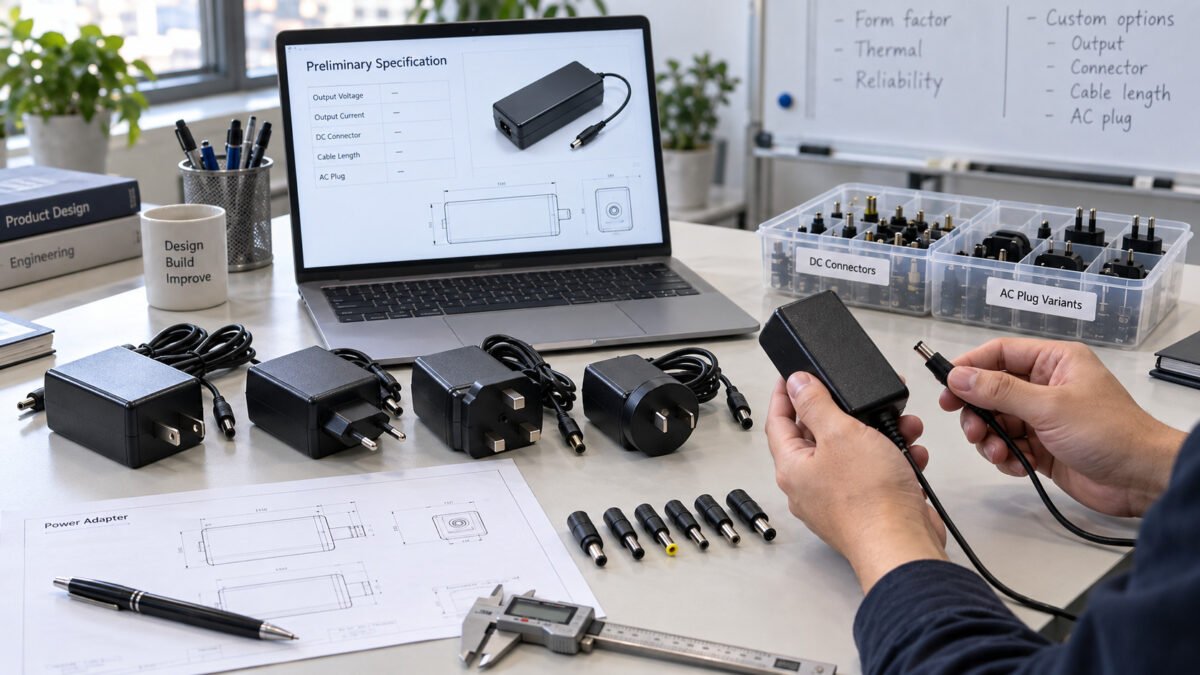
A custom power adapter can be configured across three main areas: electrical performance, mechanical design, and output connection. These parameters are evaluated together, because output power, enclosure size, thermal performance, cable length, connector rating, compliance requirements, cost, and lead time can affect one another. Available options depend on the selected power platform and project specification.
2.1 Electrical Configuration
The specification process begins with the AC input range, input frequency, required plug or inlet, DC output voltage, rated current, and total output power. The intended sales market and end-product category must also be confirmed, because plug requirements, energy-efficiency rules, safety standards, EMC requirements, and approval routes vary by country and application. Available configurations and certifications depend on the selected model and project requirements.
Voltage — Output voltage is selected to match the rated input voltage of the device. Common levels such as 5V, 9V, 12V, and 24V cover many standard products, and other values can be specified for equipment that uses a different input. Correct voltage matching is important, because a mismatch can prevent the device from operating within its intended performance range.
Current — The adapter's rated output current must meet or exceed the maximum current required by the device under its specified operating conditions. For constant-voltage adapters, the connected device draws the current it needs up to the adapter's rated limit. Start-up current, transient loads, and any applicable derating conditions should be considered when selecting the rating.
Rated Output Power — For a single fixed-voltage output, rated output power is calculated from the specified output voltage and rated current. The required rating should be selected from the device's continuous load, start-up demand, transient behavior, operating temperature, and any applicable derating requirements. Enclosure size depends on power level, efficiency, component selection, topology, and thermal design, so a higher output rating may require a different power platform or housing.
AC Input and Plug Type — The input range, frequency, and AC connection are selected for the intended market and installation. Options may include regional wall plugs or desktop adapters with detachable AC cords, depending on the model. The required safety, EMC, and energy-efficiency approvals should be confirmed before development begins.
2.2 Mechanical Configuration
The mechanical configuration determines the appearance, size, and installation method of the adapter. These choices influence both how the product looks and how well it suits the customer's design.
Housing — The enclosure can be customized in material, color, surface finish, and brand marking, subject to the selected housing platform, order quantity, and tooling requirements. Housing material is selected according to thermal performance, mechanical requirements, flammability classification, regulatory requirements, and the intended operating environment.
Size — Overall dimensions are selected from an existing housing platform or developed through custom tooling when the project volume and design requirements justify a bespoke enclosure. Compact designs suit portable devices where space is limited, while larger housings accommodate higher output levels or additional thermal management.
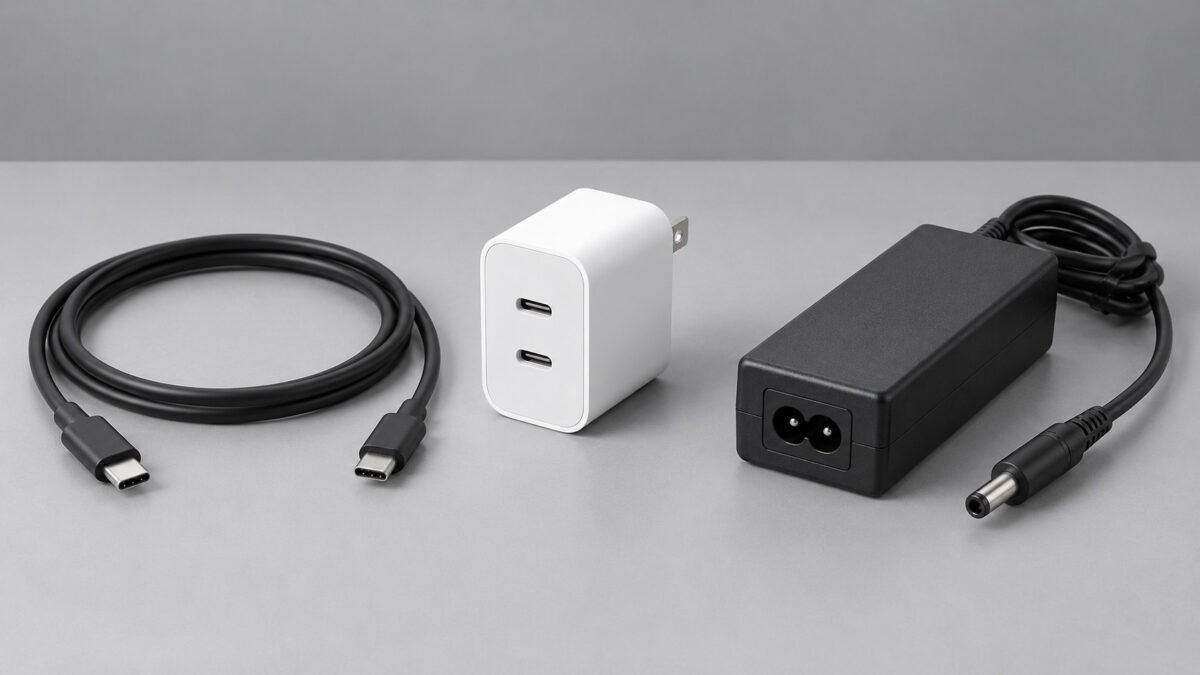
Form Factor — Available configurations may include wall-mount adapters with regional plug options and desktop adapters with fixed or detachable AC input cords. Other installation or retention features can be evaluated for selected models. The final form factor is chosen according to available space, socket access, cable routing, power level, and regional requirements.
2.3 Connection Configuration

The connection between the adapter and the device is a critical detail, because an incorrect connector can make an otherwise suitable adapter unusable. Specifying the connection early avoids rework later in the process.
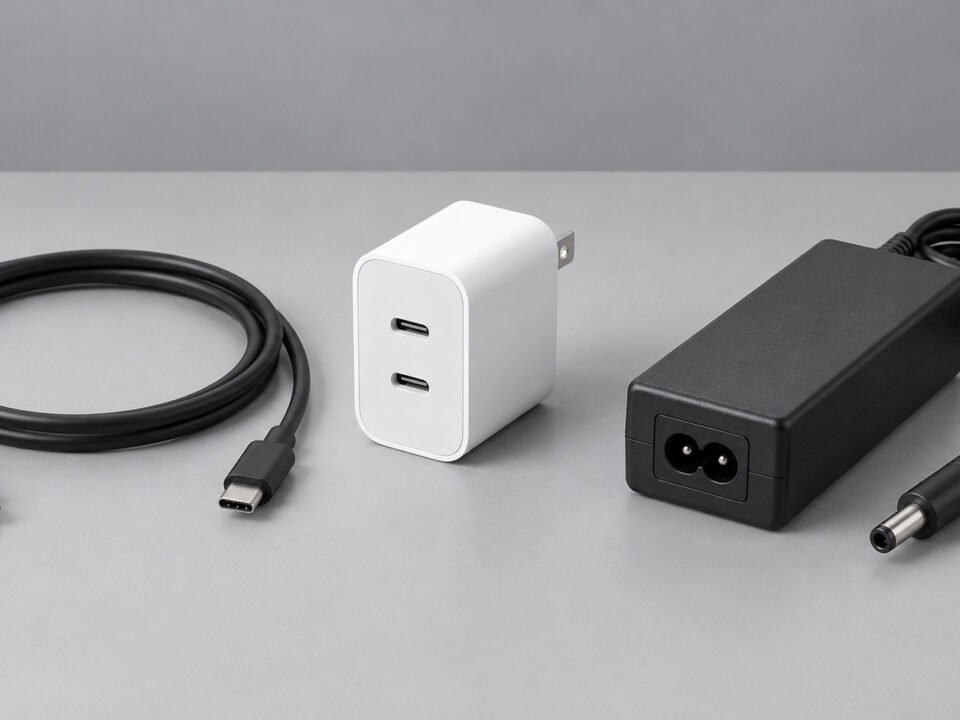
Output Connector — The output connector, dimensions, pin assignment, and polarity are matched to the device input. Available options may include DC barrel plugs, locking connectors, USB-A power outputs, USB-C outputs, or project-specific terminations. A USB-C connector alone does not define the available charging power. Where USB Power Delivery is required, the supported PD version, output profiles, maximum power, cable rating, and device compatibility must be confirmed as part of the specification.
Cable Length — The output cable length is selected for the intended installation. Conductor material and cross-sectional area are specified according to cable length, load current, acceptable voltage drop, flexibility, and temperature requirements. Shielding or filtering may be added where EMC or noise control is required. The cable jacket and strain-relief design are selected according to the expected bending, handling, and environmental conditions.
3. OEM Development Process
Developing a custom adapter follows a structured five-stage process. Working through these stages in order clarifies requirements early, surfaces problems while they are inexpensive to resolve, and reduces the risk of costly revisions during production.
3.1 Requirement Analysis
The customer provides the target device's electrical requirements, physical constraints, and applicable regulatory context. Details such as AC input, output voltage and current, connector type, plug, cable length, target market, and certification requirements are documented, and uncertain points are clarified before design work begins.
3.2 Engineering Design
Engineers translate the approved requirements into a concrete design covering the electrical architecture, housing, and connection layout. Component selection, thermal estimates, dimensional drawings, and the proposed power platform are produced for customer review. Quotation, tooling, and NRE details are agreed before hardware is committed.
3.3 Prototype
A working prototype is built to validate the design against the approved specification. The sample confirms output behavior, connector fit, and mechanical assembly, and gives the customer a physical unit to evaluate within their own application before sample approval is granted.
3.4 Testing
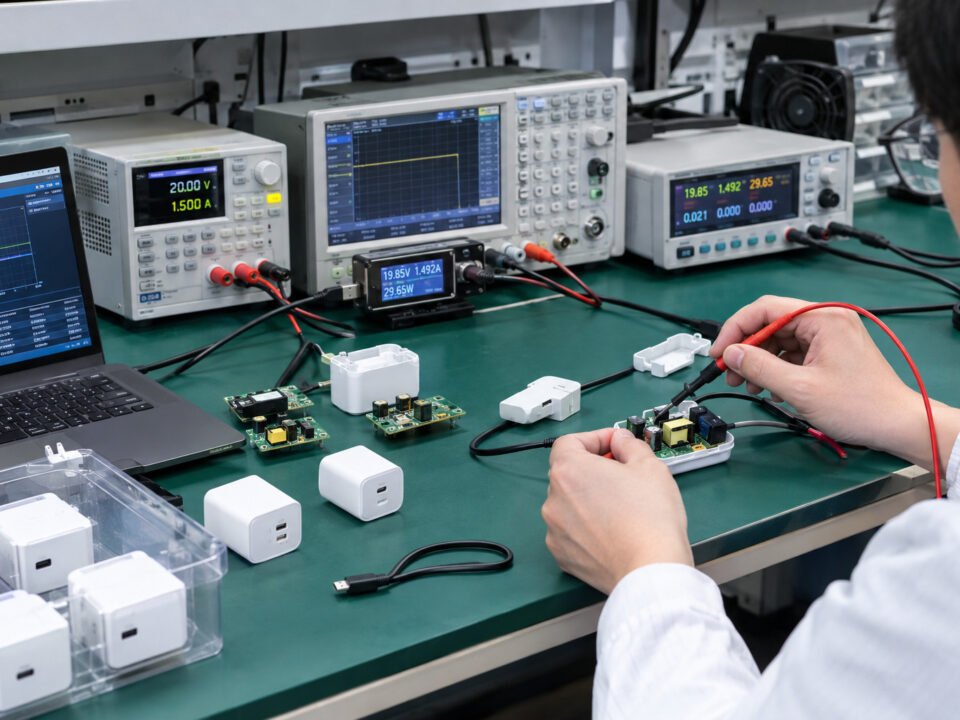
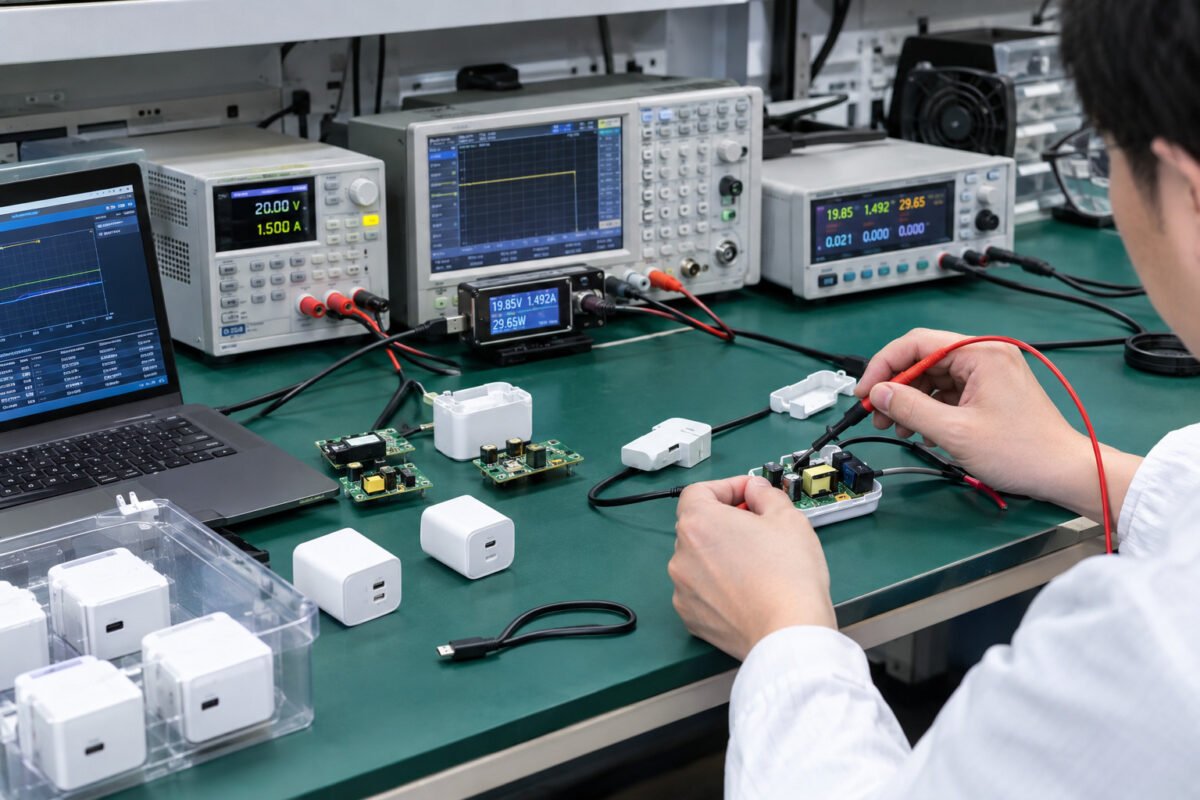
The prototype is evaluated against an agreed verification plan. Depending on the product and application, testing may cover output regulation, ripple and noise, efficiency, no-load consumption, protection behavior, temperature rise, insulation, EMC, connector retention, cable flexing, and other project-specific requirements. Capabilities that are not performed in-house can be arranged through qualified third-party laboratories when required. Any nonconformities are corrected and re-evaluated before production approval.
3.5 Production
Once the design, sample, and required verification activities are approved, the project moves to pilot or mass production. Manufacturing and inspection are performed according to the agreed specification, approved reference sample, and quality-control plan. Incoming, in-process, and final inspection requirements are defined according to the product and project risk. Any material, component, or process changes are managed through the agreed change-control procedure.
4. Related Resources
- OEM Power Adapter Development
- How to Specify a Power Adapter
- Power Adapter Application Solutions
Need a Custom Power Adapter Solution?
Whether you need custom electrical configurations, tailored mechanical designs, application-specific connections, or full OEM development for consumer, industrial, or medical applications, our team can help you specify the right solution for your project. From wall-mount to desktop, standard to fully customized, we support custom adapter projects with competitive pricing and flexible MOQ.