Braided vs Rubber USB-C Cables: Which Lasts Longer?
Braided vs Rubber USB-C Cables: Which Lasts Longer?
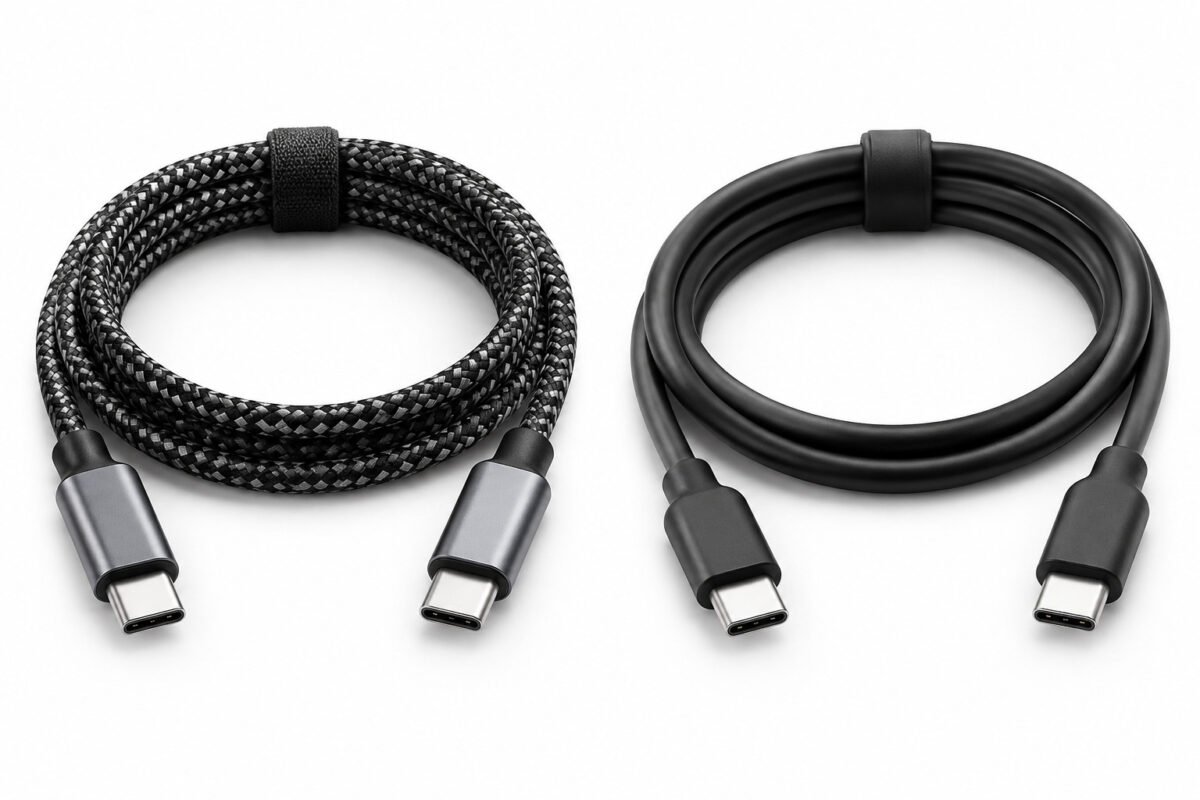
USB-C cables come in two common exterior types: braided nylon and rubber, the latter usually TPE or PVC. Both move the same power and the same data, but the braided vs rubber USB-C cable comparison only gets interesting once durability, heat management, and real-world lifespan are on the table. Here is how the two compare, and whether the braided option is worth the higher price.
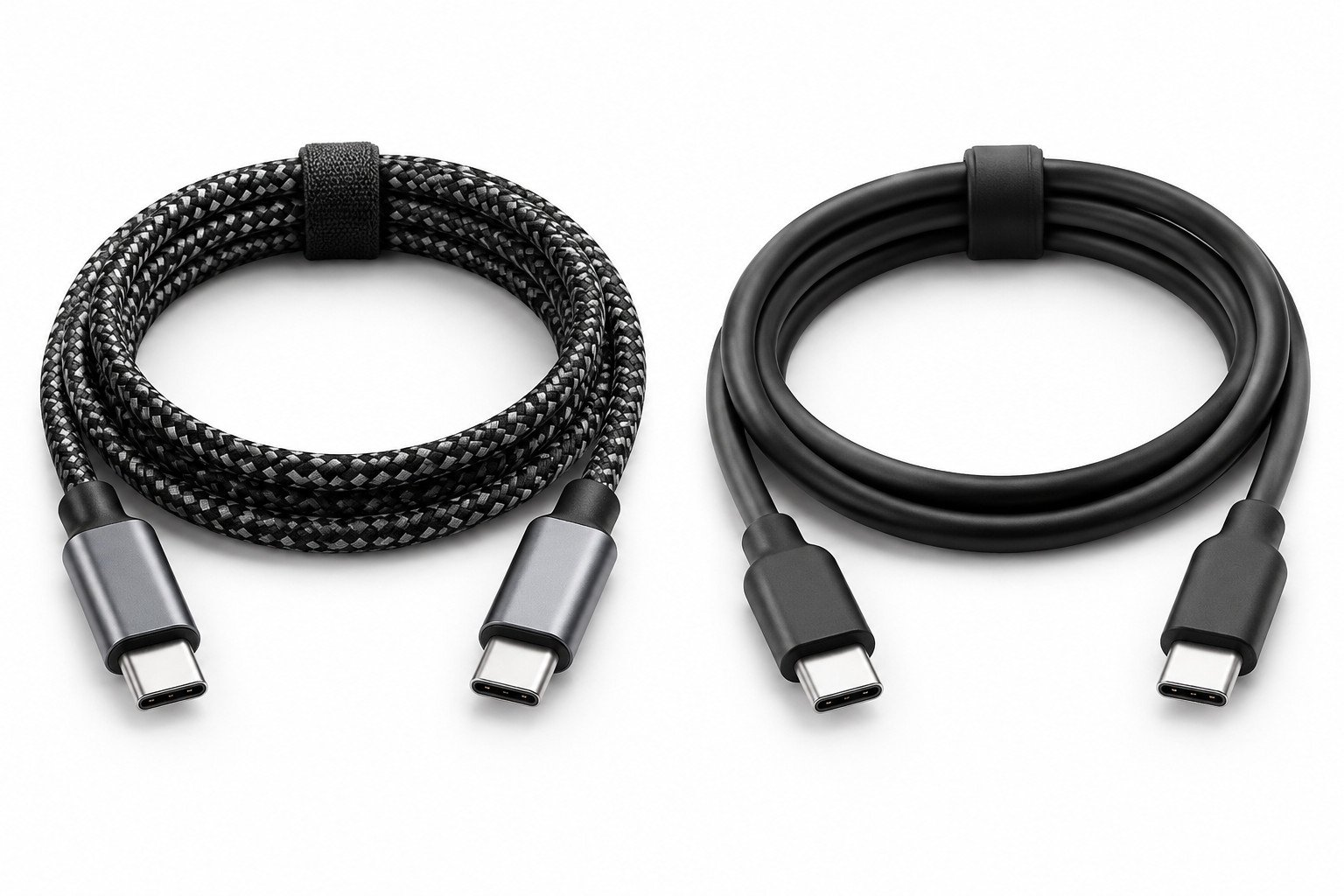
1. Durability: Build Quality & Physical Resilience
Braided cables wrap a woven nylon or polyester layer over the inner jacket. That weave spreads stress across many fibers at once, which is why a braided cable resists fraying, tearing, and the wear that comes from daily bending and coiling far better than a smooth jacket does.
Rubber (TPE/PVC) cables rely on a single smooth polymer jacket. They feel soft, bend easily, and cost less. The trade-off is surface durability: the rubber is prone to cracking, peeling, and fraying, and the first place it shows is the connector joint, where bending stress concentrates.
- Braided: excellent abrasion resistance, less fraying, better tangle resistance
- Rubber: softer feel and more flexibility, but prone to cracking and wear at the stress points
2. Heat Dissipation: Thermal Performance Matters
Heat is what quietly shortens a cable's working life, and fast charging at 65W, 100W, or 240W makes the question more important. A cable that runs cooler keeps its insulation and solder joints intact for longer.
Braided cables feel cooler at the same load. The textile surface conducts heat poorly, so the outside of the cable feels neutral in the hand; the bigger factor is what sits underneath, since a braided cable is usually built with heavier conductors for the same current rating and therefore generates less heat in the first place.
Rubber cables wrap the insulation in a thin solid layer with no air gap, so the jacket sits in close contact with the heat source and warms quickly. Under sustained loads of 100W and above, that heat speeds up breakdown of the internal insulation and the solder joints.
3. Lifespan: Long-Term Value Comparison
Rubber costs less at the checkout. Braided costs less over time — the usual estimate is two to three times the service life under real-world use.
Braided cables generally hold up for one to three years of daily use, a product of better abrasion resistance and cooler running under load. The woven layer shields the inner wires from physical damage and from heat-driven degradation at the same time.
Rubber cables often give out within 6–12 months of heavy use. The failures cluster in the same places: a cracked jacket next to the connector, frayed conductors, and intermittent connections where heat has weakened the solder.
4. Quick Comparison Table
| Feature | Braided USB-C | Rubber USB-C |
|---|---|---|
| Durability | Excellent — abrasion-resistant | Moderate — prone to cracking |
| Heat Dissipation | Better — cooler at the same load | Poorer — warmer at the same load |
| Typical Lifespan | 1–3 years | 6–12 months |
| Flexibility | Stiffer | More flexible |
| Price | Higher upfront | Cheaper |
| Tangle Resistance | Better | Poorer — prone to tangling |
5. Which Cable Should You Choose?
Choose braided if:
- You use fast charging at 65W or above regularly
- The cable travels with you — home, office, travel bag
- You want better long-term value
- Durability and heat management matter most
Choose rubber if:
- You need a budget-friendly, disposable cable
- It stays in one place, such as a home charger or a fixed desk setup
- You prefer a softer, more flexible feel
- You only charge at low wattages, 27W and below
6. Final Verdict
For most people, and especially for anyone using fast charging or carrying a cable from place to place, a braided USB-C cable is the better investment. It costs a little more upfront, but better durability, cooler running, and two to three times the lifespan mean fewer replacements over the years.
Rubber cables keep their place in light, stationary use. They rarely match braided cables for real-world longevity.
If the cable is going into a product program rather than a desk drawer, the jacket is only one line on the specification sheet. Current rating, data rate, and strain relief design determine how long a cable survives in the field.
Those three values are set by the target device and the intended use, with the jacket and connector build matched to the environment the cable will see.