

Our Manufacturing Facility
Manufacturing resources for USB cables, USB chargers, power adapters and customized connectivity products — combining production, molding, testing, quality control and finished goods handling within one coordinated manufacturing system.
A Manufacturing Base for Connectivity and Charging Products
WJW operates a manufacturing facility in Fuyong, Bao'an District, Shenzhen, supporting international B2B programs for USB cables, USB chargers, power adapters and related connectivity products.
The facility supports both repeat production and customized manufacturing programs. Depending on the product, a project may involve material preparation, connector assembly, molding, electrical verification, mechanical testing, quality inspection, packaging and finished-goods handling.
Rather than treating each department as an isolated function, production management, engineering, manufacturing, quality and warehouse operations work together around the approved product requirements. This helps keep the production specification connected with what is actually manufactured and released.
Dedicated Resources for Different Product Programs
Manufacturing resources are separated by product and production function so line planning can be matched to cable, charger, adapter, packaging and inspection requirements instead of forcing every order through the same production route.
USB Cable Assembly Lines
Support cable programs with different connector combinations, lengths, materials, molding structures and approved electrical specifications.
USB Charger / Adapter Lines
Production resources for charging and power-adapter programs according to the approved component configuration and electrical requirements.
Packaging & Labeling Lines
Finished products are packed, labeled and prepared according to customer-approved packaging and order specifications.
Testing & Inspection
Electrical, mechanical and visual verification supports in-process inspection and finished-product release.
What Our Production Resources Are Used For
Production-line numbers provide scale. Manufacturing capability explains how those resources are actually used. WJW's principal production activities are organized around cable assembly, injection / overmolding, and charger / power-adapter production.
USB Cable Manufacturing
USB Cable production starts from an approved specification covering the connector combination, cable construction, length, exterior material, electrical requirements and any project-specific details.
Depending on the cable design, production may involve wire preparation, connector assembly, soldering or termination, internal processing, overmolding, electrical verification and visual inspection.
Connector Molding & Cable Overmolding
Molding is part of the functional structure of many cable products. It helps protect the termination area, control connector geometry and provide repeatable strain-relief characteristics.
For customized programs, the mold structure, dimensions, materials and production approach are reviewed against the approved product design before mass production begins.
Charging Product Production
Four dedicated production lines support USB charger and power-adapter programs. Manufacturing is arranged around the approved product design, component configuration, electrical specification and customer requirements.
Because USB charger and adapter constructions vary between models, assembly and verification requirements are defined for the actual product rather than presented as one universal process.
From Approved Requirements to Finished Goods
Cable, charger and customized products do not follow exactly the same production route. At factory level, however, each order moves through a controlled sequence connecting specifications, materials, manufacturing, verification and finished-goods handling.
Requirement Review
Confirm the approved specification, drawings and production requirements.
Material Preparation
Prepare approved cables, connectors, components and packaging materials.
Production Setup
Arrange the appropriate line, tools, fixtures and process conditions.
Manufacturing
Complete assembly, termination, molding and other required production operations.
Testing & QC
Apply the inspection and verification requirements relevant to the product.
Packaging
Complete approved labeling, packaging and order-specific preparation.
Finished Goods
Approved products move to warehouse and outbound handling.
Equipment Supporting Repeatable Manufacturing
Equipment is presented here according to its production purpose. The objective is not simply to show machines, but to explain how preparation, assembly, molding, identification and verification are supported during manufacturing.
Wire Cutting & Preparation
Equipment supports controlled cable cutting and preparation before termination, connector assembly and molding operations.
Assembly Tools & Fixtures
Production fixtures help operators locate, hold and process components consistently during repeat manufacturing.
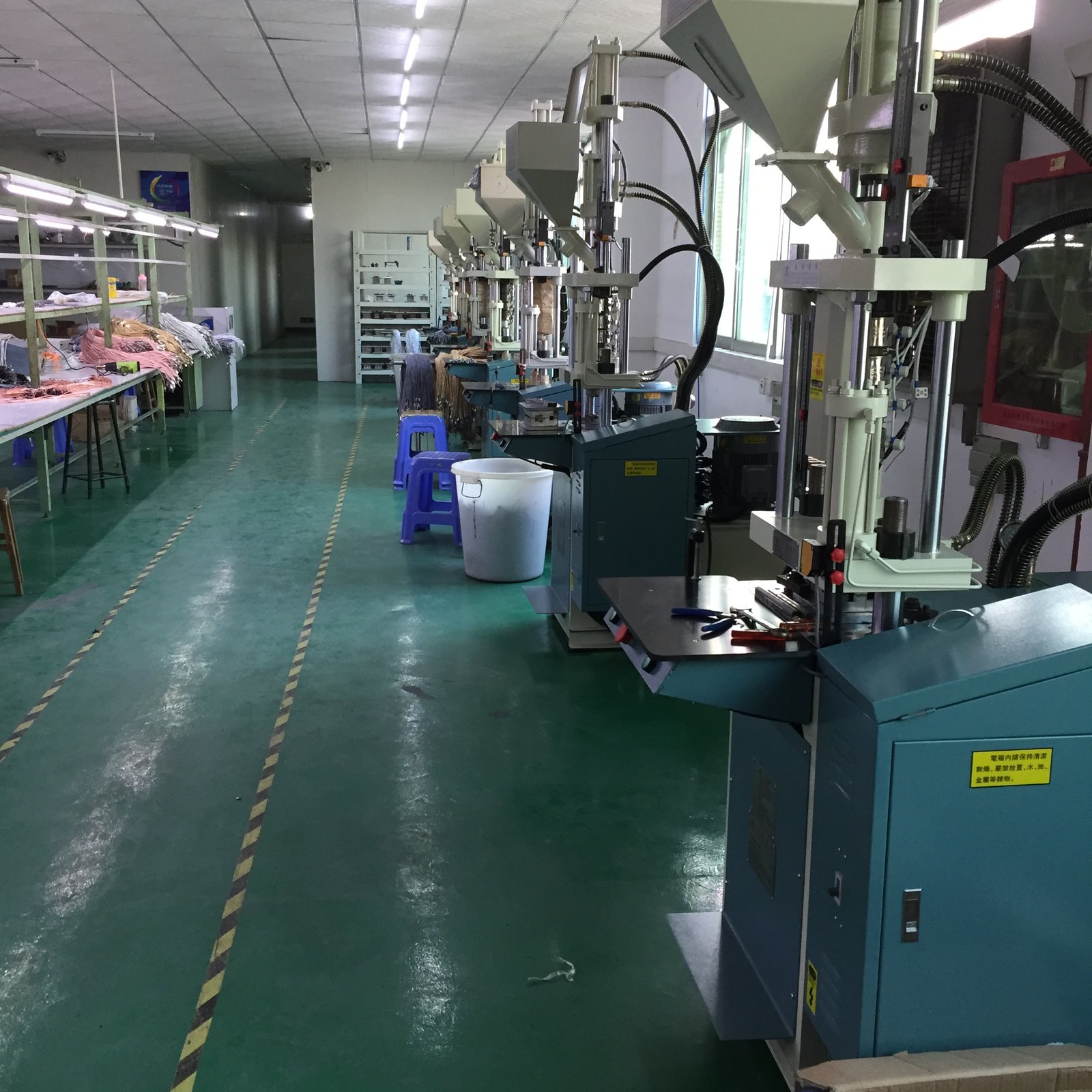
Injection Molding Equipment
Supports connector exteriors, cable overmolding, strain-relief structures and applicable molded product components.
Marking & Identification
Applicable products can move through identification processes such as marking or other project-specific labeling requirements.
Electrical Test Equipment
Electrical test equipment is used for relevant continuity, connection and product-performance verification.
Mechanical Test Equipment
Mechanical verification can include cable flexing, connector force and other durability-related checks where required.
Quality Is Controlled Through the Process
Final inspection alone cannot control manufacturing quality. WJW combines incoming-material checks, in-process control and finished-product verification so issues can be identified at the production stage where they occur.
Test requirements vary by product. Electrical, mechanical, environmental or aging-related verification is applied according to the approved specification and the intended product requirements.
Incoming Quality Control
Incoming materials and components are checked against the applicable purchasing or product requirements before production use.
In-Process Quality Control
Production checkpoints review workmanship, manufacturing conditions and applicable product requirements while production is active.
Final Quality Control
Finished goods are inspected against applicable functional, visual and order-release requirements before shipment preparation.
Electrical & Connection Verification
Electrical testing supports continuity and connection verification for applicable cable products before finished-goods release.
Cable Bending & Flexing
Repeated bending and flexing can be used to evaluate cable durability around high-stress areas.
Salt Spray Testing
Applicable metal components can be evaluated for corrosion resistance under controlled salt-spray test conditions.
Insertion / Withdrawal Testing
Connector force and repeated insertion-related checks help evaluate applicable mechanical interface requirements.
Mechanical Force Testing
Force-related testing can support evaluation of connectors and assembled structures where required by the project specification.
Connecting Production Records with the Actual Order
Traceability is useful when a production issue needs to be investigated. The goal is to retain enough manufacturing and inspection information to connect the relevant order or batch with the corresponding production and quality records.
This creates a clearer basis for issue review, corrective action and communication between production, quality and customer-facing teams.
Customer / Production Order
Approved specifications and production requirements establish the production basis.
Material & Production Batch
Materials and manufacturing activity are connected with the relevant production batch.
Inspection & Test Records
Relevant inspection or verification results support production review.
Release / Issue Review
Records provide a reference when released goods or production issues require investigation.
Manufacturing Continues Beyond the Assembly Line
Stable manufacturing depends on coordination between production, materials, engineering, quality control, packaging and warehouse operations. These functions are part of the factory system rather than separate supporting activities.
Production Management
Coordinates production resources, line scheduling, manufacturing priorities and execution according to each production order.
Engineering Support
Supports review of technical requirements, manufacturing feasibility, production methods and process-related issues for applicable projects.
Warehouse & Material Flow
Materials are prepared for the relevant production order, while approved finished products move into organized finished-goods handling.
Training & Work Instructions
Operator training supports awareness of production requirements, equipment use, work instructions and quality-control expectations relevant to each function.
Factory Management and Product Compliance Are Not the Same Thing
Quality-management systems describe how manufacturing activities are controlled and documented. Product certifications and market approvals, however, depend on the actual product, configuration and destination market.
For that reason, WJW recommends confirming compliance requirements against the specific product program rather than treating one certification statement as applicable to every product.
Explore Certifications & Compliance →Inside WJW Manufacturing & Testing
Real production and testing images provide a practical view of the manufacturing environment behind WJW's cable, charging and customized connectivity programs.
Want to Evaluate Our Manufacturing Capability for Your Project?
Share your product specification, drawings, samples or project requirements with our team, or arrange a factory visit to review the relevant manufacturing and testing resources directly.