

Custom USB Cable Solutions
Custom USB Cable Solutions
Standard USB cable products serve a wide range of consumer and commercial applications, but they cannot satisfy every project requirement. Custom USB cable manufacturing enables projects with non-standard connector configurations, specialized mechanical requirements, specific environmental demands or unique branding needs to obtain cable solutions engineered to match their exact specifications.
1. Why Custom USB Cable
Standard off-the-shelf USB cables are manufactured to common specifications suitable for general-purpose consumer and office use. In many B2B and industrial applications, however, standard products cannot meet the functional, mechanical or environmental requirements of the target device or installation. Custom USB cable manufacturing addresses these gaps.
1.1 Special Connector Requirements
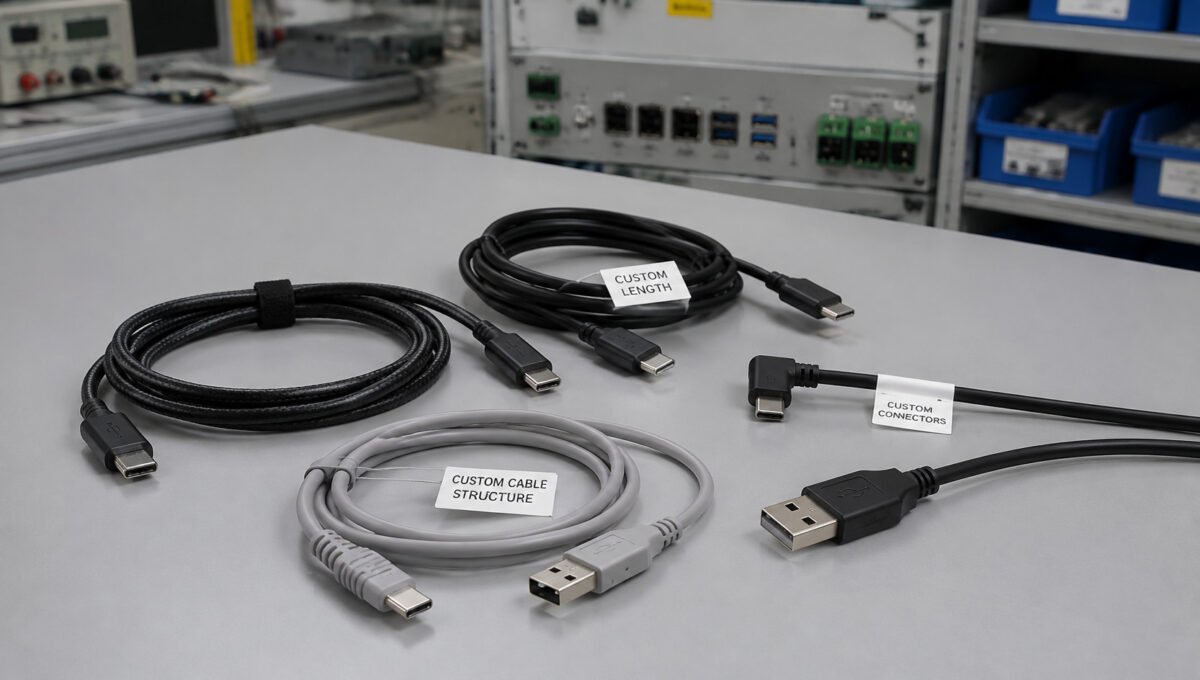
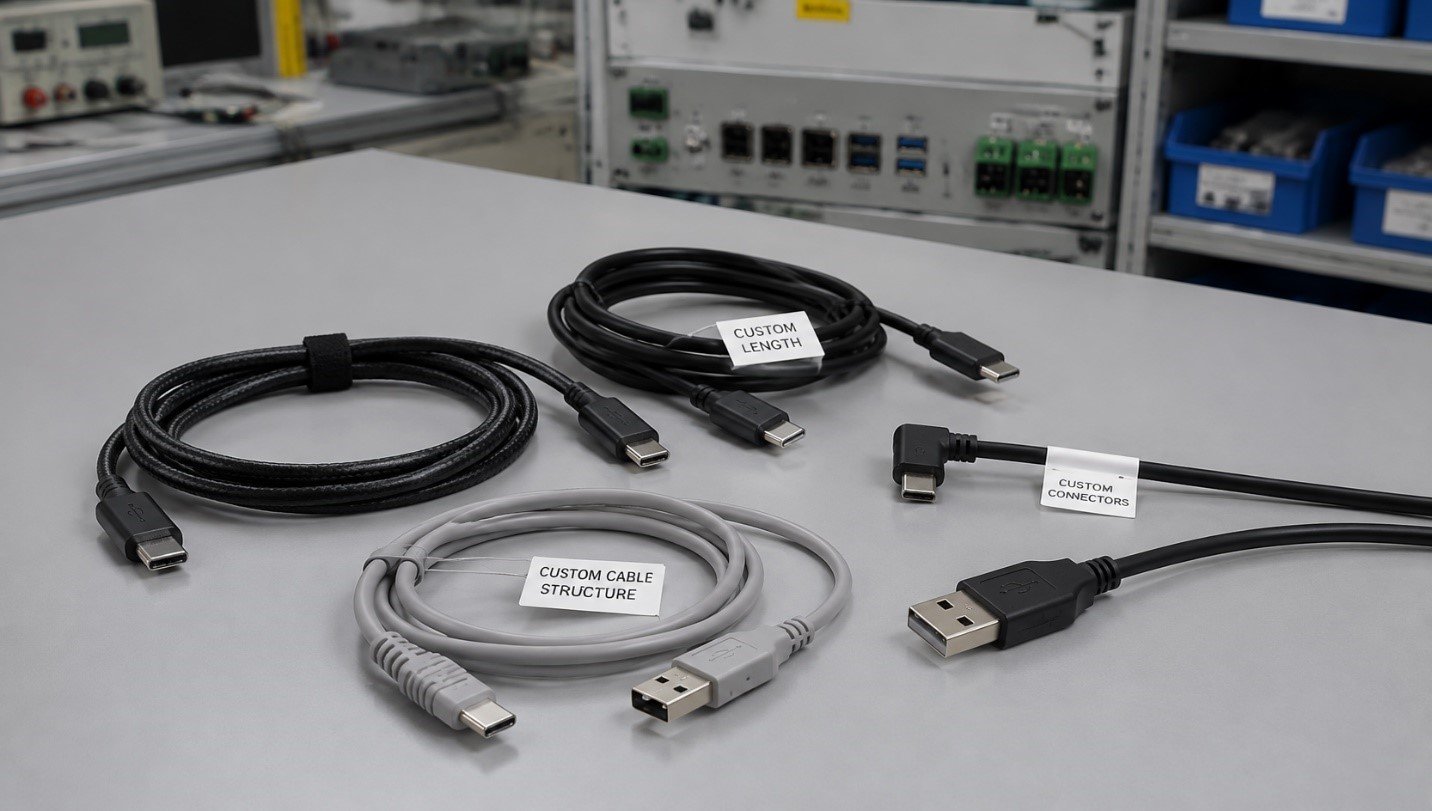
Standard USB cables are available with common connector combinations such as USB-C to USB-C, USB-A to USB-C and USB-A to Micro USB. Many projects require non-standard connector configurations that are not readily available from catalog products, including:
- Right-angle or left-angle connector orientations for space-constrained device housings
- Custom pinout configurations for proprietary device interfaces
- Hybrid connector combinations combining USB with power, signal or charging conductors
- Industrial locking connectors for vibration-resistant applications
- Miniaturized or panel-mount connector variants for embedded systems
When the target device has a unique receptacle design, limited internal space or a proprietary interface, a custom connector configuration is often the only viable solution.
1.2 Special Length Requirements
Standard USB cables are typically available in fixed retail lengths such as 0.3m, 1m, 1.5m and 2m. Many OEM and industrial applications require cable lengths outside this standard range for reasons including:
- Equipment integration where a specific cable routing distance must be matched exactly
- Cable management requirements in rack-mounted, panel-mounted or vehicle installations
- High-speed data applications where signal integrity limits usable cable length
- Short internal harnesses where excess cable causes interference or thermal issues
- Long installations where active signal conditioning or specialized conductor design is required
Custom length manufacturing ensures the cable assembly matches the installation geometry without unnecessary slack or signal degradation from an unsuitable length.
1.3 Special Environment Requirements
Standard USB cables are constructed with PVC jackets, standard conductor stranding and basic overmolding suitable for indoor consumer environments. Applications in industrial, outdoor, medical, automotive or marine settings may require cable constructions designed for:
- Temperature extremes beyond standard PVC operating ranges
- Chemical exposure including oils, solvents, cleaning agents or saltwater
- Abrasion and mechanical impact in factory, construction or field environments
- Continuous flexing in robotics, automation or portable equipment
- Dust, moisture or liquid immersion requiring sealed connector systems
Environmental customization ensures the cable material, shielding, jacket compound and connector sealing are matched to the actual operating conditions rather than assuming a standard product will be sufficient.
2. Customization Options
Custom USB cable manufacturing supports modification across three primary dimensions: connector configuration, cable structure and external appearance. Each dimension can be adjusted independently or in combination to meet project-specific requirements.
2.1 Connector
Connector selection determines the electrical interface, mechanical fit and functional compatibility of the cable assembly. Available connector options include:
- USB-C: Reversible connector supporting USB 2.0, USB 3.x and USB4 data rates, with Power Delivery up to 240W on selected configurations. Suitable for modern consumer electronics, laptops, tablets and industrial devices with USB-C receptacles.
- USB-A: Standard rectangular connector widely used for computer peripherals, existing devices, chargers and legacy equipment. Selected compact or low-profile variants are available for space-constrained installations.
- Micro USB: Compact connector for legacy mobile devices, industrial terminals, portable equipment and embedded systems where a smaller footprint is required.
- Lightning: Apple proprietary connector for iPhone, iPad and selected accessories. Available for MFi-compatible cable manufacturing where applicable.
In addition to connector type, orientation (straight, right-angle, left-angle), housing material, overmold shape, locking mechanism and contact plating can be specified to match the target device interface and mechanical requirements.
2.2 Cable Structure
The internal construction of the cable determines its electrical performance, mechanical durability and environmental suitability. Structural customization options include:
- Diameter: Overall cable outer diameter can be adjusted based on conductor gauge, insulation thickness, shielding layers and jacket wall thickness. Thinner cables suit space-constrained installations; thicker cables provide additional mechanical protection and shielding.
- Material: Conductor material (tinned copper, bare copper or oxygen-free copper), insulation material (PE, PP, FEP or SR-PVC) and jacket material (PVC, TPE, PUR, silicone or LSZH) can be selected according to the required flexibility, temperature range, chemical resistance and flame retardancy.
- Shielding: Shielding configuration can be specified as unshielded, aluminum foil, copper braid or foil-plus-braid combination. Shielding effectiveness depends on the coverage percentage, braid strand count and grounding method, and should be matched to the EMI environment of the installation.
Conductor AWG gauge, pair twisting geometry, drain wire configuration and filler material can also be customized to achieve target impedance, signal integrity and current-carrying capacity.
2.3 Appearance
External appearance customization supports branding, product differentiation and functional identification:
- Color: Jacket color, overmold color and connector housing color can be specified to match brand guidelines, product line differentiation or functional color-coding (e.g., red for charging, blue for data).
- Logo: Connector overmolds, cable ties and packaging can be marked with customer logos, model numbers or regulatory markings via printing, laser engraving or molded-in text where the manufacturing process supports it.
- Packaging: Packaging format can be customized from bulk cartons to individual retail polybags, blister packs, hang tags or custom-branded boxes depending on distribution channel and end-market requirements.
Appearance customization is typically coordinated with the OEM customer’s brand guidelines and quality standards to ensure consistent presentation across the product range.
3. OEM Development Process
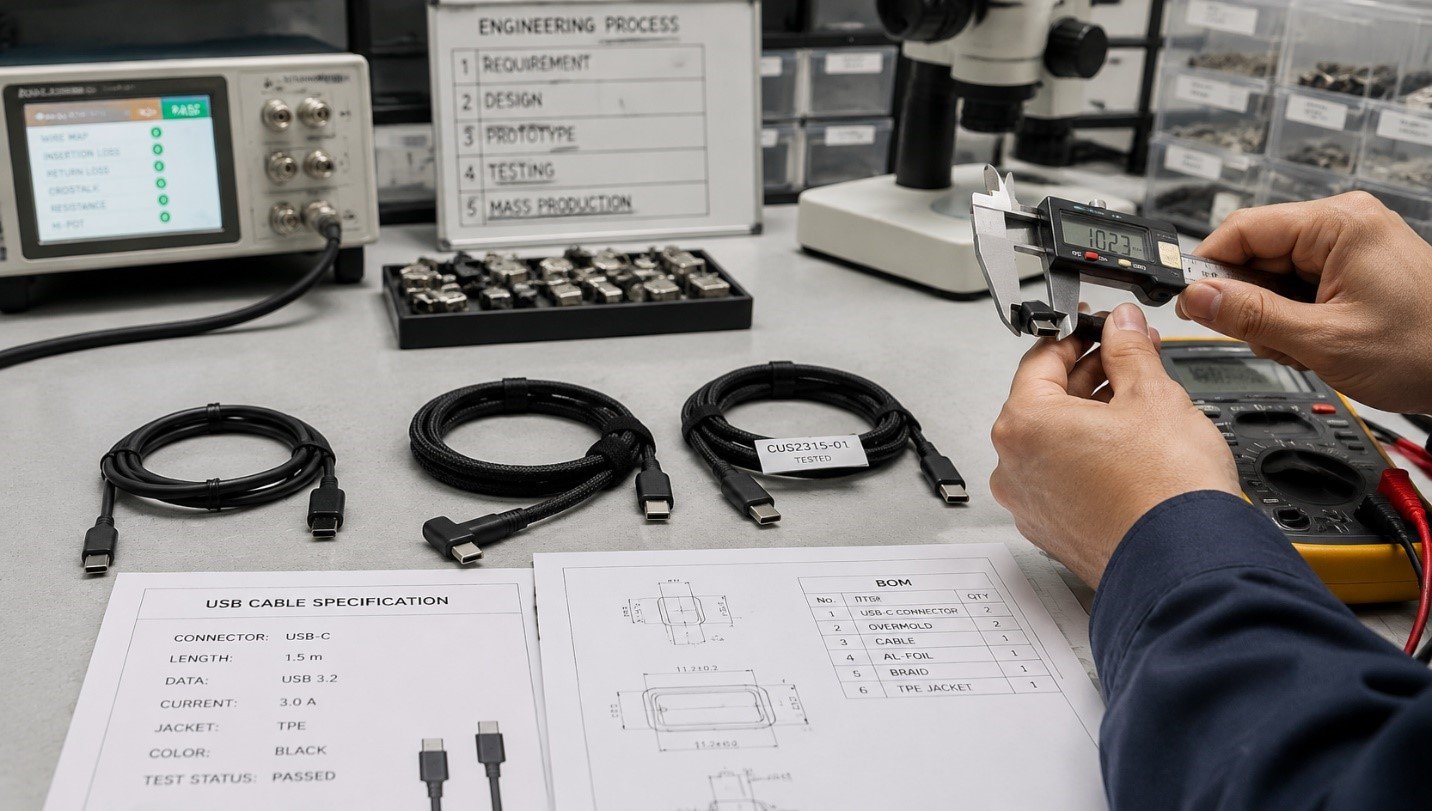
Custom USB cable projects follow a structured development process from initial requirement definition through mass production. The following five-stage process ensures that technical specifications, quality standards and production timelines are aligned before manufacturing commitment.
3.1 Requirement Analysis
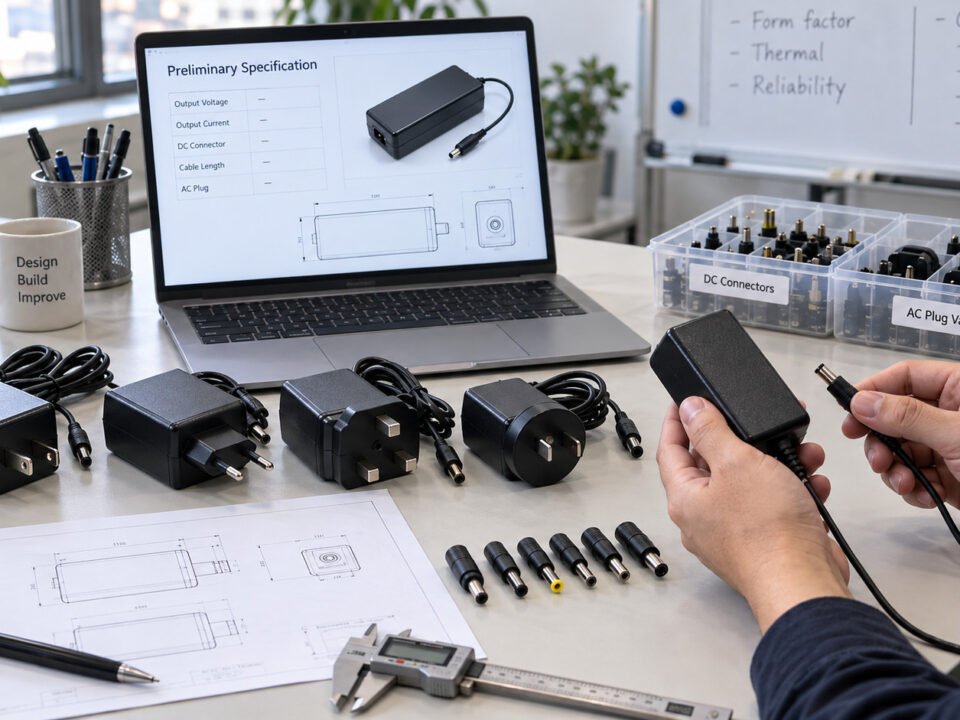
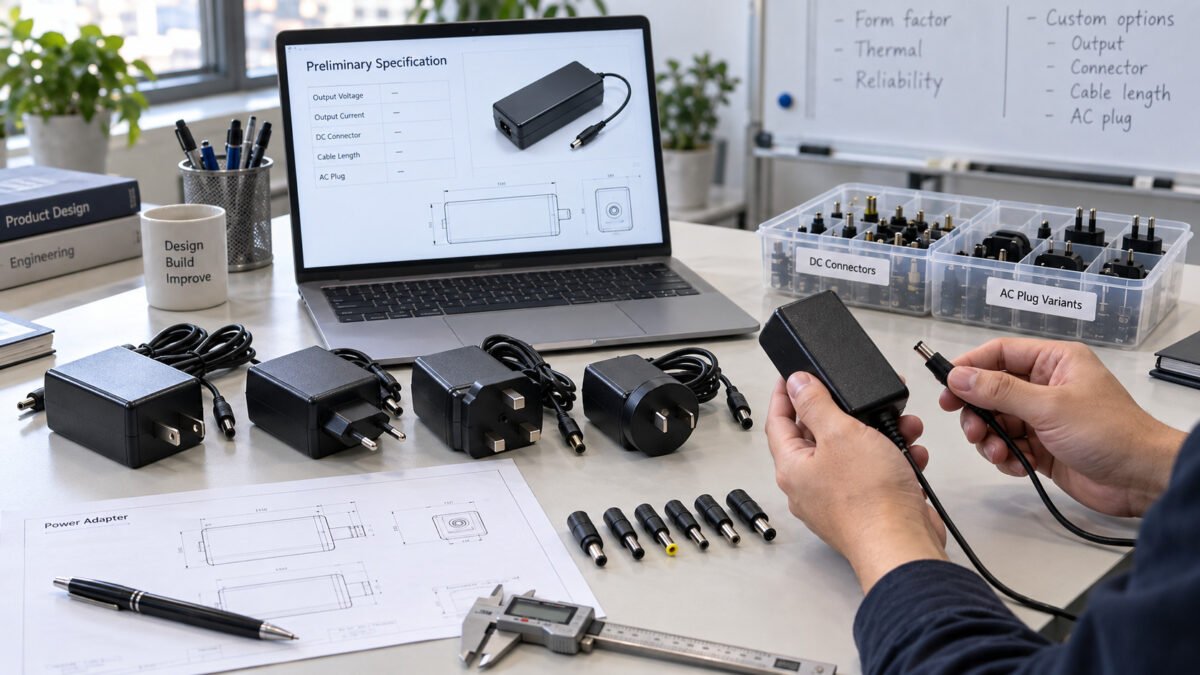
The development process begins with a detailed review of the project requirements. Technical parameters including connector type, cable length, data rate, power rating, environmental conditions, mechanical stress, target quantity and quality standards are documented. Existing device interfaces, installation constraints and regulatory requirements (where applicable) are reviewed. A preliminary cable specification is drafted based on the collected requirements, and any gaps or conflicts in the requirement set are identified and resolved before proceeding to design.
3.2 Engineering Design
Based on the confirmed requirements, engineering design develops the detailed cable construction specification. This includes conductor gauge and material selection, insulation and jacket compound specification, shielding configuration, connector part selection, overmold design, strain relief geometry and packaging format. Electrical parameters such as impedance, attenuation, crosstalk and current-carrying capacity are calculated or simulated. Mechanical parameters including bend radius, tensile strength and flex life are evaluated against the target application. Design outputs typically include a detailed BOM, mechanical drawings and an electrical specification sheet.
3.3 Prototype
Prototype production manufactures a small quantity of sample cable assemblies according to the engineering design for validation and approval. Prototypes are used to verify mechanical fit, connector mating, cable routing, electrical performance and visual appearance. Customer evaluation of prototypes may reveal necessary design adjustments before mass production. Prototype lead times and quantities depend on the complexity of the custom design and availability of connector and material components.
3.4 Testing
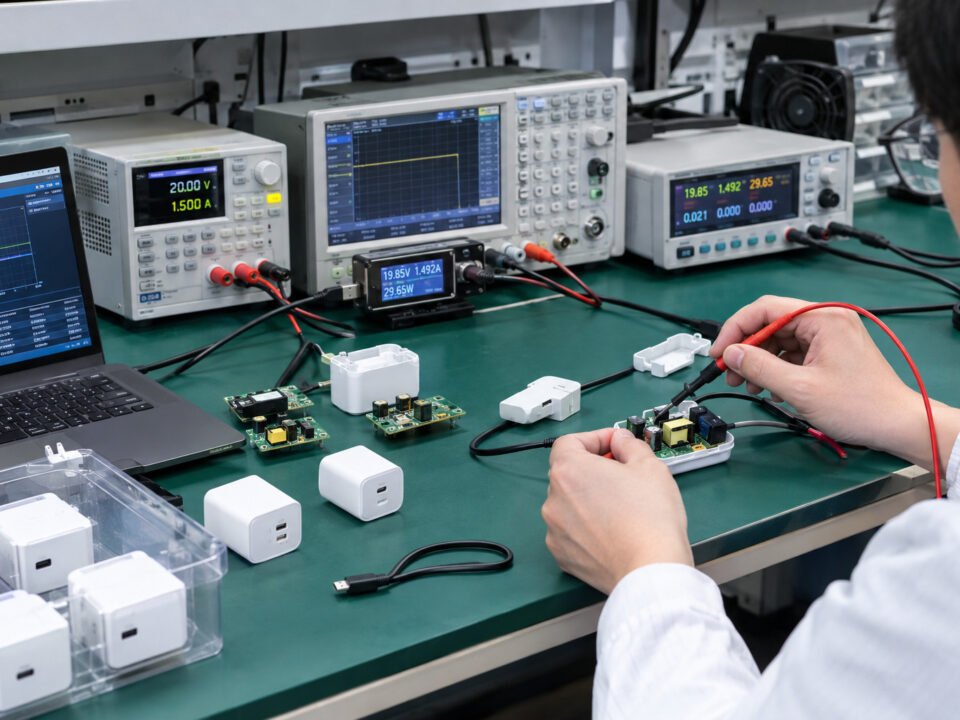
Prototype and pre-production samples undergo testing to verify compliance with the agreed specification. Testing scope may include electrical continuity, insulation resistance, high-voltage withstand, signal integrity (for high-speed USB cables), insertion and withdrawal force, mechanical pull testing, flex life testing (where applicable) and environmental testing such as temperature cycling or humidity exposure. Test methods, acceptance criteria and sample sizes are defined in coordination with the customer. For projects requiring specific certifications, testing is structured to support the certification submission process.
3.5 Mass Production
Following prototype approval and test clearance, mass production is scheduled according to the confirmed quantity and delivery timeline. Production processes including conductor preparation, extrusion, shielding application, jacket extrusion, connector termination, overmolding, electrical testing, visual inspection and packaging are executed under established quality procedures. In-process inspection and final testing ensure consistency across the production batch. Production capacity and lead times depend on order volume, material availability and current factory scheduling.
4. Applications
Custom USB cable manufacturing serves a range of industries and customer types where standard products cannot meet specific technical, mechanical or branding requirements.
4.1 Consumer Electronics
Consumer electronics brands and manufacturers use custom USB cables for device accessories, charging solutions, data transfer products and retail packaging. Customization typically focuses on connector configuration, cable length, color matching, logo branding and retail packaging format. Projects may involve USB-C, Lightning or Micro USB connectors with specific overmold designs and color schemes aligned to the product line aesthetic. Selected projects may also require MFi certification for Lightning cables or USB-IF certification for USB-C cables, depending on the target market and customer requirements.
4.2 Industrial Equipment
Industrial equipment manufacturers require USB cables that can withstand harsh operating conditions, including vibration, temperature extremes, chemical exposure and continuous flexing. Customization for industrial applications typically emphasizes cable structure, shielding effectiveness, connector durability and environmental sealing rather than appearance. Selected projects may require IP-rated connectors, locking mechanisms, high-flex conductor designs and specialized jacket materials such as PUR or TPE. Cable lengths are often customized to match specific equipment integration requirements.
4.3 Brands and OEM Projects
Brand owners, distributors and OEM customers use custom USB cable manufacturing to build proprietary accessory lines, white-label products and private-brand cable solutions. Customization spans the full range of options including connector type, cable construction, color, logo, packaging and certification. These projects typically involve higher production volumes and require consistent quality, reliable supply and packaging that supports the brand’s retail or distribution strategy.
For custom USB cable inquiries, including connector configuration, cable structure specifications, appearance requirements, target quantities and delivery timelines, technical consultation is available to evaluate project feasibility, recommend suitable constructions and provide samples and competitive quotations based on project-specific requirements.
Need a Custom USB Cable Solution?
Whether you need custom connector configurations, specialized cable lengths, harsh-environment constructions, or fully customized OEM/ODM cable assemblies with specific branding and packaging, our team can help you specify the right solution for your application. From USB-C to Lightning, right-angle to locking connectors, we support custom cable projects with competitive pricing and flexible MOQ.