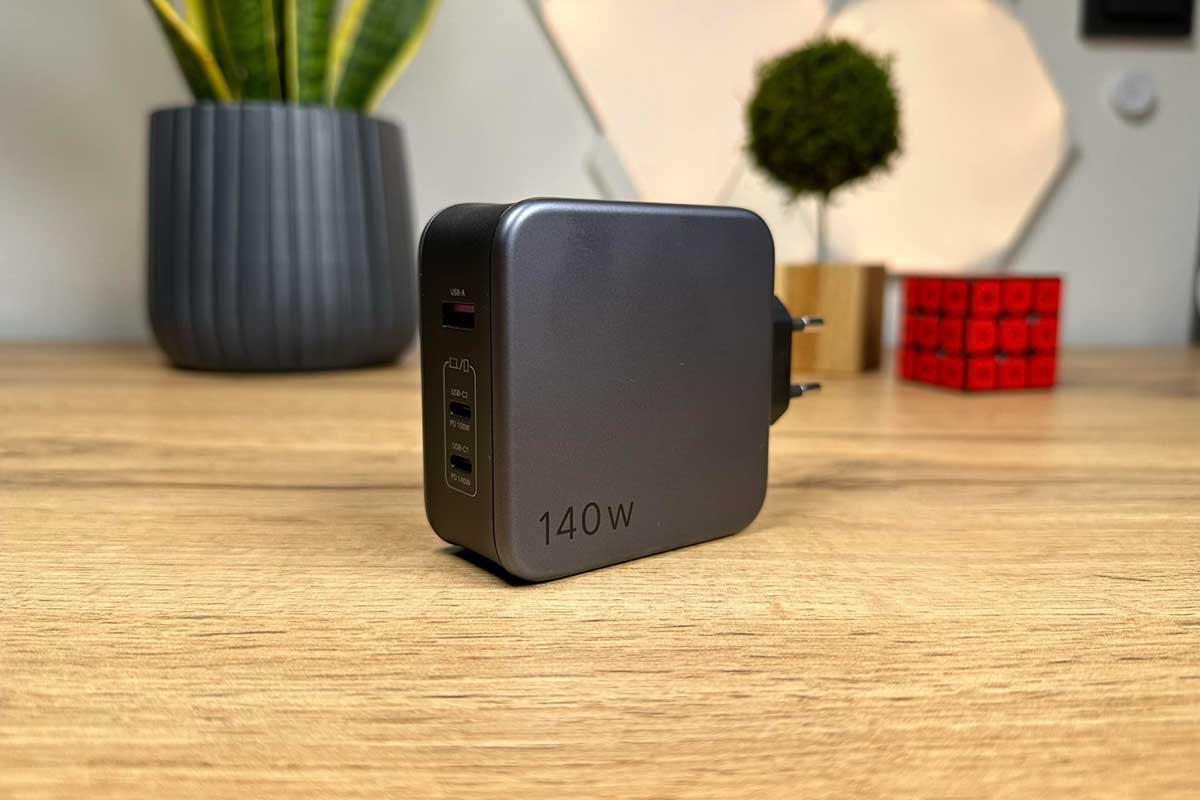


Apple Charger Guide: Power Ratings, Specifications & Device Compatibility
Apple Charger Guide: Power Ratings, Specifications & Device Compatibility
Apple offers USB-C power adapters with different output ratings, port configurations, and charging capabilities. From compact 20W adapters for smartphones to high-power 140W adapters for MacBook Pro models, each charger is designed for different charging requirements.
However, choosing an Apple charger is not simply about selecting the highest wattage. The charger's supported protocols, port configuration, and the connected device's power requirements all influence actual charging performance.
For example, a 140W USB-C power adapter does not mean that every iPhone or iPad will charge at 140W. Each device has its own power management system and maximum supported charging capability.
This guide compares Apple's USB-C charger lineup, explains the differences between power ratings and charging protocols, and examines the charging requirements of iPhone, iPad, MacBook, and other Apple devices.
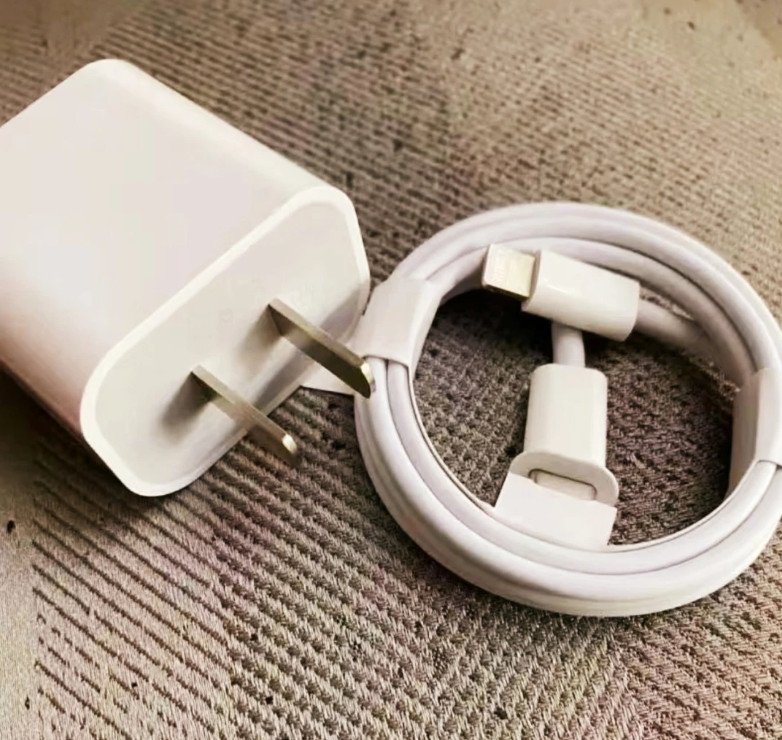
1. Key Parameters and Technical Specifications of Apple's Charger Series
Apple's USB-C power adapters cover several power levels and product configurations. They are designed to support different devices, from smartphones and tablets to professional laptops.
The main specifications to consider include:
- Total output power.
- Maximum single-port output.
- USB-C port configuration.
- Supported charging protocols.
- Input voltage.
- Output voltage.
- Physical dimensions and weight.
- Charging efficiency and thermal performance.
1.1 Overview of Apple's USB-C Charger Series
| Charger Model | Maximum Rated Output | USB-C Ports | Main Application |
|---|---|---|---|
| 20W USB-C Power Adapter | 20W | 1 | iPhone and smaller devices |
| 35W Dual USB-C Port Power Adapter | 35W total | 2 | Simultaneous device charging |
| 35W Dual USB-C Port Compact Power Adapter | 35W total | 2 | Travel and multi-device charging |
| 40W Dynamic Power Adapter with 60W Max | 60W maximum dynamic output | 1 | Compatible iPhone and iPad |
| 70W USB-C Power Adapter | 70W | 1 | MacBook Air and compatible laptops |
| 96W USB-C Power Adapter | 96W | 1 | Compatible MacBook Pro models |
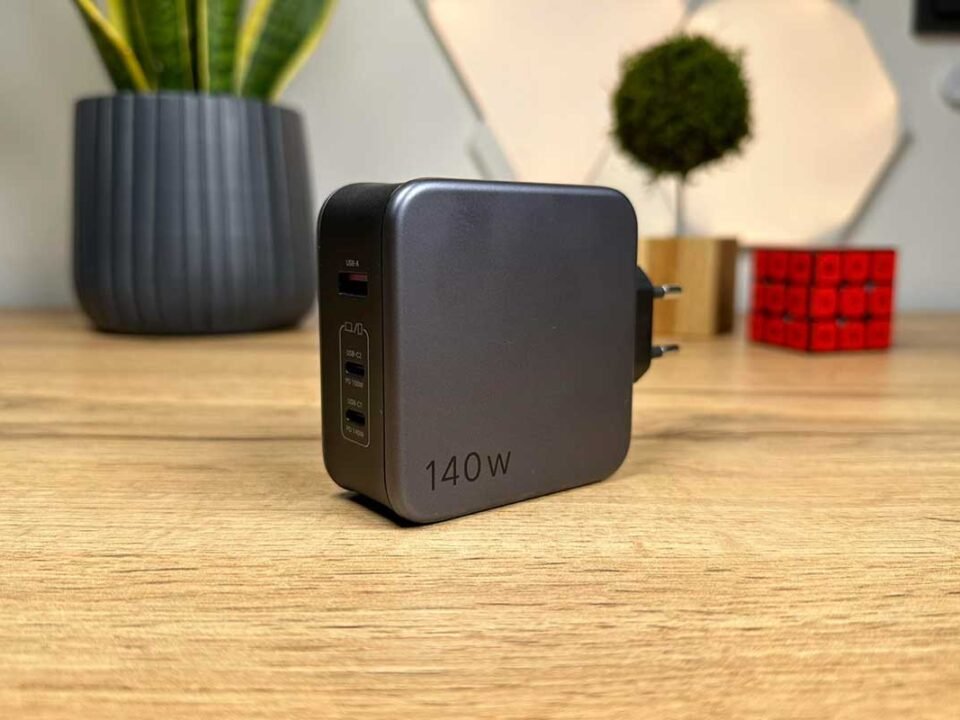
| 140W USB-C Power Adapter | 140W | 1 | High-power MacBook Pro models |
Product availability and configurations may vary by country and region. Older 30W USB-C adapters may also be found in Apple's previous product configurations.
1.2 Understanding Apple's Charging Protocols
Charging protocols determine how a charger communicates with a connected device and negotiates an appropriate power level.
Fornecimento de energia USB (USB PD)
USB PD is the primary fast-charging protocol used by Apple's USB-C power adapters.
It allows compatible chargers and devices to negotiate voltage and current according to their supported power profiles.
USB PD 3.1 Extended Power Range (EPR)
Extended Power Range expands USB PD power delivery capabilities beyond the traditional 100W range.
Apple's 140W USB-C Power Adapter supports USB PD 3.1 EPR, allowing it to deliver up to 140W under compatible operating conditions.
Adjustable Voltage Supply (AVS)
AVS is an adjustable voltage supply mechanism used in newer USB Power Delivery implementations.
Apple's 40W Dynamic Power Adapter with 60W Max uses AVS to dynamically adjust its output and provide up to 60W under supported conditions.
A charger's maximum wattage and protocol support should always be considered together. A higher power rating alone does not guarantee compatibility with every device.
2. Apple High-Power Chargers

Apple's higher-power USB-C adapters are primarily designed for MacBook Air and MacBook Pro models.
They use a single USB-C output port and support different power levels depending on the laptop's requirements.
2.1 Apple 140W USB-C Power Adapter
The Apple 140W USB-C Power Adapter is designed for compatible high-power MacBook Pro models.
Key specifications include:
- Maximum output power: 140W.
- Port configuration: 1 USB-C.
- Input voltage: 100–240V AC.
- Supported charging protocol: USB PD 3.1 EPR.
- Maximum output profile: 28V/5A.
Its high output capability makes it suitable for compatible 16-inch MacBook Pro configurations.
2.2 Apple 96W USB-C Power Adapter
The Apple 96W USB-C Power Adapter is another high-power option for compatible MacBook Pro models.
Key specifications include:
- Maximum output power: 96W.
- Port configuration: 1 USB-C.
- Input voltage: 100–240V AC.
- Supported charging protocol: USB PD.
- Maximum output profile: 20.5V/4.7A.
It is suitable for compatible MacBook Pro models that support charging at this power level.
2.3 Apple 70W USB-C Power Adapter
The Apple 70W USB-C Power Adapter is designed for MacBook Air and other compatible USB-C devices.
Key specifications include:
- Maximum output power: 70W.
- Port configuration: 1 USB-C.
- Input voltage: 100–240V AC.
- Supported charging protocol: USB PD.
- Maximum output profile: 20V/3.5A.
It provides a balance between portability and charging performance for compatible laptops.
2.4 High-Power Apple Charger Comparison
| Especificação | 140W Adapter | 96W Adapter | 70W Adapter |
|---|---|---|---|
| Maximum Output | 140W | 96W | 70W |
| USB-C Ports | 1 | 1 | 1 |
| Tensão de entrada | 100–240V | 100–240V | 100–240V |
| Maximum Output Voltage | 28V | 20.5V | 20V |
| USB PD | Sim | Sim | Sim |
| USB PD 3.1 EPR | Sim | Não | Não |
| Typical Application | MacBook Pro 16-inch | MacBook Pro 14-inch | MacBook Air |
The main difference between these adapters is their maximum power output and supported charging profiles.
The 140W model supports higher-power EPR operation, while the 70W and 96W models serve lower-power laptop charging requirements.
A compatible device will negotiate the power it can accept rather than automatically drawing the charger's maximum output.
3. Apple General-Purpose USB-C Chargers

Apple also offers lower-power USB-C adapters designed primarily for smartphones, tablets, and everyday charging applications.
These products include compact single-port adapters, dual-port adapters, and the newer dynamic power adapter.
3.1 Apple 40W Dynamic Power Adapter with 60W Max
The 40W Dynamic Power Adapter is a newer charging solution with an advertised maximum dynamic output of 60W.
Its main features include:
- Rated power: 40W.
- Maximum dynamic output: 60W.
- Port configuration: 1 USB-C.
- Adjustable Voltage Supply (AVS).
- Dynamic power adjustment for compatible devices.
Unlike a conventional fixed-output charger, this adapter can dynamically deliver up to 60W under supported operating conditions.
3.2 Apple 35W Dual USB-C Port Power Adapter
The 35W Dual USB-C Port Power Adapter provides two USB-C outputs.
Its main advantage is the ability to charge two compatible devices simultaneously.
Typical applications include:
- iPhone and Apple Watch.
- iPhone and AirPods.
- iPad and iPhone.
- Other compatible USB-C devices.
When two devices are connected, the available power is automatically distributed according to their power requirements.
For example, the adapter can distribute its total output between two connected devices rather than providing 35W independently through each port.
3.3 Apple 35W Dual USB-C Port Compact Power Adapter
The compact version provides the same general 35W dual-port charging capability in a smaller housing.
Its design focuses on portability and everyday charging convenience.
It is suitable for users who want to charge multiple devices without carrying separate power adapters.
3.4 Apple 20W USB-C Power Adapter
The 20W USB-C Power Adapter is one of Apple's common compact charging options.
It is suitable for:
- Compatible iPhone models.
- AirPods charging cases.
- Smaller USB-C devices.
- Everyday smartphone charging.
Apple recommends a 20W or higher USB-C power adapter for fast charging on several supported iPhone models. Newer models may require higher power for their advertised faster charging conditions.
3.5 General-Purpose Apple Charger Comparison
| Especificação | 40W Dynamic | 35W Dual | 35W Compact Dual | 20W |
|---|---|---|---|---|
| Maximum Output | Até 60W | 35W total | 35W total | 20W |
| USB-C Ports | 1 | 2 | 2 | 1 |
| Dynamic Power | Sim | Não | Não | Não |
| AVS | Yes (SPR AVS) | Não | Não | Não |
| Main Application | Compatible iPhone/iPad | Multiple devices | Travel charging | Smartphone charging |
These ratings describe the adapters' maximum advertised output capabilities. Actual output depends on the connected device and charging conditions.
4. Maximum Supported Charging Power for Apple Devices
Choosing a charger based only on its maximum output power can lead to unnecessary expense or an unsuitable product selection.
The actual charging power depends on the connected device's power management system.
An iPhone, iPad, or MacBook determines how much power it can accept according to its hardware, battery condition, temperature, and supported charging protocols.
Therefore, a 140W charger will not force a smartphone to receive 140W.
Understanding the charging requirements of different Apple device families helps identify the appropriate adapter.
4.1 iPhone Series
Apple introduced USB Power Delivery fast charging to the iPhone lineup, allowing compatible models to charge more quickly with suitable USB-C power adapters.
However, charging power varies by model and operating conditions.
iPhone Fast-Charging Requirements
| iPhone Models | Recommended Adapter Requirement | Official Fast-Charging Information |
|---|---|---|
| iPhone 17, 17 Pro and 17 Pro Max | 40W or higher | Up to 50% in around 20 minutes |
| iPhone 17e and iPhone Air | 20W or higher | Up to 50% in around 30 minutes |
| Earlier supported iPhone models | 20W or higher USB-C PD adapter | Up to 50% in around 30 minutes |
These are adapter requirements and charging-time claims, not statements that the phones continuously draw the charger's maximum power.
The important point is that charger output and actual device power consumption are not the same.
4.2 iPad Series
The iPad lineup includes iPad Pro, iPad Air, standard iPad, and iPad mini models.
Their charging requirements differ according to battery capacity, hardware generation, and power management design. The following comparisons distinguish measured charging performance, included adapters, and practical adapter recommendations.
4.2.1 iPad Pro Models
iPad Pro is the most power-demanding iPad series because of its larger batteries and professional usage scenarios.
| Specific Model | Effective Max Charging Power / Adapter Profile | Included Adapter | Recommended Adapter |
|---|---|---|---|
| iPad Pro 11-inch (M5, 2025) | 60W adapter for Apple's specified fast-charging condition | Varies by region | 60W or higher |
| iPad Pro 13-inch (M5, 2025) | 60W adapter for Apple's specified fast-charging condition | Varies by region | 60W or higher |
| iPad Pro 11-inch (M4, 2024) | Approximately 60W adapter profile* | 20W in some regions | 35–45W USB-C PD |
| iPad Pro 13-inch (M4, 2024) | Approximately 60W adapter profile* | 20W in some regions | 35–45W USB-C PD |
| iPad Pro 11-inch (M2) | Approx. 36W measured peak* | 20W | 30W or higher |
| iPad Pro 12.9-inch (M2) | Approx. 36W measured peak* | 20W | 30W or higher |
| iPad Pro 11-inch (M1) | Approx. 30–35W measured peak* | 20W | 30–35W |
| iPad Pro 12.9-inch (M1) | Approx. 30–35W measured peak* | 20W | 30–35W |
| iPad Pro A12Z (2020) | Approx. 27–35W measured range* | 18W | 30W |
| iPad Pro A12X (2018) | Up to approx. 35W measured peak* | 18W | 30–45W |
The M5 models support Apple's specified fast-charging condition when paired with a 60W or higher USB-C power adapter. This does not mean the tablets continuously draw 60W.
For earlier models, the figures marked with an asterisk are reference measurements or adapter-profile estimates, not Apple-published maximum charging specifications.
4.2.2 iPad Air and Standard iPad Models
iPad Air and standard iPad models generally operate within moderate USB-C PD charging ranges. Their actual power intake varies according to generation, battery level, charger, and operating conditions.
| Specific Model | Effective Max Charging Power | Included Adapter | Recommended Adapter |
|---|---|---|---|
| iPad Air 13-inch (M4, 2025) | Approx. 30W estimated* | 20W* | 30W USB-C PD |
| iPad Air 11-inch (M4, 2025) | Approx. 30W estimated* | 20W* | 30W USB-C PD |
| iPad Air 13-inch (M3, 2025) | Approx. 30–35W estimated* | 20W* | 30W USB-C PD |
| iPad Air 11-inch (M3, 2025) | Approx. 30–35W estimated* | 20W* | 30W USB-C PD |
| iPad Air 13-inch (M2, 2024) | Approx. 20–30W* | 20W in some regions | 30W USB-C PD |
| iPad Air 11-inch (M2, 2024) | Approx. 20–30W* | 20W in some regions | 30W USB-C PD |
| iPad Air 5th Generation | Approx. 28–33W measured* | 20W | 30W USB-C PD |
| iPad Air 4th Generation | Approx. 30W measured* | 20W | 30W USB-C PD |
| iPad (A16) | Approx. 20W reference level* | Not included in some configurations | 20W USB-C PD |
| iPad 10th Generation | Approx. 20W reference level* | 20W in some regions | 20W USB-C PD |
The M3 and M4 Air figures are estimates based on comparable product configurations rather than confirmed independent peak measurements.
For most iPad Air and standard iPad models, a 20W–30W USB-C PD adapter is suitable for everyday charging. A 30W adapter provides additional output capacity for compatible models.
4.2.3 iPad Mini Models
The iPad mini series has a smaller battery capacity than the iPad Pro and iPad Air series, so its practical charging requirements are generally lower.
| Specific Model | Effective Max Charging Power | Included Adapter | Recommended Adapter |
|---|---|---|---|
| iPad mini (A17 Pro) | Peak not firmly established; 35W+ adapter supports Apple's stated fast-charging condition | 20W in some regions | 30W–35W USB-C PD |
| iPad mini (6th Generation) | Approx. 19–21W sustained, with brief peaks of 22–24W* | 20W in some regions | 20W–30W USB-C PD |
For iPad mini A17 Pro, Apple specifies a 35W or higher adapter for its stated fast-charging condition. This is an adapter requirement, not a claim that the tablet continuously draws 35W.
The sixth-generation iPad mini generally operates at a lower charging level, so using a substantially higher-wattage adapter offers limited practical benefit.
4.2.4 Key Considerations for iPad Charging
- iPad Pro models benefit from higher-power chargers: The latest M5 models support Apple's specified fast-charging condition with a 60W or higher USB-C power adapter.
- iPad Air models generally need moderate power: A 30W USB-C PD charger is a practical option for many generations.
- Standard iPads do not require extremely high wattage: A compatible 20W USB-C PD charger is suitable for everyday charging.
- iPad mini models have lower practical power requirements: A 20W–30W charger is generally sufficient for everyday charging, while the A17 Pro has a separate 35W fast-charging adapter requirement.
The values marked with an asterisk are reference measurements or estimates, not guaranteed specifications for every unit.
4.3 MacBook Series
MacBook Air and MacBook Pro models support USB-C charging, while compatible models also support MagSafe 3 charging.
Different MacBook configurations require different adapter power levels.
Using an adapter with insufficient output power may result in slower charging, especially when the laptop is operating under a heavy workload.
MacBook Air Series
MacBook Air models generally require less charging power than MacBook Pro models.
The appropriate adapter depends on the MacBook generation and configuration.
| MacBook Model | Common Included Adapter Configuration | Fast-Charging Consideration |
|---|---|---|
| MacBook Air M1 | 30W | Compatible higher-power PD adapter |
| MacBook Air M2 | 30W or 35W | 70W or higher for supported fast charging |
| MacBook Air M3 | 30W or 35W | 70W or higher for supported fast charging |
| MacBook Air M4 | 30W or 35W | 70W or higher for supported fast charging |
The supplied adapter may vary according to the product configuration and purchase region.
For supported MacBook Air models introduced in 2022 or later, Apple specifies a 70W or higher adapter for fast charging under applicable conditions.
MacBook Pro Series
MacBook Pro models generally require higher charging power, particularly the larger 16-inch configurations.
| MacBook Model | Common Adapter or Fast-Charging Requirement |
|---|---|
| MacBook Pro 14-inch | 70W–96W, depending on configuration |
| MacBook Pro 16-inch | Up to 140W for supported fast charging |
For compatible 16-inch MacBook Pro models, the 140W USB-C Power Adapter supports fast charging through USB PD 3.1 EPR.
The appropriate power adapter should always be selected according to the exact MacBook model and its official charging requirements.
4.4 Apple Watch, AirPods, and Other Products
Apple also offers charging solutions for smaller accessories.
These devices generally have much lower power requirements than iPhones, iPads, and MacBooks.
Apple Watch
Apple Watch models that support fast charging require a compatible magnetic fast-charging cable and suitable USB-C power adapter.
The actual charging power is managed by the watch and its charging system.
AirPods
AirPods charging cases support different charging methods depending on the model.
USB-C charging is available on compatible cases, while some models also support wireless charging.
Their charging power requirements are considerably lower than those of laptops and tablets.
Apple Vision Pro
Apple Vision Pro uses a dedicated battery system and power configuration.
Its charging requirements should be checked against Apple's product documentation rather than assuming that every high-power USB-C adapter will provide identical performance.
5. How to Choose the Right Apple Charger
Selecting the right Apple charger depends on the device, required charging speed, number of connected products, and intended usage.
Here are some general considerations.
5.1 For iPhone Users
A compatible USB-C PD charger is suitable for most modern iPhone models.
For newer models with higher fast-charging requirements, check Apple's recommended adapter specifications.
5.2 For iPad Users
A 20W USB-C PD adapter is suitable for many everyday iPad charging situations.
For iPad Pro M5, a 60W or higher adapter meets Apple's specified fast-charging condition.
For earlier iPad Pro models, a 30W or higher adapter can be a practical option based on their charging behavior.
For iPad Air models, a 30W USB-C PD charger is a balanced choice for many generations.
For standard iPad and iPad mini models, 20W–30W adapters are generally sufficient for everyday charging, subject to the specific model's requirements.
5.3 For MacBook Air Users
A 30W–70W USB-C power adapter may be appropriate depending on the MacBook generation and configuration.
For supported fast-charging scenarios on MacBook Air models introduced in 2022 or later, Apple specifies a 70W or higher adapter.
5.4 For MacBook Pro Users
MacBook Pro models generally benefit from higher-power adapters.
A compatible 96W or 140W charger may be appropriate depending on the model and configuration.
5.5 For Multiple Apple Devices
A dual-port USB-C charger can reduce the need to carry multiple adapters.
However, always check the total power output and how power is distributed when two devices are connected simultaneously.
6. Conclusion: Understanding Apple Charger Specifications
Apple's charger lineup covers a range of power levels, from compact 20W adapters to high-power 140W USB-C chargers.
Each product serves different charging requirements, whether for smartphones, tablets, laptops, or smaller accessories.
However, the charger's maximum output does not determine the actual charging speed by itself.
The connected device, supported charging protocols, cable specifications, battery condition, and temperature all influence charging performance.
Understanding these factors makes it easier to select a suitable charger for different Apple devices without choosing an unnecessarily high power rating.
For product buyers and charging accessory developers, comparing output power, port configuration, protocol support, and compatibility is essential when evaluating USB-C charger designs.