

USB-C Charging Solutions for Electronics Brands
2026-09-14
Industrial USB and Power Solutions
2026-09-14
How to Select a GaN Charger
How to Select a GaN Charger
A GaN charger is a USB power adapter whose power-conversion circuit uses gallium-nitride semiconductor transistors in one or more switching stages. GaN-based design can, depending on the complete electrical and thermal implementation, support higher switching frequency and power density compared with silicon-based designs of similar output. This can translate into a smaller enclosure for a given output or a higher output within a similar size. GaN describes the semiconductor technology used in the power stage; it does not by itself establish an output level, a charging protocol, a certification status or an efficiency figure.
Part 1: GaN Charger Application Scenarios
These application scenarios may overlap. A single GaN charger may be portable, suitable for laptop charging and positioned for a premium retail product line.
Portable Wall Charger
Portable wall chargers are AC power adapters designed for travel and everyday use with phones, tablets, accessories or a small group of devices. Because frequent carrying favors reduced size and weight, a GaN-based design can be suitable where power density matters. Selected portable models provide USB Power Delivery outputs from 20W to 65W, depending on the specification. Output power, port count and supported charging protocols should be matched to the intended devices.
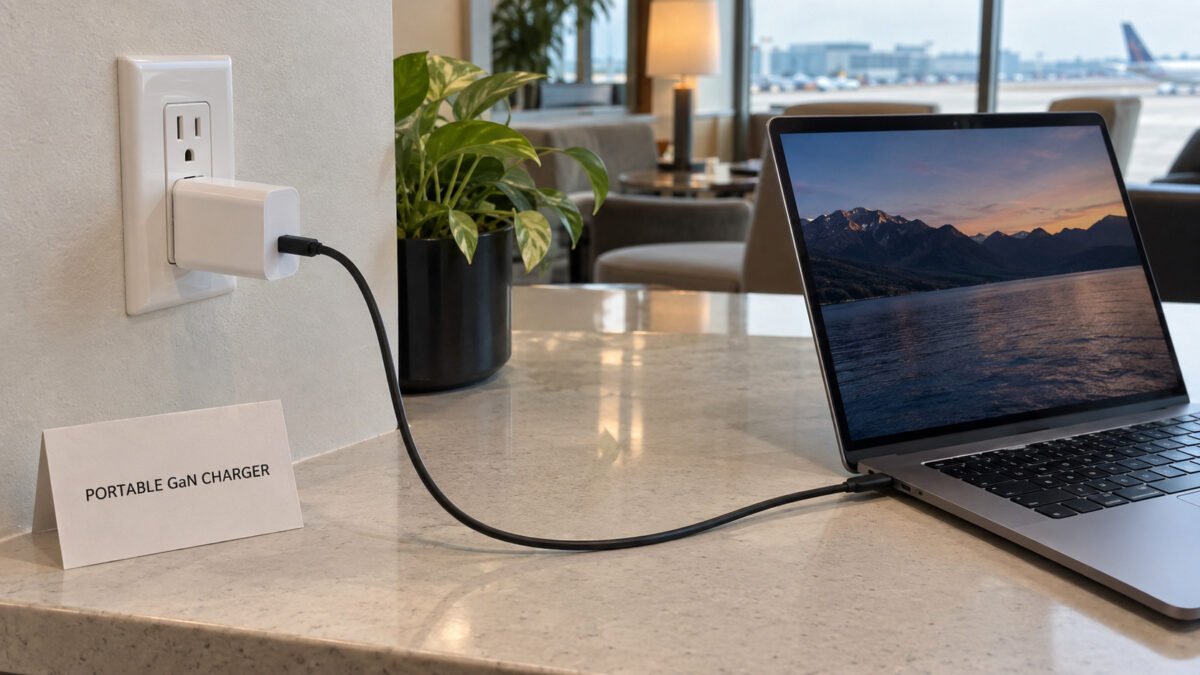
For a portable wall charger, the trade-off between size, thermal management and continuous output should be evaluated. For a given output level and efficiency, a smaller enclosure can increase thermal density and make temperature-rise control more difficult. The internal thermal design, specified ambient operating range and any output-derating behavior should therefore be confirmed. Confirm that the selected model supports the required PD profiles and PPS configurations, and that the cable bundled or recommended for it is rated for the delivered current.
Laptop Charger
A GaN laptop charger is commonly used to power a notebook and charge its battery from a single adapter. Selected models provide outputs from 45W to 100W under USB Power Delivery Standard Power Range, with some models supporting Extended Power Range beyond 100W for compatible devices. A GaN-based design can help reduce the size of selected higher-power adapters compared with conventional silicon-based switching designs of similar output. However, usable charging power still depends on the supported USB PD profiles, the connected cable and the laptop’s input requirements.
For a laptop charger, confirm the sustained-output behavior under load rather than the peak rating alone, since running the system and charging the battery draw power continuously. USB-C power above 3A requires an appropriate 5A electronically marked cable. EPR charging above 100W requires a compatible EPR charger, an EPR-capable device and a 5A electronically marked USB-C cable rated for EPR operation. The destination plug type, input-voltage range and thermal validation should also be confirmed for the target market.
Premium Retail Charger
Premium chargers are positioned for higher-specification retail lines and brand-conscious product bundles where enclosure quality, power density and protocol coverage are emphasized. A GaN-based design can support this positioning on selected models, but the premium value depends on the complete spec sheet, materials, build quality, thermal performance and certification range. Output power, supported fast-charging protocols, port arrangement and safety features should be documented clearly rather than implied by the GaN label.
For a premium product line, a clear specification sheet that separates the semiconductor-technology claim from verified output, protocol, temperature and certification data supports credible positioning. Confirm that target-market safety and energy-efficiency requirements are met, and keep the enclosure and packaging consistent with the intended retail price point. Where a premium bundle includes a cable, select a cable with connector and current ratings matched to the charger’s output.
Part 2: Selection Factors
Potência de saída
Power output, expressed in watts, is a primary selection factor. The charger must support the voltage and current required by the connected device, and under USB Power Delivery the output is negotiated between the charger and the device. Standard Power Range supports up to 100W at 20V/5A, while Extended Power Range adds higher fixed-voltage levels for selected compatible devices. For a single-port charger, select an output rating that meets the target device’s sustained power requirement. For a multi-port charger, evaluate the expected simultaneous load, total rated output and per-port power allocation together.
Confirm the number and combination of output levels, known as power data objects, that the charger provides, along with any PPS or device-specific fast-charging mode. A higher maximum rating does not force excess power into any device; the achievable power reflects the lowest compatible capability in the charging system. The total rated output, per-port output and simultaneous load should be reviewed together with the supported protocols.
Tamanho
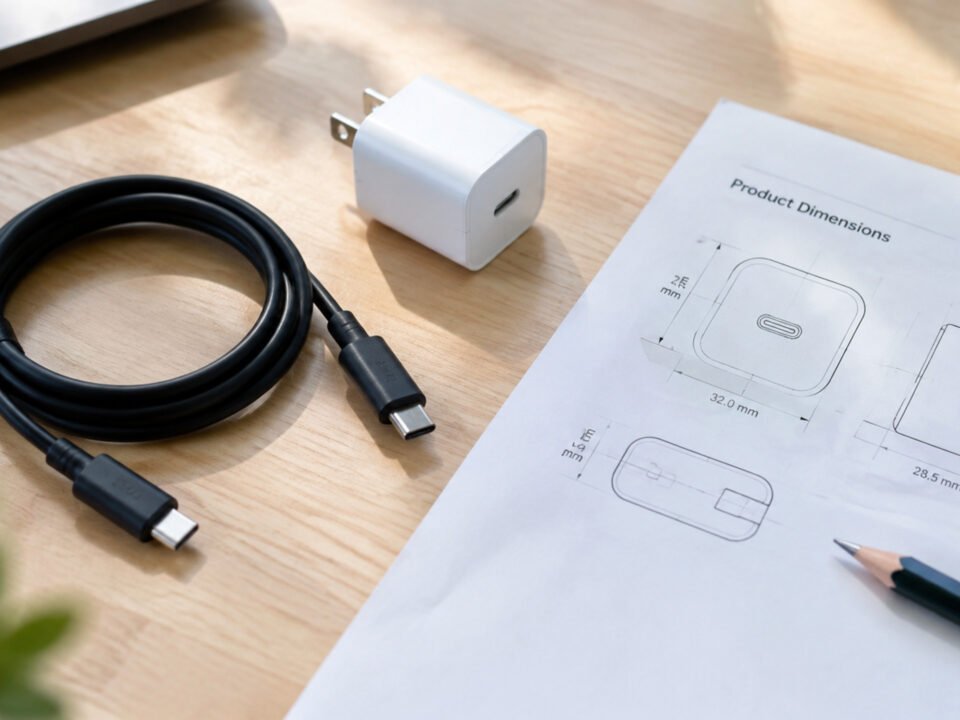
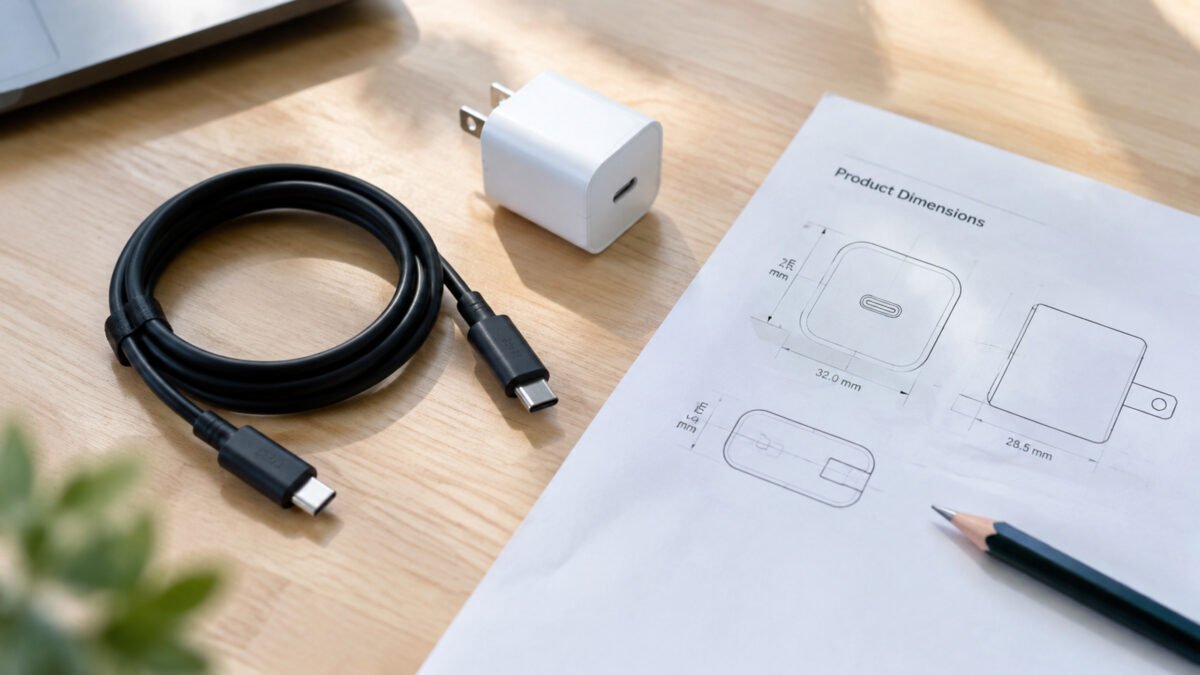
The size of a charger affects portability, installation and thermal behavior. GaN-based technology can support higher power density, which may allow a given output to fit in a smaller enclosure, but the realized size depends on the complete mechanical and thermal design rather than the semiconductor alone. Wall-plug chargers often prioritize compactness, while desktop models may use a larger enclosure to support higher total output and additional ports.
When evaluating size, relate the enclosure volume to the continuous output and the operating environment. A smaller adapter may run warmer under sustained load, so confirm thermal validation, allowable ambient temperature and any output derating across the full operating range. The plug orientation and whether the charger blocks adjacent wall sockets should also be considered for wall-mounted models.
Configuração de porta
Port configuration determines how many devices a charger can serve simultaneously. Single-port GaN chargers suit a dedicated device, while multi-port models with two, three or more outputs serve several devices from one AC source. A multi-port charger distributes or shares its total output according to its power-management logic, so the per-port rating and the total rated output should both be confirmed.
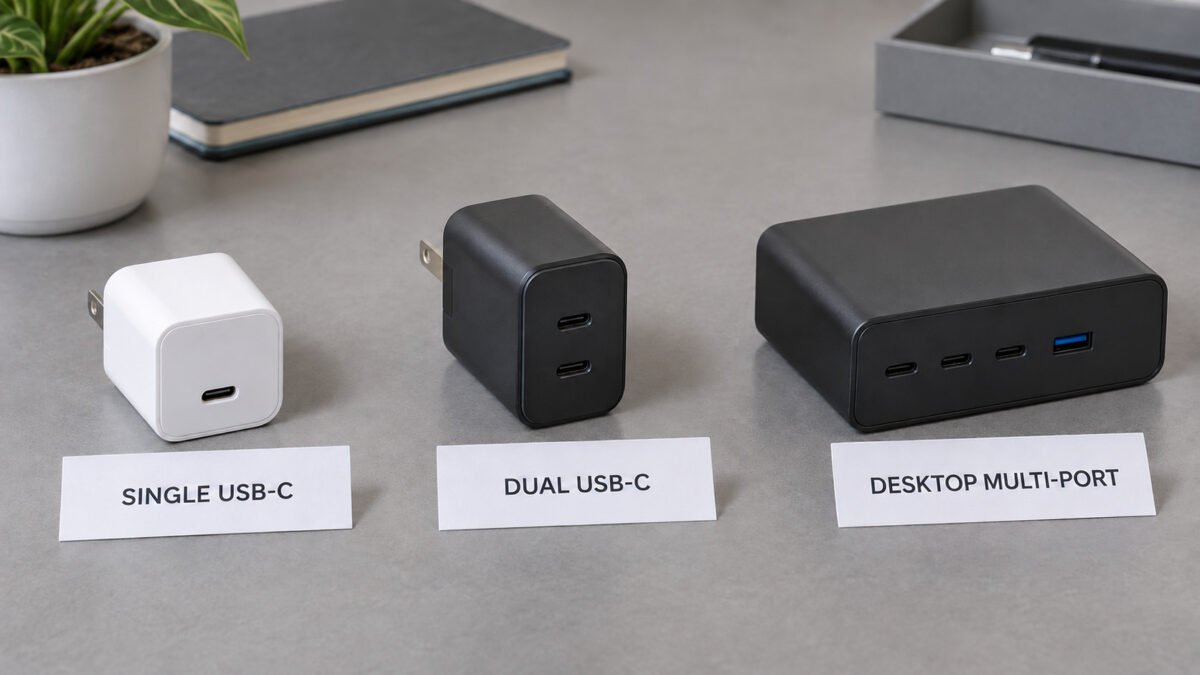
Confirm how the charger behaves when a device is connected or disconnected, since some models redistribute power or renegotiate a profile. The output mix may include USB-C and USB-A ports, and the charging protocol supported on each port can differ. The final configuration should state the number of ports, the output and protocol available on each, the supported simultaneous combinations and the total rated output.
Part 3: Customer and Project Requirements
Electronics Brands
Electronics brands that bundle or resell chargers typically require consistent electrical performance, clearly defined protocol support and documented compliance for their target markets. A GaN charger suited to this segment provides a documented output range, supported PD and PPS configurations, thermal validation and the certifications required for the brand’s target markets. Brand-specific requirements, including enclosure design, label placement and packaging, may apply.
For electronics brands, consistency across batches and clear specification control are important. Confirm the charger platform, component sourcing, test coverage and validation records, and agree on the output, protocol and certification scope before sampling and mass production.
Retail Brands
Retail brands sell chargers directly to consumers and often differentiate on size, output and multi-device support. A GaN charger for retail should match the brand’s price positioning and packaging while offering verified output, supported protocols and compliance for the retail region. Retail packaging and marketing materials should not overstate what the semiconductor technology alone delivers.
For retail, the claimed output and compatibility should be verifiable from the product label and specification, and the charger should perform within its stated range. Confirm the bundle contents, such as a cable, case or travel accessories, and match their ratings to the charger output.
OEM Projects
OEM projects integrate chargers into equipment, bundles or product lines where performance, dimensions and compliance are fixed by the project specification. GaN chargers for OEM applications can be customized around output power, port configuration, charging protocols, enclosure, color, AC plug type, labeling and packaging. Available options depend on the charger platform, thermal design, certification scope, production feasibility and required validation.
For an OEM project, confirm the target devices, required output and protocols, port arrangement, mechanical envelope, destination-market requirements and estimated order quantity before sampling. Custom specifications should be confirmed and validated before production.
Selecting a GaN charger begins with the application scenario and the sustained power requirement of the target devices, then sets the output, size and port configuration around those requirements. Confirm the supported protocols, output levels, per-port allocation, thermal validation and destination-market compliance for the selected model. For retail or OEM programs, provide the target devices, required power, port configuration, packaging and expected order quantity for specification review and quotation.
Need Help Selecting a GaN Charger for Your Project?
Whether you need portable 20W–65W wall chargers, 45W–100W laptop chargers, higher-power EPR models, or fully customized OEM/ODM GaN charger solutions, our team can help you specify the right platform for your application. From retail product lines to OEM bundles, we support charger projects with competitive pricing and flexible MOQ.