

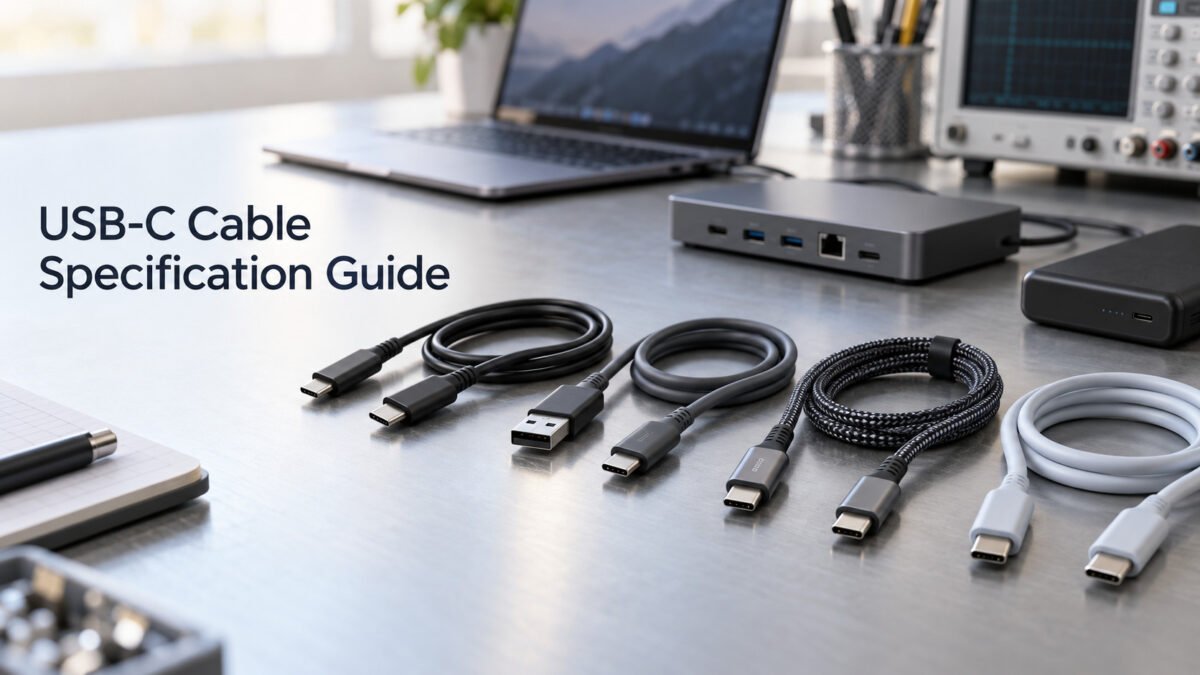
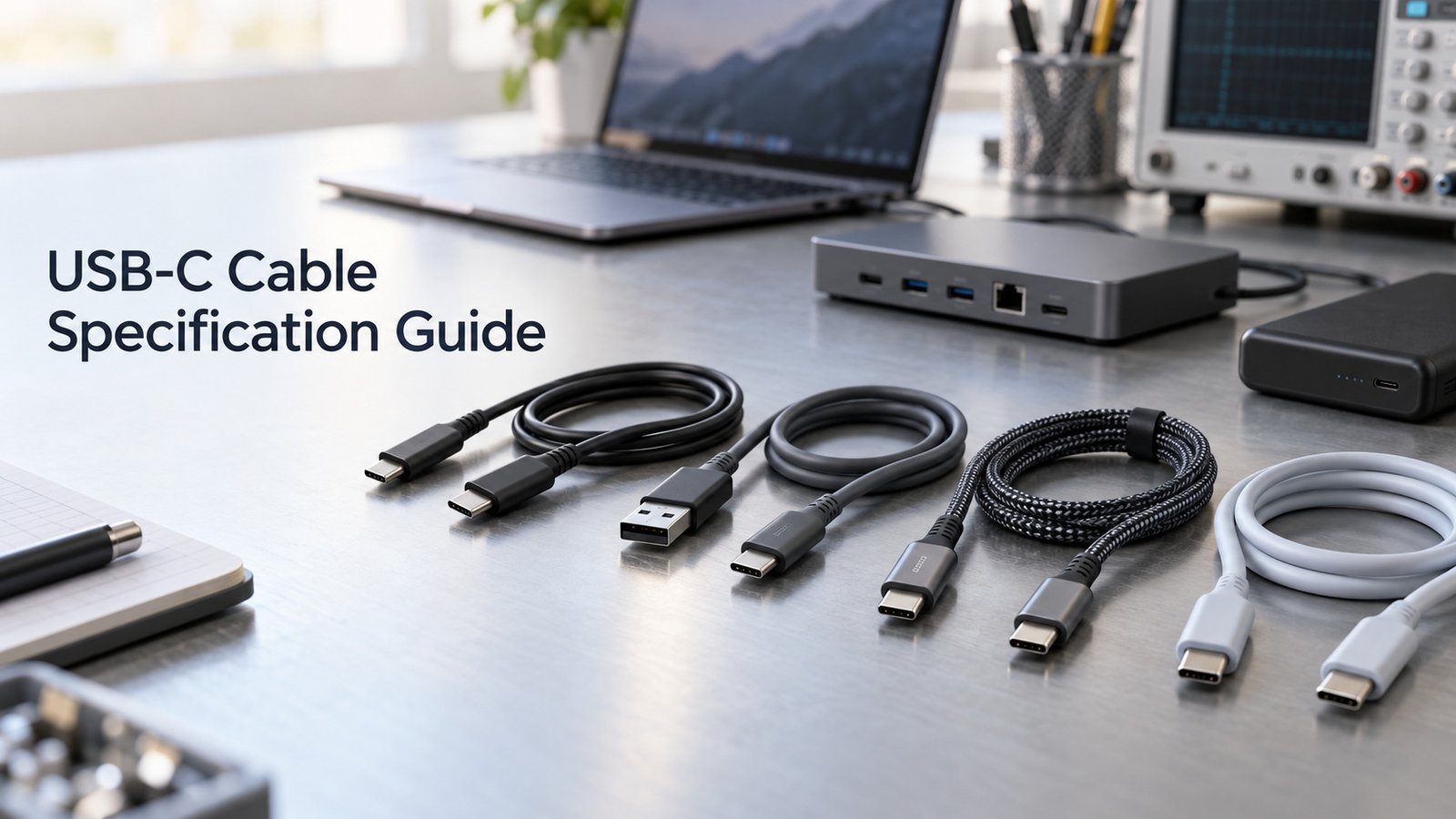
USB-C Cable Specification Guide
USB‑C Cable Specification Guide
The USB-C connector is used across a broad range of charging and data applications, from consumer electronics to industrial equipment. For buyers, brand owners, product managers, and industrial customers, the cable specification determines charging capability, data performance, mechanical durability, and suitability for the intended application. This page summarizes the main specification categories of USB-C cables and explains the parameters that matter in common application scenarios. Use this guide as a reference when defining cable specifications for new projects, or when evaluating an existing product against application requirements.
1. USB‑C Cable Main Specifications
A USB-C cable is typically defined by four main selection dimensions: connector configuration, power capability, data capability, and cable construction. These dimensions should be evaluated separately and then verified as a complete cable specification, because some combinations may affect cable length, diameter, flexibility, and cost. For example, a cable may pair a high power rating with standard data capability, or a charging-focused design with a braided jacket.
1.1 Power Specification
The cable power rating indicates the maximum power the cable is designed to carry under the applicable USB Power Delivery conditions. Commonly marketed USB-C cable ratings include 60W, 100W, e 240W.
- 60W: supports up to 20 V at 3 A. It is widely used for smartphones, tablets, power banks, compact laptops, and other portable devices, subject to the charging requirements of the connected equipment.
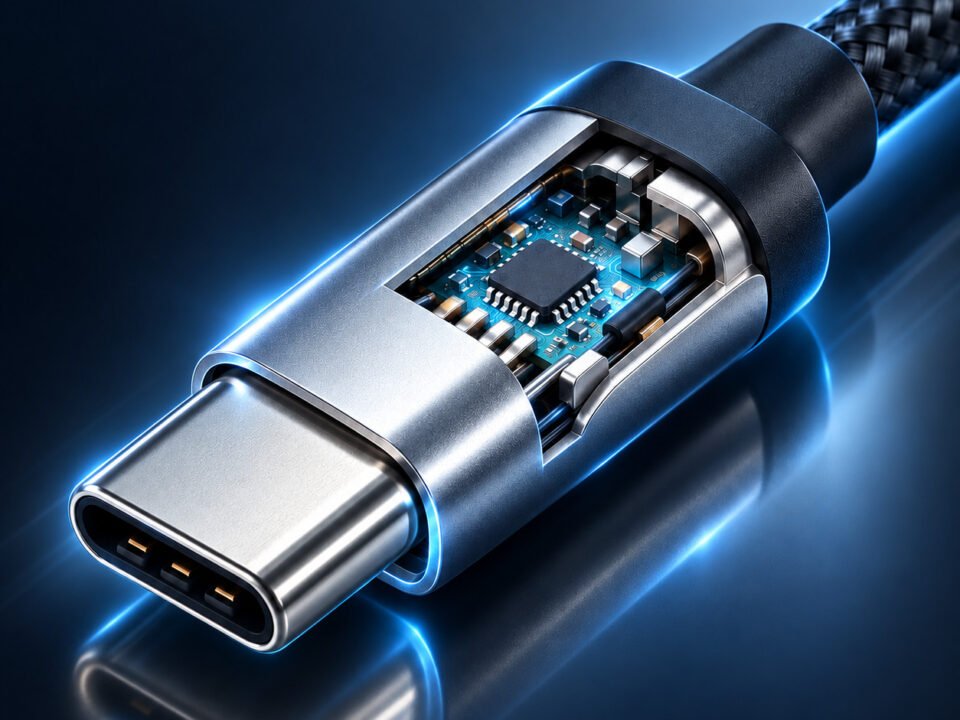
- 100W: supports up to 20 V at 5 A. A 5 A USB-C cable requires an appropriate E-Marker and is commonly used for laptops, docking stations, and other higher-power equipment.
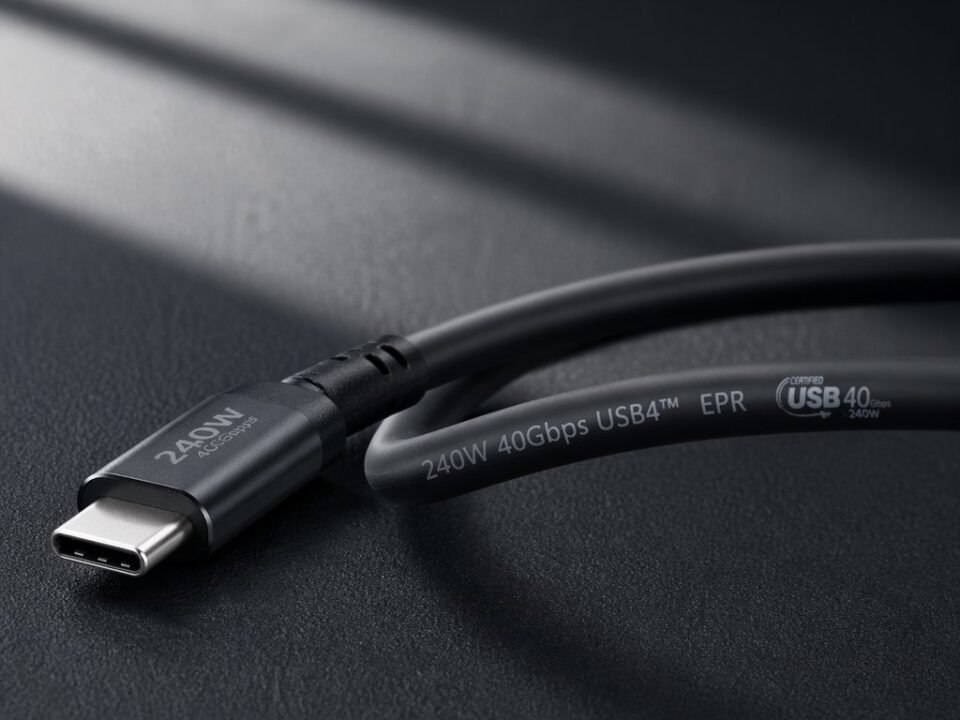
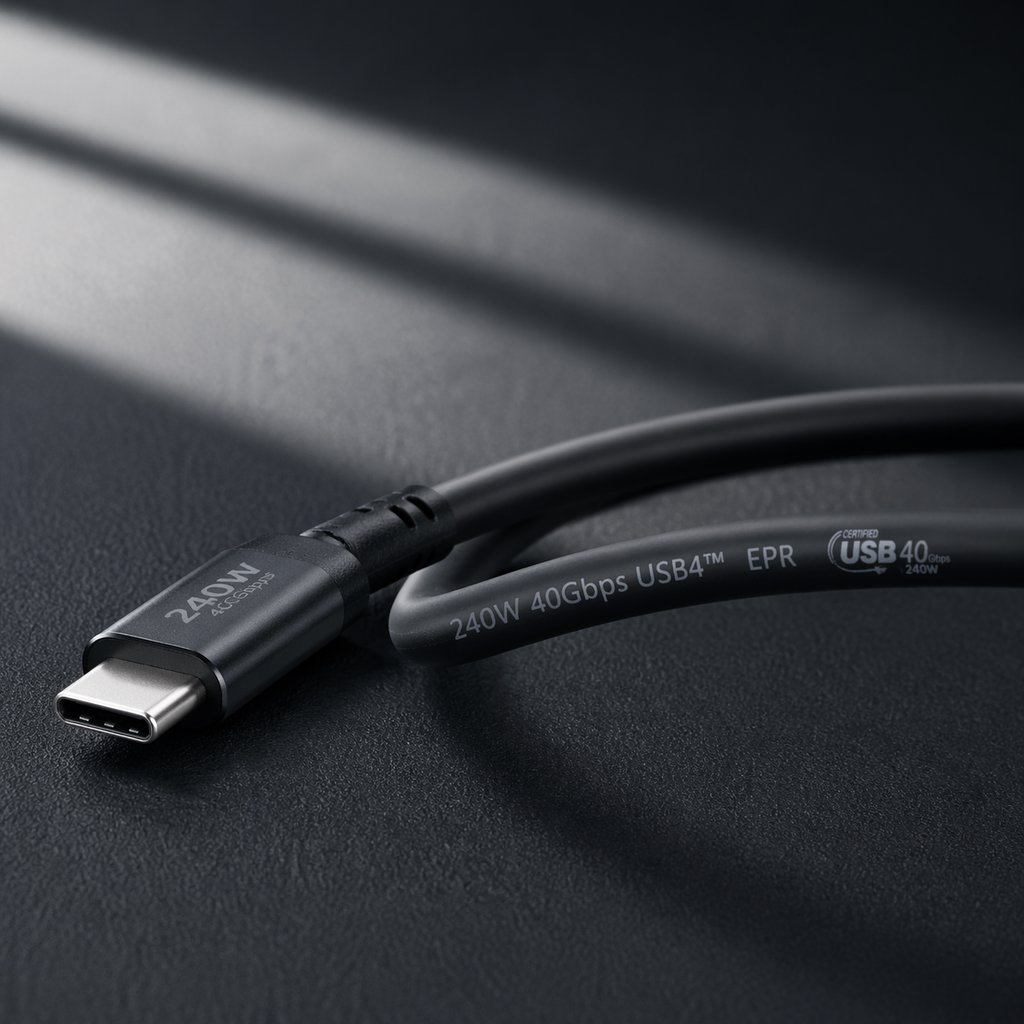
- 240W: supports USB Power Delivery Extended Power Range (EPR) operation up to 48 V at 5 A. A 240W cable requires an E-Marker and a cable design rated for USB PD EPR operation. It may be used with compatible high-power laptops, displays, docking equipment, and other devices whose charging systems support the required EPR power level.

The actual charging power is determined by the charger, the connected device, the cable rating, and the USB Power Delivery profiles supported by the connected components. A higher-rated cable does not increase the charging power of a device or charger that supports a lower power level.
Selection notes for power ratings:
- The cable's rated power and current should meet or exceed the requirements of the intended charging system. The charger, device, and cable must also support compatible USB Power Delivery profiles. Cable rating indicates capability, not the power that will automatically be delivered.
- The power rating is indicated in the product specification; buyers should confirm the rating against the intended device classes before ordering.
1.2 Data Specification
The USB-C connector shape does not by itself indicate the data capability of a cable. Depending on its design, a USB-C cable may support USB 2.0 data at up to 480 Mbps or higher data rates such as 5, 10, 20, ou 40 Gbps. Selected product models may also be designed primarily for charging.
- USB 2.0 Data Cable: supports charging and data transfer at up to 480 Mbps. Suitable for device synchronization, firmware updates, peripheral connection, and other applications that do not require high data throughput.
- High-Speed Data Cable: supports a specified data rate such as 5, 10, 20, or 40 Gbps, depending on the model. Selected models in the current product range support up to 40 Gbps. These cables are intended for applications such as external storage, docking stations, high-resolution video workflows, and large file transfers.
- Charging-Focused Cable: selected custom models may be designed mainly for power delivery where data transfer is not required. Because data wiring, USB Power Delivery support, current rating, and compliance requirements vary by construction, buyers should confirm the exact electrical specification before ordering. Charging-focused designs should not be assumed to support the full set of USB-C data or power modes. Buyers should also confirm whether a charging-focused construction is required to comply with a particular USB specification or certification program, as some power-only custom designs may not qualify as standard USB-IF compliant cable assemblies.
Selected full-featured USB-C cable models may also support video-capable connections. Video output requires compatible host and display ports, a supported video or tunneling mode, and a cable designed for the required bandwidth. Data-rate capability does not by itself determine a particular display resolution or refresh rate.
Selection notes for data specifications:
- Data capability and power rating are separate specification factors, although the selected combination may affect cable construction, diameter, length, flexibility, and cost. Selected high-speed cable models are available with 100W or 240W power ratings for applications that require high data bandwidth and high power delivery at the same time.
- For applications that combine data and charging, a data cable with an adequate power rating is recommended.
- For high-bandwidth applications, confirm that the rated data rate of the cable matches the data rate requirement of the connected devices.
1.3 Connector Configuration
Connector configuration describes the connector types on each end of the cable.
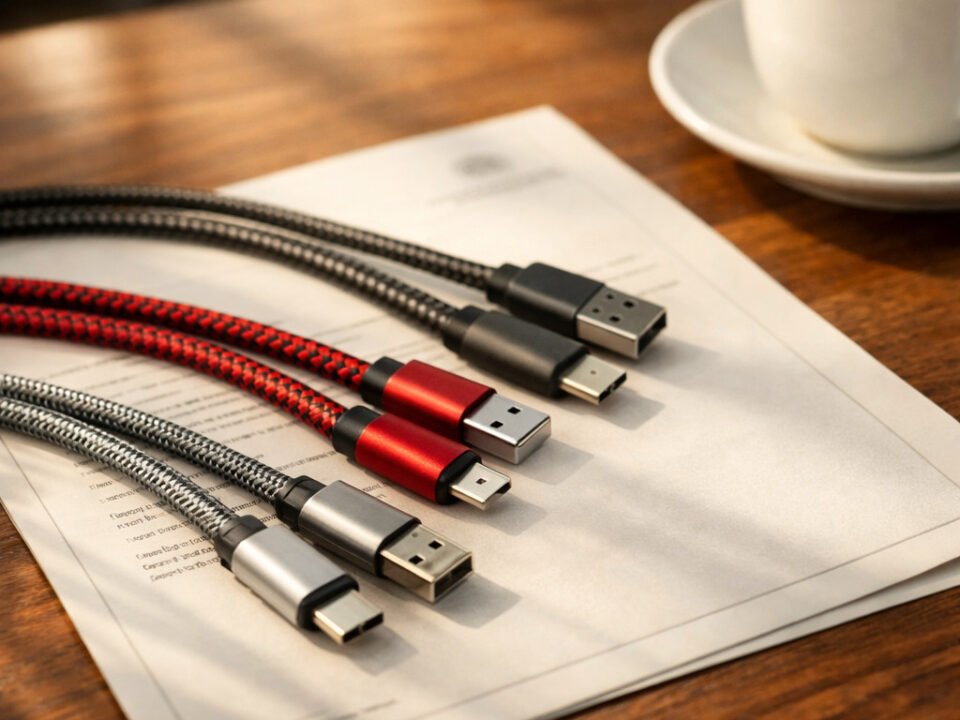
- USB-C to USB-C: connects devices equipped with USB-C ports and provides reversible plug orientation at both ends. Depending on the cable design, this configuration may support USB 2.0 or higher-speed data, USB Power Delivery, and selected video-capable modes. These capabilities are model-specific and should be confirmed separately; the USB-C connector shape alone does not indicate the cable's power, data, or video performance.
- USB-A to USB-C: connects a USB-C device to a charger, computer, power bank, or other host equipped with a USB-A port. Depending on the USB-A port and cable design, data capability may range from USB 2.0 at up to 480 Mbps to selected higher-speed USB modes. Charging performance depends on the USB-A power source, the connected device, and the charging protocols supported by both. USB-A to USB-C cables should not be presented as supporting standard USB PD power levels such as 100W or 240W. If a model supports a proprietary fast-charging protocol, the compatible charger, device, voltage, current, and maximum power should be stated in its individual specification.
When selecting a configuration, consider the ports available on the target devices and the existing charging or data infrastructure. Other connector combinations may be available for OEM/ODM projects, depending on the required interface, protocol, and compliance requirements.
1.4 Cable Construction
Cable construction refers to the jacket material and the overall mechanical design. Jacket material does not by itself determine the cable's power or data capability, but it affects flexibility, durability, temperature performance, cable diameter, and handling characteristics.
- PVC: a common and cost-effective jacket material. Suitable for general-purpose consumer cables and projects where standard durability is acceptable. PVC cables are available in a wide range of colors and finishes, which makes them a flexible choice for retail packaging and branding.
- TPE: provides a soft and flexible outer jacket for frequently handled charging and data cables. Available temperature range, abrasion resistance, and flex performance depend on the selected TPE compound and cable construction.
- Braided: uses a woven outer layer, commonly nylon, to provide additional surface protection and a distinctive appearance. Abrasion resistance and flex life depend on the braid, the underlying jacket, strain relief, and the complete cable construction.
- Silicone: provides a soft and flexible jacket and may be suitable for applications involving low or elevated temperatures. The allowable operating temperature must be confirmed from the specification of the selected model.
Selection notes for cable construction:
- Select the jacket material based on how the cable will be used and the conditions it will face, rather than on electrical requirements.
- For cables subject to frequent handling, pulling, or repeated bending, reinforced construction and appropriate strain relief should be considered.
- For applications involving low or elevated temperatures, silicone jackets may be suitable; the allowable temperature range should be confirmed from the model specification.
- In addition to the jacket, internal factors such as conductor gauge and shielding affect power delivery and signal performance, particularly in longer cable lengths.
2. USB‑C Cable Application Specifications
Different applications place different emphasis on cable specifications. The following sections describe the specification factors to consider for laptop charging, data applications, and industrial applications.
2.1 Laptop Charging
Laptop charging requires cables that deliver higher power, reach across typical workspaces, and withstand frequent use.
- High Power: notebooks generally require more charging power than mobile devices. Cables rated 100W suit mainstream laptops. 240W-rated cables are intended for compatible USB PD EPR equipment. The laptop and charger must both support the required EPR power profile; otherwise, charging will operate at a lower mutually supported level. Buyers should match the cable rating to the power requirement of the target laptop models, including allowance for devices that draw power while operating at full load.
- Long Cable: laptop users often connect chargers across desks, meeting rooms, and travel setups, which favors longer cable lengths. Longer cables introduce higher electrical resistance, so selected long cables use thicker conductors to maintain stable power delivery. Cable length also affects high-speed signal performance. The practical maximum length depends on the required current, data rate, conductor size, shielding, and whether the cable uses a passive or active design. Lengths of 1.5 m to 2 m are common for laptop use, with longer options evaluated against the complete power and data specification rather than treated as an unrestricted option.
- Durabilidade: laptop cables are plugged, unplugged, coiled, and carried repeatedly. Reinforced connectors, strain relief, and braided or TPE jackets can improve resistance to repeated handling when supported by an appropriate cable design and verified flex, pull, and connector-cycle testing. Laptop charging cables with selected jacket, connector reinforcement, length, and packaging options are available for wholesale and OEM/ODM projects.
2.2 Data Applications
Data applications emphasize transfer speed and signal performance.
- Speed: the required data rate depends on the application. High-speed cables support specified data rates such as 5, 10, 20, ou 40 Gbps depending on the model, suitable for external storage, docking stations, large file transfers, backups, and video production workflows. Standard data cables support up to 480 Mbps, which is adequate for routine synchronization and peripheral connection.
- Signal Performance: high-speed performance depends on controlled impedance, conductor and pair construction, shielding, connector quality, insertion loss, and manufacturing consistency. Shielding can help control electromagnetic interference, but it does not by itself ensure a specified data rate or support an unrestricted cable length. Buyers should confirm that the rated data rate of the cable meets the requirements of the end devices.
2.3 Industrial Applications
Industrial applications prioritize reliability and environmental suitability.
- Reliability: cables in industrial settings may be subject to continuous operation, mechanical stress, and repeated connection cycles. Reinforced construction, robust strain relief, and durable connector housings can contribute to dependable operation when supported by appropriate design and testing. Contact plating and connector housing quality influence connection reliability over repeated use. Buyers should evaluate the expected connection frequency and mechanical exposure when specifying cables for industrial use.
- Environment: operating conditions vary widely across industrial projects. Temperature range, flex life, tensile load, abrasion resistance, chemical exposure, ingress protection, and connector retention should be defined as separate requirements and confirmed against the construction and test data of the selected cable. A jacket material alone does not make a cable waterproof, chemical-resistant, or suitable for a given industrial environment. Buyers should define the operating environment and handling conditions when specifying cables for industrial use, so the construction and required protection can be matched to the conditions. Selected industrial cable models are available with reinforced jackets and protected connector designs; their specific ratings should be confirmed from the individual model specification.
3. Information to Provide for a USB‑C Cable Project
To receive a suitable recommendation for a USB-C cable, buyers can provide the following information:
- Connector configuration
- Required charging power, voltage, and current
- Required USB data rate
- Video requirement, if applicable
- Comprimento do cabo
- Jacket material and color
- Expected operating environment
- Required flex, pull, or durability testing
- Certification or compliance requirements
- Order quantity, packaging, and branding requirements
Send your target specification, application, estimated order quantity, packaging, and branding requirements. The OEM/ODM team can review the requested combination and confirm a feasible cable construction, performance specification, testing plan, and customization options.
Need Help Defining a USB‑C Cable Specification?
Whether you need standard USB-C cables or fully customized OEM/ODM configurations with specific connector combinations, power ratings, data performance, cable lengths, jacket materials, or branding, our team can help you review the requested combination and confirm a feasible cable construction, performance specification, testing plan, and customization options. From 60W to 240W, USB 2.0 to 40 Gbps, we support custom cable projects with competitive pricing and flexible MOQ.