
High Power USB-C Cable Solutions up to 240W
2026-09-09
USB Charger and Power Adapter Performance Guide
2026-09-09
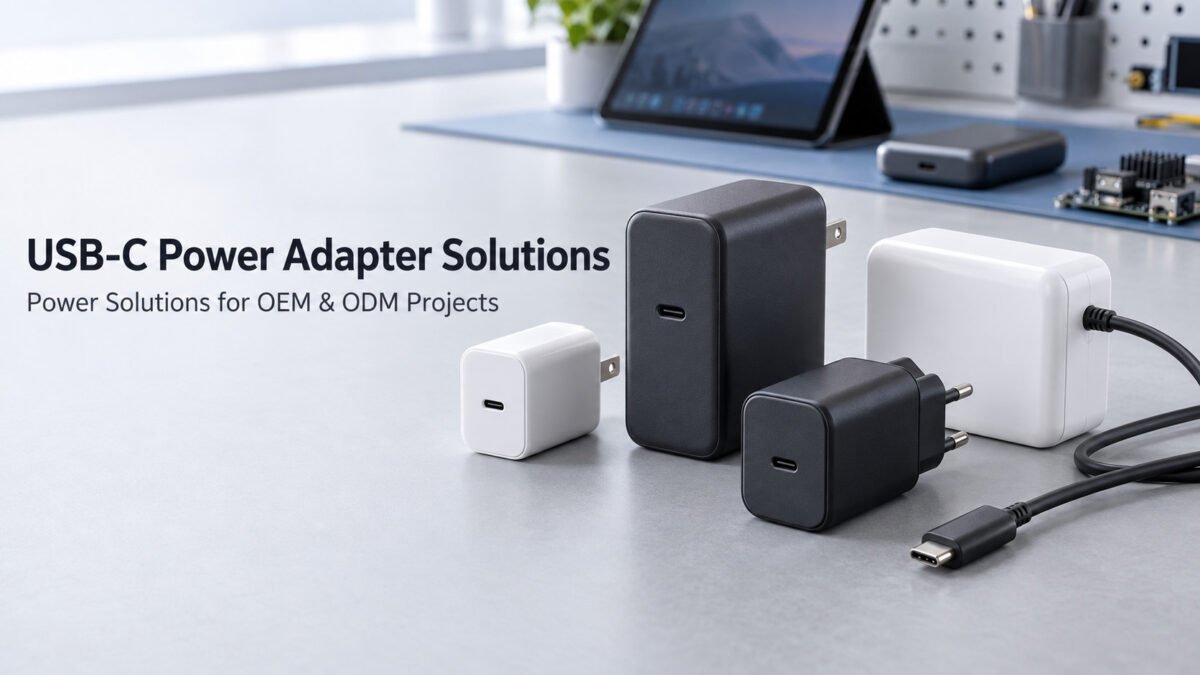
USB-C Power Adapter Solutions
USB‑C Power Adapter Solutions
As USB-C becomes more widely adopted across consumer, embedded, and portable products, manufacturers increasingly use it as a common power interface. For procurement teams, a properly specified USB-C Power Adapter can simplify accessory planning across compatible devices. However, the adapter, powered device, and detachable cable must support the required voltage, current, and charging protocol. This article introduces the product range, its applications, the main selection factors, and the customization options available for volume procurement.
1. USB‑C Power Adapter Introduction
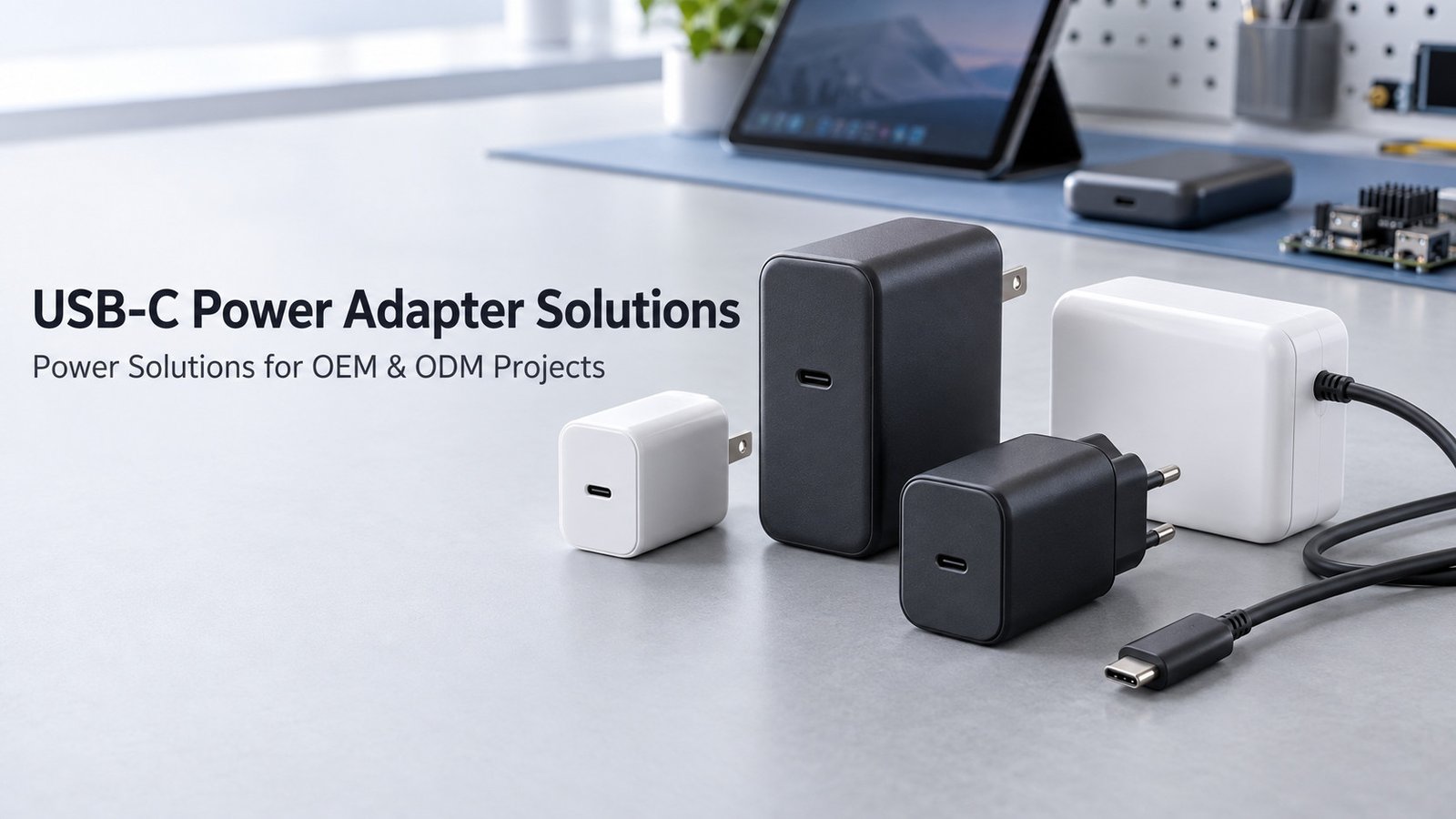
A USB-C Power Adapter converts mains AC power into regulated DC power. Depending on the model, power is delivered through a USB-C output port for use with a detachable cable or through a captive cable terminated with a USB-C plug. Selected models may incorporate over-current, over-voltage, short-circuit, and over-temperature protection, depending on the product specification. This provides a compact power solution for devices designed with a compatible USB-C power input.
Each model is specified with defined electrical ratings and is tested according to its documented performance and safety requirements. Connector durability, cable strain relief, output stability, and other test requirements depend on the selected product specification and customer program.

1.1 Consumer Electronics
Consumer electronics such as smartphones, tablets, portable speakers, smart home hubs, and wearable devices rely on predictable, regulated power for safe daily charging. USB-C Power Adapters in this category are designed for regular connection and disconnection, with plug housings and strain-relief structures selected for normal household use.
Fixed 5 V USB-C models can provide a simple solution for devices designed for a defined 5 V input, while selected USB Power Delivery models offer multiple negotiated output profiles for compatible devices. Available PDOs, maximum power, PPS support, and compatibility with additional charging protocols depend on the selected model.
Design in the consumer segment also considers how the adapter is used in practice. Compact housings fit crowded power strips, plug orientation suits wall and desk placement, and cable management is simplified by choosing an appropriate fixed or detachable cable. For shelf-ready programs, housing finish and labeling can be coordinated so the adapter presents consistently across a product range.
1.2 Embedded Devices
Embedded systems—including single-board computers, sensor nodes, communication modules, and IoT gateways—can use USB-C as an accessible power input when the device incorporates an appropriate USB-C sink design. Devices requiring higher USB Power Delivery voltages must also support the corresponding negotiation and input profiles. The adapter supplies regulated DC power, while final voltage regulation, filtering, and reference stability remain functions of the powered device's internal design.
The same supply can support prototype evaluation and production. During development, a bench-friendly USB-C supply simplifies setup and reduces power-related troubleshooting; in production, a repeatable adapter avoids variations in power quality that could otherwise surface during testing. For low-power embedded devices, a compact supply with adequate continuous and peak-current capacity can meet the load without unnecessary size or cost, while higher-output models may support boards that also power attached peripherals.
1.3 Portable Equipment
Portable instruments such as handheld meters, mobile printers, and field terminals benefit from adapters that balance size, weight, and output capacity. Selected adapters may also be evaluated for portable medical measurement equipment, subject to the applicable safety, EMC, leakage-current, risk-management, and market-specific requirements of the complete end system. Lightweight and low-profile models suit travel and on-site use, while higher-output models may support equipment that operates and charges an internal battery at the same time.
Selecting an adapter whose physical size matches the equipment avoids unnecessary bulk on the bench or in the field, and helps the device retain a clean, professional appearance. Selected models are available with regional plug options, including fixed or foldable designs depending on the target market and product specification. Cable length can be tuned to the physical layout of the work area.
2. Product Applications
USB-C power solutions serve three broad application groups. Understanding where a device falls in these groups helps narrow the selection to the appropriate output, connector style, and cable configuration before detailed technical matching begins. This section focuses on specific devices and usage patterns; Section 1 described the product requirements that these applications place on the adapter.
2.1 Consumer Devices
Smart devices—smartphones, smart watches, smart speakers, and wireless charging stations—are designed to be charged frequently and safely. A USB-C Power Adapter matched to the device's input rating replenishes the battery through normal charge cycles; for this group, output capacity, plug orientation, and housing finish are the main points of attention. Many lower-power portable products are covered by low-capacity and mid-capacity adapters where the device supplies its own regulation and only expects a suitable input supply.
Portable electronics such as e-readers, cameras, handheld gaming units, and power banks charge through a USB-C port and travel regularly with the user. Adapters for these products favor a compact footprint, an integrated short cable, and a foldable or fixed plug depending on regional preference. A smaller adapter is often preferred for travel kits, while a longer cable suits fixed locations such as desks and nightstands. In both cases the connection should be intuitive, and the adapter should remain compact and lightweight enough for travel kits.
2.2 Industrial Devices
Programmable logic controllers (PLCs), human-machine interface (HMI) panels, and IoT gateways may be powered by a USB-C source in development and low-power deployment scenarios. These applications value regulated output, operation within the specified temperature range, and consistent connector seating that stays reliable after repeated use. A USB-C power supply can be a practical option where existing infrastructure and accessibility are more important than maximum wattage, provided the device's input requirements are compatible.
Control devices such as sensor controllers and selected automation modules may operate continuously from a USB-C power source when their voltage, charging protocol, continuous load, and peak load are compatible with the adapter. Applications involving motors, solenoids, relays, or other inductive loads require additional review of start-up current, transient behavior, protection, and EMC requirements. Rated wattage alone does not establish suitability for these loads.
2.3 Charging Applications
Charging applications focus on devices that use USB-C for power without using the port for normal data transfer. Examples include battery packs, handheld tools, cordless appliances, and small instruments. The adapter must support the device's required input voltage, current, and charging method, including USB Power Delivery negotiation where applicable. Fixed 5 V USB-C models may be sufficient for devices specifically designed for that input, while higher-voltage or higher-power devices require compatible negotiated output profiles.
Where the device supports a higher negotiated input, a compatible higher-power adapter may reduce charging time. Actual charging performance depends on the device's charging protocol, maximum accepted power, battery condition, temperature, and internal charging control. The adapter should support the required output profile and provide adequate continuous capacity without exceeding the device manufacturer's specified input conditions.
3. Selection Factors
Choosing the right USB-C Power Adapter requires matching the device's electrical requirements, output configuration, cable arrangement, and intended application. Buyers should also confirm the AC input range, regional plug, target-market safety and EMC requirements, energy-efficiency requirements, and operating environment for the selected model. Reviewing these conditions at the start of a program helps prevent costly mismatches after production begins.
3.1 Output Power
Output power must cover the device's required operating and charging load with an appropriate design margin. Depending on the product range, selected models may provide outputs from approximately 5 W up to 100 W, such as 5 V / 1 A, 9 V / 2 A, or up to 20 V / 5 A on compatible USB Power Delivery models. A 100 W application requires a device that supports the corresponding USB PD input profile and, when a detachable cable is used, a USB-C cable rated for 5 A.
Selecting a substantially higher rating may add unnecessary size and cost, while insufficient output can result in slow charging, power limiting, or unstable device operation. Buyers should confirm the device's accepted voltage profiles, maximum input power, operating load, charging demand, attached peripherals, and peak-current requirements.
3.2 Connector
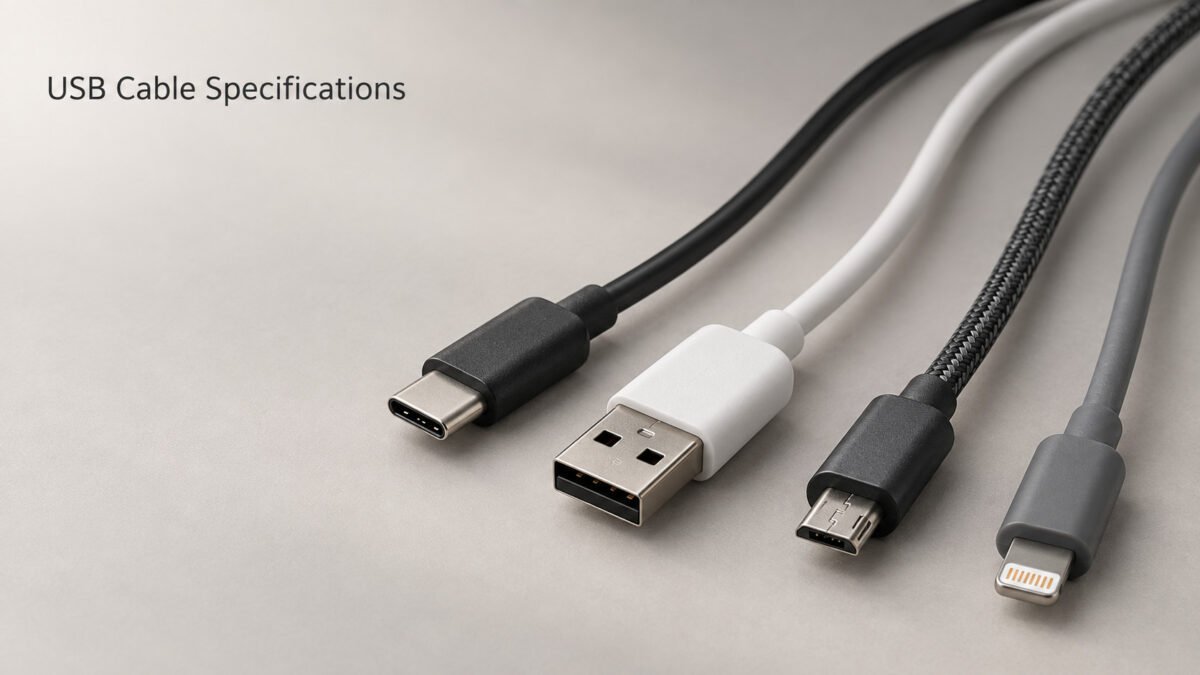
The output configuration affects installation, serviceability, and cable management. Captive-cable models integrate the output cable into the adapter, reducing the number of separate components. Models with a USB-C output port use a detachable cable, allowing the cable to be selected or replaced separately. For either configuration, plug orientation, optional right-angle designs, connector retention, and strain relief should be matched to the device layout and expected handling conditions. Available configurations depend on the selected model.
3.3 Cable Length
Cable length determines reach from the wall outlet and the practical flexibility of placement. Shorter cables keep kits compact and reduce cable management, while longer cables give freedom in arranging the device on a desk, cart, or bench. Cable routing should avoid sharp bends and pinching, which can stress the conductor and jacket over time. For higher-current captive-cable models, cable length and conductor size must also be evaluated for voltage drop and temperature rise. Selecting an appropriate length also helps maintain tidy installations in industrial and control cabinets, where loose or surplus cable can obstruct panels and ventilation.
3.4 Application
The intended application drives the final choice. Consumer settings favor aesthetics, compact size, and easy handling, so finish, weight, and plug style carry more weight in selection. Industrial settings emphasize stability, protection features, and mechanical robustness, so thermal behavior, housing strength, and connector retention tip the decision. Portable and travel settings reward light weight and packability. Defining the application early—whether indoor, bench, mobile, or control-cabinet use—filters the relevant models and avoids mismatches later in the procurement process.
4. Custom Development
For OEM and ODM programs, adapters can be tailored to meet specific product and branding needs. Customization is offered across three dimensions, and each can be adjusted independently or combined depending on the program.
4.1 Custom Output
Output configurations can be customized within the capabilities of the selected platform and the applicable USB-C or USB Power Delivery requirements. Depending on the model, customization may include supported output profiles, maximum rated power, PPS capability, and protection thresholds such as over-current, over-voltage, short-circuit, and over-temperature protection. The final configuration must be validated against the powered device's USB-C or USB PD sink design. Availability is subject to engineering feasibility, certification scope, development cost, and order quantity.
4.2 Alojamentos personalizados
Housing appearance and material can be adjusted to reflect a product or corporate identity. Options include enclosure dimensions, case color, logo and label placement, surface finish, and the choice of plug style for the target region. Custom housings allow the adapter to present consistently with the device. For consumer programs, these options can support consistent brand presentation. For industrial programs, application-specific mounting or labeling requirements may be evaluated separately, subject to mechanical feasibility, tooling, thermal design, and the applicable certification requirements.
4.3 Custom Cable
Cable configuration can be customized in length, jacket material, color, connector orientation, and strain-relief design. This matters where reach, durability, or visual consistency is part of the product requirement. A tailored cable also supports cleaner routing inside control panels or tighter packaging in retail goods, and lets a brand match the adapter's cable to the device it ships with. Jacket materials can be selected according to the required flexibility, abrasion resistance, temperature range, and regulatory requirements, subject to the available material specifications.
Starting a USB‑C Power Project
Begin by defining the device's input rating, mechanical constraints, and target regions. This information identifies the appropriate output class, connector style, and cable length. For common requirements, standard models may be available for evaluation, subject to current inventory and the required regional configuration. For brand-specific requirements, the customization program covers output, housing, and cable adjustments.