5W vs 20W vs 30W iPhone Charger: Which Is Actually Fastest?
5W vs 20W vs 30W iPhone Charger: Which Is Actually Fastest?
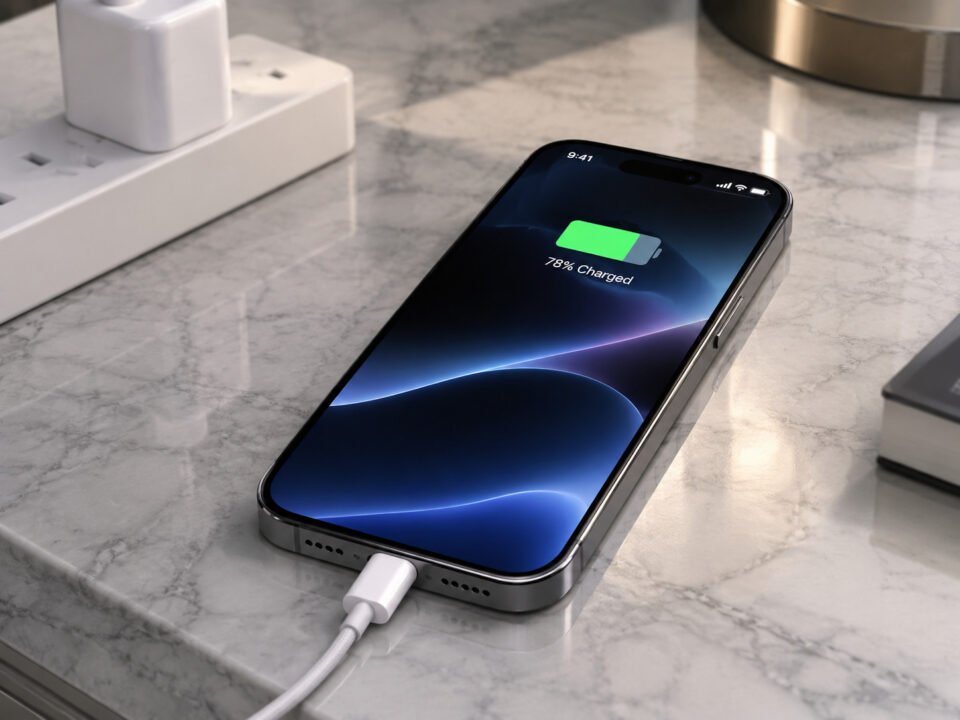
The fastest iPhone charger is not the one with the largest number printed on the box. It is the one that matches what the phone is willing to accept. For an iPhone 13 or later, a 20W USB-C PD adapter already covers most of what the phone will accept; a 30W adapter shaves only a few minutes off a full charge. The jump that matters is 5W to 20W. The 20W to 30W step is incremental unless the same brick also has to charge an iPad, a small laptop or several devices.
Short answer: 20W USB-C PD is the practical choice for most iPhone users. 5W is obsolete as a daily charger. 30W is worth it only when one adapter has to cover more than a phone.
- 1. How iPhone Fast Charging Works in the Real World
- 2. 5W vs 20W vs 30W: Head-to-Head iPhone Charging Times
- 3. Why the 5W iPhone Charger Is Now Obsolete
- 4. Apple 20W USB-C Power Adapter vs 5W
- 5. 20W vs 30W iPhone Charger: Is More Always Better?
- 6. Understanding USB-C PD: The Core of iPhone Fast Charging
- 7. Hardware Limits: Why Your iPhone Caps Charging Speed
- 8. Market Trends: Fast Charging iPhone Accessories in 2026
- 9. GaN vs Traditional Chargers for iPhone Fast Charging
- 10. Top iPhone Fast Charger Types and Use Cases
- 11. Safety, Certification, and Sourcing Considerations
- 12. Practical Buying Guide: Choosing 5W, 20W, or 30W
- 13. FAQs on iPhone Fast Charging and Charger Wattage
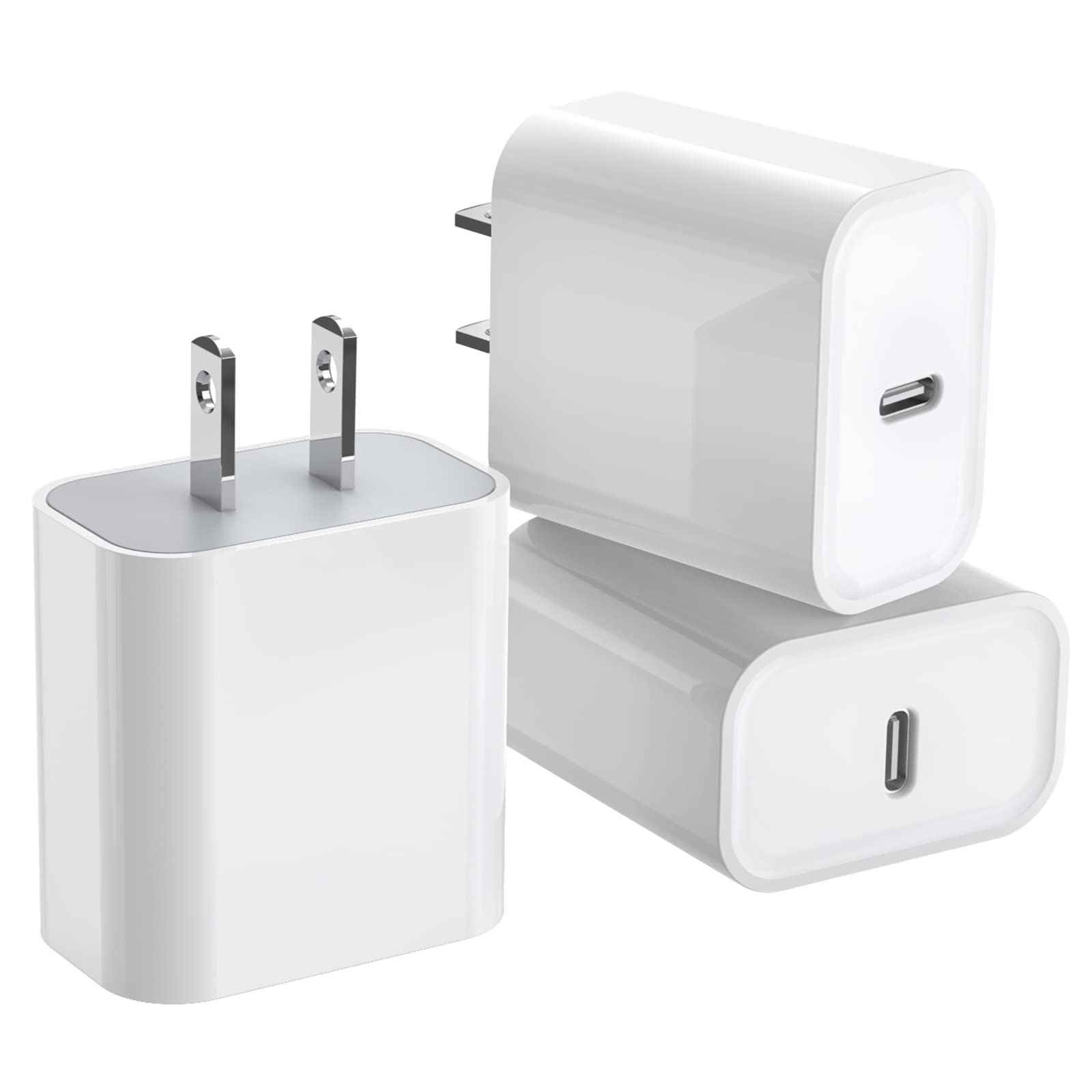
1. How iPhone Fast Charging Works in the Real World
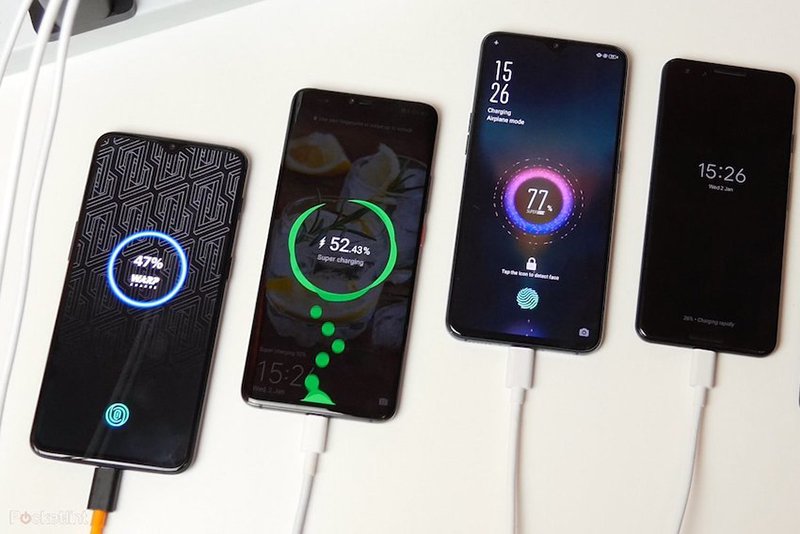
iPhones do not charge at a flat rate from 0 to 100%. The phone draws its highest power at low battery, holds that window for a while, then steps the current down as the battery fills and warms. That is why any single "charging speed" figure is misleading: a charger that is excellent in the first twenty minutes may be identical to a smaller one by the time the last 20% is reached.
Two things decide the outcome, and neither is the charger's badge:
- What the phone requests. The iPhone sets the PD contract. A 100W adapter still delivers only what the phone asks for.
- When the request happens. Peak draw is available roughly between empty and half full; after that the phone deliberately backs off.
A 5W brick never gets the phone into fast charging at any point, which is the whole reason it feels so slow.
2. 5W vs 20W vs 30W: Head-to-Head iPhone Charging Times
| Charger | Nominal power | Time to about 50% | Full charge | Best for |
|---|---|---|---|---|
| 5W legacy brick | 5W | 90 minutes or more | 3.5 hours or more | Overnight bedside charging, older or secondary phones |
| 20W USB-C PD | 20 W | Roughly 25–35 minutes | Around 1.5 hours | Daily fast charging for iPhone 13 and later |
| 30W USB-C PD or GaN | 30 W | A few minutes ahead of 20W | About 1.5 hours, occasionally less | Pro Max models, or one brick for phone plus tablet |
These are actual measured times: the same phone charged from empty to full with the screen off, then repeated on each adapter. Device model, starting battery level, screen-on use and ambient temperature can still move the numbers by ten minutes or more, which is also why "30W is 50% faster" claims do not survive a fair comparison.
3. Why the 5W iPhone Charger Is Now Obsolete
The 5W adapter was reasonable when phone batteries were smaller and charging meant leaving the phone on a nightstand until morning. On a current iPhone it cannot supply enough power to trigger fast charging at all, so the phone charges at a fraction of what it can accept. For anyone using navigation, games, video or a camera during the day, a three-and-a-half-hour recharge is not a workable turnaround.
Apple's own shift tells the same story: current iPhones ship with no adapter at all, and the entry-level adapter Apple sells separately is the 20W USB-C PD unit. The 5W brick survives only as a bedside option for a secondary phone or an older device.
4. Apple 20W USB-C Power Adapter vs 5W
From a nearly empty battery, a 20W adapter plus the right cable reaches about half in half an hour. The same half hour on a 5W brick adds somewhere in the 10–20% range, depending on the model and what the screen is doing. That difference is the entire case for replacing a 5W brick: it is not a refinement, it is a different category of experience.
5. 20W vs 30W iPhone Charger: Is More Always Better?
Most iPhone 13 and later models settle their wired fast-charging ceiling around 20W, with Pro Max bodies reaching into the high 20s, so the phone caps the draw no matter what the adapter can supply. In practice a 30W charger behaves almost exactly like a 20W one on a phone: a few minutes earlier at 100%, not a step change.
Where 30W earns its price:
- Pro Max bodies. The larger battery accepts slightly more, so the extra headroom is used rather than wasted.
- Shared bricks. The same adapter can fast-charge an iPad or hold a MacBook Air at its desk level, which a 20W unit cannot.
- Multi-port units. A 30–65W charger with two or three ports replaces a drawer of separate adapters.
If none of those apply, the extra wattage mostly buys idle capacity.
6. Understanding USB-C PD: The Core of iPhone Fast Charging
USB-C Power Delivery is the digital conversation that precedes any fast charge. The charger advertises the voltage and current combinations it can supply; the phone picks the one it wants — commonly 9V at 2–3A for fast charging — and the charger adjusts. The conversation repeats during the charge, which is why a 30W adapter cannot force power into a phone that has decided to slow down.
One cable detail matters for buyers: the adapter does not decide compatibility on its own.
- iPhone 14 or earlier. The phone end is Lightning, so the cable has to be USB-C na Lightning. An A-to-Lightning cable still charges, but at 5V without PD, which keeps the phone in the slow tier.
- iPhone 15 or later. The phone end is USB-C, so a C-to-C cable carries the PD contract. An A-to-C cable has no CC wire for the PD handshake, so the phone falls back to 5V and charges slowly.
7. Hardware Limits: Why Your iPhone Caps Charging Speed
Every iPhone has a maximum charge rate set by battery chemistry, thermal design and the power-management circuit. That ceiling is fixed in hardware, so a 65W or 100W adapter does not raise the rate on a phone. Peak power is usually available only in the lower half of the battery, after which the phone reduces its request on purpose — for longevity, not because the charger has run out of ability.
This is also why comparisons that time only the first ten minutes exaggerate differences between adapters. A fair test runs a full cycle from the same starting percentage, with the screen off.
8. Market Trends: Fast Charging iPhone Accessories in 2026
The accessory market has moved from fixed-voltage bricks to USB-C PD and GaN designs, and from single-output to multi-port. For wholesalers and private-label brands, the practical consequence is that 20W, 30W and 65W PD adapters often share one controller platform, so test evidence and tooling can be reused across wattages even though each SKU still needs its own safety certificate.
9. GaN vs Traditional Chargers for iPhone Fast Charging
Gallium nitride lets a charger switch at higher frequency with lower losses, so a 30W GaN unit can be noticeably smaller and cooler than an older 30W silicon adapter while delivering the same PD contract. The benefit is size and heat, not extra power: on an iPhone the GaN unit and the silicon unit charge at the same rate, because the phone sets the limit either way.
10. Top iPhone Fast Charger Types and Use Cases
| Typ | Main advantage | Typical rating | Where it fits |
|---|---|---|---|
| 5W legacy brick | Low heat, gentle trickle | 5W | Nightstand for an older or secondary phone |
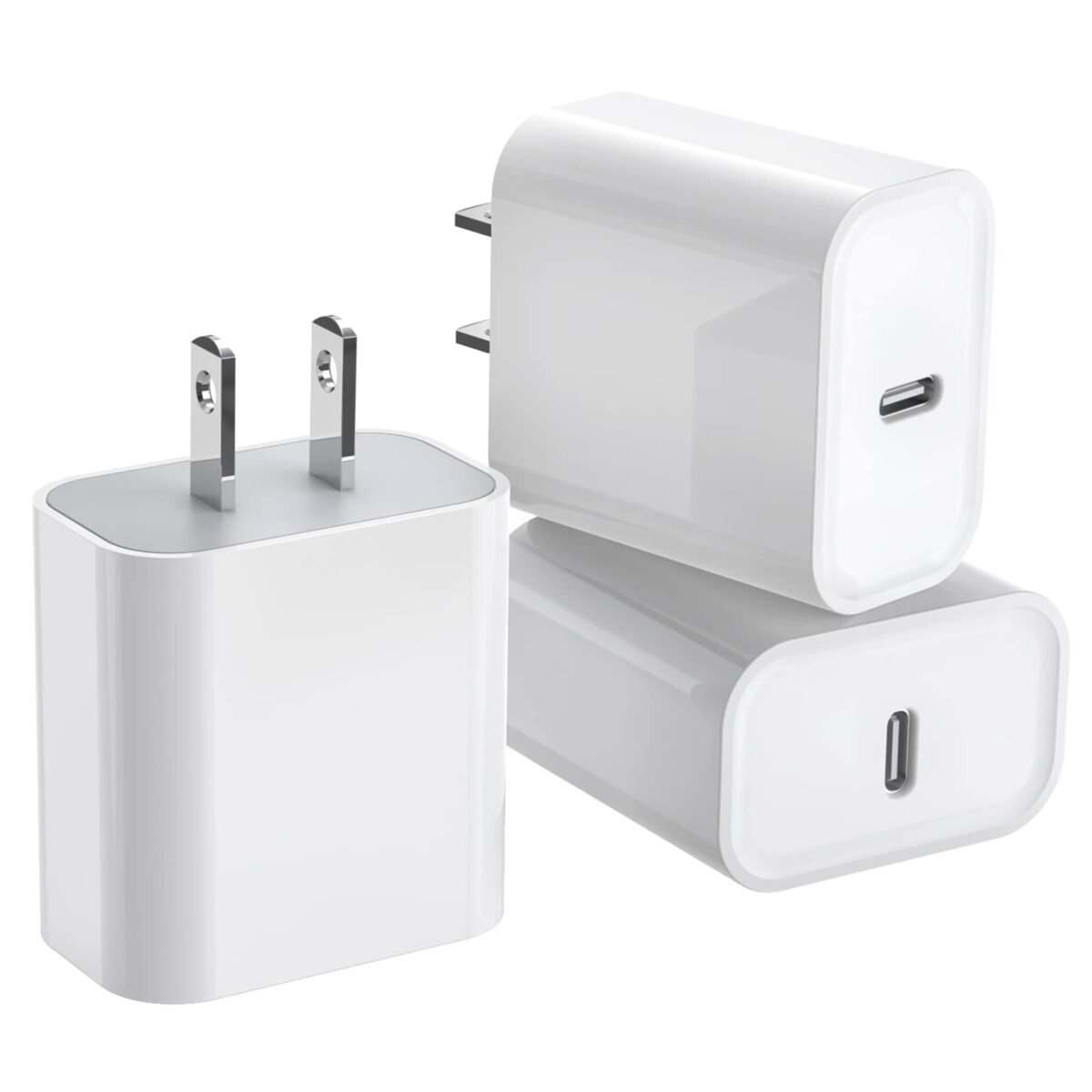
| 20W USB-C PD | Fast charging on current iPhones, compact | 20 W | One per user, home and office |
| 30W USB-C PD GaN | Headroom for Pro Max, tablets and small laptops | 30 W | Travel brick covering phone plus tablet |
| Multi-port 30–65W PD | Several devices at once, shared budget | 30–65W | Families, sales kits, bundles |
| MagSafe / Qi wireless | No cable, drop-and-go | MagSafe 15W, up to 25W on iPhone 16 with a 30W adapter; Qi 7.5W, or 15W with Qi2 on iPhone 15 and later | Desk and bedside convenience |
11. Safety, Certification, and Sourcing Considerations
A compliant PD adapter carries over-current, over-voltage, short-circuit and over-temperature protection, plus CE, FCC and RoHS for the markets it is sold into. For buyers sourcing from Chinese factories, the useful step is to ask for the actual test reports and certificate numbers rather than a logo on the artwork, and to confirm that the rated output on the label matches the certificate. At 20W and 30W the cable only needs to be rated for 3A; an E-Marker becomes mandatory above 3A, which is why it matters on 65W and 100W builds rather than on phone chargers.
12. Practical Buying Guide: Choosing 5W, 20W, or 30W
- Overnight only, older or secondary phone: a 5W unit is fine as a bedside charger, but do not rely on it during the day.
- iPhone 13 or later, single device: 20W USB-C PD is the balance of price, speed and compatibility.
- Pro Max, iPad or a small laptop in the same bag: 30W GaN gives the phone the same times and covers the other devices.
- Several phones in one household or a reseller kit: a multi-port 30–65W unit removes the drawer of separate bricks.
13. FAQs on iPhone Fast Charging and Charger Wattage
Is a 30W charger faster than a 20W charger on an iPhone?
Only marginally. Most iPhone 13 and later models cap wired fast charging around 20W, with Pro Max models reaching the high 20s, so the phone limits the draw. A 30W adapter may finish a few minutes earlier on a Pro Max, and its real value is the headroom for tablets and laptops.
Why is my iPhone slow on a 5W charger?
The 5W brick cannot supply enough power to activate fast charging, so the phone stays in its slowest mode. A full charge from empty is around three and a half hours.
Can a 30W GaN charger damage my iPhone?
No, provided the adapter is compliant. The phone negotiates through USB-C PD and draws only what it can accept. The risks come from uncertified adapters, counterfeit cables and worn connectors, not from wattage.
Which charger should I buy for an iPhone 15 Pro Max?
The Pro Max has the highest wired ceiling in the lineup, so the 30W GaN unit is the better match: it covers the phone's higher peak and still charges an iPad or a small laptop from the same brick. A 20W adapter works, but gives up the headroom the Pro Max can use.
Is wireless MagSafe charging as fast as a 20W wired charger?
No. Wireless charging is slower end to end: MagSafe tops out at 15W, or 25W on newer models with a 30W adapter, and plain Qi runs at 7.5W on an iPhone, or 15W with Qi2 on iPhone 15 and later. Heat losses inside the coil make it slower than a 20W wired PD charge in practice.
For B2B sourcing, the charger decision usually comes before the cable decision: the adapter sets the wattage, and the cable has to match the device's port and current class. A 20W PD unit is the simplest SKU to consolidate, a 30W GaN unit covers a mixed kit, and a multi-port 30–65W unit serves bundles and reseller packs.
Our factory builds USB-C PD and GaN chargers in OEM and ODM volumes, and supplies the matching cables in the same order. The target device, port type and order quantity are enough to confirm the wattage, certification and packaging.