

Laptop Charger Solutions
Laptop Charger Solutions
Laptop charger solutions covering USB‑C PD chargers, high‑power EPR chargers, and multi‑port desktop chargers. This product page presents structured specifications, power selection guidance, application industries, OEM development capabilities, and selection factors for overseas buyers, brand owners, and industrial clients.

1. Laptop Charger Product Solutions
1.1 USB‑C Laptop Charger
Built on the USB Type-C interface with USB Power Delivery negotiation. Under USB PD Standard Power Range (SPR), output reaches up to 100W at 20V/5A. Selected models support PPS (Programmable Power Supply), allowing the output voltage to be adjusted in fine steps to match the device's charging requirements. Depending on the device and charging architecture, this can help improve charging efficiency and reduce unnecessary conversion losses. A wide range of portable and mainstream laptops pair with this category.
USB-C provides a reversible connector interface that can support power delivery and, depending on the implementation, USB data and alternate-mode functions such as DisplayPort. Power Delivery negotiation occurs at attach: the charger and device exchange structured messages over the Configuration Channel (CC) line, agreeing on a voltage and current within the ranges both support. This handshake prevents over-voltage delivery to devices rated below the charger's maximum, a meaningful safeguard in mixed-device fleets where a single charger may serve several platforms.
Typical SPR fixed voltage levels include 5V, 9V, 15V, and 20V, with current capability depending on the charger and cable specification. Up to 5A operation is supported for appropriate configurations. A 100W configuration uses a 20V/5A power profile. PPS supplements these fixed levels with variable voltage, letting the device request intermediate values rather than stepping down from the nearest fixed rail, which can help align the supplied voltage with the device's requirements.
1.2 High Power Charger
Output above 100W relies on USB PD 3.1 Extended Power Range (EPR). USB PD 3.1 EPR supports power levels up to 240W, using fixed voltage levels including 28V, 36V, and 48V, depending on the implementation. The 140W tier operates at 28V/5A and requires an EPR-capable charger, cable, and device. GaN-based designs can help achieve higher power density and more compact charger designs, depending on the topology and thermal architecture. Suitable for high-performance workstations and gaming-class laptops.
EPR is not simply enabled by firmware. Higher-power EPR operation requires compatible source, cable, and sink capabilities. EPR-capable USB-C cables use electronic identification to communicate their supported capabilities to the charging system. The source and sink then establish a power contract based on the capabilities of the charger, cable, and device. If the cable or device does not support the required EPR capability, the connection will operate within the lower power capability supported by the complete system. An SPR-only device does not request an EPR power contract, so a properly implemented USB PD system operates within the power capabilities supported by the connected devices and cable. Procurement teams specifying high-power chargers should verify that companion cables in the bundle carry the required EPR capability, not merely a USB-C form factor.
1.3 Desktop Charger
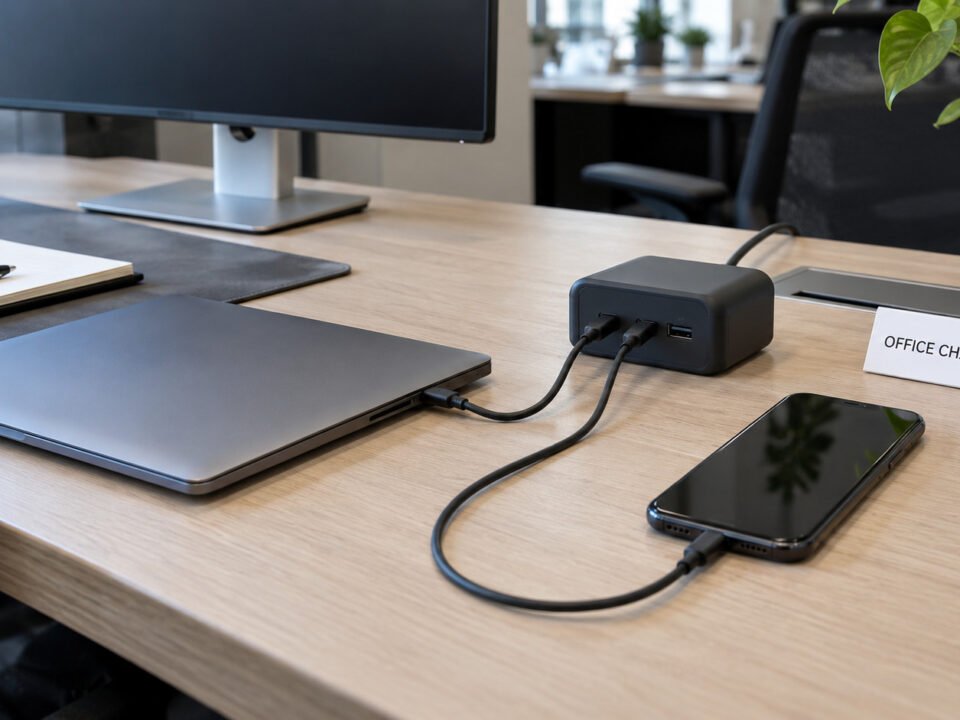
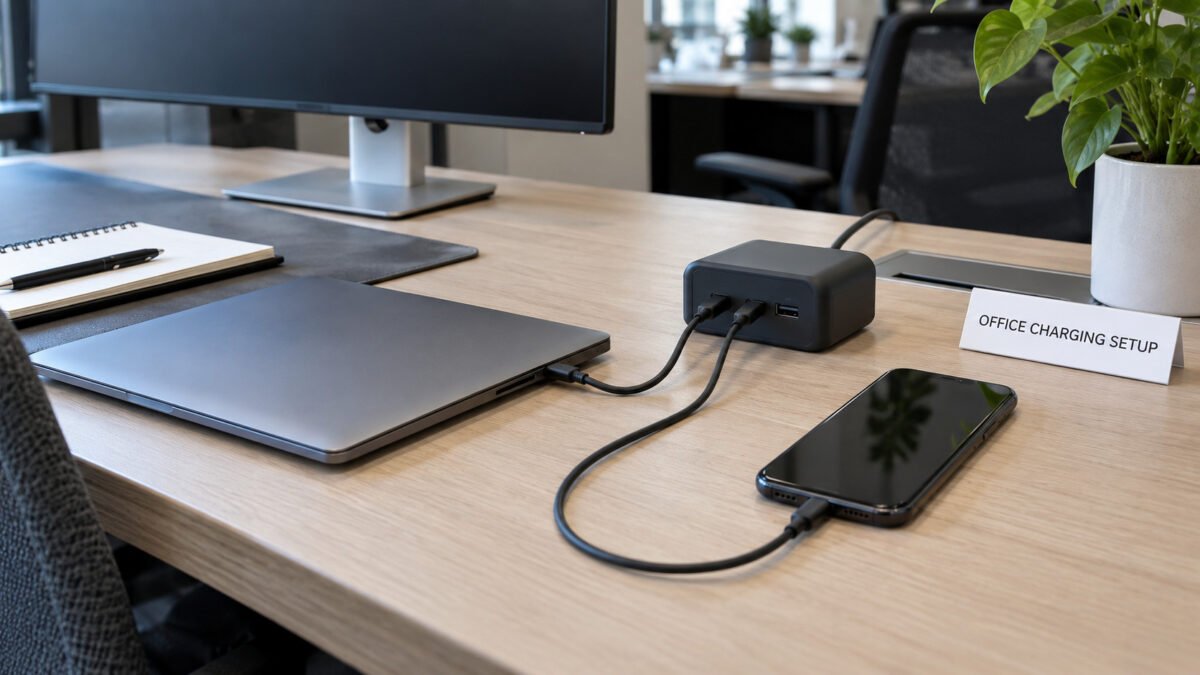
A desktop form factor distributes power across several outputs simultaneously. Typical configurations combine USB-C PD ports with USB-A ports for legacy peripherals. Power allocation rebalances as ports are added or removed, with total output constrained by the unit's rated ceiling. Suitable for shared workspaces and multi-device enterprise desks.

When a single device is connected, it may access the full rated output of its port. As additional devices attach, the power-management controller dynamically allocates the available power among connected ports according to the product's port-priority and total-output design, which varies by model. This type of power allocation allows a desktop charger rated at up to 140W to support multiple connected devices, subject to the model's port and total-output specifications.
USB-A ports typically support legacy charging methods such as BC 1.2 or selected proprietary charging protocols. Their available output depends on the port specification and the charger's overall power-allocation design. For fleet procurement, this distinction matters when specifying a unit for a desk that must simultaneously charge a laptop and a legacy device.
2. Power Selection
2.1 65W
| Specification | Detail |
|---|---|
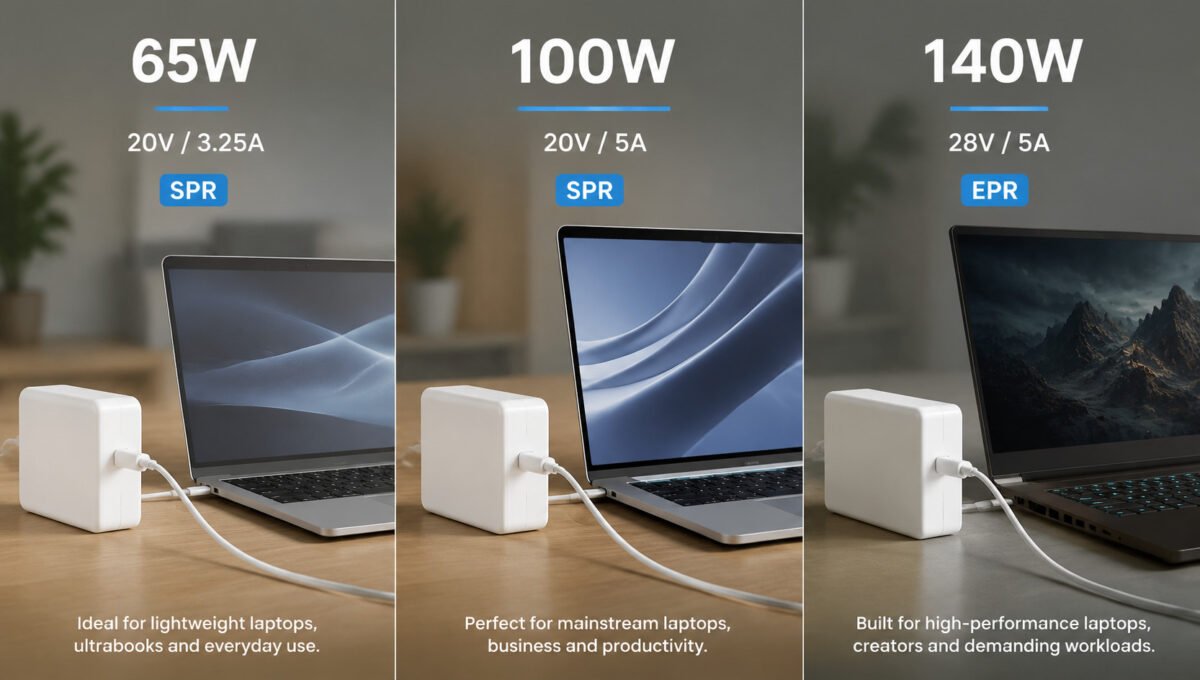
| Voltage / Current | 20V / 3.25A |
| USB PD Range | USB PD SPR, up to 65W |
| Typical Device Class | Ultrabook, Portable Laptop |
Covers the typical ceiling of ultrabook and portable platforms. A 65W adapter is commonly used for compact and mainstream laptops, although the actual charging power and charging time depend on the device's charging design, battery capacity, and operating conditions.
2.2 100W
| Specification | Detail |
|---|---|
| Voltage / Current | 20V / 5A |
| USB PD Range | USB PD SPR, up to 100W |
| Typical Device Class | Professional Laptop |
Provides up to 100W within the USB PD SPR power range, when the charger, cable, and device support the required 20V/5A configuration. Some professional laptops with discrete graphics, higher-capacity batteries, or sustained workloads may benefit from higher-power USB-C charging. A 5A-rated cable is required for a 20V/5A, 100W configuration. A 3A-rated cable cannot support the full 5A current required for 100W, so the negotiated power will be limited by the capabilities of the cable and the connected devices.
2.3 140W
| Specification | Detail |
|---|---|
| Voltage / Current | 28V / 5A |
| USB PD Range | USB PD 3.1 EPR, up to 140W |
| Typical Device Class | High-Performance Laptop |
Requires EPR support across charger, cable, and device to operate at the 28V level. A 140W-class supply can provide additional power headroom for compatible high-performance laptops that require higher USB-C input power, including scenarios where the device is operating while charging. Without an EPR-capable cable, a 140W charger cannot deliver 140W through the EPR power range, and the actual charging power will be limited by the capabilities of the connected charger, cable, and device. For example, a 3A cable may limit operation to 3A, so the available power depends on the negotiated voltage and the capabilities of the complete charging system.

3. Application Industries
3.1 Computer Brands
OEM and ODM supply for laptop manufacturers and system integrators. Output specifications, connector types, and branding are configurable to the brand's platform. Volume production follows the target market's safety and electromagnetic-compatibility regimes.
Brand-side requirements extend beyond electrical output. Connector orientation, cable length, housing finish, and label content are specified to match the brand's design language. Documentation, such as applicable test reports and declarations of conformity, can be provided to support the brand's certification and market-access requirements.
3.2 Education Devices
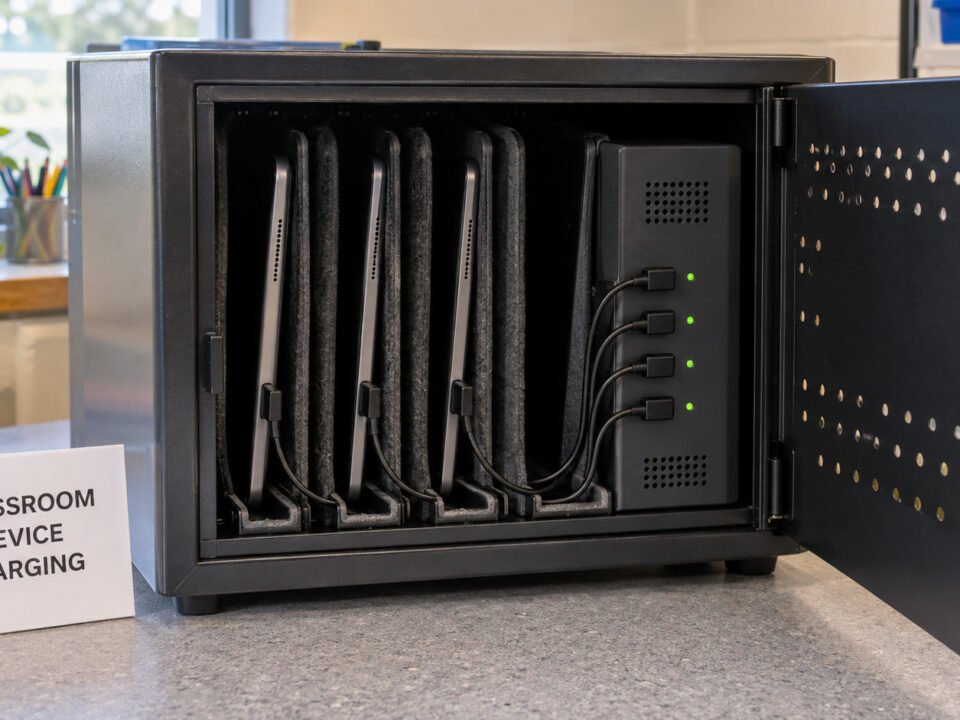
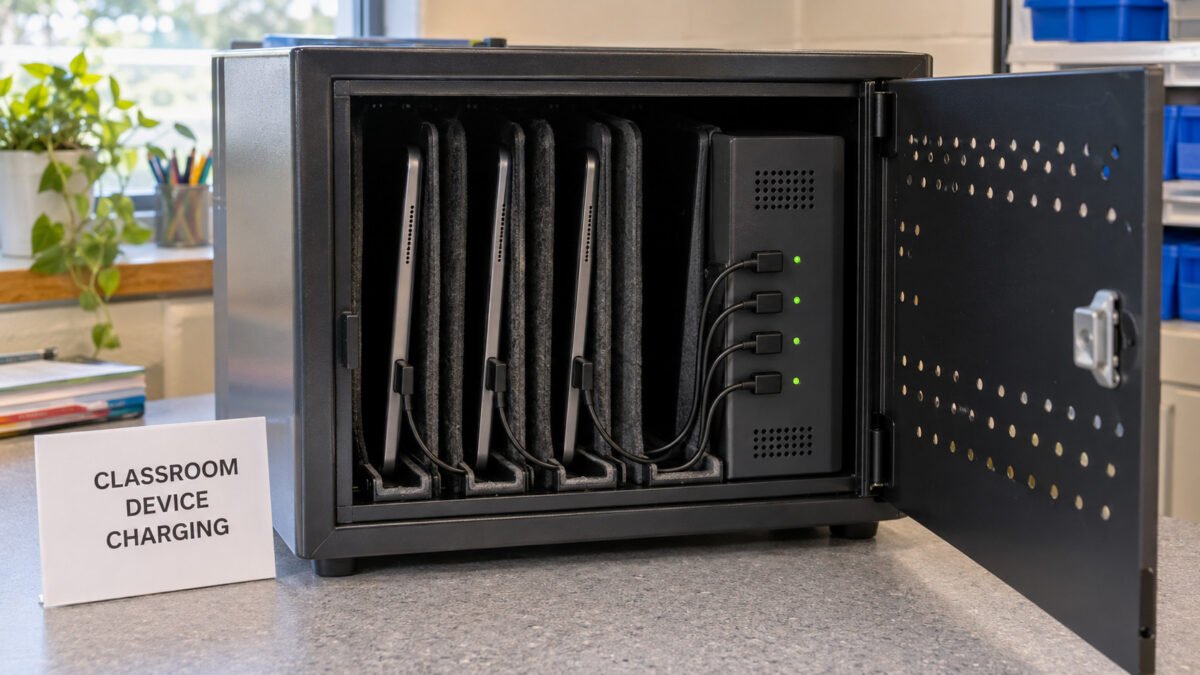
Chargers paired with school-issued laptops and tablets emphasize durability and certified safety. Strain-relief and housing designs are selected for high-frequency student handling. Compliance documentation supports institutional and tender-based procurement.
Education deployments subject chargers to handling patterns uncommon in enterprise or consumer settings, such as frequent coiling and transport in bags. Strain-relief geometry, jacket material selection, and housing impact resistance are weighted more heavily than in a desk-bound specification, and tender documentation typically requires evidence of these mechanical tests alongside electrical compliance.
3.3 Enterprise Equipment
Fleet deployment for corporate IT estates. Standardized output and multi-port desktop units support desk-sharing and hot-desk environments. Consistent labeling and connector standards streamline asset management across distributed sites.
Enterprise fleets value standardization across sites and procurement cycles. A consistent connector and output specification simplifies spares inventory and reduces the incidence of under-powered adapters reaching devices that demand higher input. Multi-port desktop units reduce the per-seat adapter count in hot-desk layouts where a single station may serve several users through the day.
4. OEM Development
Custom USB-C charger development addresses specific application requirements that standard off-the-shelf products may not fully meet. The following customization options are available for OEM and ODM partnerships, supporting volume production with tailored specifications.
4.1 Custom Output
Configurable wattage, voltage profiles, and port configurations. USB PD and PPS profiles are tuned to the target device. Compliance testing and documentation can be prepared for applicable market requirements, such as UL-related safety requirements, CE marking requirements, FCC requirements, and USB-IF certification where applicable.
Output customization is bounded by the underlying USB PD specification. A custom PD profile must still operate within the voltage and current rails the standard defines; the latitude lies in which rails are exposed, in what order, and at what current limits. PPS output ranges can be configured within the applicable USB PD requirements to match the charging requirements of the target device. Where USB-IF certification or use of a certified USB-IF logo is required, the applicable product must complete the relevant USB-IF compliance process and meet the requirements for listing and logo use. Requirements depend on the product type and the intended USB-IF marking.
4.2 Custom Design
Housing design, color, and form factor are adjustable within manufacturing constraints. GaN and silicon topologies are selected based on efficiency, size, and cost targets. Thermal management is engineered to the rated output and operating environment.
Mechanical customization interacts with thermal performance. A smaller housing can reduce available thermal dissipation area, so thermal performance must be considered alongside power density, component selection, and the intended operating environment. Folding or fixed prongs and regional plug configurations, such as Type A, Type C, Type G, and others, are selected according to the destination market and applicable electrical requirements.
4.3 Branding
Logo placement, label content, and packaging are customized to brand specifications. Co-branded configurations are available for distributor and reseller channels, with documentation aligned to channel and regional requirements.
Branding extends to the regulatory label, which in many jurisdictions must carry specific markings, model numbers, and electrical ratings in the local language. Packaging customization follows the same regional logic, with carton labeling, inner carton count, and pallet configuration set to the channel's logistics requirements. Co-branded configurations serve distributor and reseller channels where the end-brand identity differs from the specifying party.
5. Selection Factors
The following factors guide product specification for procurement. Confirm each against the target device and destination market.
- Device Compatibility: Target laptop or computing device, required input power, supported charging protocols, and connector configuration.
- Power: 65W, 100W, 140W, or another required power level, matched to the device's charging input.
- Port Configuration: Single USB-C, multi-port, or USB-C combined with USB-A, according to the desk or device setup.
- Charging Protocol: USB PD, PPS, or selected proprietary charging protocols supported by the target device.
- Plug Type: US, EU, UK, AU, and other regional plug configurations, selected per destination market.
- Form Factor: Wall charger or desktop charger, based on the deployment environment.
- Certification: Safety, EMC, and regulatory requirements confirmed against the destination market.
- OEM Requirements: Logo, housing, label, packaging, cable, and documentation customized to brand and channel specifications.
Need a Custom Laptop Charger Solution?
Whether you need standard USB‑C PD chargers or fully customized high‑power EPR units with specific output profiles, port configurations, and branding, our team can help you specify the right solution for your application. From custom voltage rails to regional plug types and packaging, we support OEM/ODM projects with competitive pricing and flexible MOQ.