

USB-C PD Charger Solutions: 20W to 140W Charging Applications
USB‑C PD Charger Solutions: 20W to 140W Charging Applications
USB-C Power Delivery chargers have become the standard power solution for a wide range of electronic devices, from smartphones to high-performance laptops. Unlike traditional fixed-output chargers, USB-C PD chargers negotiate voltage and current with connected devices, delivering only the power level requested. This intelligent power delivery mechanism enables a single charger to serve multiple device categories safely and efficiently.
1. USB‑C PD Charger Product Introduction
USB-C PD chargers utilize the USB Power Delivery protocol to negotiate optimal voltage and current with connected devices. The USB-C connector interface, combined with PD protocol support, enables a single charger to deliver multiple voltage levels — 5V, 9V, 15V, 20V under USB PD 3.0, and up to 28V under USB PD 3.1 — dynamically matching device requirements. This reduces the need for device-specific power adapters and simplifies power supply across product ecosystems.

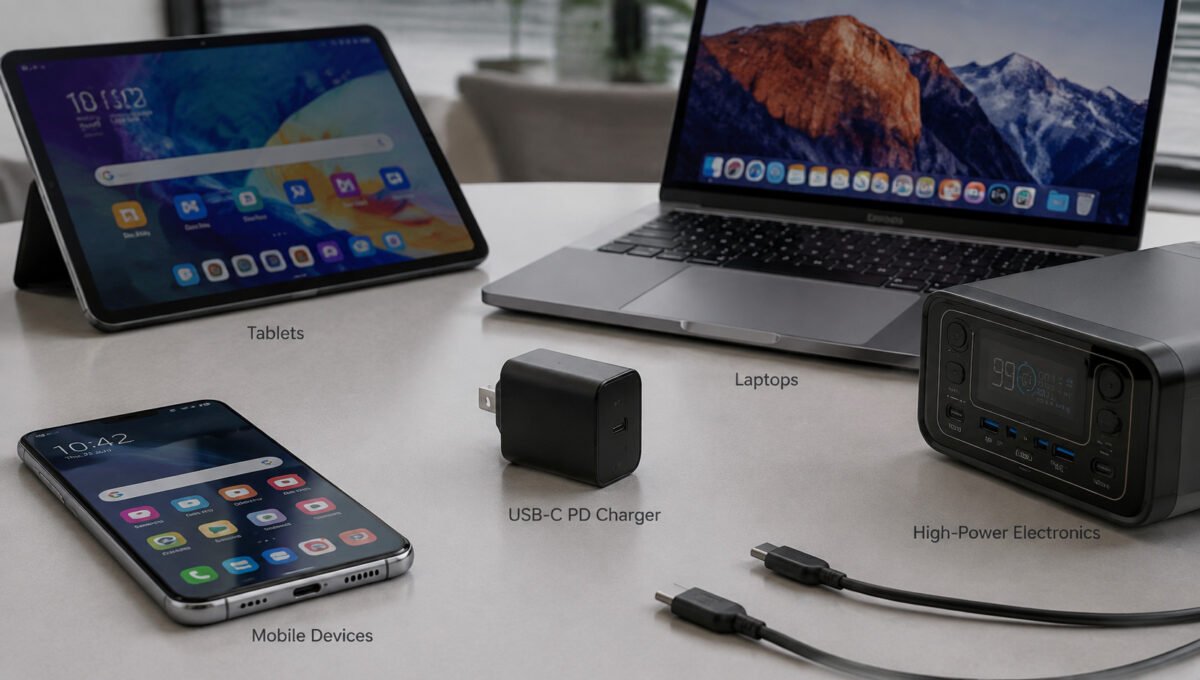
The USB-C PD charger lineup is designed to serve four primary device categories:
Mobile Devices
- Smartphones supporting USB PD fast charging (20W–30W range)
- E-readers, wireless earbuds cases and portable accessories
- Power banks and mobile charging accessories requiring USB-C PD input
Compresse
- Tablet computers with USB-C PD charging (30W–65W range)
- Stylus-enabled tablets and 2-in-1 convertible devices
- Portable displays and secondary monitors with USB-C power input
Computer portatili
- Ultrabooks and thin-and-light laptops (65W–100W range)
- Standard laptops and mobile workstations (100W–140W range)
- Gaming laptops and high-performance mobile computing devices
High Power Electronics
- Mobile workstations requiring up to 140W under USB PD 3.1 EPR
- Industrial and professional equipment with USB-C power input
- Specialized devices requiring extended power range above 100W
Each power level is engineered to match specific device power requirements. The following section details the available power solutions and their typical applications.
2. Power Solutions
Five primary power tiers are available, each aligned with USB PD specification voltage levels and designed for specific device categories. Selecting the appropriate power level depends on the target device's maximum power input rating and charging speed requirements.
2.1 20W USB‑C Charger
The 20W USB-C charger delivers up to 20W via the 9V/2,22A PDO, with 5V/3A (15W) available for standard charging mode. This power tier addresses the fast-charging needs of modern smartphones and small portable electronics. Under USB PD 3.0, the 9V fixed PDO supports power output up to 27W (9V/3A), with the 20W rating representing a commonly specified output level for smartphone fast charging.
Primary Applications:
- Smartphone fast charging via USB PD protocol
- Small electronics including e-readers, earbuds cases and portable accessories
- Retail and consumer market charger bundles
The 20W charger is the entry-level fast-charging tier in the USB-C PD lineup. Its compact form factor and cost-efficient design make it suitable for high-volume consumer market supply, retail bundling and smartphone accessory packaging.
2.2 30W USB‑C Charger
The 30W USB-C charger delivers up to 30W via the 15V/2A PDO, with 9V/3A (27W) available for device compatibility. This power tier covers the charging requirements of tablets and portable devices that demand higher current than smartphone chargers provide. The 15V fixed PDO under USB PD 3.0 supports power output up to 45W (15V/3A), with the 30W rating addressing the typical maximum power input of standard tablets.
Primary Applications:
- Tablet computers with USB-C PD charging support
- Portable devices including GPS units and handheld terminals
- Smartphone super-fast charging for devices supporting higher wattage
The 30W charger bridges the gap between smartphone fast charging and laptop power delivery. Selected models feature GaN technology for reduced housing size, making them suitable for travel accessory and retail channels.
2.3 65W USB‑C Charger
The 65W USB-C charger delivers 20V/3,25A output under USB PD 3.0, providing sufficient power for laptop charging via USB-C. This power tier represents the minimum recommended output for charging modern ultrabooks and thin-and-light laptops. The 20V fixed PDO is the highest voltage level defined under USB PD 3.0 SPR, supporting power output up to 100W (20V/5A), with the 65W rating addressing the typical power input of standard ultrabooks.
Primary Applications:
- Laptop charging for ultrabooks and thin-and-light models
- Gaming devices and high-performance portable electronics
- Multi-device charging stations with intelligent power distribution
The 65W charger is a versatile power solution that can charge laptops, tablets and smartphones. Selected models feature dual-port or multi-port configurations with intelligent power distribution, allowing simultaneous charging of a laptop and a mobile device from a single charger.
2.4 100W USB‑C Charger
The 100W USB-C charger delivers 20V/5A output, representing the maximum power level defined under USB PD 3.0 Standard Power Range (SPR). This power tier supports full-speed charging for standard laptops, mobile workstations and professional devices. Under USB PD 3.0 SPR, 20V/5A is the highest fixed PDO combination available, making 100W chargers suitable for devices that require sustained high-power input.
Primary Applications:
- High power laptops including standard and performance models
- Professional devices and mobile workstations
- Multi-port charging solutions for simultaneous laptop and mobile device charging
The 100W charger is positioned as a premium power solution for professional and enterprise applications. Selected models feature multi-port configurations where one port can deliver up to 100W for laptop charging while additional ports provide 20W–30W output for mobile devices simultaneously.
2.5 140W USB‑C Charger
The 140W USB-C charger delivers 28V/5A output under USB PD 3.1 Extended Power Range (EPR). USB PD 3.1 introduced three new fixed voltage levels — 28V, 36V and 48V — extending the maximum power range above the 100W SPR limit. The 28V/5A combination delivers 140W, designed for high-performance computing devices that require power above the 100W threshold.
Primary Applications:
- High-performance gaming laptops and mobile workstations
- High performance computing devices requiring extended power range
- Professional equipment with USB-C PD 3.1 EPR power input
The 140W charger represents the current upper tier of the USB-C PD charger lineup. Compatibility with USB PD 3.1 EPR requires both the charger and the connected device to support the EPR protocol. Selected 140W models are also backward compatible with USB PD 3.0 SPR devices, delivering appropriate power levels at 20V or lower voltages.
3. How to Choose a USB‑C PD Charger
Selecting the right USB-C PD charger requires evaluating four key factors that determine charging performance, device compatibility and deployment suitability. The following criteria focus on practical product selection rather than protocol-level technical details.
3.1 Device Power Requirement
The first and a primary factor is the maximum power input rating of the target device. A charger should deliver power equal to or greater than the device's rated input to achieve the manufacturer's intended charging speed. Using a charger with lower output than the device rating results in slower charging, while a higher-wattage charger will safely deliver only the power level negotiated by the device via the USB PD handshake.
Matching Guide:
- Smartphones: 20W–30W chargers are suitable for USB PD fast charging
- Tablets: 30W–65W chargers cover standard tablet power requirements
- Ultrabooks and thin-and-light laptops: 65W chargers address typical input
- Standard and performance laptops: 100W chargers match rated power input
- High-performance laptops and workstations: 140W chargers under USB PD 3.1 EPR
When sourcing chargers for multiple device types, selecting a charger rated for the highest-power device ensures compatibility across the range. The USB PD protocol handshake automatically limits output to lower-power devices, enabling a single 100W charger to safely charge a 20W smartphone.
3.2 Port Number

Port count determines how many devices can be charged simultaneously from a single charger. Single-port chargers dedicate full rated power to one device, while multi-port chargers distribute power across connected devices. For multi-device environments, multi-port configurations reduce the number of chargers and outlets required.
Port Configuration Options:
- Single Port — Full rated power to one device; suitable for dedicated device charging
- Dual Port — Power split between two devices; selected models support 65W + 20W o 45W + 30W distribution
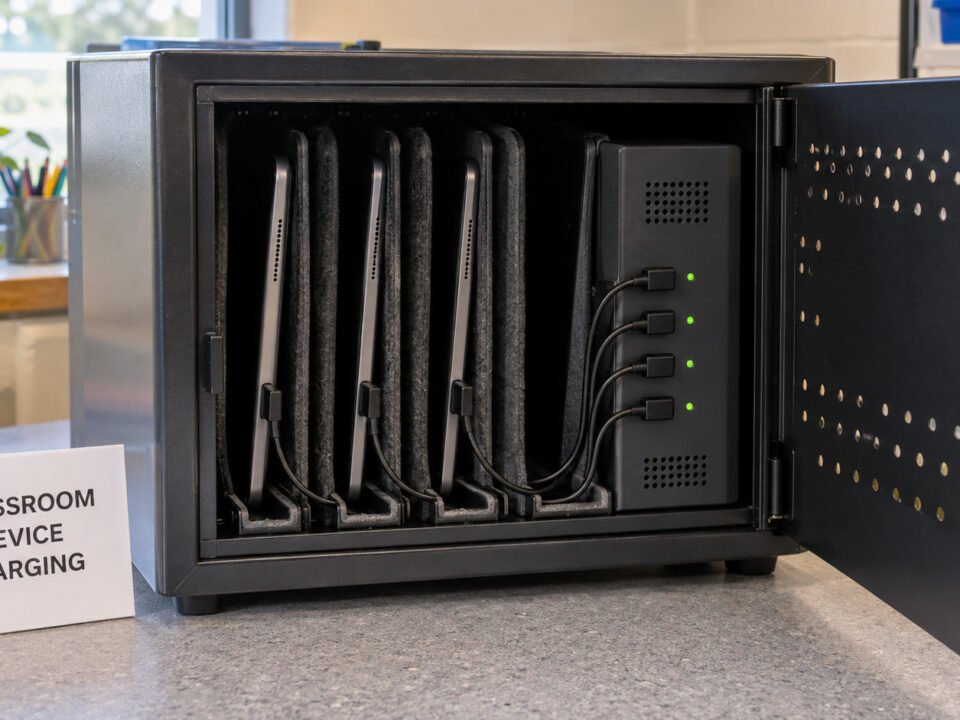
- Multi-Port (3+) — Intelligent power management across three or more ports; suitable for shared charging stations and office environments
Power distribution in multi-port chargers is managed by intelligent controllers that allocate current based on each connected device's negotiated power level. The total combined output is limited by the charger's rated power, meaning simultaneous high-power charging across multiple ports requires a higher-wattage charger.
3.3 Application
The intended use scenario influences the choice of form factor, power level and port configuration. Different applications prioritize different charger characteristics, from portability for travel to stability for stationary office use.
Application-Based Selection:
- Consumer Retail — Compact single-port chargers, 20W–30W, with retail-ready packaging
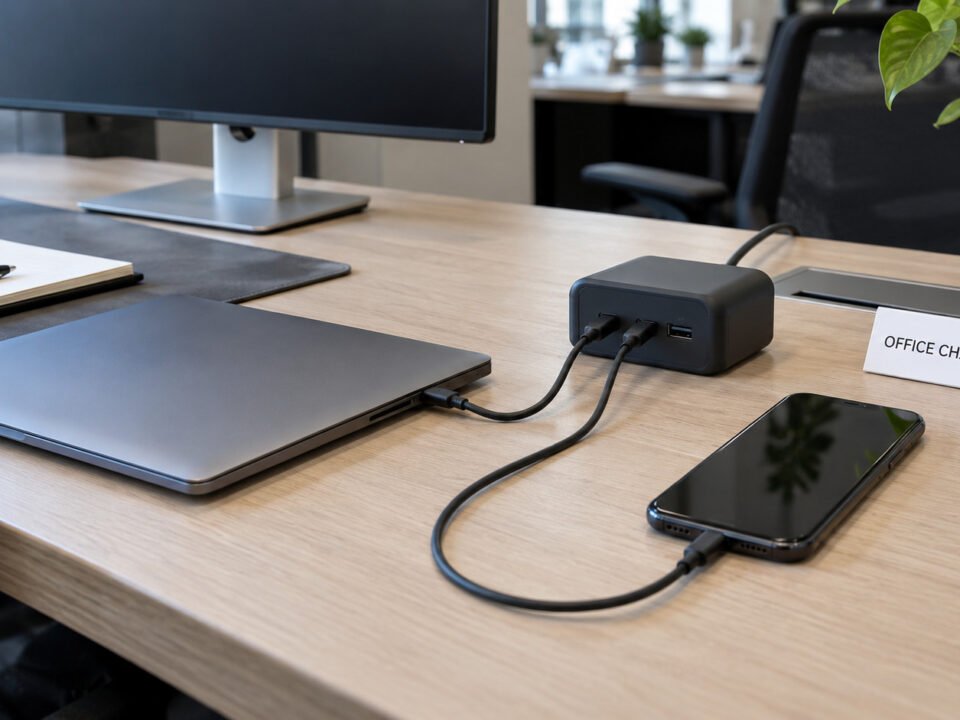
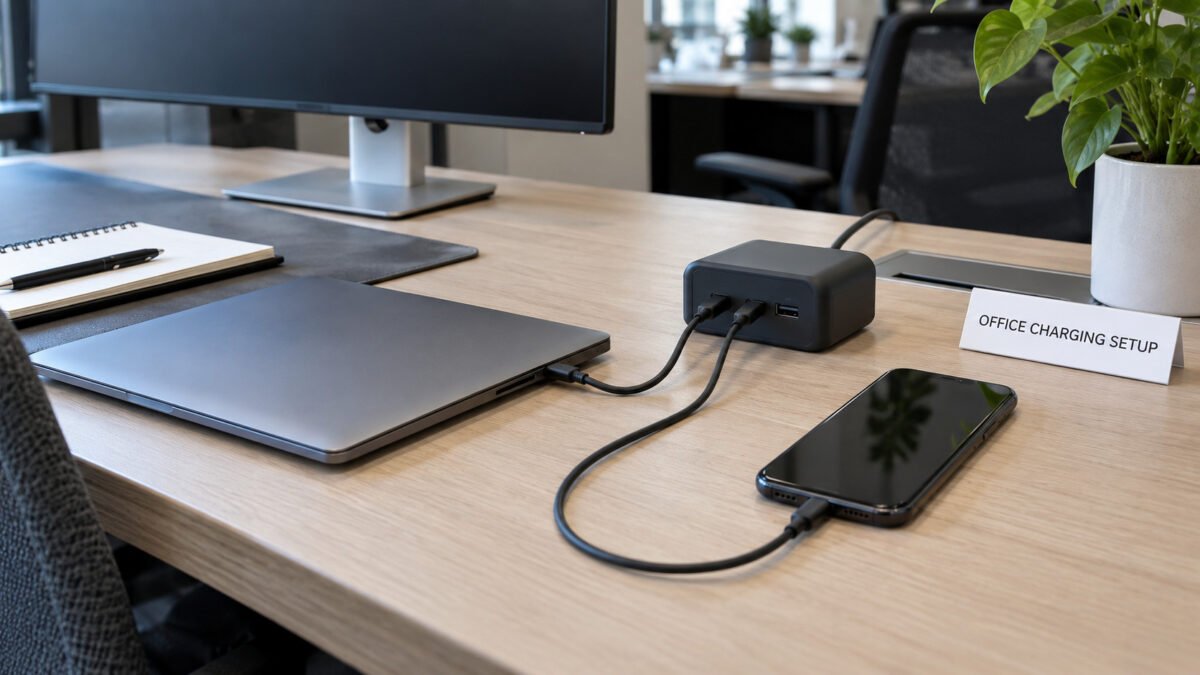
- Office Workstations — Desktop or multi-port chargers, 65W–100W, for laptop and mobile device charging
- Viaggio — Foldable-plug chargers, 20W–65W, with multi-region plug compatibility
- Industriale — Reinforced housing chargers, 65W–140W, with wider operating temperature range
- Public Infrastructure — Multi-port charging stations, 100W+, with tamper-resistant designs
Application requirements may also include specific safety certifications (UL, CE, FCC, CCC), plug standards (US, EU, UK, AU) and operating environment considerations. Selected models are available with configurations tailored to specific deployment scenarios.
3.4 Product Size
Charger physical dimensions impact packaging, shipping costs and end-user convenience. Higher-wattage chargers traditionally require larger housings for thermal management, but GaN (gallium nitride) technology has enabled significant size reduction across power levels.
Size Considerations:
- Tecnologia GaN — Selected models across 20W to 140W utilize GaN semiconductors, enabling housing sizes up to 40% smaller than equivalent silicon-based chargers
- Thermal Design — Higher-wattage chargers (100W–140W) require larger housings or advanced thermal solutions to manage heat dissipation during sustained output
- Fattore di forma — Wall-plug chargers minimize footprint for travel; desktop chargers with AC cables allow larger housings for multi-port high-power configurations
For procurement partners sourcing chargers for retail packaging or bundling, housing dimensions directly affect packaging size and shipping volume. Selected models offer optimized housing designs that balance power output, thermal performance and physical compactness for specific market requirements.
4. OEM Development Direction
Full OEM/ODM development and manufacturing services are available for brand partners seeking custom USB-C PD charger solutions. The development process supports customization across power output, housing design, branding and production scale. The following sections outline the primary customization directions available for OEM projects.
4.1 Custom Power Output
Output wattage is configurable from 20W per 140W, with USB PD 3.0 and 3.1 protocol support tailored to target device compatibility. Custom power profiles, including non-standard voltage or current combinations for specialized devices, can be developed for qualified projects.
Available Options:
- 20W to 140W power output configurations
- USB PD 3.0 SPR (up to 100W) and USB PD 3.1 EPR (up to 140W) protocol support
- Custom PDO configurations for specialized device requirements
- Additional fast-charging protocol support: Qualcomm Quick Charge, Samsung AFC, Huawei SCP
Power output configuration also includes the selection of supported voltage PDOs. For example, a custom 65W charger can be configured to support 5V, 9V, 15V and 20V PDOs, or limited to 5V and 20V only, depending on target device compatibility requirements.
4.2 Alloggi personalizzati
Housing form factor, material, color and finish are tailored to brand identity and application requirements. Available housing designs span wall-plug, desktop and travel form factors, with custom dimensions and surface treatments available for qualified projects.
Available Options:
- Wall-plug, desktop and travel form factors with custom dimensions
- Materiali dell'involucro: PC (policarbonato), ABS e composti ignifughi (opzioni con classificazione V-0)
- Corrispondenza personalizzata dei colori in base a riferimenti Pantone specifici
- Surface finishes: matte, glossy, textured and soft-touch options
- Foldable pin designs and interchangeable plug heads for multi-region use
- Reinforced housings for industrial and public installation scenarios
Housing design also incorporates thermal management considerations. Higher-wattage chargers may require ventilation patterns, internal heat sinks or thermal pads to maintain safe operating temperatures during sustained high-power output. Custom housing designs are validated through thermal testing to verify compliance with safety standards.
4.3 Branding personalizzato
Brand identity is applied to charger housings and packaging through multiple methods. The branding method is selected based on housing material, durability requirements and brand visual guidelines.
Metodi di branding disponibili:
- Serigrafia per superfici piane di alloggiamenti con loghi monocolore o multicolore.
- Incisione laser per una marcatura durevole e permanente su involucri in metallo o plastica.
- Stampaggio a rilievo o in incavo per un'identità di marca integrata nell'alloggiamento dell'utensile
- Dimensioni, posizione e colore del logo personalizzabili in base alle specifiche del marchio.
- Design in co-branding per canali di partnership e promozionali
Branding is applied during the final production stage, after housing molding and assembly. Sample units with applied branding are provided for approval before mass production begins. Brand artwork files are accepted in AI, EPS or PDF vector formats.
4.4 Mass Production
Volume manufacturing capabilities support orders from initial pilot production to high-volume mass production. The manufacturing process follows documented quality control procedures, with each production stage validated against approved specifications.
Production Capabilities:
- MOQ (Minimum Order Quantity) — Project-specific, available upon request for qualified procurement partners
- Production lead time — Typically 25–35 days for standard configurations; 40–55 days for custom-tooled housings
- Controllo di qualità — In-line testing at assembly stages, 100% electrical testing and aging tests on finished units
- Safety certification — UL, CE, FCC, CCC, PSE and EAC certifications available for destination markets
- Imballaggio — Neutral bulk, retail color boxes, blister packs and custom kit packaging options
Mass production follows a structured development workflow: specification confirmation → tooling (if custom housing) → pilot samples → approval → pilot production → mass production → quality inspection → packaging → shipment. Each stage is documented, with progress updates provided to procurement partners throughout the production cycle. Selected production lines are configured for specific power levels and housing types, maintaining consistent quality across production runs.
For procurement partners seeking USB-C PD charger solutions, the technical sales and engineering team can help specify the right power level, port configuration and customization options for specific project requirements. Contact the team today with target device specifications, power requirements, estimated quantity and destination markets to receive product recommendations, sample options and a competitive quotation.
Hai bisogno di una soluzione di ricarica USB-C PD personalizzata?
Whether you need standard USB-C PD chargers from 20W to 140W, or fully customized OEM/ODM solutions with specific power profiles, housing designs, branding, and packaging, our team can help you specify the right solution for your application. From smartphones to high-performance laptops, we support custom charger projects with competitive pricing and flexible MOQ.