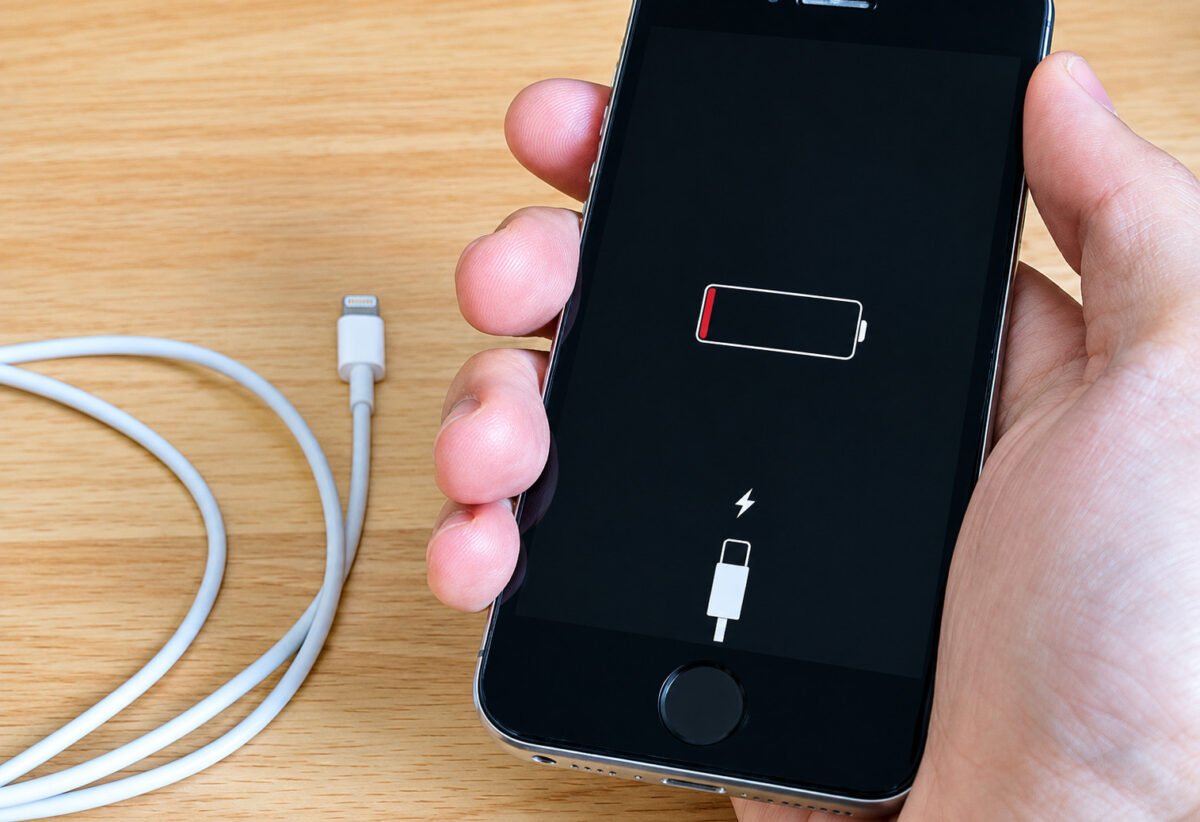
Should You Unplug a Charger When It Is Not in Use?
GUIDE · STANDBY POWER
Should You Unplug a Charger When It Is Not in Use?
A typical home holds more chargers than people. A phone charger by the bed, a tablet charger on the desk, a laptop adapter under the sofa, and a spare in a drawer that has not moved in a year. Some of them are in the wall around the clock.
Forgetting to unplug one now and then changes nothing. Doing it as a habit, across every outlet in the house, is where the small effects start to add up — in the electricity bill, in the heat inside each unit, and in the number of live devices sitting in the wall.
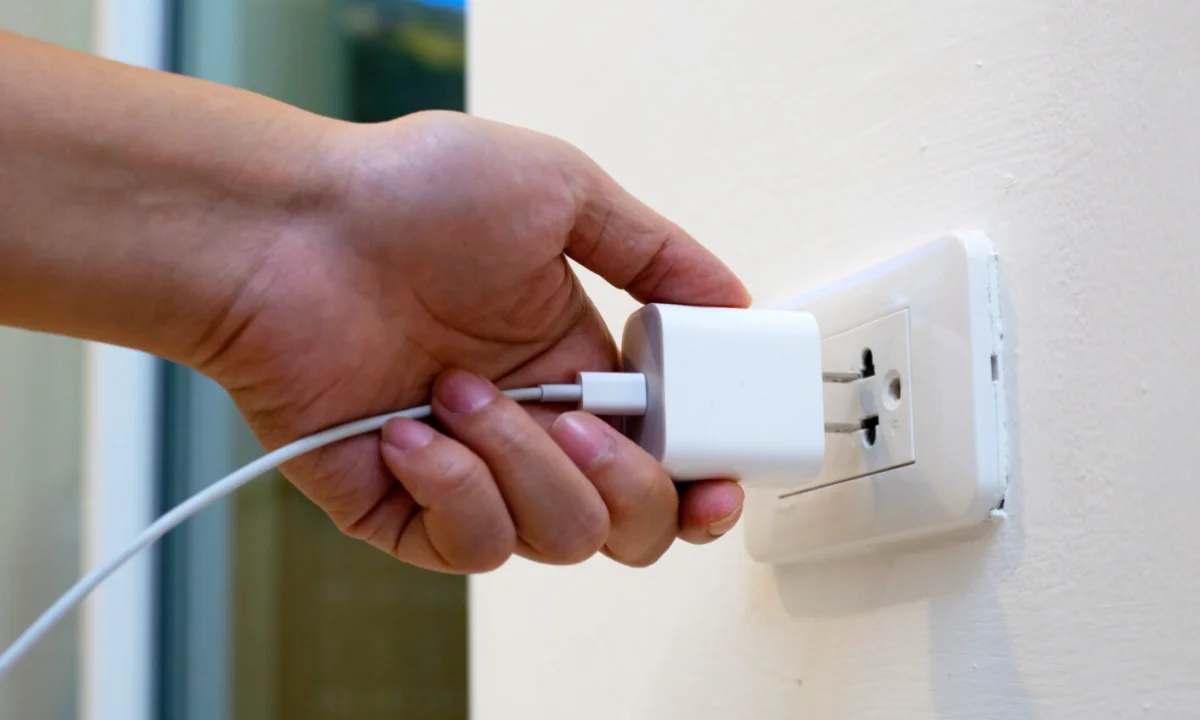
1. Should You Unplug Your Chargers When Not in Use?
Unplugging when nothing is charging is the more careful habit, and there is little cost to it. A charger with no device attached is not doing useful work; it is holding itself ready, drawing a small amount of power and staying warm for hours.
The fire argument is real but narrower than it is usually stated. A compliant charger from a known brand rarely starts a fire on its own. The cases that do occur cluster around cheap units with thin wiring, cords damaged at the strain relief, and chargers that have been overheating for months because they sit against a cushion or behind a curtain. Unplugging removes a live device from the wall, which reduces exposure to all three.
The lifespan argument looks at the same heat from the charger's side. Heat is what ages the electrolytic capacitors inside a charger, and a unit that stays connected stays slightly warmer than one that does not. The difference per hour is small; over years, in a socket that gets no airflow, it is measurable.
In homes with unstable supply, there is a third consideration. Voltage that swings above the nominal 120V or 230V puts extra stress on the primary side every time it happens, and a charger that is always connected sees every one of those events. A unit that is plugged in only while charging sees far fewer.
2. What Is Vampire Energy?
Vampire energy, also called phantom load or standby power, is the electricity a device uses while it is switched off or idle. A charger with no phone attached is the textbook example: it is not charging anything, but it is still converting a small amount of power.
The numbers are modest per unit. A phone charger typically draws somewhere between 0.1W and 0.5W at no load, with older and cheaper units at the top of that range. A unit built to the current no-load limit for supplies up to 49W may draw no more than 0.1W.
The total is what matters. At 0.3W, one charger uses about 2.6 kWh over a year. Five of them use roughly 13 kWh, which is a visible line on an annual bill in a household that watches consumption. Add a game console in standby, a set-top box, and a microwave clock, and the category becomes one of the larger slices of a home's idle load.
None of this makes a single charger worth worrying about. It makes a house full of them worth a routine.
3. Other Benefits to Unplugging a Charger
Unplugging has exactly one cost: the next charge starts with reaching for the plug. Everything else on the list runs in its favor. The bill saving from one charger is a rounding error, but across every charger, adapter, and standby device in a home it becomes visible, and it comes with no change in how anything is used. The safety gain is the same shape: a charger that is not connected cannot overheat in a socket, cannot be reached by a surge during a storm, and cannot be the path through which a damaged cord becomes a problem.
The lifespan gain applies to the charger, not to the phone. Lower average temperature and fewer hours under voltage mean the capacitors age more slowly, so the unit is more likely to still be working when the next phone arrives. A phone left on a charger after it reaches full does not keep charging, because the phone stops the current itself, so the extra hours are not damaging the battery. The benefit belongs to the hardware in the wall.
4. Tips to Simplify the Habit of Unplugging Chargers
Knowing the reasons is the easy part. Remembering to act on them at 11 p.m. is where most routines fail, so the fix is to make unplugging automatic rather than deliberate.
- Build one charging station. Consolidate the chargers into a single place, so there is one spot to check at the end of the day instead of five.
- Choose efficient chargers. A unit that meets the no-load limit wastes less if it is forgotten, and the label states the efficiency level.
- Group them on a switchable strip. One switch turns off every charger on the strip, which is faster than pulling five plugs.
- Use a timer or a smart plug. A schedule that cuts power at midnight and restores it in the morning removes the decision entirely.
- Tie it to an existing routine. The last person to leave the room at night turns the strip off; the habit attaches to something already happening.
- Make it a household rule, not one person's job. A routine that only one person follows ends as soon as that person is away.
For a household with a single charger by the bed, none of this is necessary. For a home with six outlets in use, a switchable strip does more in one second than a resolution does in a month.
So the short version is one strip for the chargers, off at night, and no individual plugs to track.
And if the strip never gets installed, the charger itself is the better place to spend the effort. A unit that meets the 0.1W no-load limit uses about 0.9 kWh a year while sitting in the wall, which is close enough to nothing that forgetting it is not a problem.