Is It Safe to Charge a Laptop With a Phone Charger?
Is It Safe to Charge a Laptop With a Phone Charger?
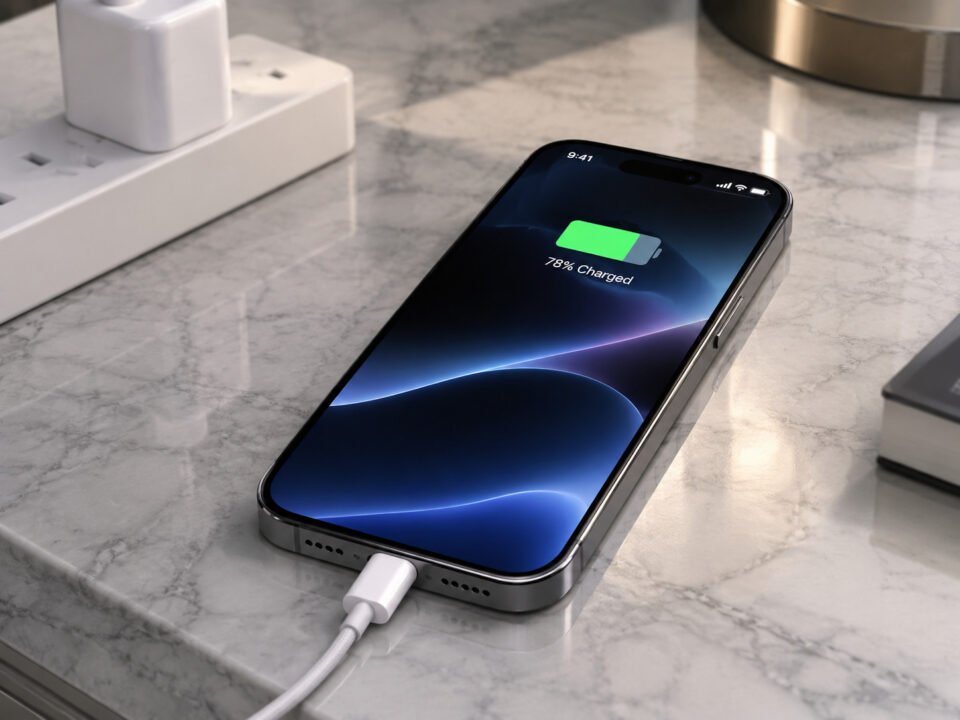
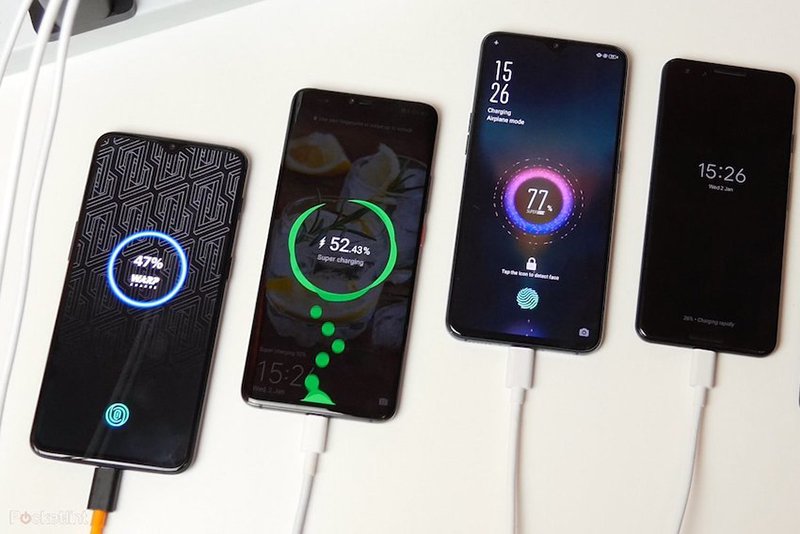
Yes, as long as both ends are USB-C and the charger supports USB Power Delivery. The laptop and the charger hold a digital conversation before any meaningful power flows, and the laptop only accepts a voltage it is built to handle. A 20W phone brick will not damage a 65W laptop.
What it will do is charge it slowly, or not at all. That gap between "safe" and "useful" is where most of the real questions sit.
1. Why the laptop slow-charges or shows nothing at all
Two different failure modes get described with the same words, and they have different causes.
The voltage mismatch (nothing happens)
A laptop's charging input typically wants 20V to move energy into a large multi-cell pack. Many phone chargers top out at 9V — a 20W iPhone-class adapter offers 5V and 9V, and no 20V profile at all.
Plug it in and the negotiation has nowhere to go. The charger lists what it can supply, the laptop looks for a profile it can use, no overlap is found, and the link stays at 5V. Since most laptops take no charge at 5V, the visible result is silence: no charging icon, no indicator, battery unchanged.
This is not a fault in either device. It is a missing profile.
The current deficit (slow charging)
Some phone chargers do offer 20V, but only at low current — a 30W unit typically pairs 20V with 1.5A. The laptop accepts the contract because the voltage is right, then finds itself with less power than it burns at idle with the screen on.
Many laptops stop charging while the machine is awake and resume when it sleeps or shuts its lid. That is why a laptop "only charges when I close it" on a small adapter: the supply covers the sleeping load and nothing more.
The drain-while-plugged-in effect
Under load the arithmetic turns negative. A laptop rendering video or running a game may draw 50–70W while a 30W charger supplies 30W. The system takes the shortfall from the battery, so the percentage falls even though the icon says "plugged in".
Nothing is being damaged. The machine is simply running on charger plus battery, and it will not climb back to 100% until the load drops or the machine is off.
2. Will a low-wattage charger damage the laptop battery?
This is the question people actually care about, and the answer is no — with one condition.
The handshake limits what can happen
USB-C does not apply full voltage the instant a plug touches. The port starts at a safe level, the source advertises its capabilities, and the sink requests a specific voltage and current. Only after both sides agree does the charger raise its output.
If the laptop asks for 20V and the charger only has 9V, the 20V rail is never created. That is the mechanical reason over-voltage damage is unlikely from a compliant charger: the high voltage is not present to be applied.
The condition is compliance. A certified adapter follows the negotiation; a counterfeit one may not, and its protection circuits may be a sticker rather than a circuit. The risk in this scenario comes from the charger's build quality, not from the wattage mismatch.
The case that slow charging is gentler
A battery charged at 30W stays cooler than the same battery charged at 100W, because resistive losses rise with the square of the current and the cell itself heats up less. Since heat is one of the main ageing factors for lithium cells, a lower charge rate is not a compromise for the battery — it is a mild advantage.
That does not make 30W the right choice for daily work. It makes it a fine choice for overnight or desk-idle charging, where speed does not matter.
The one thing that does wear
A small charger asked to run a laptop for hours sits at 100% of its rating the whole time, which is the hottest way to run any adapter. That is not a battery problem, it is an adapter problem: a cheap 30W unit in a sealed plastic case will run very warm for a long stretch. Give it air, and treat a case that is too hot to hold as a reason to stop.
3. What a phone charger needs in order to work

Four conditions, and all four have to hold.
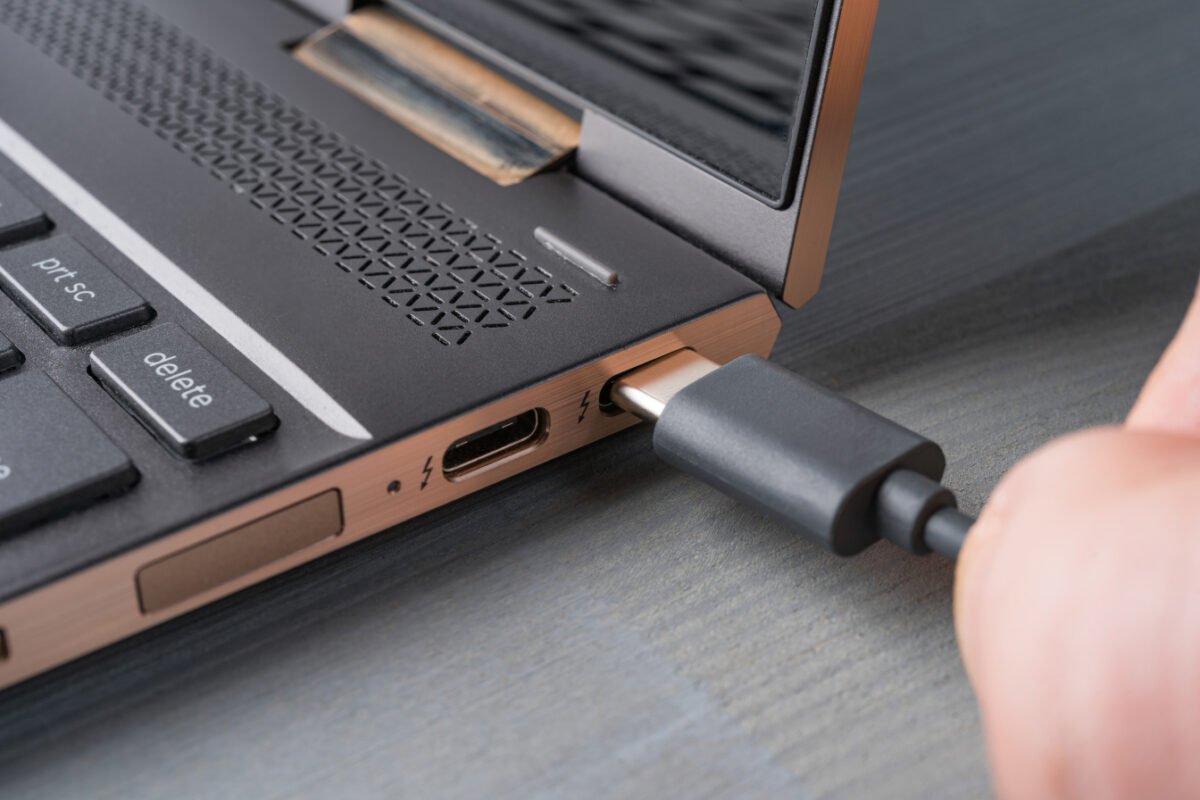
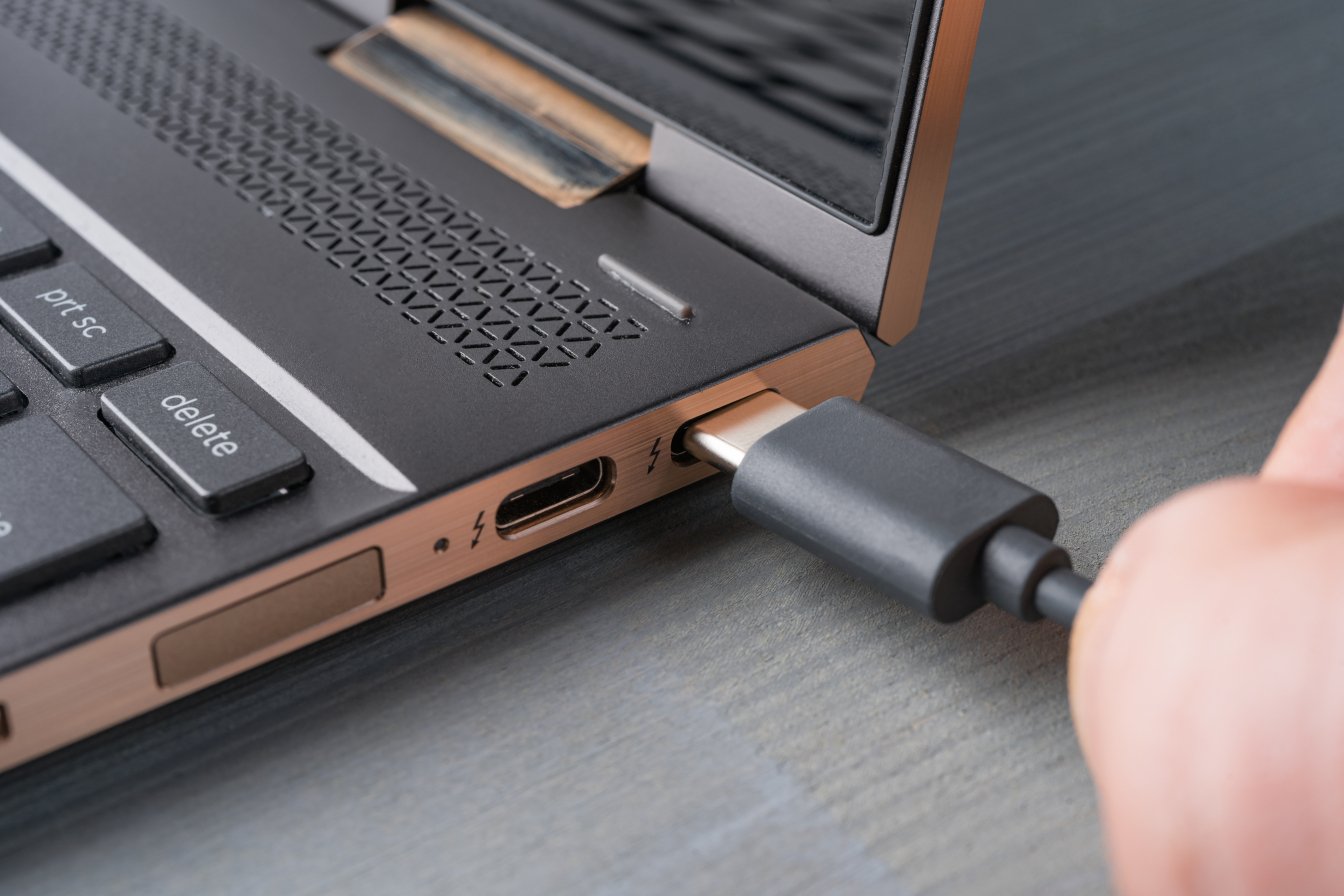
- A USB-C port wired for power input. Many laptops have several USB-C ports and only one or two accept power. A data-only or display-only port will not charge, whatever the adapter.
- A 20V PDO on the charger. This is the item phone chargers most often fail. Check the printed output list: `20V ⎓ 1.5A` means a 30W unit that can charge a thin laptop slowly; a list that stops at 9V will not start charging on most laptops.
- A USB-C til USB-C-kabel. An A-to-C cable terminates the CC pin with a fixed resistor instead of carrying a PD channel, so the link never negotiates past 5V. The charger may be capable and the cable still blocks it.
- A cable rated for the current. At 20V/3.25A (65W) the current is above 3A, so the cable needs an E-Marker declaring 5A. A plain 3A cable caps the contract at 60W, which is enough for many ultrabooks but not for a 65W rating.
If a laptop refuses a charger that meets all four, the remaining suspects are the port, the cable and the laptop's own adapter allowlist. Some business models warn or throttle on unrecognized adapters.
4. When one charger has to cover both
The reason a phone charger is tempting is weight. The reason it usually disappoints is that a 20W unit cannot do laptop duty at all. Gallium nitride closes that gap: a 65W GaN adapter is small enough to live in the same pocket as a phone brick, and it can hold a 20V contract for an ultrabook while dropping to 9V for a phone.
A 65W unit covers most thin laptops. Above that class — gaming machines and mobile workstations — the laptop wants 130W or more through its own connector, and USB-C becomes a top-up supply rather than the main charger.
For a buyer assembling one kit, the practical order is: confirm the laptop's PD request, pick an adapter with a 20V PDO at or above that wattage, then choose a cable rated for the current the port will draw. Buying the adapter first and the cable later is how 65W builds end up capped at 60W.
A charger that covers a phone, a tablet and a thin laptop is a specification question, not a shopping question: the 20V rail, the port count and the cable rating decide whether one brick replaces three.